AI Game Master - Dungeon RPG
- 2.83K
- 4.6
- Installs
- 100.00K
- Price
- Free

Screenshots
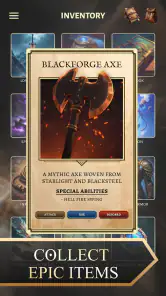
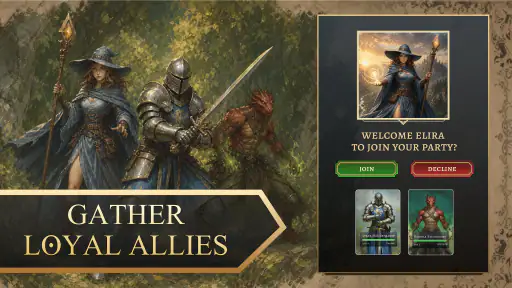
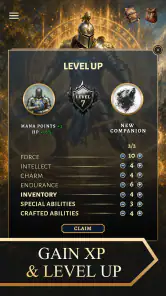
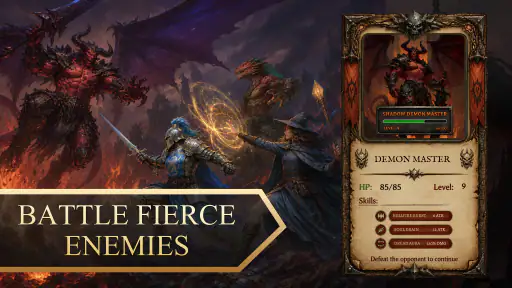
Analysis by Reviewed
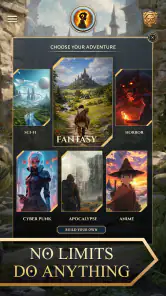
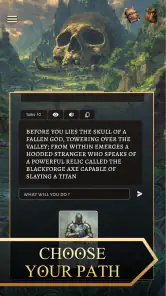
I approached AI Game Master - Dungeon RPG as a role-playing game for people who enjoy making decisions in a story rather than simply following a fixed path. Its central idea is easy to understand: I interact with an AI Game Master, describe what I want to do, and see the adventure respond. That makes it feel closer to an improvised tabletop session than to a conventional mobile RPG built around menus, preset dialogue, and a long list of missions.
After spending time with it, my main impression is that the game is most interesting when I treat it as a creative conversation. It is not trying to replace a large, visually elaborate fantasy game. Instead, it turns imagination, text, and roleplay into the main tools. That difference is important because it explains both the appeal and the occasional friction: the freedom can be exciting, but the quality of a scene depends on how clearly I communicate and how willing I am to guide the adventure.
How the AI-led adventure feels in practice
The game sits in the role-playing category and comes from Digital Dynasty Entertainment Inc. It is free to start, carries an Everyone 10+ age rating, and has reached over 100 thousand installs. The current version is 3.4.0, while the app can run on Android 7.0 or later. Those details make it accessible to people using older Android devices, although the experience still depends heavily on how comfortable someone is with reading and writing rather than tapping through traditional combat screens.
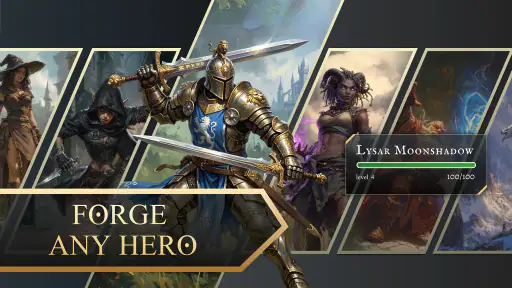
The opening experience is less about learning a complicated control scheme and more about understanding the relationship between player and narrator. I am not only selecting a hero from a rigid menu; I am shaping the direction of the story through my choices and descriptions. A cautious character, a reckless treasure hunter, and a diplomatic wanderer can approach the same fantasy situation in very different ways. That flexibility is the game’s strongest reason to exist.
I found that short, specific instructions usually worked better than vague commands. Saying that I wanted to inspect a locked chest for traps before touching it gave the scene a clear dramatic purpose. A broad request such as “make the adventure exciting” left more room for interpretation and made the result feel less controlled. This is one of the first practical lessons for new players: the AI Game Master is more enjoyable when I treat it like a narrator who needs direction, not like a vending machine that automatically produces a perfect campaign.
The Dungeons & Dragons influence is visible in the fantasy role-playing setup, but this is not the same as sitting around a table with friends and a human Dungeon Master. A human can remember personal preferences, read the mood of the group, and deliberately build tension over several sessions. An AI-led experience offers immediacy and availability instead. I can begin a story when I have a few spare minutes, experiment with an unusual decision, and continue without arranging a group or preparing a campaign.
A useful game for short sessions and private campaigns
One realistic use case is a quiet evening when I want a fantasy adventure but do not have enough time for a full console or PC session. I can create a character concept, play through a compact encounter, and stop at a natural pause. It also works during a commute or a waiting period if I am comfortable reading on a phone. The text format makes the game portable, though it is not ideal for someone looking for fast visual action.
Another good use is experimenting with character personalities. I can play a suspicious investigator in one story and a generous healer in another, then see how different choices change the tone of the conversation. This makes the game appealing to writers, tabletop players testing ideas, or anyone who enjoys collaborative storytelling. I would not use it as a replacement for a carefully balanced campaign with friends, but it can be a convenient sandbox for trying out concepts before bringing them to a group.
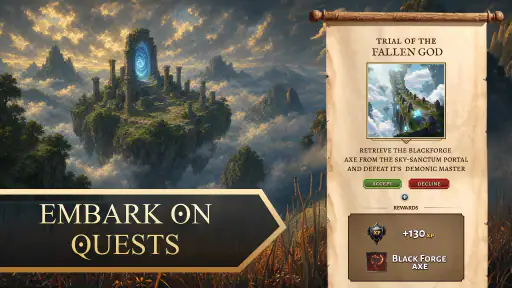
The game also rewards keeping a clear personal objective. Instead of asking only what happens next, I get better results when I give my character a motivation: recover a family relic, protect a village, uncover a betrayal, or earn a place in a guild. That extra context helps keep the adventure focused. Without it, an open-ended fantasy conversation can drift from one incident to another without the sense of progress that a traditional role-playing game provides.
Where the freedom becomes a limitation
Open-ended text is not automatically the same as unlimited, coherent storytelling. I sometimes had to restate what my character wanted, clarify the setting, or correct the direction of a scene. That is not necessarily a defect in this type of game, but it does create work for the player. Someone who wants the app to handle every detail silently may find the experience tiring compared with a conventional RPG that presents a carefully authored quest log.
There is also a difference between surprise and randomness. A good AI response can introduce an unexpected complication that makes a scene memorable. A weaker response can feel disconnected from the character’s goal or repeat familiar fantasy patterns. I recommend treating the story as collaborative: accept some improvisation, but redirect it when the adventure loses its identity. The best sessions came when I actively edited the direction instead of passively waiting for a flawless novel to appear.
For that reason, this is not the right choice for players who mainly want polished graphics, real-time battles, collectible heroes, or a highly structured progression path. A traditional mobile RPG will usually be better for visual feedback, predictable mechanics, and quick sessions that require little typing. AI Game Master - Dungeon RPG is aimed at a different kind of attention: reading, imagining, deciding, and occasionally writing more than a sentence or two.
Spending, progression, and the pressure to continue
The game is free to download, but it includes in-app purchases ranging from $0.99 to $209.99 per item. That is the part I would examine carefully before committing to a long campaign. The existence of a wide purchase range tells me that spending can become a meaningful consideration, even though the exact value of each item and its effect on play should be checked directly inside the app before buying.
I would begin by playing without spending and observing how comfortable the free experience feels over several sessions. That approach is especially sensible here because the appeal is based on storytelling quality, not on a visual asset that I can judge immediately. If the writing style, pacing, and interaction already suit me, I can then decide whether any optional purchase genuinely improves my experience. Buying first and discovering later that I do not enjoy directing an AI narrative would be an avoidable mistake.
My practical advice is to set a personal limit before exploring the purchase screen. A low-cost item may feel harmless in isolation, but repeated purchases can change the way I approach a story. I do not want to make decisions because I feel pushed to preserve momentum. The most satisfying sessions were driven by curiosity about the character and situation, not by the fear of losing progress or missing a chance to continue.
I also recommend separating story satisfaction from purchase value. If an item promises more room, more content, or another form of access, I would ask whether it solves a problem I actually have. Someone who plays occasionally may not need the same option as a committed role-player who spends long periods building one campaign. Since the available purchase range is broad, the right decision depends on personal use rather than on assuming that every player needs the highest-priced option.
Does spending affect competitive fairness?
Competitive fairness is less central here than it would be in a multiplayer battle game. The core attraction is a personal fantasy narrative, so I am not primarily comparing my character’s power with another player’s in a ranked match. That makes the spending question feel different: the concern is less about winning against other people and more about whether paid access changes the freedom, pace, or continuity of my own story.
For players who want a fair competitive ladder, esports-style balance, or direct player-versus-player progression, this is probably the wrong category of experience. A conventional online RPG with clearly documented combat rules would be easier to evaluate for that purpose. Here, fairness is better judged by whether the free path gives me a satisfying way to role-play and whether optional purchases feel like conveniences rather than requirements.
I would still avoid assuming that a narrative game has no pressure. A story can create its own form of urgency when I become attached to a character or campaign. If the app makes continuation feel dependent on spending, that can be more noticeable because the whole experience is built around maintaining a conversation. My recommendation is to keep an eye on how often I am thinking about access and purchases instead of the adventure itself. If the commercial layer starts dominating the roleplay, the game has stopped being good value for me, regardless of the fantasy setting.
What I would check before building a long campaign
The game’s concept invites long-term storytelling, but I would not immediately treat a first session as the beginning of a major personal saga. I would first test how well the app handles the kind of campaign I enjoy. Try a mystery, a character-focused conversation, and a straightforward dungeon objective. These different situations reveal whether the experience suits the player’s preferred pace better than a single dramatic opening can.
I would also establish a simple campaign brief in my own notes. Writing down the character’s goal, important allies, boundaries, and the current location gives me something to refer back to when the story becomes complicated. This is a particularly useful workflow for an AI text RPG because it reduces the need to reconstruct the entire adventure from memory. It also makes it easier to return after a break without losing the character’s voice.
Another helpful habit is to make decisions in stages. First explain the intention, then describe the action, and finally ask the Game Master to resolve the scene. For example, I might state that my character wants to gain the guard’s trust, mention the evidence being offered, and ask what happens. This produces a more useful exchange than sending a long paragraph containing several unrelated actions. It gives the narrator a clear sequence to work with and gives me more control over consequences.
I would keep an eye on continuity as well. If a location, relationship, or objective matters, I would mention it again when returning to that thread. That may feel less natural than relying on a human Game Master’s memory, but it is a small effort that protects the campaign from drifting. The trade-off is clear: I receive a flexible, always-available storyteller, but I also take on some responsibility for maintaining the story’s structure.
How it compares with familiar role-playing alternatives
Compared with a standard mobile RPG, this game gives me more freedom to phrase actions in my own words. Traditional alternatives are usually stronger when I want clear rewards, visual character growth, defined combat rules, and a predictable mission structure. Their limitations are also part of their strength: because the available actions are designed in advance, the game is less likely to misunderstand an unusual plan.
Compared with tabletop role-playing, the app is more convenient and private. I do not need a group, a schedule, dice on a table, or someone prepared to run the session. That makes it useful for learning how to role-play or for exploring a campaign idea alone. The cost of that convenience is human spontaneity. Friends can build jokes, emotional reactions, and shared memories that an AI narrator cannot reproduce in exactly the same way.
Compared with interactive fiction, the AI approach feels less confined to a fixed set of branches. I can attempt an action that the original author may never have written as a button. However, authored interactive fiction often has tighter pacing, more deliberate prose, and more reliable thematic control. If I want a polished story with a known beginning and ending, I would choose that format. If I want to improvise and accept rough edges, this game is more appealing.
That comparison helped me understand who gets the most from it. The ideal player is not simply “a fantasy fan.” It is someone who enjoys being partly writer, partly actor, and partly director. If I only want to consume a finished story, the open-ended format may feel like work. If I enjoy asking “what if?” and shaping the answer, the same freedom becomes the main reward.
Trust, expectations, and my final recommendation
The game has a 4.6 average from around 15 thousand ratings and about 2.8 thousand written reviews, which suggests that many players find the concept compelling. I see that reception as a useful sign of interest, not as a guarantee that every campaign will feel equally strong. AI storytelling is personal: the quality of a session depends on the prompt, the desired tone, and how much guidance I provide.
My trust verdict is therefore cautious but positive. I would recommend trying it if you want an AI-powered fantasy conversation, enjoy DnD-inspired roleplay, and are comfortable shaping the story through text. I would start free, test several types of scene, and decide about purchases only after understanding how the app fits my habits. The broad in-app purchase range makes that restraint worthwhile.
I would skip it if my priority is action combat, competitive balance, elaborate graphics, or a campaign that never asks me to steer the narrative. I would also avoid making it my only role-playing game if I value the social energy of a real group. For everyone else, it offers a distinctive way to turn a spare moment into a small fantasy scenario, provided I accept that the best results come from collaboration rather than passive consumption.
In the end, AI Game Master - Dungeon RPG works best when I approach it as a flexible storytelling partner. Its strongest feature is not a single character class or a fixed quest; it is the ability to test an idea and immediately play through the consequences. Its biggest weakness is the same freedom, because it asks me to provide direction, patience, and a little housekeeping. If that sounds enjoyable rather than inconvenient, this free role-playing game is worth exploring on Android.
Pros
- Creates dynamic adventures tailored to your choices.
- No fixed party or campaign setup is required.
- Text-based gameplay works well on older devices.
- Useful for solo players who enjoy improvising stories.
- Offers a flexible alternative to traditional tabletop sessions.
Cons
- Story quality can vary between different generated scenes.
- Some responses may feel repetitive during longer campaigns.
- Requires frequent reading
- which may not suit action-game fans.
- Internet access may be needed for AI-generated content.
- Limited visual elements may disappoint players seeking rich graphics.

- Category
- Role Playing
- Version
- 3.4.0