AFK Journey
- 8.26K
- 4.6
- Installs
- 5.00M
- Price
- Free

Screenshots






Analysis by Reviewed
I tend to enjoy mobile RPGs most when they give me meaningful choices without demanding that I treat every spare minute like a scheduled session. AFK Journey sits in that appealing middle ground: its idle progression makes it easy to check in briefly, while team decisions give me something to think about when I do have time to play. It is a free role-playing game from FARLIGHT, and its colorful fantasy presentation makes a strong first impression without requiring me to learn a complicated interface all at once.
That balance is the main reason I would recommend it selectively rather than to every RPG fan. The game asks me to care about how a team is put together, but it does not expect every bit of progress to come from constant input. If I have a few minutes between other plans, there is room for a small check-in; if I have a longer stretch, I can spend it considering a tougher encounter or following the adventure. The key is being comfortable with progress that happens gradually and battles where preparation carries more weight than reflexes.
Picking a pace that fits real life
The useful question is not just whether a game can progress while I am away, but whether returning feels worthwhile. Here, the idle structure suits small windows in the day: I can open the game during a break, collect progress, review my team, and decide whether I want to push ahead or leave it for later. For someone who likes steady advancement but cannot commit to long sessions, that rhythm is a real strength.
A practical routine is to make each visit serve a purpose. I would check what progress has accumulated, then choose one thing to focus on rather than tapping through every available screen. That makes the game feel less like a chore list. It also helps me notice where a battle is asking for a different approach instead of assuming that more time or repeated attempts will solve everything.
One useful habit is to separate collecting from decision-making. I can gather what has accumulated and then pause before spending resources or changing several parts of a lineup at once. When I make one deliberate adjustment, it is easier to tell whether that change helped. This keeps a short session from turning into a blur of menus, and it gives me a clearer sense of what the next visit should be about.
Where the trade-offs show up
The game’s generous-sounding hero and summon pitch may catch the eye, but collecting characters is only part of the decision. A wider roster can create options; it can also make it harder to know which heroes deserve attention. I would resist spreading upgrades evenly just because several characters look appealing. Concentrating on a coherent team is a more useful early habit, especially when resources and attention are limited.
That planning has a reward: a well-considered lineup can make battles feel like puzzles rather than a simple check of who has the highest level. The risk is that idle progress may encourage a hands-off attitude, even when a stage is clearly exposing a weakness in the team. If a fight stalls, I would first inspect the composition, equipment, and skill choices, then decide whether to adjust or return after more progress. That is more satisfying than treating every obstacle as a demand to spend.
More From Our News Desk

Clash of Clans Is Won Between the Battles

Android Auto Makes the Case for Quieter Car Software

MobiOffice: Transforming Mobile Productivity with Seamless Integration

EA SPORTS FC™ Mobile Soccer: Redefining Mobile Sports Gaming

How Microsoft OneDrive Became a Mobile Productivity Giant

How Google Translate Breaks Language Barriers Effortlessly
There is a small but important difference between waiting for progress and giving up on a decision. If I am close to moving past an obstacle, letting the game build strength over time can be a reasonable choice. If the same sort of problem keeps appearing, waiting may simply delay the need to rethink the team. I prefer to use a failed attempt as information: what is not working, and what is the least costly change worth testing?
Getting Started: Your Path to Adventure
Launching AFK Journey for the first time, you're greeted with a vibrant and fantastical world. The game kicks off with a brief tutorial that eases you into the mechanics. You’ll be assembling a team of heroes, each with unique abilities and strengths. The art style is a feast for the eyes, blending colorful landscapes with well-designed characters that really pop on your screen.
Gameplay: Strategy Meets Relaxation
The core of AFK Journey is its idle gameplay. This means your heroes continue to fight and gather resources even when you're not actively playing. It's perfect for those of us who have busy schedules but still want to enjoy the thrill of progression. There's something incredibly satisfying about logging back in to find your team has leveled up and collected a treasure trove of loot.
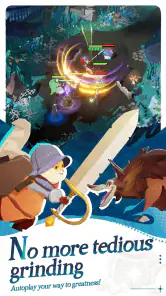
But don't be fooled by the 'idle' label. There's plenty of strategy involved. Crafting the perfect team composition, equipping your heroes with the right gear, and choosing the best skills for each battle are key to mastering the game. The battles themselves are a delight to watch, with flashy animations and strategic turn-based combat that keeps you engaged.
For me, the enjoyable part is the loop between observing and adjusting. A fight plays out, I see how the team handles it, and then I have a reason to consider whether its setup needs work. That makes the automated presentation more than a way to watch numbers rise. Still, players who want to control every move during combat should know what they are choosing: the satisfaction comes from preparation and team decisions, not from manually directing each moment.
Making the roster work for you
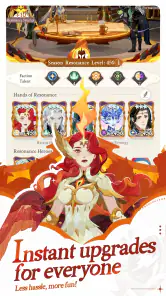
With more than 50 heroes to collect, I would treat the roster as a set of possibilities, not a checklist that must be completed. My practical tip is to compare what a prospective character adds to the team before investing heavily: does the lineup need a different role, or am I simply drawn to a new portrait? That small pause helps keep experimentation purposeful. The advertised 450 pulls may sound like a shortcut to a finished collection, but I would approach recruitment as an ongoing part of the game rather than a guarantee of any specific result.
For a commuter or someone fitting games between errands, a sensible session could be brief: collect idle gains, try a battle that looks manageable, and make one team adjustment if the lineup struggles. A longer evening session can be for exploring the story and watching combat more closely. This split works better for me than expecting the game to provide the same kind of sustained, hands-on challenge as a conventional console-style RPG.
When I am deciding whether to invest in a new hero, I would think about the team I actually use, not just the most exciting possibility in the collection. It is easy to confuse having more choices with having a stronger plan. A character is useful to me when I can explain what problem that addition is meant to solve; otherwise, I risk spending attention on a roster that is broader but no more coherent.
Features: More Than Just Idle Fun
AFK Journey is packed with features to keep you entertained. From guilds and PvP arenas to daunting dungeons and special events, there's always something to do. The game encourages social interaction, allowing you to team up with friends or compete against players worldwide.
Those activities broaden the routine, but they also create a choice about where to spend attention. Players who enjoy comparing progress with others may find the social and competitive side motivating; players who prefer a solitary story journey may be happier focusing on their own campaign. I would not assume every mode needs to become a daily obligation. Picking the parts that match your mood is a better way to keep the game relaxing.
A useful way to avoid turning variety into pressure is to choose a main reason for opening the game each time. One visit might be about advancing the adventure; another might be a chance to see how a team performs in a different activity. If I try to keep up with every option at once, the flexible pace starts to feel less flexible. The game works best for me when its range of activities offers choices rather than a new list of duties.
How it differs from hands-on RPGs
Compared with a traditional action RPG, this is less about precise movement and moment-to-moment control, and more about assembling a team and preparing it for an automated fight. That is a good trade if I want progression that fits around a busy day. It is a poor trade if what I want is to dodge attacks myself, explore every encounter through direct control, or spend a long stretch mastering execution. In that case, a more hands-on RPG is likely the better choice.
Likewise, someone who dislikes collection-driven progression may find the roster focus tiring, even if they enjoy fantasy stories. I would recommend this game most to players who like team-building, gradual improvement, and short check-ins. If I were choosing a game for a friend who wants a fully self-contained story with little attention to recruitment or competition, I would steer them toward a more narrative-first RPG instead.
It also feels different from a conventional turn-based RPG that asks me to stay present for every action and plan a sequence of moves directly. Here, my strategic window is more about the squad I send into a fight and the adjustments I make around the outcome. That suits someone who enjoys building a system and seeing whether it works. If the pleasure of an RPG is personally steering a character through each encounter, this is not a substitute for that experience.
Story, presentation, and staying power
One aspect I particularly enjoy is the narrative. The storyline, while not groundbreaking, adds depth to the game and gives you a sense of purpose as you progress through different chapters. Plus, the voice acting and sound design are top-notch, enhancing the overall experience.
There is a useful distinction between having a story to follow and being a story-only game. Here, the narrative gives context to progression, but the lasting decisions are often about how to develop a team and which activities deserve my attention. That makes it easier to return in short bursts, though it may not satisfy players looking for the uninterrupted pacing of a single-player adventure.
The presentation helps the world feel inviting when I drop in for a short visit, but the reason I would keep returning is not simply the scenery. The recurring question of how to improve a lineup gives the progression a practical focus. I find that helpful because it gives me something to do even when I do not have time to follow a long stretch of story. At the same time, anyone hoping for the narrative to carry the whole experience may find the team-building loop more prominent than they want.
What to know before installing
The game is rated Teen, and it runs on Android starting with version 5.1. Its current version is 1.2.31. It has a 4.6 average from around 242,000 ratings, with more than 5 million installs, which suggests that it has found a sizeable audience. I still see popularity as context rather than a guarantee: whether its mix suits you depends on how much you enjoy idle progress and roster planning.
It is free to start, with optional in-app purchases ranging from $0.99 to $99.99 per item. I would decide in advance whether I am comfortable with spending in a game built around collecting heroes, and avoid treating a purchase as the default answer to a difficult fight. The better first step is to understand the team-building choices and let the game’s regular progression show whether the pace works for me.
FARLIGHT released the game on March 22, 2024, and the current version is 1.2.31. Those details matter most if you are checking compatibility or comparing what is installed on your device; for the playing experience, the key point is that this is designed around returning to a developing roster rather than finishing one short campaign and moving on.
For a realistic day-to-day example, I might open it during a lunch break, collect what has built up, and attempt one stage that is holding me back. If the team loses, I can review what happened and make a single change, then leave the game until I have another window. Later, I can decide whether that adjustment was useful instead of repeatedly retrying while distracted. This routine makes the idle side practical, while keeping the strategic part from disappearing entirely.
Before installing, I would ask myself whether I want a game that can fit around other plans or one that will hold my full attention. I would also consider how I feel about optional purchases in a collection-focused RPG. The free entry point makes it possible to see whether the pace and team decisions appeal to me, but setting a personal spending boundary is sensible if recruitment and character development are likely to tempt me.
Final Thoughts: A Journey Worth Taking
All in all, AFK Journey is a delightful addition to the idle RPG genre. It's perfect for players who appreciate a blend of strategy and relaxation. Whether you're a seasoned gamer or a newcomer to the world of RPGs, this game offers something for everyone. So, if you're ready to embark on an epic adventure without the constant grind, give AFK Journey a try. Trust me, your future self will thank you for the loot and levels!
My strategy verdict
My recommendation comes with a clear condition: try it if the appeal of fantasy team-building and flexible check-ins outweighs your desire for direct control. I like that the game can fit around an ordinary day, and I appreciate having tactical decisions to revisit when a lineup hits a wall. I would skip it if I wanted every battle to be an active test of reflexes, or if collecting and developing a roster sounds more like admin than play.
For me, the best approach is patient rather than completionist: build a team with a purpose, change something when a fight exposes a weakness, and let idle progress do its job instead of expecting instant results. That balance is where the game makes the most sense. If that sounds like your kind of RPG, it is worth giving this one a fair try.
AFK Journey Frequently Asked Questions
What should I know about AFK Journey before downloading it?
AFK Journey is a fantasy role-playing game from FARLIGHT, built around exploring an overworld and collecting heroes. Its store summary highlights more than 50 heroes and 450 pulls, so character collection is an important part of its appeal. If you enjoy fantasy settings, team-building, and ongoing progression, those are useful things to keep in mind before installing.
How much storage space does AFK Journey need?
It is sensible to check your device’s available storage before downloading AFK Journey, particularly if you keep many apps or games installed. The game is a role-playing experience with a fantasy overworld, heroes, and ongoing play, so leaving room for the installation and future updates can help avoid interruptions. You can review the download size shown for your device in its app store.
Does AFK Journey include in-app purchases?
Yes. AFK Journey is free to download, but it offers optional in-app purchases that range from $0.99 to $99.99 per item. These purchases can provide in-game currency and other items, while the game can still be played without spending money. If you share a device with a younger player, it is worth checking your purchase settings and discussing spending expectations beforehand.
What kind of game is AFK Journey?
AFK Journey is a role-playing game set in a fantasy overworld. Its store description highlights a roster of more than 50 heroes and 450 pulls, giving new players a sense of its character-collecting focus. If you enjoy exploring a fantasy setting and building a team, these are central parts of what the game offers.
Is AFK Journey suitable for younger players?
AFK Journey is rated Teen, so it is generally intended for teenage players and older. Parents and guardians may want to review the game themselves and consider whether its role-playing battles, fantasy themes, and in-app purchase options suit the individual player. The rating is a useful starting point, but family preferences can differ.
Pros
- Engaging idle gameplay mechanics.
- Rich storyline and character development.
- Stunning visual graphics.
- Regular updates with new content.
- Multiplayer features enhance experience.
Cons
- Requires constant internet connection.
- In-app purchases can be pricey.
- Limited offline functionality.
- Not suitable for all devices.
- Progression can feel slow at times.
- Category
- Role Playing
- Version
- 1.2.31