8 Ball Legend
- 80.00
- 4.8
- Installs
- 100.00K
- Price
- Free

Screenshots
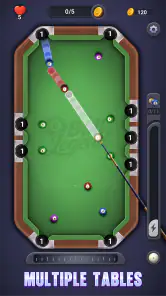
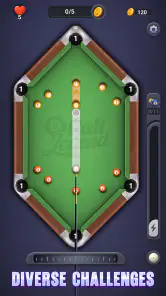
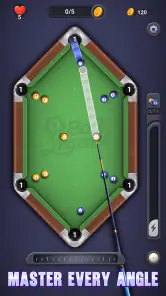


Analysis by Reviewed
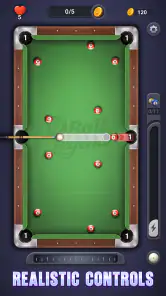
I approach 8 Ball Legend as a pool game for the moments when I want to slow down and think through a shot, rather than chase constant action. Its three-dimensional table presentation gives a match a sense of place, while the basic appeal stays familiar: read the layout, choose a line, and see whether the cue ball follows your plan. For me, that is a promising starting point for a casual sports game, provided the aiming feels clear enough to keep decisions enjoyable.
The game is free, rated for Everyone, and developed by XBORDER PTE. LTD. Its current version is 0.2.2, which makes me approach it as an early-stage release rather than an established pool platform. It has a 4.8 average from around 11,000 ratings and more than 100,000 installs. Those figures suggest that plenty of players have tried it, but my advice is still to judge it by what you want from a pool game: a relaxed way to play, or a precise tool for serious billiards practice.
How the table sets the mood
A polished setting, with the table doing the talking
The visual idea is a three-dimensional pool setting with scenic views, but the important test is whether those surroundings support the match instead of competing with it. Pool depends on reading a compact space: the cue ball, object balls, cushions, and pockets all need to remain easy to interpret. A decorative backdrop is welcome when it gives a match personality; it becomes a distraction if it makes judging a line harder. I would pay attention to that balance during play, especially if you prefer a clean, tournament-style table over a more atmospheric presentation.
That distinction matters because pool players often fall into two camps. Some want a convincing table and a calm setting that makes each turn feel deliberate. Others care most about precise controls and a consistent view, and would rather have plain visuals than scenery. The game’s relaxed framing points toward the first mood, but the actual value still rests on how clearly a player can read a shot. If you are choosing it for the scenery alone, keep the mechanics in mind: a lovely backdrop cannot make a frustrating aim system feel good.
There is also a useful way to judge the presentation without overthinking it. Play a few turns while focusing only on where the balls are going, then notice whether you remember the environment or the decisions. If the table remains the focal point and the surrounding view adds a little atmosphere, the art direction is doing its job. If your attention keeps drifting away from the layout, it may be less suited to someone who values clean competitive play.
Audio and the pace of a casual match
A good pool game needs room for concentration. The satisfying pace comes from studying the layout, committing to a shot, and then watching the result—not from constant visual or audio noise. I like that this game’s overall identity leans toward relaxing play, because it fits pool’s natural pauses between turns. Those pauses are not empty time: they give you a chance to consider whether to take a direct pot, play position for the next ball, or avoid a risky route.
Sound can either underline that rhythm or interrupt it. In a pool game, cue contact and the movement of balls are most useful when they make a shot feel legible and complete. I would not choose this title on the assumption that its sound design is a major feature; I would treat it as part of the atmosphere and judge whether it helps you stay engaged. If you usually play in public or prefer quiet sessions, muting or lowering game audio—where your device allows—can also make a quick match easier to fit into a break.
You May Like

Clash of Clans Is Won Between the Battles

Android Auto Makes the Case for Quieter Car Software

MobiOffice: Transforming Mobile Productivity with Seamless Integration

EA SPORTS FC™ Mobile Soccer: Redefining Mobile Sports Gaming

How Microsoft OneDrive Became a Mobile Productivity Giant

How Google Translate Breaks Language Barriers Effortlessly
The pacing is a better match for short, self-contained sessions than for someone looking for a sports game with constant action. Pool asks you to wait, think, and accept that a carefully planned shot can still leave an awkward next turn. That slower cadence is part of the appeal, but it will not suit everyone. If you want rapid rounds with little deliberation, an arcade sports game may fit your mood better.
Where the mechanics earn their place
The most useful habit in any mobile pool game is to separate aiming from power. First choose the pocket and the most reliable route for the object ball; only then decide how firmly to strike. A tempting shot that needs a perfect angle can be worse than a simple pot that leaves the cue ball in a manageable spot. That advice is especially valuable on a touch screen, where small changes in a finger movement can make a shot feel different from the one you pictured.
Another practical approach is to treat each turn as two linked decisions. Ask whether you can pot a ball, then ask where the cue ball will finish if you do. Beginners often focus only on the first part and end up with no sensible next shot. A relaxed eight-ball game is a good place to practise that second question: choose a safer line when the table is crowded, and do not force a difficult pot merely because it is available. These are not hidden tricks; they are ways to get more out of the core pool challenge.
For a first session, I would recommend taking a few shots with deliberately modest power. That makes it easier to learn how the table responds before attempting forceful play. Then try aiming at a ball with a clear path and observe how the cue ball travels after contact. This small practice routine can reveal whether the controls suit your hands and whether the game gives you enough confidence to plan a follow-up. It is more useful than immediately trying to play aggressively and blaming every miss on the physics.
A further test is to repeat a similar kind of shot at different strengths and compare the resulting cue-ball position. The aim is not to build a perfect model of the physics, but to learn whether your touch produces outcomes you can anticipate. If it does, you can start making deliberate safety choices instead of treating every turn as a pot-or-miss gamble. If it does not, simplifying your route and using less force is a sensible way to keep the match enjoyable while you decide whether the controls suit you.
The trade-off is that casual accessibility and serious precision are not always the same thing. If you play pool games primarily to practise exact positioning or recreate the feel of a physical table, you may prefer a specialist simulator with a more technical presentation. If you mainly want a convenient way to enjoy eight-ball without setting up a real table, this game’s relaxed framing is more inviting. I would decide based on what you want from each session, rather than expecting one mobile game to satisfy both audiences equally.
When it fits into an ordinary day
I can see this working well during a short wait or a quiet break: open the game, focus on a few shots, and return to whatever you were doing. Pool’s turn-based rhythm makes it easier to pause mentally between decisions than a fast action game. For that kind of use, the strongest appeal is not a promise of endless play; it is having a familiar sport that rewards a little attention without asking you to learn a complicated set of controls first.
Picture a lunch break when you have a few minutes left but do not want to start a game that demands continuous attention. A short stretch of pool can give you a small decision-making challenge without changing the mood of the break into a frantic one. I would still avoid opening it when I need to watch the clock closely: even a quick match can invite one more turn, and pool is most pleasant when I can give each shot a moment of thought rather than rush through it.
It is less compelling if you need a game that reliably fills a long commute or offers a deep career structure. I would not assume that a pool title is automatically a complete replacement for a social match, a league, or a detailed training tool. Someone who wants to compete with friends should check that the available play options suit their plans before choosing it as their main pool app. By contrast, a solo-minded casual player can judge it more simply: do the table, aim, and pace make each short session enjoyable?
For a practical test, install it when you have a few unhurried minutes, rather than in the middle of a rushed task. Try a straightforward shot, a more cautious shot, and one where you think about cue-ball placement. If those choices feel readable and the visual setting keeps the match pleasant, the game is likely to fit your routine. If you find yourself fighting the controls or wishing for a more stripped-back table, that is a clear sign to look for a different style of pool game.
Who should try it—and who may want another option
8 Ball Legend makes the most sense for players who enjoy pool as a calm, skill-based diversion. It is approachable in concept, free to try, and carries an Everyone age rating, so it can suit a broad audience looking for a sports game without a complicated premise. The store category is sports, but its appeal is more measured than a high-speed contest: you get the pleasure of reading angles and making choices at your own pace.
Compared with arcade sports games, which often prioritize quick reactions and frequent bursts of action, a pool match naturally gives more weight to planning and patience. Compared with dedicated billiards simulators, a more welcoming presentation can be preferable for casual play, while technical players may want greater emphasis on exact positioning. That is the choice I would make between the usual alternatives: pick this if atmosphere and accessible eight-ball are the draw; choose a stripped-back simulator if repeatable precision matters more than a relaxed setting.
I would steer away from it if you are specifically after a highly technical billiards simulator, a deep competitive ecosystem, or a game whose main draw is fast action. Those needs call for a different alternative, even if it is also built around a cue and a table. I would also be cautious about choosing any early-version game as a long-term competitive home; version 0.2.2 suggests the experience is still at an early stage, so it is sensible to judge what is playable now rather than base the decision on imagined future additions.
There are already signs that many players have taken an interest: the game has around 80 written reviews alongside its strong average score. That is encouraging, but a rating is only a starting point. Your own tolerance for touch-based aiming, your preference for scenic presentation, and the amount of strategic depth you expect will matter much more than the overall score. A casual player and a precision-focused pool fan can try the same game and come away with very different impressions.
If you are choosing it for someone else, the Everyone rating and straightforward sport make it easy to consider for a broad audience, but I would still match it to the person’s habits. Someone who likes taking turns, lining up careful shots, and learning through small adjustments is more likely to enjoy it than someone who expects constant movement or a detailed competitive ladder. For a first try, a few unhurried turns tell you more than the headline score: the crucial question is whether the aiming feels understandable on your own device and in your hands.
A measured verdict on its atmosphere
What I find appealing is the combination of pool’s naturally thoughtful pace and a presentation designed to make a match feel like a small escape. The setting can give the table a more inviting mood, while the sport itself supplies the focus: read the balls, choose a route, and live with the result. That coherence is a better reason to try it than any broad claim about being the definitive pool game.
My recommendation is straightforward: give it a try if you want an easy-to-understand pool game for occasional sessions and enjoy a bit of atmosphere around the table. Take a pass if precise simulation, extensive competition, or nonstop action is what you are after. For everyone in between, the best measure is a few careful turns. If you find yourself thinking about the next angle rather than wrestling with the presentation, 8 Ball Legend has found the right balance for you.
8 Ball Legend Frequently Asked Questions
What is 8 Ball Legend, and how do you play it?
8 Ball Legend is a pool game built around the familiar eight-ball format. Players take turns aiming and taking shots, trying to pocket their assigned group of balls before sinking the black eight ball legally. The basic rules are easy to recognize, but success depends on judging angles, controlling shot strength, and planning ahead. Check the in-game instructions for the specific rules and modes available in your version.
Can I play 8 Ball Legend offline, or is an internet connection required?
Whether you can play without an internet connection depends on the version and the mode you choose. Single-player or practice options, if offered, may work offline, while online matches and features such as rankings or multiplayer generally require a connection. Before downloading, review the store listing and in-game details for current requirements; an unstable connection can also interrupt online play or affect match results.
Does 8 Ball Legend support multiplayer matches?
8 Ball Legend is presented as a pool game, but the available multiplayer options can vary by platform and app version. If online play is offered, you may be able to challenge other players or compete in matches, subject to connection and matchmaking availability. Look at the current store description and the game’s menus to confirm whether it supports real-time opponents, friends, or only computer-controlled competition.
Is 8 Ball Legend free to download, and does it include purchases or ads?
The download price, advertising, and optional purchases can differ between the Android and iOS releases and may change over time. A game can be free to install while offering paid items, upgrades, or other in-app purchases, and it may display advertisements. Check the store page’s pricing and in-app purchase disclosures before installing, and review purchase controls if children will be using the device.
What should I check before installing 8 Ball Legend on my device?
Confirm that your device meets the operating-system and storage requirements shown on its official app-store listing, since compatibility can vary by model and app updates. Also review the developer information, recent update date, user reviews, and requested permissions. If you plan to play online, make sure your connection is reliable. Download from an official store where possible, and check the privacy information before sharing personal details.
Pros
- Simple controls make aiming and shooting easy to learn.
- Practice matches help newcomers build confidence before competing.
- A range of cues gives players goals to work toward.
- Matches are short
- making the game suitable for quick sessions.
- The familiar 8-ball rules are easy for casual players to follow.
Cons
- Accurate shots can take practice on smaller touchscreens.
- Online matches may feel uneven when opponents have more experience.
- Progression can slow down as cue upgrades become harder to earn.
- A stable internet connection is needed for online play.
- The core gameplay may feel repetitive to players seeking varied modes.

- Category
- Sports
- Version
- 0.2.2