Zoo Prank 2: Jurassic Animals
- 3.00
- 4.3
- Installs
- 100.00K
- Price
- Free

Screenshots
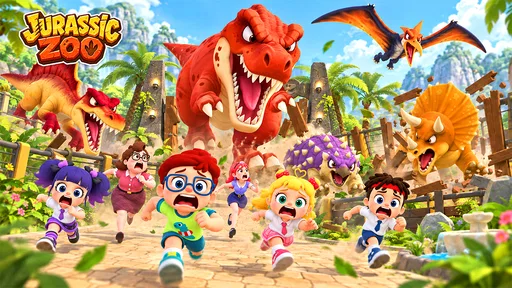
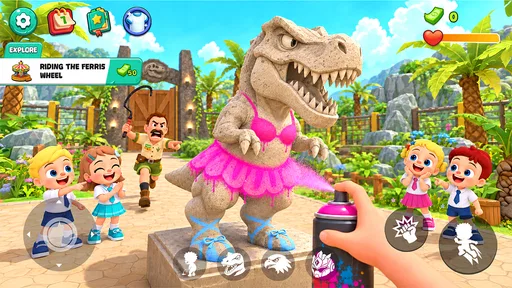
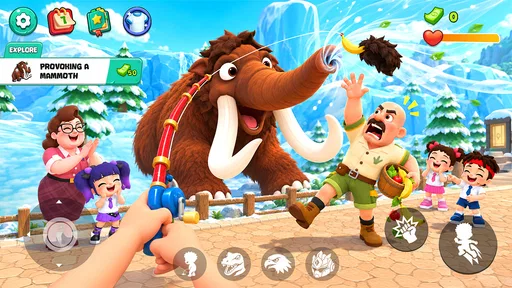
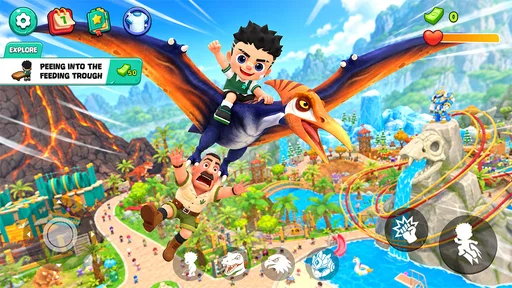

Analysis by Reviewed
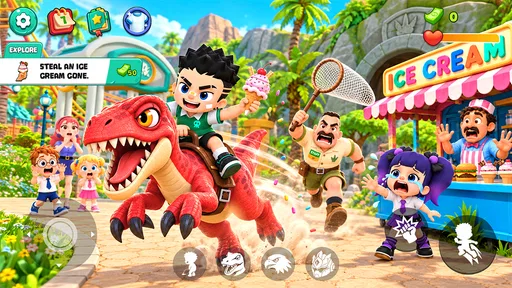
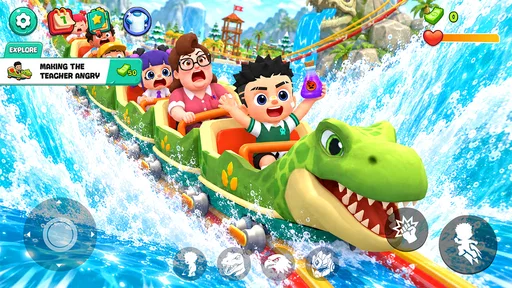
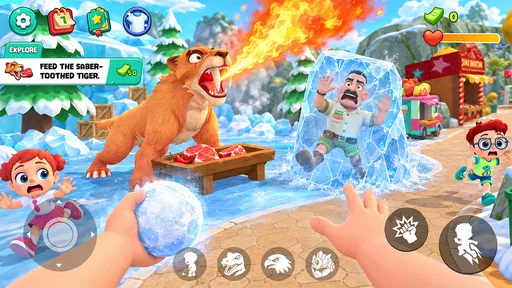
I approached Zoo Prank 2: Jurassic Animals as a quick, playful simulation rather than a game to master. Its appeal is easy to grasp: you spend time around dinosaurs in a zoo setting, with the fun built around startling or fooling visitors. That gives it a sillier mood than a traditional zoo-management game, and it suits short sessions when I want a light distraction instead of a long campaign.
That also shapes what I would expect from it on a phone: a compact burst of comic play, not a project that needs a notebook, a long tutorial, or a plan for the next several days. I would consider it for a casual break or as a first step into simulation games, while keeping in mind that the prank premise—not building a detailed park—is the main reason to open it.
Finding your way around the dinosaur zoo
The central idea is simple enough to understand without needing much gaming experience. You are not being asked to study a complex management system; the focus is the contrast between a dinosaur attraction and the people visiting it. That straightforward premise helps keep the game approachable, especially for younger players or anyone who prefers to learn by trying things rather than reading extensive instructions.
As a simulation game from Unicorn Studio Official, it sits closer to casual amusement than to detailed zoo planning. I would choose it when I want a playful interaction with the setting, not when I am looking for an elaborate economy, realistic animal care, or a deep collection of management tools. That distinction matters: the dinosaur theme may suggest a full park-building experience, but the prank-centered idea is the more useful guide to what kind of fun to expect.
The game’s name is shown as Zoo Prank 2, while the full title, Zoo Prank 2: Jurassic Animals, makes the dinosaur focus clearer. The distinction is worth knowing when looking for it in an app catalog. It is free to install, with optional in-app purchases priced from 99 cents to $2.99 per item. I would treat those purchases as an optional extra rather than a reason to start; the basic pitch is casual play, not a promise that spending is needed to understand the concept.
The game has a 4.4 average from 373 ratings and has passed 100,000 installs. Those figures suggest that plenty of players have tried it, but I would not use popularity alone to decide whether it fits. The more relevant question is whether you enjoy its mischievous tone and can comfortably interact with the way it presents its scenes.
Readability and navigation in play
For a game with a compact premise, clear visual priorities matter. I find that a dinosaur-and-visitor setup is naturally easier to read than a screen filled with dense menus: the subject of a scene is immediately recognizable, and the basic joke does not depend on understanding specialist terminology. That can make it a comfortable first simulation for someone who is new to the genre.
More From Our News Desk
 Instagram
’s Power Comes From Its Place in Your Phone
A close look at how Instagram turns Meta’s reach, recommendation systems and everyday camera habits into durable platform power—and what that costs users.

 Gmail
Gmail in a Busy Inbox: Who Benefits Most?
From first account to crowded workday, Gmail earns its place through dependable search and flexible sorting—but its best fit depends on how much inbox maintenance you can tolerate.

 Prime Video
Switching to Prime Video: What Changes in Your Viewing Routine
Prime Video can make a compelling second home for streaming, but switching means learning a different catalog, rental layer, and route from browsing to playback.

 Universal TV Remote Control
 Works Best as a Reliable Backup
A phone remote earns its place through quick setup and reliable habits. Here is how to get more from Universal TV Remote Control—and where its limits show.

 Weather - By Xiaomi
Weather by Xiaomi Review: Clear at a Glance, Less Clear Up Close
Xiaomi’s weather app makes everyday forecasts quick to scan, but its calm surface can leave useful details and recovery paths harder to find than they should be.

 X
X Under Pressure: Can It Recover When Posting Goes Wrong?
A resilience-focused review of X, examining setup, mistaken posts, interruptions, weak connections, and the gaps that matter when recovery needs to be dependable.
Latest News



Still, a simple concept does not automatically mean every interaction is effortless. If a player has difficulty distinguishing small on-screen details, keeping track of moving characters, or noticing a visual cue quickly, a prank-focused scene may demand more attention than its lighthearted tone suggests. I would recommend taking a moment to observe what is happening before acting, rather than tapping rapidly and hoping the game responds as expected. That small change in pace can make a casual game less frustrating.
One useful way to approach it is to treat each visit as a short observation exercise: identify the dinosaur, notice where the visitors are, then decide whether the moment looks right for a prank. This is a practical habit rather than a claim about a special game feature. It gives players who need extra time a chance to process the scene, and it can also help anyone who tends to rush through casual games and miss the setup.
I would also avoid judging the controls from a rushed first attempt. A brief pause before each action gives a player time to distinguish the scene’s main elements and work out what they want to do, rather than treating every moment as a reflex test. That approach is particularly useful when someone is sharing the screen with another person: one can describe what they notice, while the other decides whether to act. It turns the game into a more collaborative little activity without assuming that special control options are available.
Motor and sensory comfort
Prank games often rely on timing and attention, so the most important personal question is whether quick visual changes or repeated touch input feel comfortable. I would be cautious about recommending this one to someone who finds sudden or busy scenes tiring, or who needs a game to work well with very limited hand movement. The light premise is friendly, but that does not guarantee that every action will suit every player.
If you are playing with a child, or sharing the game with someone who prefers a slower pace, I would sit together for the first few minutes and see how the controls feel in practice. Keep the session short at first, and let the player decide whether the visitor-prank idea is funny or stressful. This is especially useful for a game meant as a casual diversion: there is little reason to push through discomfort just to finish a scene.
The game is rated Everyone, which makes its general audience broad, but an age rating is not a substitute for checking personal sensory preferences. A player can be old enough for a game and still dislike its pace, visual activity, or humor. In my view, a shared trial is a better guide than assuming that a dinosaur theme automatically makes it suitable for every child.
For a player with limited dexterity, I would make the first check practical rather than theoretical: can they hold the phone securely, reach the places they need to touch, and make an action without strain? If the answer is no, a stand or a stable surface may make a shared trial easier, though it will not change the game’s controls. Anyone sensitive to visual activity can also stop as soon as the screen feels tiring; there is no need to turn a light game into an endurance test.
When and where it fits
This is the kind of game I would try during a short break, while waiting for an appointment, or when I want to pass a few spare minutes without committing to a long story. The premise is easy to return to after putting the phone down: dinosaurs, visitors, and comic mischief are a simpler mental load than a simulation that expects careful planning across many connected systems.
That makes it potentially useful for a family member who wants something more interactive than watching a video but less demanding than a strategy game. A parent can use the recognizable zoo setting as a starting point for a conversation about what the player is trying to do, then let them explore at their own pace. I would not, however, assume that a quick-session game is automatically ideal for every waiting room or shared space; the player should still be mindful of sound and of other people nearby.
A realistic use would be opening it during a short wait, trying a little play, then putting the phone away when the appointment is called. I would not choose it for a commute where I could not comfortably look at the screen, or for a situation where quick attention might distract me from something important. The point is to fill genuinely spare time, not to make a player keep checking a phone when their surroundings deserve attention.
For comparison, a conventional zoo-management simulator is the better choice if you want to design habitats, maintain a park over time, and make layered decisions. A dinosaur collection game is a stronger fit if collecting creatures is the main attraction. This game’s distinctive draw is the comic interaction between prehistoric animals and zoo visitors, so it makes sense when you want a lighter, prank-led experience rather than a long-term management project.
That difference is useful when choosing among casual simulations. If you enjoy setting goals and watching a park develop through deliberate choices, the usual management alternative will likely hold your interest longer. If you mainly want a recognizable setting and an amusing situation to react to, this game’s narrower focus may be a plus: there is less to keep track of, though also less reason to expect lasting strategic variety.
Where the experience may fall short
The narrow premise is both the game’s clearest strength and its main limitation. If the humor does not land for you, there may not be another deep system to keep you invested. Players who want careful progression, detailed animal behavior, or a serious take on running a zoo should look elsewhere. I would also skip it if you strongly dislike games built around teasing or surprising fictional visitors; the joke itself is the point, not a side activity.
There is also a practical trade-off in choosing any quick, visual simulation: it may be easy to start, yet still ask for attention at moments when a player would rather relax without monitoring the screen. If you need a game that can be played entirely at your own pace, with no pressure to notice what is happening, a slower puzzle or turn-based title may be a better match. I would make that choice based on comfort, not on whether one genre is inherently better.
Another sensible question is whether the free start means every part of play is free. The game is free to install, but optional purchases are available, so I would check the purchase prompts before handing the phone to a child or letting someone play unsupervised. I would not assume that spending is required, nor would I buy anything before deciding whether the central prank idea is enjoyable. That simple boundary keeps a casual trial low commitment.
For someone deciding whether to keep it installed, I would use a modest test: play long enough to see whether the visitor-and-dinosaur joke continues to amuse you, then ask whether you want more of that exact activity. If you find yourself wishing for habitat design, a larger management challenge, or a collecting goal, that is a sign the game’s focus is too narrow for your taste rather than a reason to keep waiting for it to become a different kind of simulator.
Version 1.0.19 is the current version, and the game supports Android 7.1 or later. That gives a useful compatibility baseline when deciding whether an older device is likely to be suitable. As with any mobile game, I would also consider the actual screen size and responsiveness of the phone in hand: an experience that feels easy on a larger, steady display may be more awkward on a small screen or a device that is difficult to hold.
That baseline is useful, but I would still check the device itself before choosing it for someone who needs a comfortable setup. A phone that is technically supported may not be the easiest one to use if its display is cramped, touch input is unreliable, or holding it causes discomfort. In a household where several people share a device, trying a short session on the intended phone is a more useful test than relying on the model name alone.
A more inclusive way to decide
My recommendation is to treat Zoo Prank 2: Jurassic Animals as a low-commitment trial, particularly if you are choosing it for someone with different visual, motor, or sensory needs. Start with a short session, watch whether the player can follow the scene comfortably, and let their reaction guide whether to continue. The free entry point makes that kind of cautious try-out straightforward, while the optional purchases are something to consider only if the game already feels worthwhile.
The game is best suited to people who enjoy cartoonish dinosaur mischief, want a simple simulation to dip into, and do not need a deep management loop. It is less suitable for players seeking calm, predictable input, extensive strategic choices, or a specifically tailored accessibility experience. I would not make assumptions about a person’s abilities based on the Everyone rating; instead, I would focus on whether the actual play feels readable, manageable, and enjoyable to them.
That makes the most useful recommendation a personal one rather than a blanket label. A child who enjoys playful surprises may find the premise immediately appealing, while a player who prefers quiet, predictable puzzles may not. An adult looking for a low-effort novelty could enjoy a few brief visits, but anyone hoping to settle into a substantial zoo simulation should choose a game designed around planning and long-term decisions instead.
Overall, I see this as a cheerful niche pick rather than an all-purpose simulation. Its zoo-and-dinosaur setup offers a clear, playful reason to open it, and its short-session appeal can work well for casual use. But the prank-centered approach will not satisfy everyone, and comfort depends on how each person responds to the on-screen action. If that mischievous tone sounds fun and a quick hands-on trial feels comfortable, it is worth trying; if you want thoughtful park management or a slower, more controlled experience, another game will serve you better.
Zoo Prank 2: Jurassic Animals Frequently Asked Questions
What is Zoo Prank 2: Jurassic Animals about?
Zoo Prank 2: Jurassic Animals is a casual mobile game centered on playful pranks involving zoo creatures and prehistoric animals. Players explore the game’s scenes, interact with characters and objects, and look for ways to trigger amusing reactions. Its lighthearted presentation is aimed at people who enjoy simple, humorous gameplay rather than realistic animal simulation or a complex story.
How do you play Zoo Prank 2: Jurassic Animals?
The game generally relies on straightforward touch controls: explore the scene, tap or use available objects, and try different interactions to discover what happens. Some moments may ask you to solve a small puzzle or complete a prank before moving forward. The emphasis is on experimentation, so if an interaction does not work immediately, checking nearby objects and characters can help.
Is Zoo Prank 2: Jurassic Animals suitable for children?
The game’s colorful, comic style and silly prank premise may appeal to younger players, but suitability depends on a family’s preferences and the content shown in the version available in their region. Parents should check the store listing, age rating, screenshots, and any advertising or in-app purchase information before downloading. It is also sensible to review the game together before allowing a child to play.
Does Zoo Prank 2: Jurassic Animals require an internet connection or include purchases?
Requirements can vary by platform and by the version currently offered, so check the Google Play or Apple App Store listing for the latest details. The listing should indicate whether an internet connection is needed and disclose any advertising or in-app purchases. If you prefer offline play or want to avoid unexpected spending, review these settings and disclosures before installing the game.
Which devices can run Zoo Prank 2: Jurassic Animals, and how can I download it safely?
Availability and compatibility depend on your device, operating-system version, and country. Use the official Google Play Store on Android or the Apple App Store on iOS, then confirm the developer, age rating, permissions, and supported-device information on the listing. Avoid unofficial download files, which may be outdated or unsafe. Keep enough storage available and install system updates if the store reports a compatibility issue.
Pros
- Simple controls make it easy to start playing.
- Quick levels suit short play sessions.
- Cartoon-style dinosaurs give the game a playful look.
- Prank-focused challenges add a lighthearted twist.
- Suitable for players who enjoy casual
- low-pressure games.
Cons
- Gameplay may feel repetitive after several levels.
- Pranks and surprises may not appeal to every player.
- Limited challenge could leave experienced players wanting more.
- Frequent ads may interrupt play
- depending on the version.
- Requires an internet connection for some features or ads.