Zombie Strike: Shoot Fire
- 54.00
- 4.5
- Installs
- 500.00K
- Price
- Free
Screenshots

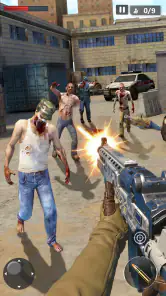
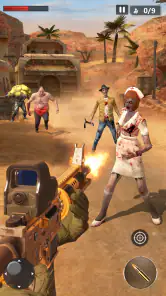
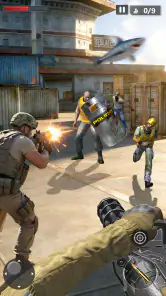
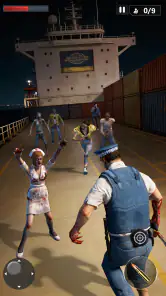
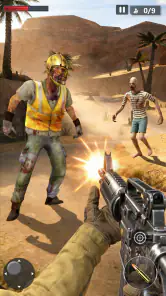
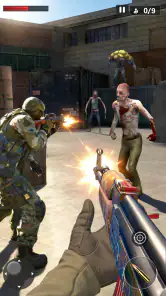
Analysis by Reviewed
Zombie Strike: Shoot Fire is the kind of adventure game I can pick up when I want a direct, action-focused escape rather than a long story or a complicated role-playing system. Its premise is easy to understand: the world has collapsed, zombies are everywhere, and my job is to keep humanity from being overwhelmed. That straightforward setup gives the game an immediate purpose, but the real question is whether its goals, unlocks, challenge and pacing are strong enough to keep me playing after the first burst of excitement.
My overall impression is positive, with an important qualification. I enjoyed the clarity of the experience: there is no need to spend a long time learning the world before getting involved. At the same time, players who want deep narrative choices, elaborate character building or a highly social survival game may find this a narrower experience. It works best when I treat it as a focused zombie-shooting adventure for short sessions, not as a replacement for a massive console-style campaign.
How the first goals establish the rhythm
The opening appeal comes from knowing exactly what matters. The apocalypse is not presented as a distant background event; it creates an urgent reason to act. In practical terms, that gives each early encounter a useful sense of direction. I am not wandering without a purpose. I am trying to survive, clear danger and become more capable of dealing with what comes next.
That simplicity is one of the game’s strongest early choices. A new player can understand the basic fantasy immediately, even without experience with this particular title. The short description, “Zombie Strike,” is blunt, but it accurately signals the compact action at the center of the experience. I would recommend it to someone who wants to start playing quickly instead of reading pages of instructions before the first meaningful decision.
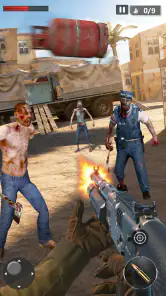
The first goals also serve as a test of whether the shooting feels satisfying enough to carry the game. In a zombie adventure, the enemies are familiar, so the game needs to make each confrontation feel purposeful. I pay attention to how much attention is required, whether targets feel manageable, and whether completing one objective makes me curious about the next. When those elements work together, even a simple mission structure can create a pleasant “one more round” effect.
A useful way to approach the early game is to avoid rushing through every objective simply because the theme suggests constant urgency. I found it more rewarding to use the opening stages to learn the pace of encounters and identify where I tend to waste shots or make careless moves. That small adjustment matters because later progress feels more controlled when I have learned the game’s basic rhythm rather than relying only on reflexes.
Why the early loop is easy to understand
The game’s accessible structure should appeal to players who are new to zombie action games. The fantasy is recognizable, the stakes are obvious, and the goal does not need much explanation. This makes it suitable for a quick session during a commute, a break or an evening when I want something more active than a puzzle but less demanding than a large open-world adventure.
There is also a practical benefit to a focused opening: I can tell fairly quickly whether the game suits my taste. If I enjoy direct combat and the pressure of defending against undead enemies, the early objectives provide a reason to continue. If I am looking for exploration, dialogue-heavy storytelling or a broad simulation of rebuilding society, the game’s central loop will probably feel too concentrated.
Progress signals and the value of moving forward
Progression is most effective when the game makes improvement easy to recognize. In my experience, the satisfaction here comes less from an elaborate narrative transformation and more from the feeling that each completed challenge has moved me further into the survival scenario. The game needs to make the next target feel worthwhile, because simply defeating another group of zombies is not enough on its own for every player.
I like progression systems that let me understand why I am continuing. In this case, the strongest motivation is the combination of immediate survival and the expectation that later encounters will ask more from me. That creates a useful chain: complete the current objective, become familiar with the demands of the next one, then decide whether I want to improve my approach before continuing.
One practical tip is to judge progress by consistency rather than by speed. If I finish a stage quickly but repeatedly make avoidable mistakes, I have not necessarily improved in a meaningful way. A better sign is being able to handle pressure with fewer panicked decisions. That mindset makes the game more rewarding and prevents the action from becoming a mindless rush through objectives.
The progression is also easier to appreciate when I play in short, deliberate sessions. A long uninterrupted run can make similar encounters blur together, while a brief session gives each completed goal a clearer place in my memory. I can return later with a specific intention, such as improving accuracy, handling a difficult section more calmly or seeing whether the next unlock changes how I approach combat.
Unlocks should change decisions, not only decorate the menu
Unlocks matter most when they alter the way I play. I do not need every reward to transform the entire game, but I do want new progress to create a reason to reconsider my strategy. If an unlock only feels like a number going up, the motivation becomes weaker. If it helps me approach a difficult encounter differently, it has practical value.
That is why I would advise new players not to chase every reward automatically. First, notice which improvements solve a problem you are actually having. If I am struggling because I react too slowly, an upgrade connected to handling pressure may matter more than an attractive option that does not address my weakness. This is a small but important trade-off: progress feels better when it responds to my play style rather than when I collect everything without a plan.
The game’s free entry also makes experimentation less intimidating. I can try the core experience without paying upfront, then decide whether its progression is engaging enough to justify optional spending. The presence of in-app purchases ranging from $0.99 to $49.99 per item means I would personally set a limit before buying anything. A free download can still become expensive if I make repeated impulse purchases during a difficult stretch.
Difficulty and whether the challenge feels fair
A zombie game needs pressure, but pressure is not the same as unfairness. The most enjoyable difficulty curve is one that teaches me what went wrong. When I fail, I want to understand whether I misjudged the situation, reacted too slowly or approached the encounter without enough preparation. That kind of failure encourages another attempt. A sudden wall with no clear lesson does the opposite.
Zombie Strike: Shoot Fire is best suited to players who enjoy gradually sharpening their reactions and decision-making. The early objectives provide room to settle into the controls and the combat rhythm, while later pressure gives those basic skills a purpose. I found that the experience becomes more interesting when I stop treating every encounter as a simple target-clearing exercise and start thinking about timing, attention and resourcefulness.
My main caution is that action games can become repetitive when the challenge changes only by adding more enemies or making situations more demanding without introducing a fresh decision. That is the point at which personal tolerance matters. Some players enjoy the familiar comfort of a reliable zombie-shooting loop; others need constant mechanical variety. I would place this game closer to the first group.
A realistic everyday scenario shows where it fits well. Suppose I have fifteen minutes before an appointment. I can play a compact session, focus on one immediate objective and stop without feeling that I have abandoned a complicated storyline halfway through. If I have an uninterrupted evening and want a richer adventure with exploration and character relationships, I would choose a different game instead.
How to make difficult sections less frustrating
My best advice is to treat a failed attempt as information rather than as a reason to spend immediately. First, replay with a calmer pace and identify the exact moment when control was lost. Then consider whether the problem came from rushing, poor positioning or failing to recognize the encounter’s pattern. This approach is especially useful in games with optional purchases, because it separates a genuine skill problem from a temptation to solve frustration with money.
I would also avoid beginning a session when I am already impatient. The game’s direct action can be satisfying, but repeated mistakes become more likely when I am trying to force progress. A short break often helps more than blindly repeating the same attempt. That is not a weakness unique to this title; it is simply more noticeable in a focused action loop where small errors can decide the outcome.
Pacing, repetition and the pressure to keep playing
Pacing determines whether the game feels like a compact adventure or an endless sequence of similar encounters. The strongest sessions are the ones where a goal arrives quickly, the action stays readable and progress gives me a reason to continue. The weaker moments are those where I feel I am repeating an action without gaining a meaningful new objective or decision.
The apocalypse theme naturally creates urgency, but the game should not rely on urgency alone. I am more likely to keep playing when the next challenge feels like a genuine step forward rather than an arbitrary delay. This is where progression signals matter: a visible sense of advancement can make a familiar encounter feel worthwhile, while a weak reward can make the same encounter feel like routine.
There is a trade-off between accessibility and variety. A simple loop is easy to learn and works well for short sessions, but it may not satisfy players who want a constantly changing set of systems. I appreciate the former quality, yet I would not recommend the game to someone whose main priority is a large number of radically different activities. The focused design is part of its identity, and it is also the source of its main limitation.
In-app purchases can add another kind of retention pressure. When progress slows or a difficult section appears, some players may feel encouraged to buy an item rather than practice or wait. I prefer to approach the game with a clear rule: enjoy the free progression first, and only consider a purchase if it adds genuine enjoyment rather than removing an artificial feeling of urgency. That keeps the decision under my control.
Who will stay engaged and who may leave early
This game is a good match for players who like zombie action, clear objectives and a survival mood without needing a large amount of narrative explanation. It is also a reasonable choice for someone who wants a free adventure game to test casually before committing more time. The mature age rating of 17+ is important here, so it is not something I would recommend as a family-friendly zombie game for younger players.
I would suggest skipping it if you dislike repeated combat, dislike pressure around optional purchases or need a strong story to motivate every session. Players who prefer slow exploration, deep customization or cooperative survival should look toward alternatives built around those priorities. This title is more appealing when I want immediate action and a compact progression path than when I want a broad, shared world.
Technical fit, value and long-term verdict
FIRE GAME is the developer behind this release, and the game currently stands at version 1.2.0. It runs on Android eight and later, which makes it accessible to people who are not using the newest phone. I would still pay attention to how comfortably my device handles extended action sessions, especially if it is older, because responsiveness matters more in a shooting game than it does in a turn-based adventure.
The game is free to download, which lowers the barrier to trying it. Its average rating is 4.5 from around 8.4 thousand ratings, and it has passed half a million installs. Those figures suggest that the basic concept has found a substantial audience, but they should not replace personal testing. A popular action loop can still be a poor fit for someone who wants a slower, more story-driven experience.
The mature 17+ rating also affects where and when I would play it. The zombie setting is clearly aimed at an older audience, and I would not hand it to a child simply because the download costs nothing. That is an easy detail to overlook when browsing quickly, but it matters when choosing a game for a shared device or a family account.
Compared with a conventional adventure game, this one puts more weight on immediate combat and less on wandering through a detailed world. Compared with a large survival game, it feels more focused and easier to approach in short sessions, but it does not offer the same appeal to players who want extensive crafting, social interaction or open-ended planning. Its place is between quick action entertainment and a more structured survival adventure.
My final judgement is that Zombie Strike: Shoot Fire succeeds when I use it for what it is: a direct zombie-shooting game with clear early goals, a progression loop built around continued improvement and enough challenge to make success feel earned. The game’s main weakness is the risk of repetition, especially for players who need constant novelty. Optional purchases also deserve restraint, because difficulty should encourage better play rather than automatic spending.
The best reason to try it is its focused, low-commitment action. I can start for free, learn the rhythm quickly and decide from actual play whether the goals and unlocks keep me interested. I would recommend it to an adult player who enjoys zombie combat and short, purposeful sessions. I would not recommend it to someone seeking a deep narrative adventure or a fully open survival simulation. For the right player, it is a straightforward way to spend a few minutes defending the last line of humanity without demanding a huge investment of time at the outset.
Pros
- Fast-paced shooting keeps short play sessions entertaining.
- Wide selection of weapons adds variety to combat.
- Simple controls make aiming and movement easy to learn.
- Zombie waves create a satisfying challenge as difficulty increases.
- Offline play is useful when you have no internet connection.
Cons
- Repeated missions can make the gameplay feel predictable over time.
- Frequent ads may interrupt the action between levels.
- Upgrading powerful weapons can require considerable grinding.
- Some levels may feel unbalanced for newer players.
- The game can consume noticeable battery during longer sessions.

- Category
- Adventure
- Version
- 1.2.0