World Robot Boxing
- 104.91K
- 4.5
- Installs
- 50.00M
- Price
- Free

Screenshots
Analysis by Reviewed
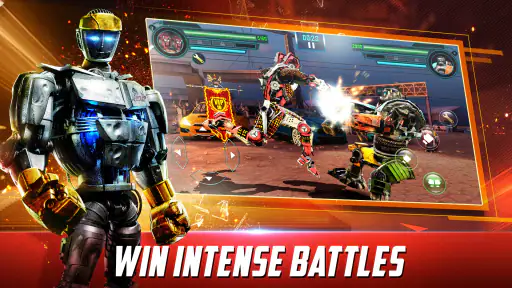
Robot fighting sounds simple until a match asks you to manage distance, timing, defense, and the personality of a machine that may not suit your usual style. That is where World Robot Boxing earns my attention. It is a free action game from Reliance Games that turns heavyweight robot battles into short, energetic bouts designed for touch controls. I found it easiest to enjoy when I treated each fight as a small tactical puzzle rather than a button-mashing contest.
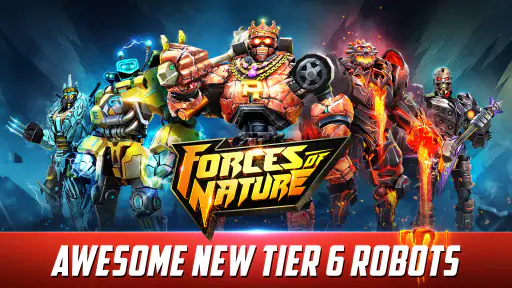
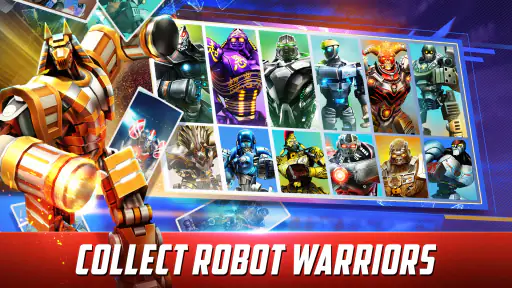
The appeal is immediate: choose a robot, enter the ring, read the opponent, and look for the opening that lets a punch land cleanly. The game has a large roster, with more than ninety robots available, so the experience is not limited to learning one fighter and repeating the same attack pattern. Some machines feel better for players who like pressure, while others reward patience and careful counterattacks. That variety gives the game a longer life than its basic premise might suggest.
How the current version feels to play
My first impression is that this is a game built for quick sessions. A single match can fit into a break, a commute, or the few minutes before going to bed, but the combat still asks for enough attention to prevent it from feeling like a completely passive experience. You can throw punches quickly, yet careless attacks leave you exposed. The best results come from watching the opponent’s movement and choosing when not to attack.
The touch controls are approachable, which matters on a phone screen. I did not need a long tutorial period to understand the basic rhythm, but becoming consistent was a different matter. The difference between tapping through a sequence and waiting for a useful moment becomes clear once opponents stop giving away easy openings. If you enjoy action games where reflexes matter but positioning still counts, this balance is one of the stronger parts of the package.
The robot roster also gives the game a useful sense of discovery. With so many machines to try, I would not choose a new fighter only because its appearance is impressive. I would spend a few matches learning how it behaves, then decide whether its rhythm matches my habits. That is a practical way to avoid wasting resources on a robot that looks appealing but feels awkward in your hands.
One of my favorite ways to approach the game is to keep a small rotation of robots rather than relying on a single favorite. This makes losses more informative. If one fighter struggles against a particular opponent, switching styles can reveal whether the problem is the matchup or my timing. It also prevents the early part of the game from becoming a repetitive loop with one familiar character.
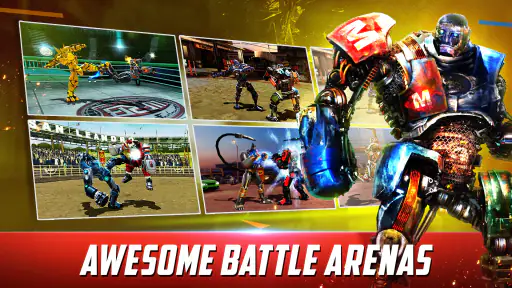
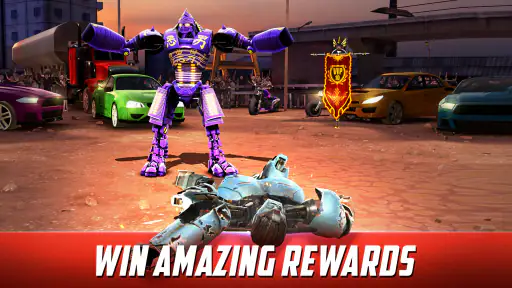
The presentation is clearly aimed at spectacle. The machines are the stars, and the ring gives each encounter a strong arcade-boxing identity. I would not approach this as a realistic boxing simulator. Its pleasure comes from the fantasy of controlling a powerful mechanical fighter, not from reproducing every detail of professional boxing. Players who want a grounded sports simulation may find the action too exaggerated, while fans of robot combat should feel at home quickly.
A useful routine for learning each robot
A simple habit improved my results: I used the first round with a new robot as an observation round whenever the situation allowed it. Instead of immediately spending every attack, I watched how quickly the machine recovered, how much space it needed, and which attacks left me vulnerable. This is more effective than judging a robot after one exciting knockout, because a fighter that looks powerful in a short exchange may be difficult to control over a longer battle.
I also found it helpful to change only one variable at a time. If I switched robots, changed my attack rhythm, and altered my defensive approach together, I could not tell what had improved. Testing a new machine against familiar opponents creates a clearer comparison. This is a small adjustment, but it makes the large roster feel manageable instead of overwhelming.
That approach is especially useful for players who are tempted to chase every new option. A broad selection is valuable only when you understand what separates the choices. Taking a little time to learn the feel of a robot turns the collection element into a genuine gameplay decision rather than a parade of cosmetic swaps.
What the long-running release history means
The game originally arrived on October 14, 2013, so it has had a long time to establish its identity. The current version is 113.113.120, which places the experience in a mature stage rather than at the beginning of its life. In practical terms, I see that maturity in the clear focus: the game knows it wants to deliver accessible robot fights, a substantial roster, and progression that encourages repeated sessions.
That history is useful context for newcomers. This is not a brand-new experiment that still needs to prove whether its central idea works. It is an established mobile action title that has remained recognizable while continuing to be presented in a current version. I would still judge it by how well its controls and progression suit me today, but its age explains why the overall structure feels familiar and well defined.
There is also a trade-off to a long-running game. New players may encounter a lot to absorb, especially if they try to understand every robot and every progression choice immediately. I recommend starting with the basic combat loop, selecting a small group of machines, and expanding gradually. The game becomes less confusing when I treat its depth as something to explore over time rather than a checklist to finish in one sitting.
For existing players, a current version number can be reassuring because it shows that the title is still being maintained as a living product. It does not automatically mean every part will feel modern, though. Some players may notice that the structure reflects mobile action design from an earlier era, particularly in the way progression and purchases sit alongside the core battles. That is not a deal-breaker for me, but it is worth recognizing before committing many hours.
Free to start, with an important spending decision
The game is free to download and play, which makes it easy to test without making an immediate purchase. That is a real advantage because the most important question is personal: do the controls, pace, and robot handling feel satisfying to you? A short trial can answer that better than any description.
In-app purchases range from $0.99 to $299.99 per item. The wide gap matters more than the lowest price. I would approach the store carefully, especially if I were playing on a shared device or letting a younger family member try the game. The Teen content rating is another reason to treat the game as an action title for older children and adults rather than as a universal family game.
My advice is to decide on a spending boundary before getting deeply involved. If progress begins to feel slower than I want, I would first ask whether I am enjoying the matches themselves or merely trying to reach the next unlock. That distinction protects the best part of the experience. If the fights are fun, the free starting point has value. If the main motivation becomes collecting everything as quickly as possible, the purchase structure can become a source of frustration.
This is also where the game differs from a traditional premium action game. A paid, one-time alternative may offer a cleaner experience for someone who dislikes purchase prompts or progression pressure. On the other hand, a free-to-start game is easier to sample and can provide more reason to return in short bursts. Neither model is automatically better; the right choice depends on whether you prefer convenience and ongoing goals or a more controlled, upfront experience.
Who will enjoy it most
I would recommend this game to players who like arcade action, mechanical characters, and battles that reward timing without demanding the complexity of a full console fighting game. It is particularly suitable for someone who enjoys experimenting with a roster and wants a game that can be played in short sessions. The large selection of robots gives collectors and tinkerers a reason to keep exploring after the first few matches.
It also works well for a player who wants a break from realistic sports games. The robot theme gives the fights a louder personality, and the exaggerated machines make it easier to accept a dramatic, game-focused approach to combat. If your ideal mobile action game is something you can open quickly, play a few bouts, and put away, this fits that use case better than a slower role-playing game with long conversations and extensive map travel.
A realistic everyday scenario would be a ten-minute wait at a station. I could play one match with a familiar robot, then use the next attempt to test a different approach. Because the game does not require me to build a large world in my head before playing, it suits those fragmented moments. I would not start a serious learning session in that situation, but I could maintain progress and gradually improve my reactions.
It is less suitable for someone who wants a calm, story-heavy experience or a precise simulation of boxing technique. It may also disappoint players who dislike free-to-play economies on principle. If you know that purchase options make you feel pressured, a premium game with a fixed cost would probably be a better fit, even if it has a smaller roster or fewer reasons to return.
Where it compares with other mobile action choices
Compared with conventional boxing games, this title places more emphasis on robot identity and arcade spectacle. You are not simply choosing between human athletes with different statistics or animations; the machines are the central fantasy. That makes it stand out in a crowded action category, though it also means the experience is less useful for someone seeking realistic footwork, authentic sports presentation, or a simulation-like career.
Compared with fighting games built around complex combo systems, the attraction here is accessibility. I can understand the basic actions quickly and focus on reading the opponent rather than memorizing a long list of inputs. The trade-off is that players who want highly technical competitive combat may eventually want a game with more demanding controls and tighter specialization.
Compared with collectible action games, the robot roster is a strong reason to keep playing, but I would not assume that collecting alone will carry the experience. The fights need to remain enjoyable. My best sessions came from trying to improve how I played, not from simply adding another machine to the lineup. That distinction helps set realistic expectations: the game offers variety, but the player still has to engage with the combat.
The audience size suggests that the concept has broad reach. The game has passed fifty million installs, holds a 4.5 average from around 2.3 million ratings, and has roughly 105 thousand written reviews. I read those figures as evidence that the core idea connects with many mobile players, not as a guarantee that every device, control preference, or spending style will suit it. Popularity can tell me a game is worth sampling; it cannot replace personal testing.
Small details that make the experience better
The first practical tip is to resist changing robots after every loss. A defeat can come from poor timing, unfamiliar reach, or attacking while exposed. If I switch immediately, I lose the chance to identify the real problem. I prefer to repeat a difficult matchup with the same machine once or twice, then make a deliberate change. This turns failure into useful information.
The second is to separate collection goals from combat goals. If I want to unlock or try more robots, I treat that as a long-term objective. During an actual match, I focus on spacing and openings instead of thinking about the next reward. This prevents the progression layer from distracting me from the controls that ultimately determine whether a fight feels satisfying.
The third is to use short sessions intentionally. The game is well suited to quick play, but rapid repetition can make mistakes feel automatic. After several losses, I would take a break rather than continue tapping with the same habit. Returning later with a clear head often helps more than forcing another attempt immediately.
A fourth useful distinction is between a robot that feels powerful and one that feels reliable. High-impact attacks can be exciting, but reliability matters when an opponent punishes missed timing. I would choose the machine I can control consistently for difficult progress, then use more unusual robots when I am experimenting. That gives the roster two purposes: dependable performance and variety.
Remaining friction and what I would watch
The biggest limitation is the tension between straightforward combat and a broad progression structure. The matches are easy to understand, but the larger experience can ask for patience. Players who want constant immediate access to every option may feel slowed down, while players who enjoy gradual discovery will see that same pacing as a reason to return.
The purchase range is another point I would keep in mind. Free access is convenient, but the presence of high-priced individual items means I would not play casually without checking my account settings and purchase habits. The game is most comfortable for me when I treat spending as optional rather than as part of the expected route through the roster.
I would also watch how well the current version continues to balance newcomers and long-time players. A mature game needs enough structure to reward people who have already invested time while remaining understandable to someone opening it for the first time. The current release shows that the title is still presented as an active product, but the real test for any returning player is whether the familiar combat still feels rewarding after the novelty of the robots has faded.
Another thing to watch is personal repetition. A large roster can delay boredom, but it cannot eliminate it if every match is approached in exactly the same way. I would keep the experience fresh by setting small goals: learn a new robot, win without rushing, or identify why a particular opponent keeps catching me. Those goals are more sustainable than simply trying to play longer.
Reliance Games has built a recognizable mobile action game around a clear fantasy, and the current version keeps that foundation intact. The result is not a perfect choice for everyone, especially players who dislike in-app purchases or want realistic boxing, but it is an easy recommendation for fans of accessible robot combat. I would start for free, test several machines, establish a spending limit, and decide based on the quality of the fights rather than the size of the collection.
After spending time with it, my honest view is that the game works best when played as a tactical arcade fighter with a long-term roster to explore. Its strongest feature is the combination of quick matches and meaningful robot variety. Its main weakness is the friction that can appear around progression and purchases. If that trade-off suits you, there is plenty here to make short sessions feel worthwhile; if it does not, a premium action game will likely be a more comfortable alternative.
Pros
- Fast-paced robot battles are easy to learn but remain satisfying to master.
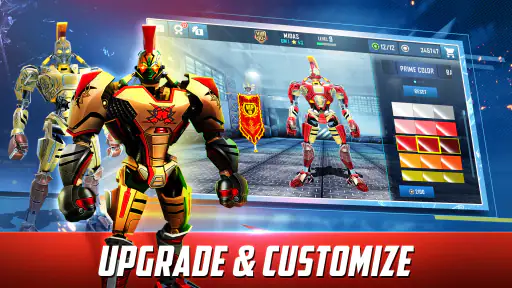
- A wide range of robots offers varied fighting styles and upgrade paths.
- Special attacks make matches feel dramatic and visually exciting.
- Offline play lets you battle without a constant internet connection.
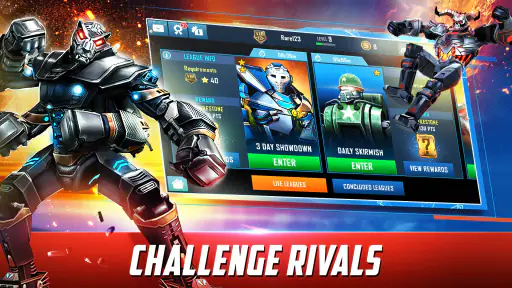
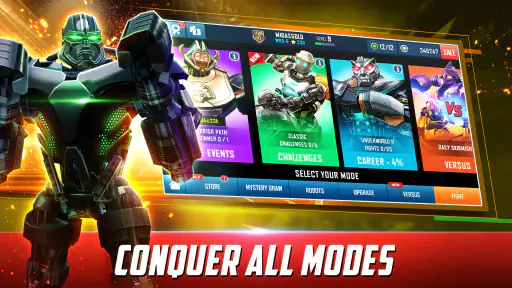
- Frequent events and challenges provide extra goals beyond standard fights.
Cons
- Energy limits can interrupt play and encourage waiting or spending.
- Upgrades may feel grindy when progressing through tougher opponents.
- Some battles can favor heavily upgraded robots over player skill.
- The interface may feel crowded with currencies
- offers
- and upgrade menus.
- Device performance can affect visuals and smoothness on older phones.

- Category
- Action
- Version
- 113.113.120