Wonder Skies
- 687.00
- 4.8
- Installs
- 100.00K
- Price
- Free

Screenshots


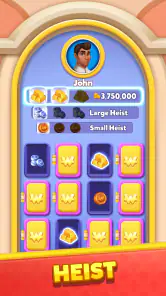

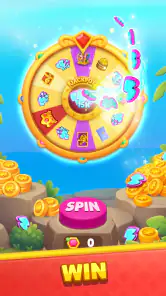

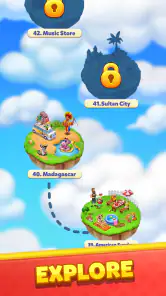

Analysis by Reviewed
Wonder Skies looks inviting from the first moment: it is an adventure game built around the idea of creating a world above the clouds. I spent time with it expecting a relaxed building experience, but what stood out was how much the game depends on learning its rhythm. It is not simply a matter of placing attractive objects and watching a floating island grow. Progress feels better when I plan a few moves ahead, keep an eye on what the game is asking me to do, and avoid spending valuable resources just because a new option appears.
That makes this a particularly interesting choice for players who enjoy gentle exploration mixed with construction. Fortune Mine Games has positioned the experience for a broad audience: the content rating is Everyone, the game is free to install, and its store presence shows a 4.8 average from around 5,300 ratings. Those details suggest strong early appeal, but they do not remove the need to decide whether this style of play suits you. If you want fast combat, a deep competitive system, or a completely uninterrupted offline-style experience, this may not be the right adventure game for you.
Getting past the first points of friction
The first place I would expect new players to get stuck is not a difficult puzzle. It is the transition between looking at the floating world and understanding what the game wants me to do next. The presentation encourages me to explore, while the progression usually rewards a more deliberate order of actions. I found that tapping through prompts too quickly made the early flow less clear, especially when I wanted to experiment instead of following the immediate objective.
My practical advice is to slow down during the opening section. Read each instruction before moving anything, notice which action unlocks the next step, and resist the urge to spend every available resource on decoration. In a game about building a personal sky world, decoration is naturally tempting, but early resources are more useful when they help establish a reliable routine. I had a smoother experience once I treated the first session as a tutorial for the game’s economy rather than as a race to make the island look impressive.
Another common sticking point is the difference between progress and appearance. A larger or busier-looking island is not automatically a healthier one. I found it useful to ask what each new construction actually contributes before committing to it. If an item advances an objective, opens a new area, or supports the next clear task, it deserves priority. If it only makes the island prettier, I usually postponed it until I had a comfortable reserve of resources.
The most useful early habit is to separate “needed now” from “nice to have.” That small distinction prevents a surprising amount of frustration. It also makes the game feel less demanding because I am no longer trying to complete every visible possibility at once.
What I check before blaming the game
Because Wonder Skies is a free mobile title, the quality of the session depends partly on the device and the way the game is being used. Before assuming that a slow response or interrupted load is a game-breaking problem, I close other demanding apps, make sure the device has room for the installation and its ongoing data, and restart the game cleanly. These are ordinary checks, but they matter more in a visually active building game than they do in a simple turn-based title.
The minimum operating-system requirement is Android 7.1, so older devices that technically meet that requirement may still deliver a less comfortable experience than newer phones and tablets. I would not judge the game after a single crowded session on an aging device. Instead, I would test it after a restart, lower background activity, and play for a short period while watching for repeatable problems. If the same issue appears under those conditions, it is easier to identify as a genuine compatibility or game-side concern.
Installation is free, but the game includes optional purchases ranging from $0.99 to $99.99 per item. That range is important when deciding how to approach the opening hours. I recommend turning the first session into a no-spend trial: learn the building loop, see how naturally progress arrives, and decide whether the pace feels enjoyable before considering any purchase. A free download should not be treated as a promise that every shortcut or convenience will also be free.
For families, the Everyone rating makes the game easier to consider than many adventure releases, but I would still explain the purchase setup before handing over a device. The age label tells me about the intended content level; it does not replace sensible account and payment controls. This is especially relevant if a child is attracted to the creative side and may tap through a purchase screen without thinking about its long-term effect.
A setup routine that saves time
My preferred setup is simple. I install the game on a device with a stable connection, launch it when I have enough uninterrupted time to understand the opening sequence, and avoid switching rapidly between apps while the first content is being prepared. I also keep the device charged, not because the game requires a special setup, but because interrupted sessions make it harder to tell whether a problem came from the game, the connection, or the phone itself.
After launching, I spend a few minutes learning where the game places its main objectives and resource information. I do not immediately redesign the island. I first complete the actions that teach the core loop, then I make one small personal change and return to the next objective. This gives me a useful baseline: I know what normal progress feels like before I start experimenting.
That baseline is valuable when something goes wrong. If an action worked before I changed the layout or left the game, I can retrace those steps instead of randomly tapping around. Mobile games often feel confusing when a player has no memory of the last successful action. Wonder Skies rewards a little observation because its appeal comes from gradual world-building rather than from constant urgency.
Recovering a stalled session without making it worse
When progress appears to stop, I first check whether the game is waiting for a specific action rather than failing. I revisit the current objective, inspect nearby interactive elements, and look for a task that I may have skipped. In my experience with this kind of guided adventure, a stalled feeling often comes from completing an attractive side action while overlooking the requirement that actually unlocks the next stage.
If the screen does not respond normally, I use a cautious recovery order. I wait briefly, leave the current view if the game allows it, and return to the same area. If that does not help, I close and reopen the game. I avoid repeatedly tapping purchase buttons or spending resources during a confused state. The goal is to restore a clear view of the current task, not to create extra changes that make the situation harder to understand.
A useful workflow is to keep a mental note of the last confirmed step. For example, I might remember that I completed a construction action, collected a reward, and then opened a new objective. If the next instruction does not appear, I know exactly where to resume checking. This is more effective than restarting after every minor delay, and it protects the sense of progress that makes a building adventure satisfying.
I also recommend separating a visual problem from a progress problem. If an object looks misplaced but the next task still advances, the issue may be cosmetic. If the objective remains locked after the required action, that is more serious. This distinction matters because unnecessary rebuilding can waste time and resources without solving the real issue.
How I manage resources and optional spending
The strongest practical lesson I took from Wonder Skies is that patience improves the experience. I do not spend immediately just because I can. I wait until I understand whether the purchase would solve a genuine bottleneck or merely satisfy the impulse to speed up a moment. This is particularly important in a game where the pleasure comes from watching a floating world develop over time.
I also avoid making several major changes in one session. If I expand, decorate, and alter the layout all at once, it becomes difficult to know which choice helped and which created friction. Making one meaningful change, then checking how the next objective behaves, gives me better control. It is a slower method, but it reduces the need to undo decisions.
Players who enjoy optimization may appreciate keeping a simple priority order: advance the current objective, preserve enough resources for the next obvious requirement, and decorate only after the progression path feels stable. Players who prefer creativity can reverse the emphasis once they have a reserve. Neither approach is wrong, but mixing them without a plan is where I found the most avoidable frustration.
The trade-off is clear. Free access lowers the barrier to trying the game, while the optional purchase range means some players will need discipline around convenience spending. If you enjoy earning progress gradually, the free starting point gives you room to judge the experience honestly. If you dislike any game that presents paid acceleration, even when purchases are optional, you may feel uncomfortable sooner than someone who treats them as a personal choice.
When the game is not the real problem
Not every interruption points to Wonder Skies itself. A weak connection can make a mobile session feel stalled, especially when the game is moving between menus or loading new content. A crowded device can also cause delayed touches or sudden returns to the home screen. I test for these possibilities by restarting the connection, closing background apps, and trying the same action again later rather than immediately concluding that my progress is lost.
Device age is another factor. Meeting the Android requirement means the game can install, but it does not guarantee identical comfort across every phone. Heat, limited free storage, and aggressive battery-saving settings can all affect a session. If the game behaves normally after the device cools down or after background processes are reduced, the phone is part of the explanation. That does not make the inconvenience imaginary, but it changes the most useful solution.
I am also careful with account and installation decisions. I do not uninstall in frustration before checking whether the game offers a safe way to retain progress, because reinstalling can introduce a separate problem. If a session is stuck, I try the least destructive steps first: close, reopen, reconnect, and repeat the last known successful action. That approach is slower than deleting everything, but it avoids turning a temporary issue into a permanent loss.
For a realistic everyday example, imagine playing during a commute, reaching a new construction task, and then losing a stable connection before the action finishes. I would not immediately buy a shortcut or rebuild the island. I would wait until I had a reliable connection, reopen the game, confirm the last completed objective, and only then continue. This routine keeps a small interruption from becoming an expensive or confusing detour.
Who will enjoy the floating-world approach?
I think Wonder Skies is best for players who like calm adventure games with a visible sense of development. The appeal is strongest when I have a few minutes to check an objective, make a considered improvement, and leave the world in a better state than I found it. It also suits people who enjoy creative ownership but still want guidance instead of a completely blank sandbox.
It is less suitable for someone seeking a traditional action adventure with constant movement and immediate challenge. It is also not my first recommendation for players who want a complex city simulator with detailed management at every level. Wonder Skies sits in a gentler middle ground: more directed than a pure creative toy, but less intense than an action-focused adventure.
Compared with a typical puzzle game, it gives me a stronger feeling of place and continuity, because my attention stays on the growth of one floating world. Compared with a conventional builder, it feels more approachable and adventure-led, with objectives helping me decide what to do next. The compromise is that players wanting unlimited control may find the guided structure restrictive, while players wanting instant rewards may find the gradual pace too patient.
The game’s broad age rating also makes it easier to share with a younger player, but I would still play the opening together. That lets me explain resource priorities and optional purchases instead of leaving the child to discover those choices by trial and error. For an adult looking for a relaxing evening game, the same opening can serve as a quick test of whether the pace feels soothing or simply slow.
My practical verdict after using it
Wonder Skies succeeds when I approach it as a steady world-building adventure rather than as a game to rush through. The floating setting gives it a clear identity, and the satisfaction comes from making small improvements that gradually feel connected. Fortune Mine Games has created a free experience with enough immediate charm to attract new players, while the 100K-plus install milestone shows that it has already reached a substantial audience.
Its limitations are equally practical. The guided progression can be unclear if I skip instructions, the experience may feel less comfortable on older hardware, and optional purchases require awareness because the individual items extend from $0.99 to $99.99. None of those points automatically disqualifies the game, but they shape who will enjoy it. I would skip it if I wanted a purchase-once adventure, a fast combat loop, or complete freedom from progression prompts.
The current version is 1.2.58, and the game was released on October 24, 2024, so I would keep the installation current before judging a problem as permanent. My final recommendation is to try it without spending, play slowly enough to understand the objective flow, and use the recovery steps above whenever a session seems stuck. If the idea of nurturing a personal sky world sounds more appealing than chasing high scores, Wonder Skies is worth a careful, no-pressure trial.
For me, the decisive question is not whether it can fill every kind of mobile gaming session. It cannot, and it does not need to. Its value is in giving me a manageable place to return to, improve piece by piece, and explore at my own pace. If that is the kind of adventure I want, I would recommend it to a friend; if I need speed, depth, or uninterrupted action, I would choose a different category altogether.
Pros
- Relaxed flight experience with simple controls for casual players.
- Beautiful sky environments make exploration enjoyable.
- Short play sessions work well for mobile gaming.
- Progression gives players goals beyond basic flying.
- Runs smoothly on many modern Android and iOS devices.
Cons
- Limited gameplay variety may make the experience feel repetitive.
- Some features may require in-app purchases or extra patience.
- Internet access may be needed for certain functions.
- Touch controls can feel imprecise during challenging maneuvers.
- The game may offer limited depth for experienced simulation fans.

- Category
- Adventure
- Version
- 1.2.58