Warhammer: Chaos & Conquest
- 3.92K
- 4.4
- Installs
- 1.00M
- Price
- Free

Screenshots
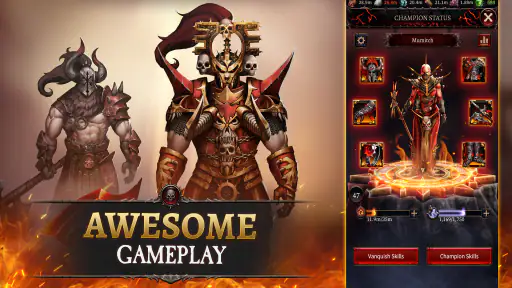
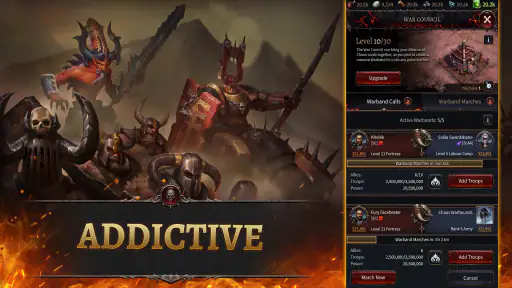
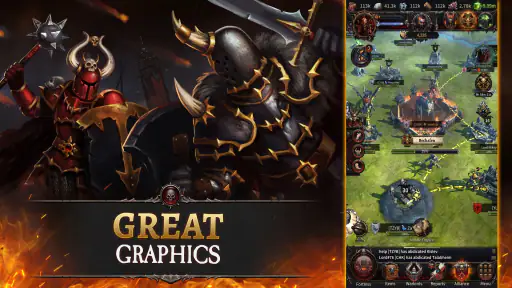
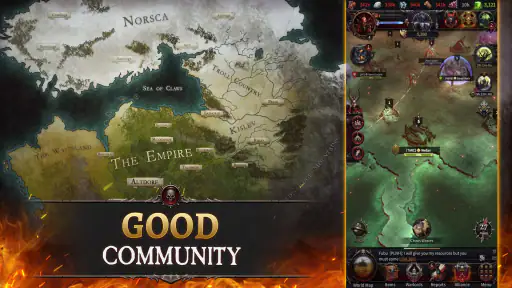
Analysis by Reviewed
Warhammer: Chaos & Conquest is a strategy game I found most interesting when I stopped treating it as a quick battle app and started viewing it as a coordination game. Its central appeal is building a force, working with an alliance, choosing when to commit resources, and protecting a citadel that can become the focus of larger conflicts. That combination gives every decision more weight than simply picking an army and pressing attack.
It is free to play, developed by Tilting Point, and aimed at players who enjoy a slower campaign rhythm rather than short, self-contained matches. The game is rated Teen, which fits its war-focused setting and darker Warhammer atmosphere. I would not recommend it to someone who wants an instant five-minute strategy puzzle, but I can see why it has attracted over 1 million installs and an average rating of 4.4 from around 46 thousand ratings.
Why alliance strategy is the real heart of the game
Power matters, but timing matters more
The most important capability here is the way individual progress connects to alliance warfare. You are not simply improving a personal roster in isolation. Your decisions make more sense when they support a wider plan: strengthening your position, helping an alliance prepare, deciding which target deserves attention, and making sure your own citadel is not left exposed.
That changes how I approach the game. In a typical mobile strategy title, I might spend resources whenever an upgrade becomes available because there is little reason to wait. Here, patience has a practical purpose. I want to think about what my alliance is trying to accomplish before committing everything to one improvement or attack. A large force is useful, but a badly timed force can be less valuable than a smaller one that arrives when allies need it.
The strongest part of the experience is the link between personal growth and group decision-making. It gives routine development a reason beyond watching numbers rise. An upgrade feels more satisfying when it helps me hold a position, contribute to an alliance plan, or prepare for a conflict that is still developing.
What the citadel changes
The citadel is more than a decorative headquarters. It gives the game a clear defensive priority. I have to think about what I am building, what I am protecting, and whether my current position is ready for pressure. That defensive layer makes the game feel less like a sequence of attacks and more like a contest over preparation.
This also creates a useful tension for mobile play. I can make progress in short visits, but I cannot always solve a strategic problem instantly. If my position is vulnerable, the right response may be to improve defenses or coordinate with allies rather than launch another attack. Players who enjoy planning around risk will get more from this than players who measure fun only by how many battles they can start in a session.
How the Warhammer setting affects the strategy
The Warhammer identity gives the game a harsher tone than a bright kingdom builder. The armies, citadel-focused conflict, and alliance language all support a world where conquest feels expected rather than optional. I liked that the setting gives the strategic choices a stronger personality, even though the underlying appeal still comes from resource decisions, preparation, and group coordination.
That atmosphere will not automatically make the game enjoyable for every Warhammer fan. Someone looking for a direct action game or a deep tabletop recreation may find this format more deliberate than expected. It is best understood as a mobile strategy interpretation built around long-term decisions, not as a replacement for a fast combat experience.
How it works in everyday play
The first sessions are about learning priorities
When starting, I would resist the temptation to spend every available resource immediately. The early game is a good time to learn which improvements support your larger plan and which ones merely make the account look stronger on paper. Because the game combines personal development with alliance conflict, early habits can influence how useful you become to other players later.
A practical approach is to keep one goal in mind for each session. One visit might be about improving your position. Another might be about preparing forces. A later visit could focus on coordinating around an alliance objective. This prevents the game from becoming a vague loop of collecting and upgrading without understanding why each action matters.
The version I reviewed is 5.0.1 and runs on Android from version 8.0 onward. That makes it accessible to many existing devices, although strategy games with persistent development can still feel less comfortable on older phones if the interface becomes busy or sessions run long. I would use a stable connection and keep notifications under control, because a game built around ongoing conflict can otherwise start demanding attention at inconvenient times.
Alliance participation is not the same as joining and forgetting
Joining an alliance is only valuable if I am willing to participate in its rhythm. The useful question is not just “Which alliance is strongest?” but “Can I contribute consistently to this group?” A highly competitive alliance may expect regular activity and quick responses, while a more relaxed group may suit someone who plays around work, school, or family responsibilities.
This is one of the less obvious trade-offs. A powerful alliance can make the game more exciting, but it can also make the experience feel like an obligation. I prefer to choose a group whose pace matches my actual schedule. Overcommitting creates frustration for both sides, especially when the strategy depends on several players acting at the right moment.
A simple routine that keeps progress manageable
My preferred routine would be to check the citadel first, review any immediate defensive concern, then look at alliance priorities before spending resources. After that, I would choose one development task and one strategic task rather than trying to improve everything at once. This order helps prevent a common mistake: investing heavily in personal growth while ignoring the position that makes that growth worth protecting.
I would also keep a small reserve instead of treating every resource as available for immediate use. The reserve is useful when an unexpected conflict changes the priority of the day. This is not a flashy tactic, but it is exactly the kind of habit that separates deliberate play from constantly reacting to whatever button is highlighted.
What a normal day might look like
Imagine I have ten minutes during a commute or lunch break. I can review my current development, check the alliance situation, decide whether my citadel needs attention, and queue a sensible next step. I do not need to begin a dramatic campaign every time I open the game. That makes it suitable for players who enjoy maintaining a strategic position across several short visits.
Later, with more time available, I can return to think through a larger decision. Should I reinforce my own position, support an alliance objective, or save resources for a conflict that may become more important? The game works best when these visits feel connected. If I only want isolated rounds with a clear beginning and end, the persistent structure may feel slow.
The best scenario for playing
It suits organized groups more than solitary optimizers
The strongest scenario is a group of friends or a well-matched alliance that enjoys discussing priorities and sharing responsibility. The game’s appeal grows when other players make the world feel active and when my choices have consequences beyond my own account. Even casual coordination can make development feel purposeful.
For example, a small group could divide attention between personal strengthening, defensive preparation, and supporting a shared objective. That does not require everyone to play constantly. It does require players to communicate honestly about availability and avoid assuming that every member can respond immediately.
This is also where the game differs from many familiar mobile strategy alternatives. A solo-focused title may give clearer control and faster feedback, while a short-match strategy game offers a cleaner sense of completion. Warhammer: Chaos & Conquest trades some of that immediacy for a more persistent social layer. If I want my decisions to matter over time and within a group, that is a worthwhile trade.
Who should avoid the alliance emphasis
I would skip this game if I dislike waiting for long-term development, defending a persistent position, or adjusting my plans around other players. It is also not the best choice for someone who wants a purely skill-based contest where every match begins with equal conditions. The attraction here comes from accumulated progress and strategic context.
Players who prefer a relaxed solo experience should be cautious as well. You can still make personal progress, but the game’s defining tension comes from the relationship between your citadel, your force, and the alliance around you. Ignoring that layer means ignoring much of what makes the game distinct.
When a different strategy game is better
If I have only a few minutes and want immediate action, I would choose a turn-based match game or a compact puzzle strategy title instead. Those formats usually provide faster conclusions and fewer ongoing commitments. If I want a detailed single-player campaign, a premium strategy game may also be a better fit because it can avoid the social pressure and purchase prompts common in free mobile games.
On the other hand, if I enjoy the Warhammer atmosphere, gradual development, and the idea of contributing to a larger alliance, this game offers a more appropriate type of engagement. The choice depends less on whether I like strategy in general and more on whether I like strategy that continues between sessions.
The trade-offs behind the free-to-play structure
Free entry makes trying it easy
The game costs nothing to download, which makes experimentation straightforward. I can see whether the alliance-centered approach suits me before deciding whether it deserves regular attention. That is especially useful for players who are curious about the setting but are unsure about committing to a persistent mobile strategy game.
There are in-app purchases ranging from $0.99 to $99.99 per item. That broad range is important to keep in mind from the beginning. Even if I intend to spend nothing, I would approach the purchase system carefully and decide on a personal limit before the game’s pressure points become persuasive.
My advice is to judge progress by the quality of decisions rather than by how quickly the account grows. Saving resources, choosing a useful alliance role, and protecting the citadel can be satisfying even when progress is slower. If the only enjoyable version of the game is the fastest possible version, the free-to-play structure may become irritating.
Speed and convenience are not always the same as strategy
Purchases can make some parts of a free strategy game feel more convenient, but convenience can blur the line between planning and acceleration. I prefer to ask whether an action improves my position or merely removes a delay. That distinction helps me avoid spending simply because waiting feels uncomfortable.
This is a particularly relevant consideration for competitive alliances. If the surrounding group treats rapid development as essential, a player who wants a completely no-spend experience may feel pressure. A casual alliance can reduce that friction, but choosing the right social environment becomes part of managing the game’s economy.
Long-term games need boundaries
Persistent strategy games can quietly expand into a daily habit. I would set a schedule for checking in rather than allowing every notification to dictate when I play. This keeps the game in its proper place and makes strategic sessions feel intentional instead of reactive.
The Teen rating also signals that this is not designed as a children’s game. The war setting and purchase options make it sensible for younger players to use appropriate account and spending supervision. For adults, the rating is less a concern than a reminder that the tone is built around conflict rather than gentle city decoration.
Who gets the most from it
The ideal player
I think the best match is someone who enjoys planning several steps ahead, likes the Warhammer mood, and wants a strategy game that remains relevant after closing the app. You should be comfortable with gradual progress and willing to contribute to an alliance without expecting every session to produce a dramatic victory.
You will probably appreciate it most if you enjoy asking questions such as: Is this the right time to attack? Should I strengthen the citadel first? Does my alliance need another attacker, a defender, or simply a reliable member who follows the plan? Those questions are more important here than chasing constant action.
The player who will gain less
I would not recommend it to someone who dislikes social coordination, has no patience for ongoing development, or wants a complete strategy experience without optional spending. It may also disappoint players who expect the Warhammer name alone to guarantee a tabletop-style simulation. The game’s identity is shaped by its mobile format and persistent alliance structure.
Likewise, if you regularly play in very short bursts with no chance to return later, you may struggle to appreciate the broader decisions. The game can accommodate brief check-ins, but its best moments come from seeing how those check-ins connect to a developing situation.
My final recommendation
After spending time with it, I see Warhammer: Chaos & Conquest as a focused choice for players who want alliance strategy rather than instant battles. Its best feature is not any single attack or upgrade; it is the way the citadel, personal development, and group planning reinforce one another. That design gives routine actions a reason and makes preparation feel as important as aggression.
It is not frictionless. The persistent structure can demand patience, alliance expectations may not suit every schedule, and the in-app purchase range means I would play with a clear spending boundary. Still, those limitations are manageable when the game is approached on its own terms.
The current release is 5.0.1, and the game has a substantial player presence, with over 1 million installs and around 3.9 thousand written reviews. I would recommend trying it free if you enjoy Warhammer’s darker setting and want a strategy game where cooperation, timing, and defense matter as much as building power. I would skip it in favor of a faster or more self-contained alternative if that sounds like work rather than play.
Pros
- Deep faction variety encourages different strategic playstyles.
- Alliance coordination adds a strong social and cooperative element.
- Regular events provide fresh objectives and rewards.
- Warhammer artwork and lore create an immersive atmosphere.
- City development offers satisfying long-term progression.
Cons
- Progress can feel slow without frequent play or resource spending.
- Large battles may become difficult to follow on smaller screens.
- Competitive rankings can favor highly active or paying players.
- Many upgrades require waiting timers before completion.
- The interface may feel overwhelming for newcomers at first.

- Category
- Strategy
- Version
- 5.0.1