Tuner Z - Track Days
- 73.00
- 4.1
- Installs
- 50.00K
- Price
- Free
Screenshots
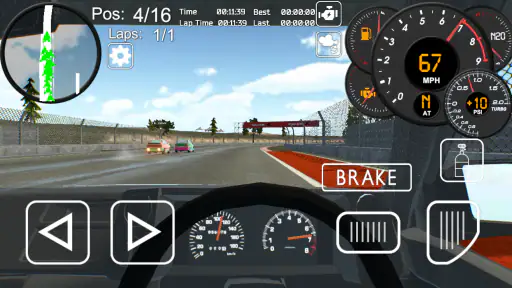
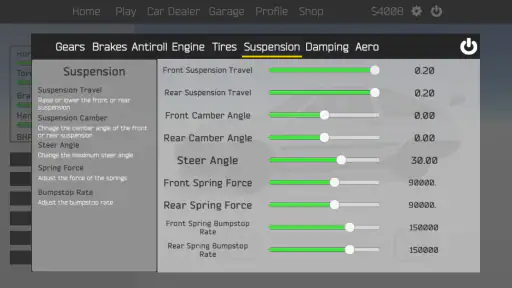
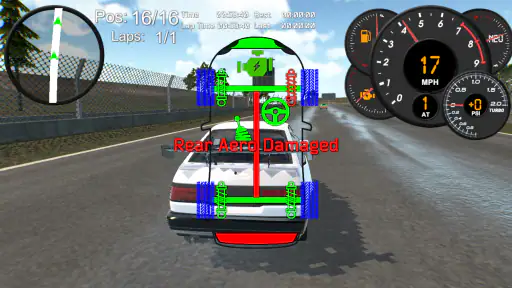
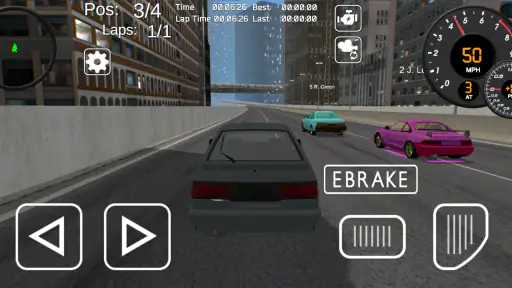
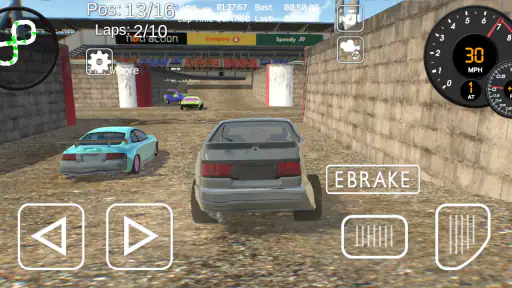
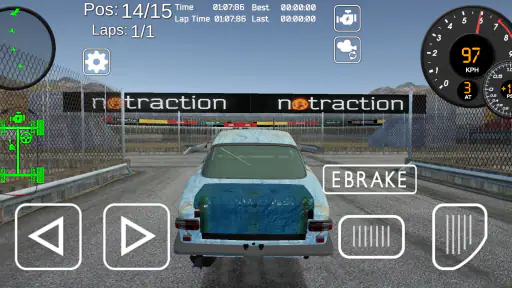
Analysis by Reviewed
I approached Tuner Z - Track Days as the kind of racing game that asks a more specific question than “How fast can you finish?” Its focus is tuning and track driving, so the real appeal is the relationship between preparation and performance. You are not simply choosing a car and holding the accelerator; you are deciding whether you enjoy adjusting a machine, learning how it reacts, and accepting that a setup that feels good in one situation may not be ideal in another.
That makes this a useful choice for players who want more involvement than a quick arcade racer usually offers. It is a free racing game from Notraction Games, available for players rated Everyone, with a 4.1 average from around 682 ratings and more than 50K installs. Those figures suggest a modest but established audience rather than a giant mainstream racing community. I would treat that as a reason to approach it with realistic expectations: this is best judged as a focused tuning simulator, not as a replacement for every large racing game on mobile.
My overall impression is positive, but conditional. I enjoyed the idea of working toward a car that suits my driving instead of relying on one universal configuration. At the same time, that approach can feel slower and less immediately rewarding than a conventional arcade racer. If you want instant action, the adjustment layer may seem like work. If you like experimenting, it is the part that gives the game its identity.
What to decide before downloading
Before downloading, I’d decide whether I want a racer that rewards patient experimentation or one that delivers instant action. That distinction matters more here than the free entry point, because the tuning-focused approach asks for attention across several sessions. With that expectation set, it becomes easier to see what the game does especially well.
First ask whether tuning is part of the fun
The most important decision is not your phone or your racing experience; it is your patience with setup work. A full car-tuning concept sounds attractive, but tuning only becomes meaningful when you are willing to test changes rather than expecting every adjustment to produce an obvious improvement. I found the strongest reason to keep playing was the small process of noticing how a car behaved, changing my approach, and returning to the track with a clearer idea of what I wanted.
That is different from a typical pick-up-and-play racer. In a lighter arcade game, the car often has a predictable personality and the main challenge is steering cleanly. Here, the appeal is more analytical. You may spend part of a session thinking about control rather than simply chasing speed. For me, that made each successful run feel more earned, but it also meant the game demanded more attention than a casual five-minute distraction.
Think about your preferred racing rhythm
I would divide mobile racing players into three broad groups. The first wants short bursts of spectacle, simple controls, and immediate rewards. The second wants a structured career experience with a large collection of cars and lots of progression. The third enjoys the mechanical side: trying a setup, observing the result, and gradually finding a driving style that works. Tuner Z - Track Days is most naturally aimed at that third group.
More From Our News Desk

Weather by Xiaomi Review: Clear at a Glance, Less Clear Up Close

X Under Pressure: Can It Recover When Posting Goes Wrong?

Clash of Clans Is Won Between the Battles

Android Auto Makes the Case for Quieter Car Software

MobiOffice: Transforming Mobile Productivity with Seamless Integration

EA SPORTS FC™ Mobile Soccer: Redefining Mobile Sports Gaming
It can still work for the second group, especially if you enjoy building a personal project over time, but I would not choose it solely because you want a huge content catalogue. The game’s strongest selling point is its tuning-and-racing relationship, not the promise of being everything at once. If your ideal session involves testing a change and then learning a circuit more carefully, you are looking in the right direction.
Check the practical fit
The game is free to download, which makes it easy to try without committing money at the start. It includes optional in-app purchases ranging from $1.49 to $10.99 per item, so I would decide in advance whether you are comfortable treating purchases as optional support or whether you prefer to play without spending. I generally recommend beginning with the free experience and seeing whether the driving itself holds your attention before considering anything extra.
It requires Android 9 or later, and the current version is 0.9.6.4.9. That is worth checking before you install, particularly if you use an older device. I also prefer to leave some storage and battery headroom for a racing game rather than installing it on a phone that is already struggling with demanding apps. Even when a game starts correctly, a crowded or aging device can make precise driving less comfortable.
A realistic everyday use case
Imagine having twenty minutes before leaving for work or while waiting for an appointment. A standard arcade racer would probably be easier if your only goal were immediate excitement. With this game, I would use that time for a focused routine: run a familiar track, identify one problem, make one meaningful setup change, and test it again. That gives the session a purpose without requiring a long uninterrupted campaign.
On a quieter evening, the same approach can expand into a longer experiment. I might keep the car mostly unchanged, learn where I am losing time, and then alter one area rather than changing everything at once. That “one change at a time” habit is one of the most useful ways to enjoy a tuning game because it helps you understand cause and effect. If you adjust several things together, a faster or slower result becomes much harder to interpret.
Where the game wins
For me, the game wins when the car’s behavior becomes part of the challenge rather than a detail between races. I’ll look at why that creates lasting appeal for players who enjoy testing and learning, and why a consistent setup can be more satisfying than chasing one unusually fast run. The same focus, though, naturally makes other kinds of racing games a better fit for some people.
It gives racing a mechanical reason to continue
Many racing games rely on a loop of unlocking, upgrading, and moving to the next event. That can be satisfying, but it can also make the driving feel like a short step between rewards. What I like about Tuner Z - Track Days is the possibility of making the driving itself the project. A run is not only a result; it is feedback about whether the car and the driver are working together.
That distinction matters when you have already played several racers with familiar acceleration, braking, and upgrade routines. Instead of asking only which car is strongest, the game encourages a more personal question: which setup helps me drive consistently? A technically quick configuration is not automatically the best choice if it makes me overcorrect, miss braking points, or lose confidence through corners.
Experimentation is more valuable than blindly chasing maximum speed
My practical advice is to avoid treating every tuning screen as a hunt for the single “correct” setting. A setup should serve a purpose. If the car feels nervous, prioritize control and consistency. If it feels dull, look for a change that makes your inputs more responsive without turning every mistake into a spin. The exact adjustment process is less important than keeping your experiments deliberate.
This is also where the game can teach a useful racing habit: consistency usually beats one spectacular run. I would rather complete several clean laps with a predictable car than occasionally produce a fast lap while fighting the steering. That mindset is easy to lose in competitive racing games, where speed is constantly emphasized. Here, the tuning theme gives you a natural reason to value repeatable control.
It suits players who enjoy learning through feedback
A generic description might tell you that the game combines tuning and racing, but the meaningful benefit is how that combination changes your attention. I found myself watching for patterns: whether a mistake happened under braking, whether the car felt unsettled when changing direction, and whether a setup helped everywhere or only in one section. This turns a race into a small problem-solving exercise.
That makes the game particularly appealing to players who enjoy driving games but do not necessarily want competitive multiplayer pressure. You can create your own goals: improve a weak corner, make a car easier to control, or find a balance between speed and confidence. Those goals are more satisfying when you define them yourself, although players who need constant external rewards may find the experience less compelling.
The free entry point lowers the risk
Because the game is free, I can recommend trying it to anyone curious about tuning without asking them to buy a premium racing title first. The Everyone age rating also makes it broadly accessible from a content-rating perspective. That does not mean every player will enjoy the same level of mechanical involvement, but it does make the initial decision straightforward: install it, spend time with the driving, and judge whether the tuning loop feels rewarding.
The audience size also gives the game some useful context. Around 682 ratings and 73 written reviews are enough to show that people have tried it, while over 50K installs indicate that it is not an unknown experiment. I would still avoid assuming that its community or content scale matches the largest racing franchises. Its value is more likely to come from the specific style of play than from sheer scale.
Three habits that make the experience better
- Change one variable at a time. If you alter several parts of a setup together, you lose the ability to tell which decision helped. A slower, controlled testing routine is more informative than constant random adjustments.
- Judge a car by repeatability. A setup that produces one impressive run but causes frequent errors may be worse for your actual progress than a calmer configuration that you can drive cleanly.
- Use a problem-first workflow. Before opening the tuning options, name the issue you want to solve: unstable cornering, weak braking confidence, or difficulty maintaining a line. This prevents tuning from becoming aimless menu browsing.
These habits are not merely ways to make the game harder. They reduce frustration. When a run goes badly, you have a method for understanding why instead of immediately blaming the car or making a complete series of changes that creates a new problem.
Where another racing game may fit better
A different racer may be preferable if I want quick spectacle, a collection-led progression loop, or a more demanding simulation experience. Choosing between those styles is less about declaring one superior and more about matching the game to the time and attention I have. That choice also has a practical cost beyond the download itself.
Arcade alternatives are better for instant entertainment
If you usually play racing games in short bursts and want immediate speed, a conventional arcade racer may be a better match. Those games generally make the first few minutes clearer: choose a vehicle, follow the course, and enjoy the spectacle. Tuner Z - Track Days asks for more attention to the relationship between setup and handling, so it may feel too deliberate when you are tired or only have a moment to spare.
I would especially skip it if the phrase “car tuning” sounds like a barrier rather than an attraction. The game’s central idea cannot be separated from that involvement. You might still enjoy the races, but you will be ignoring the feature that gives the experience its character. In that case, a simpler racer would probably provide more fun with less friction.
Large progression racers may suit collectors better
Some players want a broad progression structure, a long list of vehicles, and a constant stream of unlocks. If collecting is your main motivation, a larger category-leading racing game may fit more naturally. Tuner Z - Track Days is not the choice I would make purely for a massive content ecosystem. I would choose it when I want the car I am driving to feel like a project I understand, not just another item in a collection.
This is an important trade-off. A bigger racing game can offer more variety and a more obvious long-term roadmap, while a focused tuning game can make individual driving decisions feel more personal. Neither approach is automatically better. It depends on whether you measure value by the amount of content available or by how much attention each car and run can hold.
Simulation purists should keep expectations measured
The word “simulator” can create expectations of deep realism, highly detailed physics, or a complete recreation of professional motorsport. I would not download this game assuming it will replace a dedicated simulation platform. Its appeal is the combination of tuning and track-oriented racing on a mobile device, not a guarantee that it reproduces every aspect of real-world vehicle behavior.
For me, the best way to approach it is as an accessible tuning-focused racing experience. That keeps the comparison fair. If you want a mobile game that lets you think about setup and then immediately test your decisions, it has a clear reason to exist. If you want exhaustive realism above all else, you should investigate a more specialized alternative instead.
Control preference can decide the outcome
Racing games are unusually sensitive to control comfort. A player who enjoys the handling can forgive a slower progression system, while a player who dislikes the input method may abandon even an excellent game. I recommend spending enough time with the default controls before making a judgment, then deciding whether your issue is genuine handling difficulty or simply unfamiliarity.
There is also a difference between a car feeling demanding and a car feeling unfair. A demanding car encourages cleaner inputs and better planning. An unfair-feeling car makes you feel disconnected from your decisions. If your first sessions are rough, I would test the same situation repeatedly and make small setup changes before deciding. That process is more revealing than judging the game from one frustrating race.
The real cost of switching to this style of racer
Switching to a tuning-centered racer means investing time in observation, repetition, and controlled changes, not just deciding whether to spend on optional items. I’ll consider when that effort pays back in a more personal driving experience and when it becomes needless friction. From there, the recommendation depends on the kind of player picking up the phone.
Your time becomes part of the investment
The financial entry point is simple because the game is free, but the larger cost is attention. A tuning-focused racer rewards players who are willing to learn its behavior. You may need to repeat a track, remember what changed, and accept that progress is not always visible as a new unlock. If you are switching from a purely casual racer, that can feel like extra effort.
I see that effort as worthwhile when I want a game that gives me something to think about after a race. It is less worthwhile when I am looking for background entertainment. Before installing, decide whether you want a driving toy or a small driving project. The former may be better served elsewhere; the latter is where this game becomes interesting.
Optional purchases deserve a personal boundary
The available in-app purchases range from $1.49 to $10.99 per item. I would not make a purchase simply because a setup feels difficult or because progress seems slower than expected. First, learn whether the core driving loop is enjoyable without spending. If it is, then any purchase should have a clear purpose in your own budget rather than being an emotional response to a disappointing run.
For families, the Everyone rating makes the game broadly approachable, but the purchase range is still worth discussing before handing the device to a child. A simple rule such as “play for free unless we agree otherwise” avoids turning a racing session into an accidental spending decision. That is sensible advice for any free-to-play game, but it matters especially when the game’s appeal grows gradually rather than appearing immediately.
Switching requires changing how you evaluate progress
In a traditional racer, progress may be easy to recognize: a new event opens, a vehicle becomes available, or a reward appears. With this style of game, progress can be more subtle. You may notice that you brake later without panic, recover from a mistake, or complete several clean laps with fewer corrections. Those improvements are easy to overlook if you only measure success by visible rewards.
I recommend keeping a simple mental note of one driving problem per session. For example, decide that today you will focus on entering corners more smoothly. That gives the session a measurable purpose and helps the tuning system feel connected to your own improvement. It also prevents the common mistake of changing the car when the real issue is an inconsistent driving habit.
My recommendation for different players
My recommendation comes down to whether I find the tuning process itself enjoyable after the novelty of a new racer wears off. I’ll separate the players likely to make that routine part of their play from those who would be happier elsewhere, while keeping the decision grounded in everyday use rather than racing-game theory. That makes the game’s lasting value easier to judge.
Who should install it
I recommend Tuner Z - Track Days to players who like the idea of a tuning-focused racing game and want their car’s behavior to be part of the challenge. It is a good fit if you enjoy testing changes, learning tracks gradually, and choosing consistency over flashy but unreliable runs. It is also a sensible free download for curious players who want to explore this category without paying up front.
I would give it a fair trial on a device running Android 9 or newer, using several sessions rather than one quick race. The current version, 0.9.6.4.9, is the version to look for when checking compatibility. More importantly, pay attention to whether the tuning loop makes you curious. If you find yourself wondering what a different setup will do, the game is probably offering the kind of engagement it was designed to provide.
Who should skip it
I would steer away from it if you want a highly cinematic arcade experience, a giant collection-first progression system, or a strict professional simulator. It may also be a poor fit if you dislike repeating races to understand a car. The game’s strengths require patience, and no amount of free access changes that basic trade-off.
Players who prefer not to deal with optional purchases should also decide whether they are comfortable with a free game that offers items between $1.49 and $10.99. You can make that decision before playing, and I think that is the healthiest approach. Enjoy the driving first; treat spending as separate and optional.
My final view
After looking at it as a decision rather than a simple recommendation, I think Tuner Z - Track Days earns its place among mobile racing games because it has a clear personality. It is not trying to win every category. Its strongest idea is that tuning should change how you experience the track, and that idea gives the races more meaning than a basic speed contest.
My recommendation is to try it if you want a car you can learn, not just a car you can select. Start free, make controlled changes, and judge the game by how much you enjoy the testing process. If that process feels rewarding, the modest audience and focused scope will matter less. If you only want instant racing action, choose an arcade alternative and save yourself the adjustment period.
Notraction Games has created a game with a specific audience in mind, and I appreciate that focus. I would not call it the universal racing choice, but I would recommend it to a friend who enjoys mechanical experimentation and track-day thinking. For that player, Tuner Z - Track Days offers a more thoughtful kind of mobile racing—one where improvement comes from understanding the car as much as from pressing the accelerator.
Tuner Z - Track Days Frequently Asked Questions
Is Tuner Z - Track Days free to download, and does it include in-app purchases?
Tuner Z - Track Days is free to download, so you can try its racing and car-tuning experience without an upfront purchase. It also offers optional in-app purchases, with items priced from $1.49 to $10.99. Consider whether you are comfortable with in-game spending before downloading, particularly if the game will be used by someone who may make purchases on your device.
Who developed Tuner Z - Track Days, and what kind of game is it?
Tuner Z - Track Days is a racing game developed by Notraction Games. Its focus is car tuning and track driving, making it a natural fit for players who enjoy working on a vehicle as well as taking it onto a circuit. Rather than being only about quick races, the experience is built around improving a car and seeing how those changes affect its performance on track.
What is Tuner Z - Track Days?
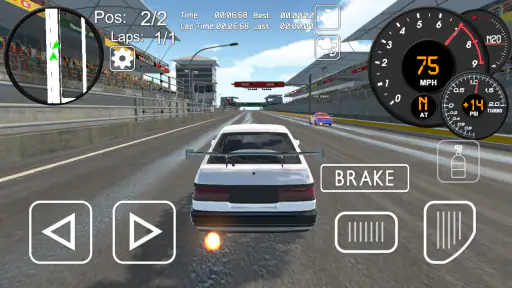
Tuner Z - Track Days is a racing-focused game centered on tuned cars, track driving, and performance customization. From the first sessions, the experience feels aimed at players who enjoy improving a vehicle and testing it on demanding circuits rather than simply completing short arcade races. You can drive, adjust your setup, and work toward better lap times while building a more competitive car.
Can I play Tuner Z - Track Days offline?
The game may allow some driving and customization features without a constant internet connection, but offline availability can depend on the specific mode, device, and current version. Online services may still be required for updates, advertisements, cloud features, leaderboards, or other connected content. It is best to launch the game once while connected and check which menus remain available after switching to offline mode.
Does Tuner Z - Track Days offer car customization and tuning?
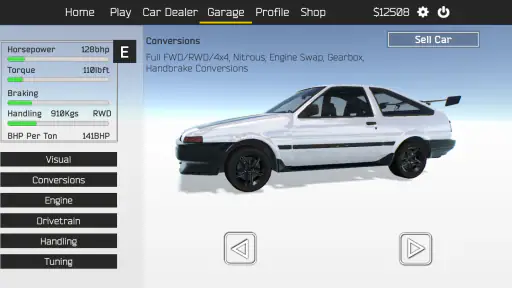
Customization and tuning are an important part of the game’s appeal. Players can generally focus on improving a car’s appearance and performance, then test those changes on the track. The most useful upgrades are not always the most expensive ones, because handling, acceleration, braking, and stability must work together. Expect to experiment with settings instead of relying on one universal setup.
Pros
- Simple interface makes lap-time tracking quick to start at the circuit.
- Useful for comparing sessions and monitoring progress over time.
- Designed around track-day driving rather than general road navigation.
- Can help organize vehicle and session data in one place.
- Practical companion for drivers focused on improving consistency.
Cons
- Accuracy may depend on your phone’s GPS quality and placement.
- Battery usage can increase during long sessions with tracking enabled.
- Limited value if you rarely attend circuits or timed driving events.
- Some features may require extra setup before your first track session.
- Track data can be affected by weak signal or difficult circuit layouts.
- Category
- Racing
- Version
- 0.9.6.4.9