Truck Simulator EVO: Drive USA
- 835.00
- 4.6
- Installs
- 1.00M
- Price
- Free

Screenshots
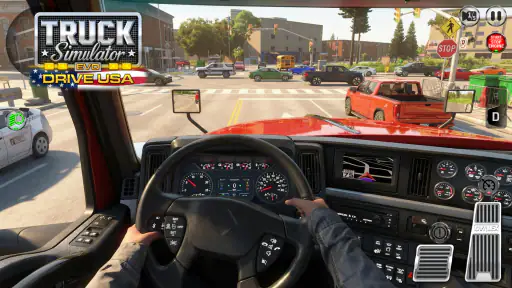
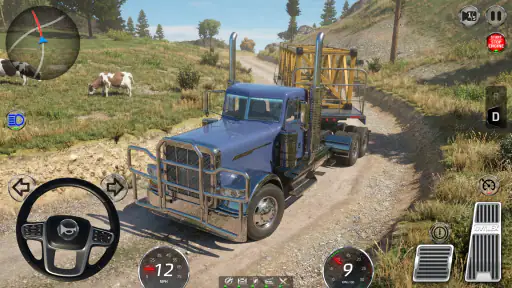
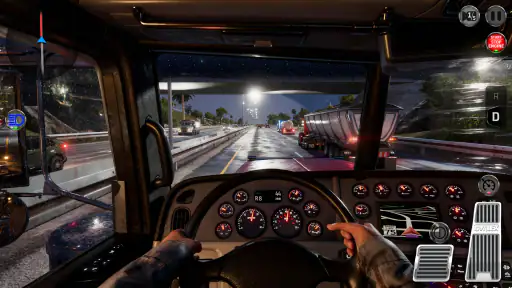
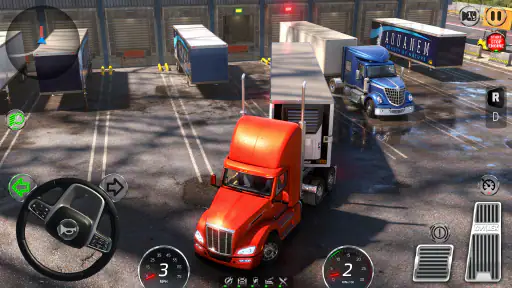
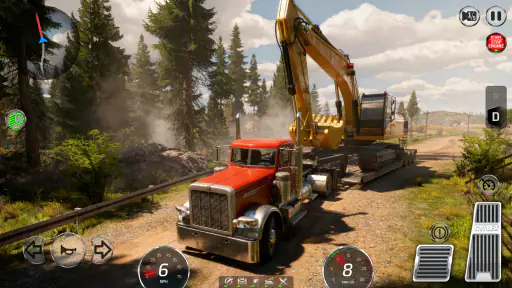
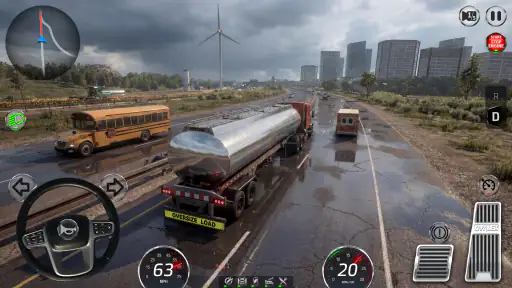
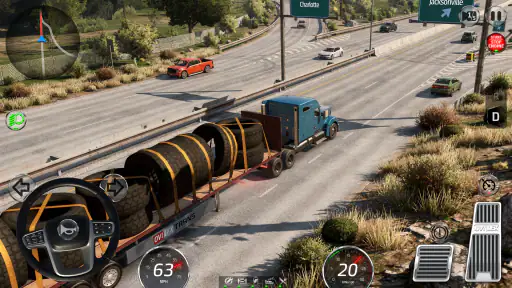
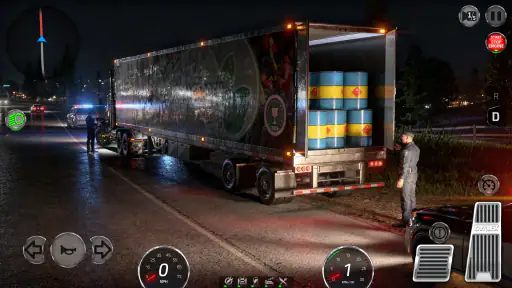
Analysis by Reviewed
Truck Simulator EVO: Drive USA is the kind of driving game I open when I want a slower, more deliberate session rather than a quick arcade race. Developed by Ovidiu Pop, it places the focus on hauling cargo through American cities and along highways, with the appeal coming from planning a trip, keeping the truck under control, and finishing a delivery without treating every road like a racetrack. It is a simulation game, but it remains approachable enough for casual players who enjoy large vehicles and long routes.
I found the basic idea easy to understand: choose a job, drive the assigned truck, follow the route, and arrive with the delivery intact. The satisfaction comes from the small decisions between those steps. I have to judge turns earlier, manage speed before bends, and leave more room when traffic or road geometry makes a maneuver awkward. That gives the game a different rhythm from conventional racing titles, where acceleration and overtaking are usually the whole point.
The game is free to download and is suitable for Everyone, which makes it easy to recommend to families or players who want a relaxed vehicle simulator without starting with a complicated setup. It requires Android 8.0 or later. Its current version is 1.2.55, and the game has passed one million installs with an average rating of 4.6 from roughly sixty thousand ratings. Those figures suggest a healthy audience, although popularity alone does not guarantee that its pace will suit every player.
How I approach a delivery from the first menu to the final turn
Building a reliable baseline workflow
My most dependable routine begins before the truck moves. I first look at the job as a complete drive instead of tapping through immediately. I want to know whether I am in the mood for a short practice run or a longer trip that asks for more concentration. That simple pause prevents the common mistake of beginning a route casually and then becoming impatient halfway through it.
Once the drive starts, I treat the first part as a calibration lap. I check how quickly the truck responds to steering, how much space it needs for a turn, and how confidently I can brake. Every truck simulator feels slightly different in its controls, and assuming that one familiar control style will work perfectly can lead to avoidable mistakes. A few quiet moments at the beginning are more useful than trying to recover from a bad corner later.
I also keep my speed conservative near junctions and city streets. Highways invite faster driving, but a heavy vehicle needs more preparation than a small car. I begin slowing before the turn looks urgent, especially when the route bends after an intersection. This is not merely a role-playing habit; it gives me more time to correct steering and reduces the chance that a delivery becomes a frustrating sequence of recovery attempts.
Navigation deserves attention as well. I do not stare at the route display continuously. Instead, I glance at it when the road layout changes, then return my attention to the lane and the next maneuver. That rhythm works better for me than trying to memorize an entire journey. It is particularly useful when moving from open highway sections into denser urban roads, where a missed turn can be more disruptive than a slightly slow arrival.
A realistic everyday use case is a short evening session after work. I can choose a manageable delivery, use the first few minutes to settle into the controls, and play without needing the constant reactions demanded by a racing game. The slower tempo can be calming, but only if I accept that the objective is controlled progress rather than speed. If I approach it expecting immediate excitement, the same deliberate design may feel uneventful.
Settings that are worth checking before judging the game
My first recommendation for a new player is to test the available control options rather than accepting the initial arrangement as permanent. Steering by touch, tilt, or another offered method can produce very different results, and the best choice depends on how steadily you hold the phone and how much screen space you need for the road view. I prefer the option that lets me make small corrections without covering important visual information.
Control sensitivity is another setting worth treating as a practical tool. If the truck swings too sharply with a small input, I reduce the intensity if the game allows that adjustment. If the vehicle feels unresponsive, I make the opposite change. The goal is not to find a universally correct value; it is to create a range where gentle movements produce gentle lane changes and larger inputs remain available for tight turns.
Camera choice can change the difficulty more than a new player might expect. A view that shows more of the road helps with anticipation, while a closer perspective can make the truck feel more immediate but may reduce awareness of surrounding space. I switch views when practicing difficult maneuvers instead of forcing one camera to handle every situation. A wider view is often more useful before a turn, while a closer view can make ordinary cruising feel more connected to the vehicle.
Audio settings also deserve a quick visit. I like keeping enough engine and road feedback to understand what the truck is doing, but I lower anything that competes with concentration during a long drive. This matters when playing in a quiet room or using headphones. The right balance makes the journey feel more physical without turning sound into a distraction.
Performance settings are important on older or less powerful phones. If the picture feels unstable, I would rather reduce visual detail than continue with delayed steering or uneven motion. A simulator depends on timing, particularly when lining up with a narrow turn. Smooth control is more valuable than maximum graphical polish, and this is one of the first trade-offs I would make before deciding whether the game is enjoyable.
The game is free, but optional in-app purchases range from $0.99 to $44.99 per item. I see that as a reason to decide on a personal spending boundary before playing for a long time, not as a reason to avoid the game automatically. Someone who only wants occasional drives can treat the free entry point as sufficient, while a committed player should consider whether optional purchases add meaningful value to their own routine.
Faster patterns that preserve control
Experienced play in a truck simulator is not about holding the accelerator down. It is about removing unnecessary corrections. I keep the truck positioned early, brake before the corner, and use smaller steering movements through the turn. This pattern feels slower at first, but it usually produces a cleaner exit and avoids the repeated steering that makes a large vehicle wander across the road.
I also divide a route into three mental zones: preparation, maneuver, and recovery. Preparation is where I reduce speed and choose my line. Maneuver is the turn, merge, or lane change itself. Recovery is the moment after the obstacle, when I straighten the truck and return to a stable pace. Thinking this way prevents me from accelerating before the truck is properly aligned.
When a delivery includes a long highway stretch, I use it as a practice area for consistency. Rather than constantly changing speed, I aim to maintain a comfortable pace and make only small lane corrections. This reduces fatigue and helps me notice whether my steering input is too aggressive. The highway is not empty time; it is where I can develop the habits that make city driving easier.
For city sections, I look farther ahead than the next vehicle. I want to identify the turn after the immediate turn, because a truck may need to occupy a wider line and cannot always correct at the last second. If I wait until the corner is directly in front of me, I have already surrendered much of my room to maneuver. Early positioning is one of the most useful skills I have carried from one delivery to the next.
Another practical habit is to avoid restarting too quickly after a mistake. I first ask whether the truck is still controllable and whether the route can be completed safely. A missed approach or awkward corner can become useful practice if I slow down and understand what caused it. Restarting is appropriate when the mistake has made the delivery impractical, but doing it automatically prevents improvement.
I recommend using short sessions to learn a new control scheme, then longer sessions once the inputs feel natural. Switching controls repeatedly in the middle of a route makes it difficult to tell whether a problem comes from the truck, the camera, or the interface. Consistency is more valuable than chasing a theoretically perfect setup every few minutes.
Where the simulation becomes demanding
The main limitation is the pace. Players who want immediate rewards, rapid overtakes, or constant action may find the game too restrained. American trucks are large, and the simulation framing makes that size part of the challenge. The same quality that makes a careful delivery satisfying can make a routine trip feel repetitive if I am not in the right mood.
Touch controls can also create friction. Small screens leave less room for precise steering, and a finger can obscure part of the display at exactly the wrong moment. I find that the game asks for patience with inputs rather than instant reactions. Players who prefer physical buttons or a dedicated controller may feel more comfortable with another type of driving game, especially for long sessions.
Long routes can expose another trade-off: realism competes with convenience. A slower journey gives the drive atmosphere, but it also demands attention for longer. I would not choose this as my first option when I have only a few minutes and want a complete sense of achievement. A compact arcade racer is better for that situation. This game is stronger when I can settle in and let the route develop.
Visual quality and device performance may vary with hardware and settings. On a phone that struggles with demanding 3D games, I would test a short route before committing to extended play. A simulator becomes tiring when frame pacing or input response interferes with judgment. Adjusting graphics can help, but there is a point where a more lightweight driving game will simply be a better fit.
I would also skip it if I dislike repetition. The appeal depends on refining the same core actions: braking early, taking wide turns, following roads, and completing transport work without unnecessary drama. There is depth in doing those actions well, but the game is not designed around a constantly changing set of rules. Players looking for story-heavy progression or a broad collection of unrelated activities should look elsewhere.
Who gets the most from Truck Simulator EVO
I think it suits players who enjoy vehicle handling more than competition. It is a good match for someone who likes watching a route unfold, learning how a large truck behaves, and turning ordinary driving decisions into the main challenge. It also works for casual simulation fans who want a free starting point and do not mind experimenting with settings before settling into a preferred style.
It is less suitable for someone who wants a purely relaxing idle experience. Although the pace is calm, I still need to monitor turns, lanes, speed, and the route. Nor would I recommend it first to a player seeking realistic trucking management beyond driving itself. The game’s clear appeal is the act of driving cargo through cities and highways, not replacing a full desktop-style logistics simulator.
Compared with arcade driving games, this title gives up instant excitement in exchange for weight and preparation. Compared with more complex simulation alternatives, it is easier to approach because I can focus on the road instead of learning a large collection of management systems. That middle position is its strength: it offers more patience and technique than a racer, while remaining more accessible than a highly detailed trucking platform.
My verdict after developing a repeatable driving style
After settling on suitable controls, a comfortable camera, and a performance level my phone can handle, I find the game much more enjoyable than it first appears. The best results come from treating every delivery as a small driving exercise rather than a race. I prepare for turns, keep corrections modest, and use highway sections to practice steady control. Those habits make the experience feel purposeful instead of slow for its own sake.
My strongest advice is to give the game a fair test with the settings adjusted and a route chosen for your available time. Do not judge it during a rushed first attempt, and do not expect it to behave like an arcade racer. The free price makes that trial easy, while the Everyone rating broadens its audience. At the same time, optional purchases and the deliberate pace mean that each player should decide whether the longer-term style fits their habits.
With over a million installs and a 4.6 average, it is clear that the straightforward truck-driving formula has found an audience. My own recommendation is positive but specific: choose Truck Simulator EVO if you want American cargo driving built around patience, route awareness, and repeatable technique. Skip it if you need rapid action, short bursts of constant variety, or a management-heavy trucking career. For the right player, its greatest strength is that a successful delivery feels earned through control rather than handed over by speed.
Pros
- Large USA map offers varied routes and scenery.
- Wide selection of trucks with different performance characteristics.
- Realistic driving physics make careful handling important.
- Traffic and weather effects add variety to each journey.
- Truck customization lets players personalize their vehicles.
Cons
- Some trucks and features may require in-app purchases.
- Long-distance trips can feel repetitive after extended play.
- Heavy graphics may cause battery drain on older devices.
- Controls can feel awkward until you adjust their sensitivity.
- Occasional traffic or physics glitches may interrupt immersion.

- Category
- Simulation
- Version
- 1.2.55