Train Station 2: Rail Tycoon
- 15.82K
- 4.3
- Installs
- 10.00M
- Price
- Free
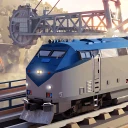
Screenshots


Analysis by Reviewed
I enjoy railway games most when they make planning feel satisfying without demanding my full attention every minute. Train Station 2: Rail Tycoon has that appealing loop: choose a job, assign trains, and return later to collect the results. It is a strategy game from Pixel Federation Games, and its focus is less on driving locomotives than on running the network behind them. If you like gradual progress and small decisions that add up, it is an inviting place to start.
How It Fits Into a Busy Day
The stop-and-return rhythm is most useful when I can make a small decision, put my phone away, and come back when I have a spare moment. For example, before starting a meeting or heading out for errands, I can choose a suitable contract and dispatch a train rather than trying to play continuously. Later, I can collect the result and decide what fits next. That makes the game easier to fit around ordinary routines than a railway title built around constant steering or quick reactions.
I would still check the job before sending a train, rather than dispatching whichever engine happens to be available. A train committed to one task may not be ready for another request, so keeping some capacity in reserve can save a frustrating wait. This is a small but useful planning habit: I get more flexibility by thinking one job ahead instead of treating every available train as an immediate assignment.
It is also worth separating “more goods” from “less waiting” when considering upgrades. If a contract asks for a larger load, capacity is the obvious constraint; if I have the right load but the turnaround is slow, speed may matter more. I would focus on the problem I am actually running into instead of spreading resources across upgrades without a clear reason. That approach makes the strategic layer feel more deliberate, particularly for someone playing in short visits.
Where the Railway Strategy Sits
Among mobile strategy games, this one keeps its focus unusually close to railway dispatch. It is not trying to be a hands-on driving simulator, where the enjoyment comes from controlling a locomotive moment by moment, nor does it offer the broad planning canvas of a large city builder. Its contracts provide clear, bite-sized objectives, which is useful when I want to know what to do as soon as I open the game. The trade-off is that players who want a wide range of interacting systems may find the central routine narrower.
That focus is a strength for casual players who enjoy assigning, collecting, and improving, but it is not a universal substitute for other train games. If I wanted to learn routes by driving them myself, I would choose a simulator. If I wanted to plan a sprawling settlement, a city-building strategy game would be a better match. I would pick this one when the railway-management loop is the point, not merely because it has trains on screen.
There is also a practical question about how often to check in. I would not keep the game open just to watch a job progress; the real-time design makes more sense as a background rhythm. A quick check between daily tasks can be satisfying, while a long uninterrupted session may expose how much the game relies on waiting between assignments. Players who enjoy frequent small returns may find that pace calming; anyone who dislikes timers is likely to find it restrictive.
More From Our News Desk

Weather by Xiaomi Review: Clear at a Glance, Less Clear Up Close

X Under Pressure: Can It Recover When Posting Goes Wrong?

Clash of Clans Is Won Between the Battles

Android Auto Makes the Case for Quieter Car Software

MobiOffice: Transforming Mobile Productivity with Seamless Integration

EA SPORTS FC™ Mobile Soccer: Redefining Mobile Sports Gaming
Getting on Track
When I first downloaded Train Station 2, I was immediately impressed by its user-friendly interface. The game welcomes you with a simple tutorial that helps you understand the basics without feeling overwhelmed. It’s like having your personal railway guide! The graphics are stunning, with vibrant colors and intricate details that make every train and station come to life.
Building Your Empire
As you start playing, you’ll find yourself in the shoes of a budding railway tycoon. The game tasks you with completing various contracts to earn resources and expand your railway network. It’s all about strategic planning – deciding which trains to send on which routes and how to optimize your railway empire for maximum efficiency. The sense of accomplishment when you successfully complete a contract is incredibly rewarding.
The game doesn’t stop at just managing trains; you also get to upgrade them. Each train can be enhanced to carry more goods or travel faster, adding another layer of strategy. It’s not just about moving from point A to B; it’s about doing it in style and efficiency.
Stay on Schedule
Timing is everything in Train Station 2. The game operates in real-time, meaning you’ll have to manage your time wisely. It’s a bit like running a real railway station where things can get hectic, but that’s part of the fun! The real-time aspect adds a level of immersion that keeps you coming back for more. It’s addictive, in the best possible way.
There’s also a social element to the game. You can join unions with other players, which allows you to collaborate on tasks and compete in global events. It’s a great way to meet fellow train enthusiasts and adds a competitive edge to the gameplay.
Playing at My Own Pace
In everyday use, I would treat the real-time jobs as a reason to check in between other activities, not as a reason to keep the game open. Before I leave for work or settle in for a longer stretch away, I can pick a contract that suits the time I have and send the appropriate trains. A quick return later lets me collect the outcome and choose the next task. That rhythm works well for casual sessions, though it can feel slow if I want continuous action or instant results.
One useful habit is to look at the contract requirements before dispatching anything. A train tied up on a longer job may be unavailable for another request, so I would avoid assigning every suitable engine at once. Keeping some flexibility can make the next contract less of a waiting game. Upgrades are another choice to make deliberately: improving capacity is useful when a job calls for more goods, while speed matters more when the wait itself is the bottleneck. I would spend resources according to the obstacle I actually encounter rather than upgrade by reflex.
Who Will Enjoy the Railway Loop?
This is a better fit for players who like planning, collecting progress, and checking back than for anyone looking for hands-on train driving. Compared with action-focused train games, its appeal is in dispatch and management; compared with broad city-building strategy games, the railway contracts give each session a clearer task. That focus is welcome when I want a compact goal, but it also means the core routine can become repetitive if assigning jobs and waiting for them is not satisfying on its own.
A realistic use case is a short break during a busy day: I can review the available jobs, send a train, and leave the game until it has finished. If I have a longer play session, I can use it to plan upgrades and work through several contracts. I would not choose it for a commute with unreliable connectivity or for a moment when I need uninterrupted action; the real-time structure is better suited to a patient, stop-and-start routine. Players who dislike timers or prefer direct control over every movement may be happier with a different kind of railway game.
Current State and What to Expect
The game remains actively presented as a developed mobile title: it was released on April 11, 2019, and its current version is 4.10.0. That version number tells me which build is current, but it does not by itself prove what has changed between releases, so I would not assume a particular new feature or overhaul. For someone returning after a break, the practical step is to check the current in-game interface and available tasks rather than expect a specific change based only on the version label.
Its audience is substantial, with more than 10 million installs, around 542,000 ratings, and an average rating of 4.3. It is free to download and rated for Everyone, while optional in-app purchases range from $0.49 to $219.99 per item. I would treat spending as optional and decide in advance whether paying to speed up progress is worth it to me; the wide price range makes checking each purchase carefully sensible. The game can be enjoyed as a free player, but anyone uncomfortable with purchase prompts or waiting should keep that trade-off in mind.
What I Would Watch For as a Returning Player
For someone coming back after time away, I would focus less on the version label and more on whether the current contracts and available choices fit the way I want to play. The confirmed current build is 4.10.0, but a version number alone is not a reliable guide to specific changes. I would open the game, review what is available, and make a fresh plan rather than assume that the railway has been redesigned or that a particular feature has arrived.
New players may wonder whether they need to spend to enjoy the game. I would start free and see whether the dispatch-and-return cycle suits me before considering any purchase. Optional items range from $0.49 to $219.99, so I would read each purchase screen carefully and set a personal limit rather than treating payment as a requirement for progress. If waiting is the part that bothers me most, spending may not solve the deeper issue: the real-time pacing is central to the experience.
Another sensible question is whether the social side is essential. Unions and global events add a shared and competitive dimension, but the basic appeal I find here is still managing contracts and trains. I would approach the social features as an extra reason to stay engaged, not as a condition for enjoying the railway loop. If I prefer a private, self-paced experience, I can judge the core management routine on its own.
The game is rated for Everyone, which makes it broadly accessible in terms of age classification, but that does not mean every play style will suit every player. I would recommend it to someone who likes colorful railway management, patient progression, and goals that can be handled in brief sessions. I would steer away a player who expects realistic driving controls, constant action, or a strategy game with many different systems to master. Knowing which kind of railway experience you want matters more than being a train enthusiast.
Final Thoughts
Overall, Train Station 2: Rail Tycoon is a fantastic game for anyone who loves strategy and management games. The blend of real-time gameplay, strategic planning, and social interaction makes it a standout in the genre. Plus, it’s free to play, so there’s really no excuse not to give it a try. Whether you’re a seasoned rail enthusiast or a newcomer to the world of trains, this game offers something for everyone. So, are you ready to build your railway empire? All aboard!
My recommendation comes with one clear qualification: the fun depends on enjoying the planning-and-returning cycle, not just the look of the trains. If that sounds appealing, I’d try it without feeling obliged to spend; if I wanted a detailed driving simulator or immediate, continuous play, I’d look elsewhere. For patient players who like having a small railway task waiting when they open a game, it is an easy one to keep in rotation.
Train Station 2: Rail Tycoon Frequently Asked Questions
Is Train Station 2: Rail Tycoon suitable for a quick, casual play session?
Train Station 2: Rail Tycoon is built around planning railway operations and completing jobs, so it can suit players who like checking in and making progress over time. Its strategy focus means there is more to consider than simply watching trains run: you organize trains, resources, routes, and contracts. If you prefer games with ongoing management goals, its structure may appeal to you.
What age group is Train Station 2: Rail Tycoon intended for?
Train Station 2: Rail Tycoon is rated Everyone, so it is presented as suitable for a broad audience. The railway-management theme and strategic tasks are approachable for players who enjoy planning and progression. Parents can still consider whether its management-focused gameplay matches a younger player’s interests, while adults looking for a casual tycoon-style strategy game may also find the subject matter appealing.
What kind of strategy and planning does Train Station 2: Rail Tycoon involve?
Train Station 2: Rail Tycoon is a strategy game centered on running a railway. Before downloading, it helps to know that the appeal is in organizing trains, resources, routes, and jobs rather than simply watching trains move. You decide how to use your available trains to meet contracts and build up your railroad, so planning and steady progress are central to the experience.
Who developed Train Station 2: Rail Tycoon, and is it suitable for a general audience?
Train Station 2: Rail Tycoon is developed by Pixel Federation Games and is rated Everyone, making it suitable for a broad audience. Its railway-management theme and strategic tasks are approachable for players who enjoy planning and progression. The game has a 4.3 average from around 542,000 ratings, which gives prospective players a useful sense of its standing with the player community.
1. What is Train Station 2: Rail Tycoon and how does it work?
Train Station 2: Rail Tycoon is a train simulation game where players take on the role of a railroad manager. The game involves building and upgrading trains, managing resources, and completing various tasks and contracts to expand your railway empire. Players can discover new regions, unlock new trains, and compete in events. The gameplay is strategic and requires players to optimize their train routes and resource management for maximum efficiency.
Pros
- Engaging and strategic gameplay.
- High-quality graphics and animations.
- Wide variety of trains to collect.
- Regular updates with new content.
- Challenging quests and events.
Cons
- Requires constant internet connection.
- In-app purchases can be pricey.
- Progress can be slow without spending.
- Limited offline features.
- Can be repetitive over time.
- Category
- Strategy
- Version
- 4.10.0