The Operator
- 80.00
- 4.7
- Installs
- 500.00K
- Price
- Free

Screenshots
Analysis by Reviewed
When a mystery game is passed around the living room, the fun often comes from comparing theories as much as playing. The Operator suits that kind of shared evening: it is an adventure game built around investigating crimes, following clues and working toward an explanation. I like the premise because it gives a group something concrete to discuss, rather than asking everyone to watch one person race through action scenes. Still, it is best treated as a game for taking turns and thinking together, not as a party game designed for constant interruptions.
One case can turn a quiet evening into a group investigation
The appeal is in the investigative role. You are not simply being told a mystery; you are expected to pay attention to evidence and decide what it means. That makes the game a natural fit for a couple of people sharing a device: one person can take the lead while the others watch closely, question an assumption or point out a clue that was easy to overlook. In my view, that is a more engaging way to share a story game than passing the phone around without a plan.
A realistic use is a short after-dinner session. One person plays while another keeps track of the details they think matter, then you compare interpretations before moving on. The useful habit is to separate what the game has actually shown from what you suspect. In a mystery, those can blur quickly, and a confident early theory can make later clues seem to support it even when they do not. Discussing evidence rather than guessing the ending keeps the shared session lively without turning it into a contest.
Articles Related to The Operator
This format has a trade-off. A player who likes to investigate at their own pace may find a group’s running commentary distracting, while a group that talks over every moment can make it harder to absorb the case. I would agree on a simple rhythm: let the person holding the device explore, pause when a meaningful clue appears, then compare ideas. That small boundary helps the game remain an investigation instead of background entertainment.
The Operator is an adventure game from Bureau 81, and its crime-solving focus gives it a different feel from a typical action-led adventure. It is aimed at players who enjoy noticing details and reasoning through uncertainty. If the household usually reaches for fast rounds, competitive matches or games where everyone acts at once, this may not be the best shared pick. Its value is more about attention and discussion than quick, noisy interaction.
Sharing a device works best with clear turns
If several people use the same phone or tablet, agree on who is playing before opening a session. That is practical rather than a claim about built-in household tools: a shared device can make it unclear whose progress or choices are being used, and the safest approach is not to assume the game separates players automatically. If individual progress matters to you, use separate devices where possible and check the game’s own options before relying on one shared setup.
For a one-device household, decide whether the session belongs to one person or is a cooperative watch-and-discuss session. In the latter case, keep the controls with one player and let everyone else contribute theories. This avoids accidental taps and makes it easier to follow the chain of evidence. It also gives quieter players a clear opening to explain a clue instead of having to compete for the device.
You May Like

How Microsoft OneDrive Became a Mobile Productivity Giant

How Google Translate Breaks Language Barriers Effortlessly

Why Google Sheets Is the Ultimate Mobile Productivity Tool

Unveiling the Dynamic World of My Talking Tom Friends

Free Fire MAX: Dominating the Battle Royale Arena
Free Fire: Winterlands – The Ultimate Winter Gaming Adventure
Another useful approach is to pause before making an important decision, if the game allows it, and have each person state their reasoning. I would not treat this as a guaranteed feature or a promise that every choice can be undone; it is simply a good way to play carefully. In a case-solving game, a brief discussion can reveal that one person remembers a detail another overlooked. If pausing is not convenient, take turns at natural breaks rather than passing the device during an active moment.
Household boundaries matter most when people share accounts or devices. Keep purchases and account access under the device owner’s supervision, especially if younger players might use the same screen. The game is free to start, but it includes optional in-app purchases priced from $0.99 to $7.99 per item. That is worth discussing before handing over a device, not because a purchase is required for a particular feature, but because shared access can make it unclear who is responsible for spending.
Good coordination means comparing evidence, not spoiling the case
The most satisfying way I can imagine playing with another person is to let each player form an independent theory first. After a section, compare the clues each of you noticed and ask what would make your interpretation wrong. That last question is especially useful: it prevents the group from locking onto the first plausible suspect or explanation. It also turns the game into a light reasoning exercise without requiring anyone to take notes throughout.
For a household with different schedules, this is less ideal as an ongoing shared activity if one person wants to continue while another is away. A shared session can quickly become a spoiler for anyone who has not seen the same material. If you want to keep the mystery fresh for everyone, agree that the active player will not reveal later discoveries, or reserve the game for times when the interested players can sit together. If that kind of coordination sounds like a chore, playing solo is likely the smoother option.
The game also asks for a different kind of attention than many mobile adventures. Rather than treating it as something to dip into while answering messages or watching television, give it a focused stretch. A clue-based story loses some of its pull if the player repeatedly forgets what was just established. For a busy evening, I would choose a stopping point before starting, then recap the main evidence aloud if another person is joining later. That simple recap helps without giving away the whole case.
Compared with the usual alternatives, The Operator is more suited to people who want a guided mystery than to players looking for open-ended exploration, reflex challenges or a broad multiplayer competition. That distinction is useful when choosing for a household: one person may enjoy a close-reading investigation while another wants immediate action. Neither preference is wrong, but the game’s central appeal depends on following the case rather than treating every moment as a quick reward.
Teen suitability and trust in a shared home
The Operator carries a Teen content rating, so I would not assume it is a fit for every child simply because it is available on a phone. Its crime-investigation theme is an important part of the experience, and each household should decide whether that subject matter suits the player. If a younger teen wants to try it, I would first look at the game together and talk about what kinds of crime stories feel comfortable. The rating is a useful starting point, not a substitute for a parent’s judgment.
For shared-device use, trust also means making expectations clear. Tell children which account or device they may use, whether they may make purchases, and whether they should ask before continuing a shared story. Those are household agreements, not controls I am attributing to the game. A straightforward conversation is more reliable than assuming a game itself will manage family roles or spending boundaries.
Its current version is 2.3.20+20, and it requires Android 7.0 or later. That gives Android owners a practical compatibility check before they plan a shared session. The game is free, with optional purchases in the range already noted, so a household can try it without an upfront purchase while still keeping an eye on spending. Its average rating is 4.7 from around 6.9K ratings, and it has over 500K installs; I see that as a sign of broad interest, not a guarantee that its measured, clue-focused pace will suit every player.
Because the available age guidance is Teen, I would be particularly careful about younger children watching over someone’s shoulder. A child who is not ready for crime-themed material may still encounter the story during a family session even if they are not the one playing. If the household cannot agree on that content, a lighter exploration game is the better choice. Likewise, anyone who wants a completely child-oriented experience should choose a game designed for that audience rather than relying on a shared screen to make this one appropriate.
Who should make room for it—and who should pass
I would recommend The Operator to someone who enjoys connecting clues, forming a theory and checking it against what the game reveals. It is especially appealing if you want an adventure that can prompt conversation with a friend or partner. A practical tip is to let the more observant player explain their reasoning before the group settles on an answer; that keeps the experience collaborative and gives the quieter person a meaningful role.
I would skip it if your main goal is a fast game for a few spare seconds, a title everyone can control simultaneously, or an adventure that rewards wandering without focusing on a mystery. I would also avoid making it the default shared game when different household members have very different comfort levels around crime stories. In those cases, a more action-heavy or lighter-themed alternative is likely to create less friction.
There is also a difference between enjoying a mystery and wanting to solve one with an audience. If you prefer to think privately, a group can unintentionally steer your interpretation or spoil discoveries. Play alone if you want full control over your pace and theories; invite someone else only if you both enjoy discussing evidence without insisting that one person’s guess is right. That flexibility is one of the game’s strongest household qualities, even though it does not turn it into a dedicated multiplayer experience.
My household verdict is that The Operator works best as a deliberate, shared investigation for a small group that is happy to take turns and respect spoilers. Bureau 81’s crime-solving adventure gives people a reason to pay attention to details together, and the free entry makes it approachable to try. The Teen rating, optional purchases and need for focused play deserve a little planning, particularly on a shared device. If your household wants thoughtful mystery-solving rather than instant action, I think it is worth giving a session; if you need casual, simultaneous play or a universally child-friendly story, choose something else.
A practical way to decide whether it fits your routine
If you are choosing a game for a household, I would think about when people will actually play, not just whether the mystery sounds appealing. A shared investigation is easiest to enjoy when the room is calm enough to hear one another and nobody is rushing to leave. It can suit a weekend afternoon or a relaxed evening, but it is a poor match for a five-minute wait when attention is likely to be split. That distinction helps avoid judging the game unfairly because it was started in the wrong setting.
For a first session, I would keep the group small and agree on one simple rule: the person holding the device controls the pace, while everyone else offers observations without taking over. If the group enjoys that balance, you can keep playing together; if not, the same mystery can still be approached solo. This is a useful test because it reveals whether the appeal is the case itself or the social discussion around it, without making the whole household commit to a shared run.
The title is free and has a 4.7 average from around 6.9K ratings, which may reassure someone deciding whether it is worth trying, but popularity cannot settle the household question. The more important test is whether players enjoy careful attention, are comfortable with the crime theme and can agree about purchases and spoilers. If those conditions line up, its focused pace can make a small shared session feel satisfying; if they do not, choosing a lighter or more immediately interactive game is the kinder option for everyone.
The Operator Frequently Asked Questions
What is The Operator about?
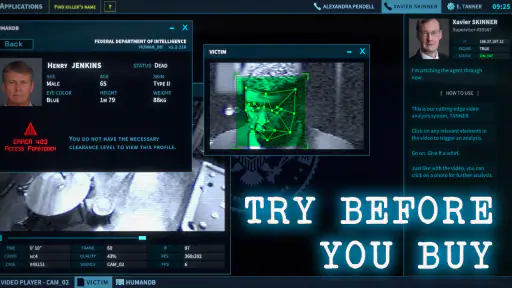
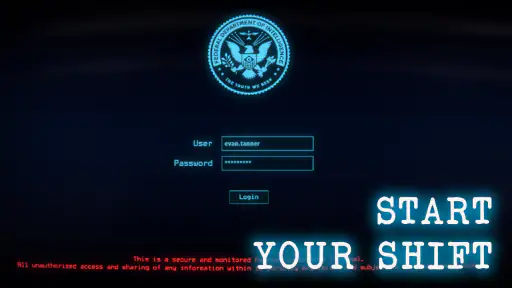
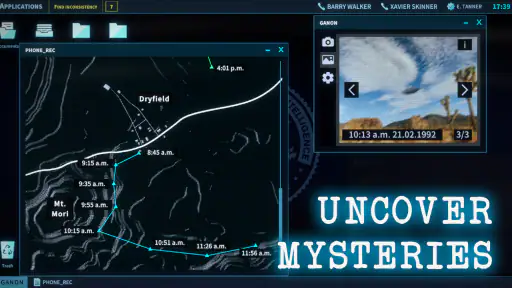
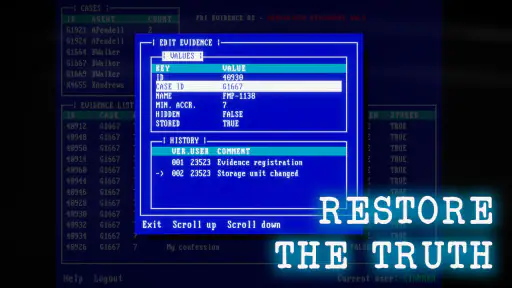
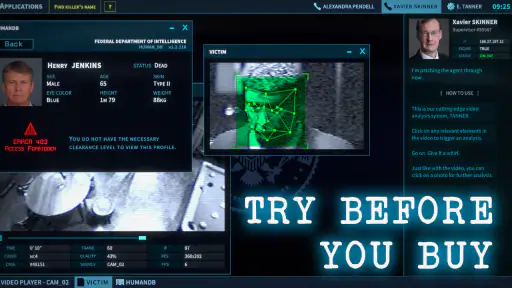
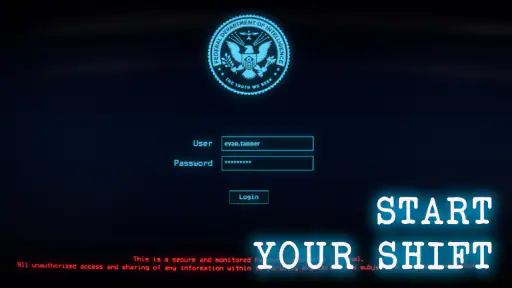
The Operator is a narrative investigation game in which you work as an employee of a fictional government agency. Rather than exploring a large world or fighting enemies, you review case files, examine evidence, use specialist software, and communicate with field agents. Its appeal is the feeling of piecing together a mystery from a desk, so it is best suited to players who enjoy careful observation and story-driven problem solving.
What kind of gameplay and puzzles can I expect?
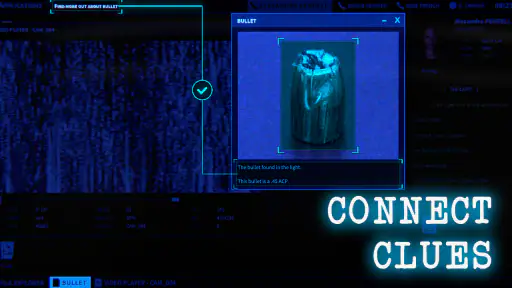
Most of the gameplay involves analysing information on a computer interface. You may inspect photographs, search databases, compare records, listen to recordings, and connect clues to help agents make decisions. The challenges are generally based on attention to detail and logical deduction rather than quick reflexes. Some players may find the interface and investigative routine immersive, while those seeking action, extensive exploration, or complex mechanical puzzles may prefer a different game.
Is The Operator available for Android or iOS?
Availability can vary by platform and region, so check the official Google Play Store or Apple App Store listing before downloading. The Operator is primarily known as a PC game, and an unofficial mobile download or a website claiming to offer an Android or iOS version should not be assumed to be legitimate. Confirm the developer, platform support, and store details before installing anything, and avoid unfamiliar APK files or download links.
Does The Operator require an internet connection, and can I play it offline?
Whether you can play offline depends on the version and how it is distributed. A store may require an internet connection for purchase, installation, updates, or an initial ownership check, even when the main game is designed for solo play. Before buying or downloading, review the platform’s current listing and the developer’s notes for offline requirements. If you are considering a mobile version, verify that it is an official release rather than relying on claims from third-party sites.
Who should play The Operator, and is it suitable for everyone?
The Operator is a strong choice for players who like investigative fiction, computer interfaces, and stories that unfold through documents and evidence. Its slower pace rewards patience and close reading, making it less suitable for anyone who expects frequent action or multiplayer features. The subject matter involves crime and potentially unsettling case details, so players sensitive to those themes may want to check the game’s content information and reviews before starting.
Pros
- A focused interface makes it easy to keep track of evidence and case details.
- The investigative format rewards careful observation rather than quick reactions.
- Distinct cases offer variety in suspects
- clues
- and conclusions.
- A compelling atmosphere builds tension without relying on constant action.
- Good fit for players who enjoy detective stories and analytical challenges.
Cons
- Some cases can feel difficult if you overlook a small detail.
- Progress may depend on trying multiple interpretations of the evidence.
- The deliberate pace may not suit players looking for action-heavy gameplay.
- Limited investigative freedom can make solutions feel tightly scripted.
- Its subject matter and tense atmosphere may not appeal to everyone.

- Category
- Adventure
- Version
- 2.3.20+20