The Jackbox Party Pack 7
- 3.00
- 3.3
- Installs
- 5.00K
- Price
- $29.99

Screenshots



Analysis by Reviewed
I’d think of The Jackbox Party Pack 7 less as a game to play alone and more as a ready-made activity for a roomful of people. Its five party games lean on different kinds of quick thinking—writing jokes, drawing, describing clues, presenting ideas, and coordinating—so the group can change pace instead of getting stuck in one format. That variety is the pack’s strongest practical argument, though it works best when the people around you are willing to join in and laugh at their own improvising.
What the purchase actually buys
This is a paid casual game from Jackbox Games, Inc., listed at $29.99, rather than a free party app. I’d make the buying decision around how often you can bring a group together: if you expect to use several of the games across repeat gatherings, the price is easier to justify than if you only want a quick one-night diversion. The Teen age rating is also worth keeping in mind when choosing a game for a mixed-age family get-together.
The game has an average rating of 3.3 from 8 ratings, with 3 written reviews, and has 5K+ installs. Those figures suggest a relatively small audience on this platform, so I wouldn’t treat the rating as a definitive verdict on how your particular group will respond. The listed release date is Oct 15, 2020, and the current version is 1.0.2; it supports Android 5.0 or later. If you’re considering it for a particular device, check that the device meets that minimum before buying.
How to get more out of a group session
A useful way to avoid a slow start is to pick the first game for the people who are already comfortable joking around, rather than asking a quieter guest to improvise in front of everyone right away. Quiplash 3 and Talking Points put people’s words and delivery in the spotlight; Champ’d Up gives a more visual outlet, while Blather ‘Round rewards careful clue-giving. Switching formats can help different personalities find a moment to contribute.
For a casual evening at home, I’d set up the game before guests arrive and choose one title as the opener, then let the group decide whether to continue or switch. That small bit of preparation matters: party games lose momentum when everyone is waiting while the host sorts out what to play. The pack is most appealing when it becomes part of the evening’s plan, not when you expect it to entertain people who would rather chat or watch something.
A practical hosting trick is to offer a choice between two games rather than asking an open-ended “What should we play?” The smaller decision is easier for a mixed group, and it keeps the start from turning into a long discussion. I’d also avoid treating each round as a test of who is funniest. When people feel they can make a deliberately silly answer or simply enjoy someone else’s, the room tends to loosen up.
Where it differs from familiar party options
Compared with a simple trivia app or a deck of conversation prompts, this pack offers several distinct activities in one purchase and is built around shared reactions to what players make up. That can feel more personal and unpredictable than answering preset questions. The trade-off is that its humor and energy depend on the people playing; a traditional board game may be a better fit for guests who prefer clear turns, quieter competition, or less improvisation.
More From Our News Desk

Weather by Xiaomi Review: Clear at a Glance, Less Clear Up Close

X Under Pressure: Can It Recover When Posting Goes Wrong?

Clash of Clans Is Won Between the Battles

Android Auto Makes the Case for Quieter Car Software

MobiOffice: Transforming Mobile Productivity with Seamless Integration

EA SPORTS FC™ Mobile Soccer: Redefining Mobile Sports Gaming
There’s also a difference between owning a varied pack and getting equal mileage from every game. One group may keep returning to the writing and performance games, while another may prefer drawing or cooperative coordination. I’d treat the five options as a menu rather than assume everyone will love each one. Letting players vote on the next round is a simple way to keep the evening moving without making the host choose every time.
Its variety makes it a different proposition from downloading a handful of free casual games. Those alternatives can be easier to try without spending, but they often ask the host to pick, install, and explain separate activities. Here, the appeal is having contrasting styles ready in one pack; the limitation is that paying for variety only makes sense if the group actually wants to switch between these kinds of play. If your friends already have a favorite free game they reliably enjoy, this purchase may not improve the evening enough to justify its cost.
If your gathering includes people who don’t enjoy being put on the spot, give them room to observe a round before joining. That can lower the pressure without turning the game into a performance test. The same flexibility helps when the group has different confidence levels: choose an activity that lets people contribute in their own style, and don’t insist on continuing a mode that clearly isn’t landing.
Who is likely to enjoy it—and who may not
For a small get-together where everyone is already comfortable with playful banter, it can be a lively alternative to scrolling through separate free games and deciding what to try next. If you need a quiet solo experience, a dependable activity for very young children, or something that works without a group willing to participate, this is not the purchase I’d choose. A conventional single-player game or a low-pressure board game would serve those plans better.
It also suits a host who enjoys guiding a room without dominating it. You can suggest a first game, explain the basic idea in your own words, and then let the players’ choices carry the session. Someone who dislikes managing group energy may find that effort tiring, especially if guests arrive at different times or are reluctant to take part. This is not a background activity that automatically fills a quiet room; the people playing create much of its momentum.
A realistic use case is a weekend visit when friends have finished dinner but aren’t ready to call it a night. I’d pick a game that feels approachable to the group, play a round, and use the response to decide whether to move to something more performative or more cooperative. If the group is tired, distracted, or split between wanting to play and wanting to talk, I’d leave the pack aside rather than push everyone into a session. Choosing the right moment matters more than trying to make every gathering into a game night.
Before buying, it is worth asking one simple question: can I picture using this with the same people more than once? A one-off event can still be a good reason to purchase, but repeat use makes a five-game collection easier to value. If you are buying for a particular household, think about whether its usual guests enjoy making jokes, drawing, giving clues, or working together. The better those styles match the group, the less likely the pack is to sit unused after its first outing.
How the different games change the evening
My verdict is straightforward: I’d consider paying $29.99 if I regularly host friends or family and want several styles of group play ready for the same evening. I’d skip it if party games are only an occasional interest or if the people I play with dislike improv and shared jokes. The variety is appealing, but the value comes from actually bringing people together to use it.
What’s Inside the Box?
First off, let’s talk about what you get with The Jackbox Party Pack 7. This pack is loaded with five different games, each bringing its own flavor of fun to the table. Whether you’re into trivia, drawing, or word games, there’s something here for everyone. And the best part? You don’t need a bunch of controllers. Just whip out your smartphone or tablet, and you’re good to go!
Quiplash 3
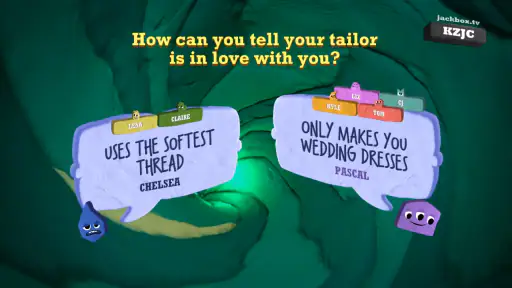
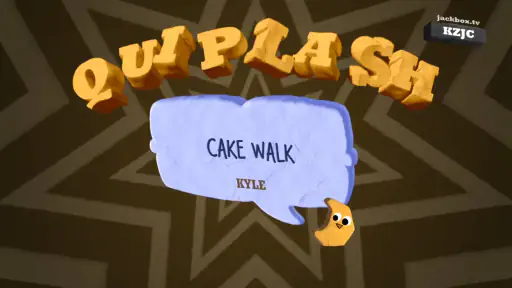
One of my personal favorites is Quiplash 3. If you’ve played the previous versions, you know the drill. It’s all about coming up with the funniest answers to quirky prompts. There’s something magical about seeing your friends’ wild and wacky responses pop up on the screen. It’s like a comedy show where everyone gets to be the star!
In practice, the fun here comes from how different people interpret the same prompt, not from having a polished punchline ready. I’d keep the mood light and avoid putting too much weight on winning; the odd, unexpected answer can get the biggest laugh even when it is not the most carefully written. This is a strong opener for friends who already enjoy teasing one another, but a less comfortable group may prefer to watch before taking a turn.
The Devils and the Details
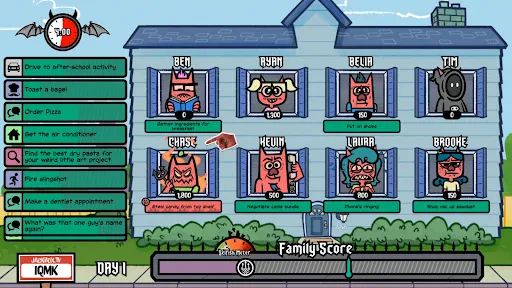
Next up, we have The Devils and the Details, a cooperative game that requires some serious teamwork. You play as a family of devils trying to get through the trials of suburban life. It’s chaotic, it’s hilarious, and trust me, it’s harder than it sounds. You’ll find yourself yelling across the room, trying to coordinate tasks with your fellow players. It’s all in good fun, though, and it’s a great way to bond with your crew.
This is the option I’d pick when the group wants to act together rather than compete for the best joke. Its coordination can be a welcome change after a round built around individual contributions, but it also asks people to communicate while things are happening. If your guests prefer a calm, turn-by-turn pace, this may feel hectic rather than amusing. I’d save it for a group that is happy to be a little noisy and make mistakes together.
Champ’d Up
For those who love a good drawing challenge, Champ’d Up has you covered. In this game, you’ll create characters to face off in epic battles. The twist? You don’t know what your opponent’s champion looks like until you see it on the battlefield. It’s a riot watching these bizarre creations duke it out, and it’s a game that truly tests your creativity.
The appeal isn’t limited to people who think of themselves as artists. I’d lean into quick, readable ideas rather than trying to make an impressive drawing; an odd visual choice can give the group more to react to than a carefully detailed character. It also gives a useful change of pace for players who would rather draw than deliver a speech or invent a written joke. If someone feels self-conscious about drawing, remind them that the point is the character’s idea, not artistic skill.
Talking Points
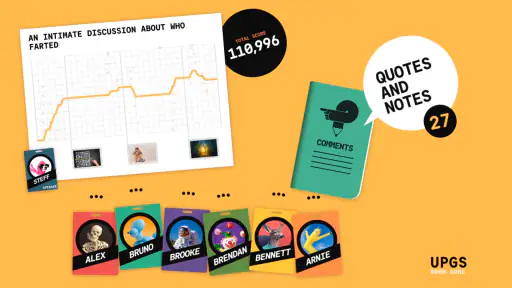
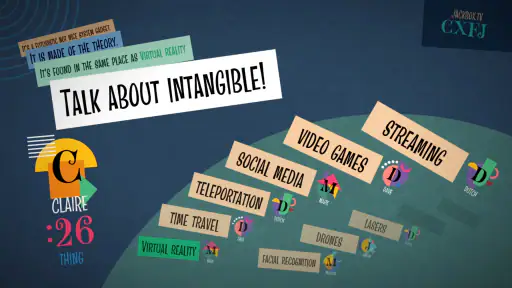
Ever wanted to give a speech on the fly? Talking Points gives you that chance. You’ll have to deliver a presentation based on slides you’ve never seen before, and it’s up to you to make it convincing. This game is a goldmine for laughs, especially when your friends try to keep a straight face while pulling off the most ridiculous presentations.
This is likely to land best with people who enjoy performing, even if only for a short turn. A confident speaker can make an absurd presentation feel convincing, while a quieter guest may need encouragement or a chance to pass the spotlight to someone else. I wouldn’t choose it as the first activity for a room of strangers; once everyone has warmed up, the same awkwardness can become part of the joke rather than a reason to hold back.
Blather ‘Round
Last but not least, there’s Blather ‘Round, a guessing game where you try to describe a secret phrase using limited words. It’s a bit like charades meets password, and let me tell you, it’s harder than it looks! The challenge lies in crafting clues that are just vague enough to be tricky but clear enough to lead your team to victory.
Because this game depends on finding a useful clue, I’d encourage players to start with a broad hint and then narrow it down instead of getting stuck on a perfect description. That gives the group more chances to respond and keeps the guessing conversational. It can be a good choice when the room wants to think together without the attention resting on a prepared performance, though people who dislike wordplay may prefer one of the more visual options.
So, why should you consider adding this game pack to your collection? Well, simply put, The Jackbox Party Pack 7 offers entertainment for groups that like to make things up together. It can suit parties, family gatherings, or a relaxed evening with friends, provided the group is comfortable with the style of play and the Teen rating fits the people present. The variety helps keep a session from relying on one kind of activity, but I’d still choose games to match the room rather than assume every option will work for everyone.
All in all, this is a paid purchase I’d recommend to a regular host who can picture the pack coming out at more than one gathering. Its distinct activities offer useful choices when the group wants to joke, draw, present, guess, or coordinate, but they cannot replace the value of guests who are happy to participate. If you want a solo game, a free option, or a quieter activity with predictable turns, I’d look elsewhere. If your friends enjoy improvised group play, this pack has a clear place in the evening’s plans.
The Jackbox Party Pack 7 Frequently Asked Questions
Can one person enjoy The Jackbox Party Pack 7, or is it mainly for groups?
The Jackbox Party Pack 7 is designed as a casual party game collection, so its main appeal is sharing the experience with other people rather than playing alone. The five included games use prompts and player contributions to create lively group rounds. It is best suited to gatherings, whether friends are together in one room or joining remotely.
How much does The Jackbox Party Pack 7 cost, and what should I know before buying it?
The Jackbox Party Pack 7 is priced at $29.99. It is a paid game collection from Jackbox Games, Inc., built around five party games rather than a single activity. If you are deciding whether it suits your group, consider whether you will have people to play with and whether the different game styles appeal to everyone taking part.
What is The Jackbox Party Pack 7 and what games are included?
The Jackbox Party Pack 7 is a collection of fun, interactive party games perfect for social gatherings or online play. It includes five games: Quiplash 3, The Devils and the Details, Champ'd Up, Talking Points, and Blather 'Round. Each game offers a unique experience, from trivia and drawing challenges to presentation games, ensuring there's something for everyone.
How can I play The Jackbox Party Pack 7 with friends remotely?
You can easily play The Jackbox Party Pack 7 with friends remotely by using a video conferencing tool or streaming platform. One player hosts the game on their device and shares their screen with others. Participants can join by entering a room code on their devices via jackbox.tv, making it accessible and convenient for everyone, even if they are far apart.
What platforms is The Jackbox Party Pack 7 available on?
The Jackbox Party Pack 7 is available on multiple platforms, including PlayStation, Xbox, Nintendo Switch, PC, and Mac. It's also accessible on other digital platforms like Steam and the Epic Games Store. This wide availability ensures that players can enjoy the games on their preferred devices, whether at home or on the go.
Pros
- Fun and engaging party games.
- Supports up to 8 players locally.
- Easy to understand rules.
- Great for social gatherings.
- Includes a variety of mini-games.
Cons
- Requires internet for remote play.
- Some games need prior knowledge.
- Limited single-player content.
- Can be repetitive over time.
- Not all games suit every group.
- Category
- Casual
- Version
- 1.0.2