TDS - Tower Destiny Survive
- 3.50K
- 4.5
- Installs
- 10.00M
- Price
- Free

Screenshots
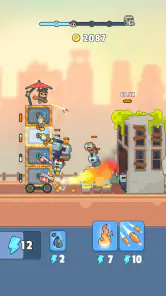
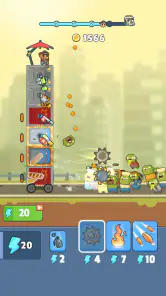
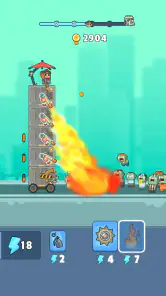
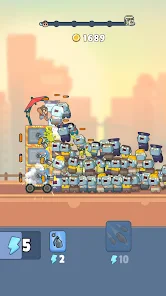
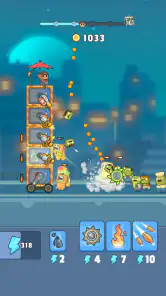
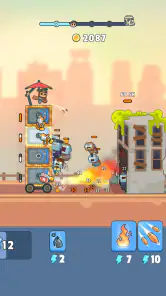
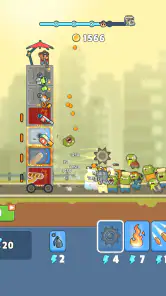
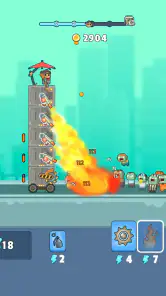
Analysis by Reviewed
I often reach for a compact action game when I have a few minutes free, and TDS - Tower Destiny Survive gives that pause a clear goal: make thoughtful choices before the next wave becomes a problem. Its tower-building and upgrade loop is easy to understand, but it still gives me decisions to weigh. That makes it a handy fit for a short break, though it is less appealing if you want a story-led game or something that asks for no attention at all.
A shared-device break that stays easy to understand
The basic appeal is visible quickly: build up a defensive tower, improve it, and try to hold against incoming enemies. On a shared phone or tablet, that makes the game straightforward to pass between household members. Someone can make a few choices, hand the device over, and explain the immediate aim without needing a long introduction. I would still agree on whose turn it is before starting; the game’s strategic choices are part of the fun, and another player may not want their run changed halfway through.
For an everyday example, I can see it working during a short wait while one person handles a practical task nearby. It gives the player something active to focus on, but the tower-defense format is easier to pause mentally than a competitive match that depends on keeping up with other people. I would not treat it as a guaranteed one-minute distraction, though: once I am considering an upgrade or responding to a tougher wave, I may want to finish that stretch before putting the device away.
Keep expectations clear on a household device
Before handing over a shared device, I would make sure the next person knows that choices about placement and upgrades can affect how a run unfolds. This is a useful game for taking turns and comparing approaches, but it is not the kind of experience where I would assume everyone can jump into an identical personal setup. I would keep household expectations simple: agree who is playing, avoid changing another person’s decisions, and check the device’s usual account arrangements before making purchases.
The game is free to download, with in-app purchases ranging from $0.99 to $99.99 per item. That broad range makes it sensible to discuss spending before a child or another household member plays on a device tied to a payment method. I would not assume that a game’s low barrier to entry means every later purchase is equally small. If I were setting it up for shared use, I would handle purchase boundaries through the device’s normal settings and family agreements rather than expecting the game itself to manage them.
Age, trust, and who will enjoy the challenge
Its Everyone 10+ age rating gives families a useful starting point for deciding whether it suits a younger player, but I would still consider the individual child and how they respond to repeated enemy waves and action-focused play. The game’s central appeal is planning under pressure, not a quiet creative activity. I would recommend it to someone who likes making small tactical decisions and seeing how those choices hold up; I would skip it for a player who gets frustrated by needing to adjust a plan after an attack goes badly.
Compared with more direct action games, this one puts more emphasis on preparation and upgrading than on constant hands-on combat. Compared with slower strategy games, its waves give decisions a more immediate consequence. That middle ground is its strongest fit: it can engage a player who wants more than tapping through a passive sequence without requiring the long commitment of a sprawling strategy campaign. If someone mainly wants exploration, a strong narrative, or relaxed decoration, I would point them toward a different style of game.
You May Like

Clash of Clans Is Won Between the Battles

Android Auto Makes the Case for Quieter Car Software

MobiOffice: Transforming Mobile Productivity with Seamless Integration

EA SPORTS FC™ Mobile Soccer: Redefining Mobile Sports Gaming

How Microsoft OneDrive Became a Mobile Productivity Giant

How Google Translate Breaks Language Barriers Effortlessly
A practical tip is to treat upgrades as choices with a purpose rather than automatically taking whatever looks newest. When a run is going well, I would think about what has actually helped so far and use that as a guide for the next improvement. I would also pay attention to how different enemy patterns change the value of a familiar approach. Those small observations make repeated attempts feel more like learning than simply replaying the same sequence, even when the game’s basic loop remains familiar.
Sharing a run without losing the thread
Taking turns can be more interesting when each player explains the reason behind a decision, rather than simply handing over the device with no context. I would say what seemed to work and what I would change, then let the next person make their own choices. That turns a shared session into a small strategy conversation without pretending the game has a dedicated cooperative mode. It also helps avoid the familiar household argument over who “ruined” a run: the point is to compare approaches, not to treat a shared attempt as a perfect record everyone must preserve.
If the device is used by people with different patience levels, I would set a clear stopping point before a turn begins. Someone who enjoys planning may want to finish a wave or weigh an upgrade, while a younger player may be ready to pass the device sooner. A simple handoff agreement makes the game easier to fit around chores, waiting rooms, or a shared evening, and prevents a quick turn from becoming an open-ended claim on the screen.
The Thrill of Strategy
From the moment you launch TDS - Tower Destiny Survive, you're thrown into a whirlwind of strategic decisions. The game is all about survival, and trust me, every decision counts. You'll find yourself building towers, upgrading them, and placing them in the most strategic locations to fend off waves of enemies. It's not just about brute force; it's about smart planning. The thrill of seeing your strategy play out successfully is unmatched.
Graphics and Gameplay
Visually, the game is a treat. The developers have done an impressive job with the graphics, considering it's a mobile game. The details in the tower designs and the enemy troops are quite captivating. The animations are smooth, making the gameplay experience seamless and immersive. It's easy to lose track of time when you're so engrossed in such a vibrant world.
The controls are intuitive, which is a big plus. Often, mobile games suffer due to clunky controls, but this isn't the case here. Whether you're a seasoned gamer or a newbie, you'll find the controls easy to master. It's all about dragging, dropping, and tapping in the right places at the right times.
Making short sessions more useful
When I only have a small window to play, I try to make one decision at a time instead of opening the game without a plan and tapping through upgrades quickly. I look at what my current defense seems to handle well, then think about the weakness I want the next choice to address. That approach gives even a brief session a satisfying purpose. It is also a good way for a less experienced player to learn: explain the trade-off, let them choose, and see what happens rather than taking over the controls.
For a commute or a queue, I would choose a moment when I can pay attention rather than assume the game is ideal for every stop-and-start situation. The action is built around waves and decisions, so an interruption can arrive just as I am weighing a response. If I know I will need to put the phone away immediately, a puzzle with a clear pause point may be a better pick. This game suits short breaks when I can give it a little focus, not every spare second by default.
Leveling Up
One aspect I genuinely appreciate is the game’s leveling system. As you progress, you'll unlock new towers and upgrades. This keeps the game fresh and exciting. You're constantly strategizing on which upgrades to prioritize based on your playstyle. The sense of progression is well-paced, ensuring you're always challenged but never overwhelmed.
Moreover, the game offers a variety of levels, each with its own unique challenges. This diversity keeps the gameplay from becoming monotonous. You're always on your toes, thinking of new strategies to tackle different enemy patterns.
Learning from a failed attempt
When a defense does not hold, I find it more useful to change one part of my approach than to abandon everything at once. If I alter several choices together, I cannot tell which adjustment mattered. Keeping track mentally of what I built and where a wave caused trouble gives a replay a clear experiment: keep the parts that served me and test a different response where I struggled. This is a practical way to get more out of the repeatable wave structure without needing a guide or treating every loss as wasted time.
That method does have a trade-off. Players who want every attempt to feel entirely new may find the core loop familiar, because building, upgrading, and responding to waves remain the central activity. The variety of levels and enemy patterns gives me reasons to adapt, but it does not turn the game into an exploration adventure or a narrative campaign. I would choose it for tactical repetition and improvement, not for a constant stream of unrelated mechanics.
How it fits alongside other mobile games
For me, the best way to judge its pace is to compare it with the usual alternatives in the action category. A reflex-heavy action game asks me to react moment by moment; a tower-defense game like this asks me to think ahead, then see whether that plan survives contact with a wave. That makes it a better choice when I want a little tactical involvement than when I want pure, uncomplicated action. It also means that a distracted session can be less satisfying: if I keep switching away while deciding what to build or improve, I lose the thread of the strategy.
SayGames Ltd developed the game, and its broad reach suggests it has found an audience: it has over 10 million installs and an average rating of 4.5 from around 142,000 ratings. Those figures are useful context, but they do not tell me whether its particular mix of planning and waves will suit you. I would use the free download as a low-commitment way to find out, while keeping the optional purchase range in mind if the device is shared.
Version, device, and household expectations
The game’s current version is 1.1.9, and it needs Android 8.0 or later. It was released on April 5, 2024. Those details matter most when you are deciding whether an older shared phone or tablet can run it, or when several people rely on the same device for everyday tasks. I would check compatibility before making plans around a shared session, and I would avoid assuming that a device suitable for one family member will necessarily be available whenever another wants to play.
It is also worth separating the game’s in-game progress from the household’s account and payment arrangements. I would not let a shared device blur who is responsible for purchases or who gets to make choices during a run. Before anyone starts, agree on whether turns are individual or shared and how the device’s normal purchase safeguards are handled. That practical setup matters more to family use than trying to turn a casual game into a formal group activity.
Final Thoughts
In a nutshell, TDS - Tower Destiny Survive is a brilliant blend of strategy and action. It's perfect for those moments when you want to engage your mind while enjoying some fast-paced action. The game is not just about surviving; it's about thriving and mastering the art of tower defense. Whether you're on a quick break or looking to kill some time during a long commute, this game has got you covered.
For a household, I think it works best as a casual, turn-taking game for people who enjoy comparing decisions, with an adult setting clear spending expectations when the device is shared. It is less suitable for someone who wants a calm, story-rich experience or a game that never asks them to pause and plan. The game is free, rated Everyone 10+, and requires Android 8.0 or later; it was released on April 5, 2024, and its current version is 1.1.9. My recommendation is simple: try it if building a defense and adapting it to enemy waves sounds satisfying, but choose another kind of action game if you would rather focus on speed than strategy.
So, if you haven't already, give it a shot! Who knows, you might just find yourself hooked, just like I did. Happy gaming!
TDS - Tower Destiny Survive Frequently Asked Questions
Can I play TDS - Tower Destiny Survive offline?
TDS - Tower Destiny Survive centers on building, equipping, and upgrading a tower while fighting through zombie waves. If you are deciding whether to download it for travel or places with limited connectivity, keep in mind that the game’s core premise does not by itself establish whether every feature works offline. Check the game’s current requirements on your device before relying on it without an internet connection.
How much storage space does TDS - Tower Destiny Survive need?
It is sensible to check the available space on your device before installing any game, especially if you regularly download new apps. TDS - Tower Destiny Survive is an action game focused on tower building and zombie survival, but its install size can vary with device and version. Review the download prompt on your phone or tablet to see the space required before you proceed.
What kind of game is TDS - Tower Destiny Survive?
TDS - Tower Destiny Survive is an action game built around defending yourself against huge waves of zombies. Its central idea is to build, equip, and upgrade a tower as you make your way through those attacks. If you enjoy games that combine survival pressure with improving your defenses over time, its premise is easy to understand before you download.
Who makes TDS - Tower Destiny Survive, and is it suitable for younger players?
TDS - Tower Destiny Survive is developed by SayGames Ltd and is rated Everyone 10+. That rating can help families decide whether the game is appropriate for a younger player, though it is still sensible to consider a child’s comfort with action gameplay and zombie-themed enemies. The game’s focus is on defending a tower and surviving waves rather than on a realistic presentation.
What is the main objective of TDS - Tower Destiny Survive?
TDS - Tower Destiny Survive is a thrilling tower defense game where players must strategically place towers to fend off waves of enemies. The main objective is to survive as long as possible by defending your base from increasingly challenging foes. Players must utilize different tower types and upgrades to enhance their defense and achieve high scores.
Pros
- Engaging tower defense gameplay.
- Smooth graphics and animations.
- Varied levels and challenges.
- Regular updates and events.
- Multiplayer mode available.
Cons
- In-app purchases can be intrusive.
- Requires constant internet connection.
- Occasional bugs and crashes.
- High battery consumption.
- Ads can be disruptive.

- Category
- Action
- Version
- 1.1.9