Tacticool: PvP Action Shooter
- 27.75K
- 4.6
- Installs
- 10.00M
- Price
- Free
Screenshots
Analysis by Reviewed
I approached Tacticool: PvP Action Shooter less like a quick arcade distraction and more like a mobile action game I might return to between everyday tasks. Developed by Panzerdog, it puts short, team-based firefights at the center of the experience, with weapon choice and positioning mattering more than simply holding down the fire button. That makes it immediately appealing if you enjoy competitive action, but it also means the game asks more from your attention, vision, hearing, and touch control than a relaxed offline shooter.
My overall impression is positive, with an important qualification: this is a better fit for players who enjoy pressure and quick decisions than for anyone looking for a calm, forgiving game. The free entry point makes it easy to try, and its 4.6 average from around 749 thousand ratings shows that it has built a substantial audience. Still, popularity does not remove the practical questions. Can you read what is happening on a small screen? Can you manage rapid controls comfortably? Does it work for a short session in a noisy or unstable environment? Those are the questions that matter most to me here.
How clearly the game presents a busy battlefield
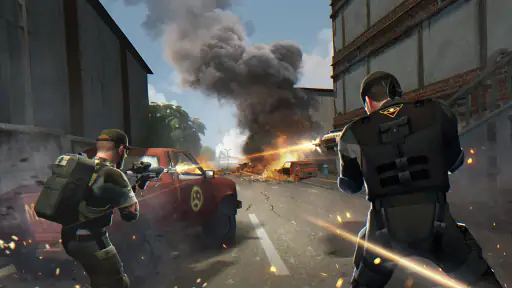
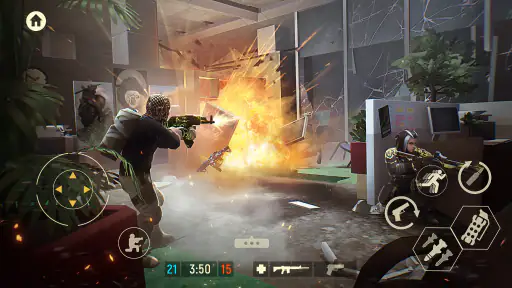
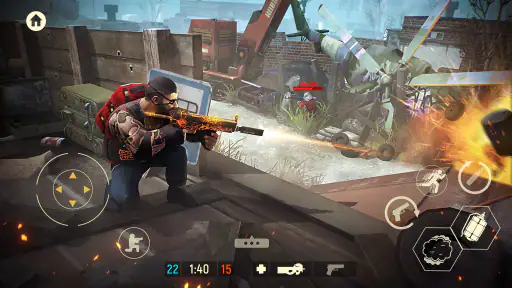
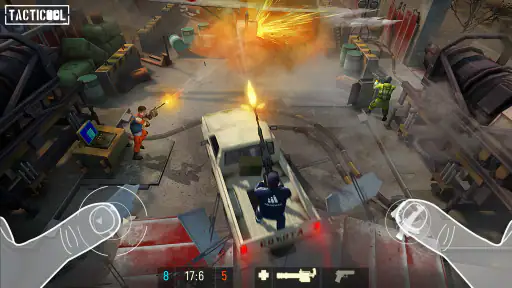
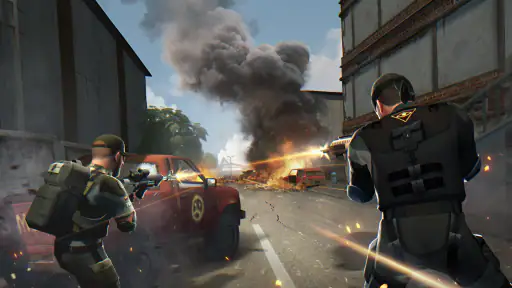
The first thing I noticed is that a competitive shooter has to communicate several kinds of information at once. I need to understand where my character is, where danger is coming from, what weapon I am carrying, and what my teammates are doing. Tacticool’s appeal comes partly from that constant flow of decisions, but the same density can make the screen demanding. A player who already knows the conventions of mobile shooters will probably find the general structure easier to follow than someone who rarely plays this genre.
Navigation is most comfortable when I give myself time to learn the layout before trying to play aggressively. I would not judge the game after a single rushed match. The early learning period is important because the controls, combat rhythm, and visual cues need to become familiar enough that I can react without searching the interface. This is especially relevant for players with reading difficulties, attention differences, or limited experience with touch-screen action games. Familiarity reduces the need to process every button and indicator consciously.
I also found that readability depends heavily on the physical setup. A larger phone or tablet can make small interface elements easier to distinguish, while a bright room or strong reflections can make an already busy scene harder to parse. I would keep the display clean, use a comfortable brightness level, and avoid playing with the screen partly obscured by a case or finger. Those are simple changes, but in a game where a moment of confusion can decide an encounter, they have a real effect.
The game’s short description points to a choice between a shotgun and a frag grenade, and that choice captures an important part of its design: I am not only aiming, I am deciding how to approach a situation. A shotgun encourages close-range commitment, while a grenade asks me to think about timing and space. For a new player, it is useful to treat these choices as different ways of managing attention. If precise aiming is tiring, a weapon or tactic that rewards positioning may feel more manageable, although it still requires fast reactions.
Learning the interface without rushing
My most practical advice is to separate learning from winning. In the first sessions, I would focus on identifying the main controls and understanding what information deserves immediate attention. Trying to master movement, aiming, equipment, and team awareness simultaneously can create unnecessary frustration. Once the basic gestures feel automatic, I can spend more mental energy on tactics rather than on remembering which part of the screen does what.
This approach is also useful for players who need extra time to process visual information. Competitive games often reward speed, but speed is not the same as clarity. A player who builds a consistent routine—check position, identify cover, watch the immediate threat, then choose a weapon—may perform more reliably than someone who reacts to every visual element at once. Tacticool gives that routine a meaningful place because the action is shaped by choices, not just reflexes.
There is a trade-off here. Players who want a highly adjustable interface, large text options, or extensive visual customization should investigate the current in-game settings on their own device before committing. I would not assume that a mobile action game automatically offers every accessibility control I might want. The basic experience is understandable once learned, but that is different from being broadly configurable for every visual or cognitive need.
Motor control, sound, and sensory demands
Touch controls are central to the experience, and that creates both convenience and friction. I can start playing without extra equipment, but I also have to keep my fingers in the right places while watching the action. For players with limited dexterity, tremor, joint pain, or one-handed use, this may be more difficult than the store summary suggests. The challenge is not only pressing a button; it is combining movement, aiming, and combat decisions while the situation changes quickly.
I would test the game with the hand position I actually use in daily life rather than assuming a standard two-thumb grip will be comfortable. A player who usually holds a phone in one hand may find the action harder when the other hand is occupied. Someone using a larger device may gain screen space but lose ease of reach. These small ergonomic differences can determine whether a match feels engaging or physically tiring.
Another useful habit is to play in short blocks and stop when hand tension begins to build. Competitive pressure can make me grip the phone more firmly and tap more forcefully than necessary. That does not improve accuracy, and it can make repeated sessions uncomfortable. I get better results when I keep the device supported, relax my hands, and treat a poor match as a reason to reset rather than immediately queue again.
Players with slower reaction times should know what kind of experience they are choosing. Tacticool is not the ideal alternative to a turn-based strategy game or a slower tactical title. Its action rewards quick responses, and team encounters can become difficult before I have time to reconsider a mistake. That does not make it inaccessible to every player with motor limitations, but it does mean the game may be enjoyable only with careful pacing, a comfortable setup, and realistic expectations about competitive performance.
Sound can help, but it should not be the only support
Action games commonly use sound to reinforce danger, movement, and combat feedback. I find audio useful because it can draw attention to something outside the center of the screen, but relying on sound alone is risky. A player may be in a noisy household, on public transport, wearing no headphones, or unable to hear game audio clearly. In those situations, visual awareness becomes more important, and the screen can feel more demanding.
For a more inclusive routine, I would choose a quiet environment when possible and avoid treating headphones as mandatory equipment. If I cannot listen comfortably, I would play more cautiously, stay aware of visible cover, and accept that some reactions may be slower. This is one of the clearest differences between Tacticool and a slower single-player action game: losing an audio cue in a competitive match can matter immediately.
Players sensitive to flashing effects, rapid movement, or visual clutter should approach carefully. The battlefield is designed to communicate urgency, not calm. Even when I enjoy the energy, long sessions can feel intense. Lowering the device brightness to a comfortable level, taking regular breaks, and stopping when the screen begins to feel overwhelming are sensible choices. I would also avoid playing while tired, because fatigue makes both visual scanning and touch accuracy worse.
Playing in real-life situations
The free price makes this easy to sample, and the game’s audience is large, with over 10 million installs. In practical terms, I can imagine opening it during a break, while waiting for an appointment, or after finishing a short commute. However, a competitive match is not always suitable for a truly interrupted moment. If I may need to put the phone down without warning, a game that saves progress between pauses would be a safer choice.
This is where the difference between “mobile” and “convenient anywhere” becomes important. A phone lets me carry the game everywhere, but the action still asks for concentration. I would not start a match while walking, supervising a child, cooking, or waiting for an important call. Even a short interruption can leave me distracted, and teammates may be affected by my absence. For a reliable everyday routine, I prefer to play when I have a clear block of attention, even if that block is brief.
Connectivity and surroundings also influence the experience. A crowded place, unstable connection, low battery, or limited data environment can turn a fast match into a frustrating one. I would check those practical conditions before starting rather than blaming my performance on the game. Players who need dependable offline access should look elsewhere, while players who already use online competitive games will understand the trade-off.
The age guidance is Teen, so I would treat the game as a better choice for teenagers and adults than for young children. The action-focused design, competitive pressure, and in-app purchase model are worth discussing with younger players. The game is free to start, but individual in-app purchases range from $0.99 to $99.99. I would decide in advance whether purchases are part of my budget and use the device’s purchase controls where appropriate. That is particularly important when a child shares the phone or tablet.
Who will get the most from it?
I think Tacticool works best for players who enjoy learning through repeated matches. It suits someone who likes to test a weapon choice, adjust positioning, and gradually become more comfortable under pressure. The game is also a good fit for friends or groups who want a competitive mobile action experience rather than a long story campaign. Its strongest appeal is the moment-to-moment decision-making: choosing when to push, when to hold back, and how to use equipment in a confined encounter.
It is less suitable for people who want a predictable solo experience, very slow pacing, or controls that can be mastered without practice. I would also hesitate to recommend it to anyone who becomes stressed by team competition or who needs to pause at any time without consequences. A puzzle game, turn-based strategy game, or offline adventure would be more accommodating in those cases.
Compared with a typical casual shooter, Tacticool asks me to think more about tactics and equipment instead of simply chasing targets. Compared with a full-scale console or PC shooter, it is easier to carry and start quickly, but the small touch screen and limited physical feedback can make precision less comfortable. That middle ground is its identity. I would choose it when I want competitive action on a phone, not when I need the depth, comfort, and control of a dedicated gaming setup.
Barriers that remain after the first sessions
The main barrier is the combination of speed and touch input. Players with strong vision and quick reactions may barely notice it, while others may find that the game asks for more simultaneous actions than they can comfortably perform. The learning curve can be softened through repetition, but practice does not remove every physical limitation. If a player cannot reach the controls reliably or becomes uncomfortable after a few minutes, the game may remain a poor fit regardless of its quality.
Another barrier is the pressure created by competitive play. Even when the rules are easy to understand, the emotional load can be high. A player who needs a low-stimulation environment may find the constant urgency tiring. I would recommend treating sessions as optional entertainment rather than a test of skill. Taking a break after a frustrating match is not just good mood management; it can also prevent rushed decisions and unnecessary hand strain.
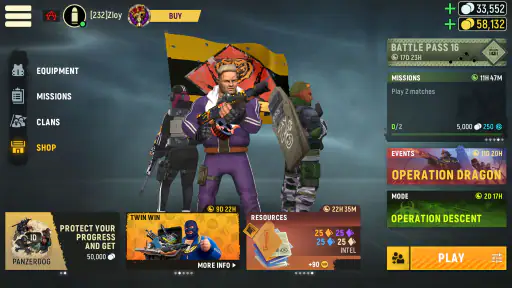
There is also a financial boundary. Free installation lowers the risk of trying the game, but the presence of purchases means families and budget-conscious players should set expectations early. I prefer to play first, decide whether the core loop genuinely suits me, and only then consider spending anything. The highest listed individual purchase is $99.99, so I would never leave purchasing decisions entirely to impulse, especially on a shared device.
Version 2.16.10 is the version associated with the current experience I reviewed, and the minimum operating system is Android 7.0. That makes the game relevant to many Android users, but device age still matters in practice. A phone may technically meet the operating-system requirement and still feel cramped, warm, or difficult to control during action. I would judge compatibility by comfort and responsiveness, not just by whether installation is possible.
Small habits that make the experience more inclusive
I found three habits especially useful. First, I would create a repeatable setup: the same grip, a stable place to rest the phone, and a brightness level that does not force squinting. Consistency reduces physical and mental adjustment between matches. Second, I would use the early sessions to learn one weapon style at a time instead of changing everything after every defeat. That makes it easier to tell whether a problem comes from strategy, controls, or simple unfamiliarity.
Third, I would plan around attention rather than around the game’s availability. A short, uninterrupted session is more accessible than a longer session repeatedly broken by notifications or responsibilities. Turning off distractions where appropriate, sitting comfortably, and stopping before fatigue changes my grip can make a bigger difference than chasing a perfect control technique.
These habits do not transform the game into a slow or fully customizable experience. They simply reduce avoidable barriers. That distinction matters: accessibility is not only a settings menu. It is also whether the player can choose a suitable environment, understand the demands, and decide honestly whether those demands fit their body and routine.
My inclusive verdict
I enjoyed Tacticool most when I treated it as a focused competitive activity rather than something to launch during every spare second. Panzerdog has built an action game with enough tactical choice to make weapon selection and positioning meaningful, and the free starting point gives curious players a straightforward way to test that style. Its Teen rating, current version 2.16.10, and broad Android compatibility make it approachable for many players, but approachability should not be confused with universal comfort.
The best reason to try it is the combination of quick firefights and meaningful tactical choices; the biggest reason to skip it is the demand it places on rapid touch control and sustained attention. Players with strong visual and motor comfort on a phone will probably find a lot to like. Players with sensory sensitivities, limited dexterity, slower reactions, or unpredictable schedules should test it cautiously and keep sessions short. If the controls feel physically tiring or the screen becomes difficult to read, another genre may serve them better.
I would recommend giving it a fair trial in a quiet, comfortable setting, learning the controls before judging performance, and deciding on purchases before entering the competitive loop. That approach answers the most important practical questions: whether the screen is readable, whether the controls suit your hands, whether your surroundings support focused play, and whether the pressure is enjoyable rather than exhausting. For me, it earns a recommendation as a mobile action game with real tactical flavor, provided the player understands that its accessibility depends as much on personal circumstances and device comfort as on the game itself.
With a 4.6 average and more than 749 thousand ratings, it is clear that many players have found that balance worthwhile. I would not recommend it as a universal choice, but I would recommend it to the right person: someone who wants free-to-start competitive action, can give each match their full attention, and enjoys improving through experimentation rather than expecting instant mastery.
Pros
- Fast-paced matches are easy to start and usually fit short play sessions.
- Destructible environments add tactical options and unexpected combat moments.
- Multiple operators offer different abilities and play styles to experiment with.
- Team objectives encourage communication and coordinated movement.
- Regular events provide additional goals beyond standard multiplayer matches.
Cons
- Progression can feel slow without frequent play or optional purchases.
- Random teammates may ignore objectives and make coordinated modes frustrating.
- The small maps can become chaotic when several players use explosives together.
- Some weapons and operators require significant time to unlock or upgrade.
- A stable internet connection is essential for responsive online matches.
- Category
- Action
- Version
- 2.16.10