Super City2:Tut Life World
- 74.00
- 3.7
- Installs
- 5.00M
- Price
- Free

Screenshots



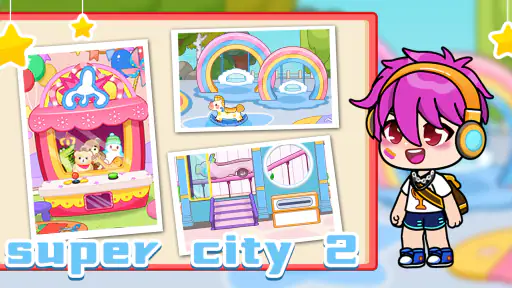


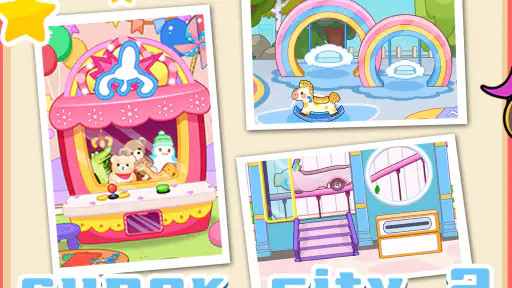
Analysis by Reviewed
I approach Super City2:Tut Life World as a relaxed, creative role-playing game: its appeal is the chance to shape spaces and imagine the lives unfolding in them, rather than chase a demanding combat or competitive loop. That makes it an easy fit for short, open-ended play, especially if you enjoy deciding what a place should look and feel like. The key question is whether its building and make-believe give you enough direction to keep returning.
What gives the first sessions direction
The game’s premise points toward creating places such as a home, hospital, or school, so a useful way to begin is to pick one setting and give it a clear purpose. I’d start with a small, specific idea—making a welcoming room or laying out a school space—rather than trying to design an entire town at once. That turns a broad creative sandbox into a manageable project and gives each session a natural stopping point.
There is a trade-off here: open-ended play can feel freeing, but it can also leave players wondering what to do next. If you prefer a game that constantly presents a clear mission, timed challenge, or measurable target, this style may feel loose. I find it works better when I bring my own goal, then treat the game as a place to try it out rather than expecting a tightly guided campaign.
Progress you can see, and pacing you set
In a creative game like this, the most useful progress signal is often the space you have changed. A room with a coherent purpose, or a building that feels more complete after a few small decisions, can make a session satisfying without requiring a leaderboard or a difficult win. One practical trick is to choose a visual theme before placing items; it helps keep a project focused and makes it easier to decide what belongs.
That approach also makes the difficulty curve gentler: you can scale your own ambition instead of treating every building as a test. But the same freedom means the game may not provide the steady sense of unlocking and escalating challenge that some role-playing games offer. I would not choose it for intense progression pressure; its pace is better suited to players who like making their own milestones.
Step into a World of Endless Possibilities
Picture this: a sprawling city where you’re not just a resident but also the architect of your own universe. That’s the magic of Super City2:Tut Life World. It’s a sandbox game that gives you the tools to create, explore, and interact with a vibrant, ever-evolving world. Whether you want to build skyscrapers, design your dream home, or run a bustling city, the options are limitless.
Customization Galore
One of the standout features is the level of customization the app offers. From the tiniest details in your home to the grandest structures in the city, you have complete control. The game boasts an impressive catalog of items and decorations, ensuring that your space reflects your unique style. Plus, the intuitive interface makes it a breeze to bring your vision to life.
More From Our News Desk

Clash of Clans Is Won Between the Battles

Android Auto Makes the Case for Quieter Car Software

MobiOffice: Transforming Mobile Productivity with Seamless Integration

EA SPORTS FC™ Mobile Soccer: Redefining Mobile Sports Gaming

How Microsoft OneDrive Became a Mobile Productivity Giant

How Google Translate Breaks Language Barriers Effortlessly
For a more useful test than simply browsing possibilities, I’d make one themed space, give it a purpose, and see whether arranging it feels enjoyable after the initial novelty passes. That is a better measure of fit than asking whether the game has endless options: a broad catalog only matters if choosing and placing things is fun for you. I’d also keep a rough idea of the layout in mind before decorating, so the project stays readable rather than turning into a collection of unrelated objects.
Engaging Gameplay
The gameplay is where Super City2:Tut Life World truly shines. It’s not just about building; it’s about living. You can create characters, embark on adventures, and even form relationships. The app encourages creativity and experimentation, allowing players to truly immerse themselves in their creations. With regular updates and new content, there’s always something fresh to explore.
For an everyday use case, I can imagine opening it during a quiet break, deciding that today’s small project is to make a home feel lived-in, then returning another time to continue the same idea. That kind of self-set routine suits the game’s creative premise better than expecting a short session to deliver a dramatic story beat. If I were choosing for someone who wants a clear quest chain or a demanding challenge curve, I’d point them toward a more structured role-playing game instead.
Interactive Community
What’s a city without its people? The app features a lively community where players can share their creations, collaborate on projects, and even participate in challenges. This social aspect adds a layer of depth to the game, making it a much richer experience. Plus, it’s a great way to get inspired by others and learn new tricks to enhance your own gameplay.
It is worth separating the appeal of personal building from the social side: if sharing and seeing other ideas motivates you, community activity can help supply fresh inspiration. If you would rather create privately, the central attraction remains the freedom to work on your own spaces. I would treat any challenge as an optional prompt, not a reason to measure your creativity against somebody else’s finished build.
Who will get the most from it
I see this as a good fit for players who enjoy arranging rooms, inventing little stories, and deciding what a place is for without being hurried along. It can also suit a parent looking for a creative game to explore alongside a child, since its age rating is Everyone. A shared session can be as simple as choosing a building and discussing what each space should do; that gives the play a light structure without turning it into a set of rules or a competition.
It is less convincing for someone who wants a steady stream of explicit objectives. Before installing, ask yourself whether you enjoy making your own brief: “today I’ll make the school feel welcoming,” or “I’ll give this home a consistent style.” If that sounds like a pleasant way to play, the open format may click. If it sounds like homework, a quest-led game with clear tasks and rewards is likely a better match.
A practical way to keep a project manageable
One useful approach is to separate planning from decorating. First decide who might use the space and what mood you want it to have; then make only the choices that support that idea. This simple constraint helps when a creative sandbox offers many possible directions, because it reduces aimless switching between objects and gives you a clear standard for deciding what to keep. I’d finish one room or corner before expanding the project, rather than scattering attention across a whole town.
For longer-term play, I would keep a small mental note of what I want to change next time. That makes it easier to return after a break without feeling obliged to rebuild everything or start over. A project can grow through a few modest visits: set a purpose, make a handful of coherent choices, then pause once the result feels complete enough. This is a self-made progression method, not a substitute for players who specifically want the game to hand them a sequence of unlocks.
Where the freedom has limits
The trade-off with a broad creative premise is that personal goals have to do more of the work. If I arrive without an idea, I may spend time browsing possibilities without feeling that I have made meaningful progress. A theme, a room’s intended use, or a small story for the characters can prevent that drift, but players who prefer the game itself to direct every session may find those workarounds less satisfying.
I would also avoid treating the social angle as essential to enjoying the core idea. Sharing creations or drawing inspiration from other players may appeal to some people, while private builders may prefer to focus on their own layouts. The important choice is whether making a place feel distinctive is rewarding by itself. If it is not, community inspiration is unlikely to turn an otherwise loose experience into a structured campaign.
Why You Should Dive In
If you’re someone who loves creativity, storytelling, and a bit of escapism, this app is definitely worth checking out. It combines the best elements of simulation and creativity games to deliver an experience that’s both fun and fulfilling. Whether you’re spending a few minutes or a few hours, you’ll find yourself coming back for more.
In practical terms, it is free to start, with in-app purchases ranging from $0.99 to $19.99 per item. I’d keep that distinction in mind if you are setting a spending limit, particularly for a younger player: the game is rated Everyone, but purchases still make it sensible to agree on boundaries. It is made by Hainan Hengdou Network Technology Co., Ltd.; the current version is 1.0.26, and it requires Android 7.0 or later. Its 3.7 average from around 6,800 ratings and over 5 million installs suggests a sizeable audience, though popularity alone cannot tell you whether its relaxed, self-directed rhythm will suit you.
For context, it sits closer to a make-believe life-and-building sandbox than to a conventional role-playing game centered on battles, equipment, or a long sequence of quests. I’d choose it over that usual alternative when I want to arrange places and invent scenes; I’d choose a more goal-driven RPG when I need clearer unlocks and a stronger challenge curve. The game was released on March 15, 2024, but the more useful question for a new player is whether designing spaces is enjoyable enough to become its own reward.
My progression verdict
For me, the strongest reason to try it is the way it lets a player define what “progress” means: a more inviting home, a school with a clear identity, or simply a place that now feels like it belongs to a story. That can make even a brief visit feel worthwhile when I set a small intention first. It is not the same satisfaction as earning a difficult reward, and that distinction matters when choosing between this and a more conventional RPG.
I would recommend giving the game a fair test through one modest project rather than judging it by how quickly it opens up. Pick a setting, decide on a purpose, and see whether the act of shaping it holds your attention. If you find yourself thinking of the next detail to add after closing the game, its relaxed loop is doing its job. If you keep waiting for a clear objective to arrive, that is a useful sign that a more structured alternative will suit you better.
So, are you ready to build your dream world? Dive into Super City2:Tut Life World and let your imagination run wild. Trust me, once you start, you won’t want to stop.
Super City2:Tut Life World Frequently Asked Questions
Who developed Super City2:Tut Life World, and what kind of game is it?
Super City2:Tut Life World is a role-playing game developed by Hainan Hengdou Network Technology Co., Ltd. Its focus is a mini hometown where you can design, build, and makeover places such as a house, hospital, and school. If you enjoy shaping a setting and exploring everyday-life scenarios, that creative, town-focused premise may be a good fit before you decide to download it.
What is Super City2:Tut Life World all about?
Super City2:Tut Life World is an immersive simulation game where players can create and explore their own virtual city. It offers a vibrant world filled with customizable characters, interactive environments, and a variety of activities and missions. Players can engage in daily life scenarios, build relationships, and unlock new content as they progress through the game. Its store summary also highlights designing, building, and making over a home, hospital, and school in a mini hometown, giving the experience a creative everyday-life angle.
What platforms are supported for Super City2:Tut Life World?
Super City2:Tut Life World is available on both Android and iOS platforms, making it accessible to a wide range of mobile users. It can be downloaded from the Google Play Store for Android devices and the Apple App Store for iOS devices. Ensure your device meets the required specifications for optimal gameplay. Android users should check that their operating system is version 7.0 or later before installing.
Is Super City2:Tut Life World free to play?
Yes, Super City2:Tut Life World is free to play, allowing users to download and enjoy the game without any initial cost. However, the game does offer in-app purchases for various items and enhancements that can enhance the gaming experience. Players can choose to spend real money to acquire these optional features. Individual purchase prices range from 99 cents to $19.99, so it is worth reviewing purchase settings if children will be playing.
What age group is Super City2:Tut Life World suitable for?
Super City2:Tut Life World is designed to be family-friendly and suitable for players of all ages. The game features engaging content that can be enjoyed by children and adults alike. However, parents should be aware of the in-app purchases and supervise younger players to ensure a safe and enjoyable gaming experience. Its content rating is Everyone, while purchase controls can help families manage optional spending.
Pros
- Diverse character customization options
- Engaging open-world exploration
- Regular updates with new content
- User-friendly interface
- Interactive storytelling elements
Cons
- In-app purchases can be costly
- Occasional bugs disrupt gameplay
- Requires constant internet connection
- Limited offline play features
- Advertisements can be intrusive

- Category
- Role Playing
- Version
- 1.0.26