Subnautica
- 566.00
- 4.6
- Installs
- 100.00K
- Price
- $9.99

Screenshots
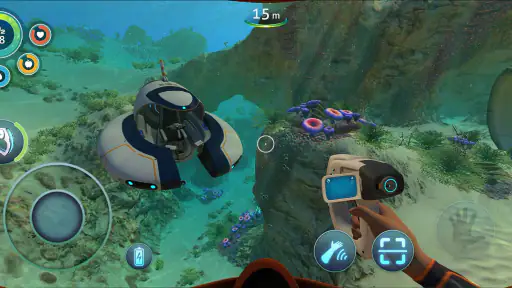
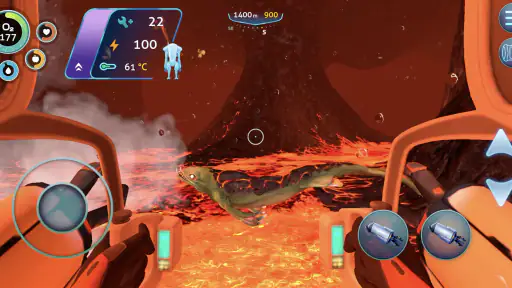
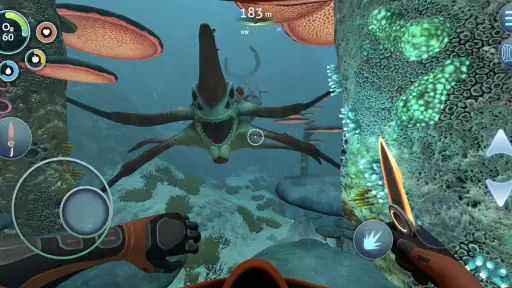
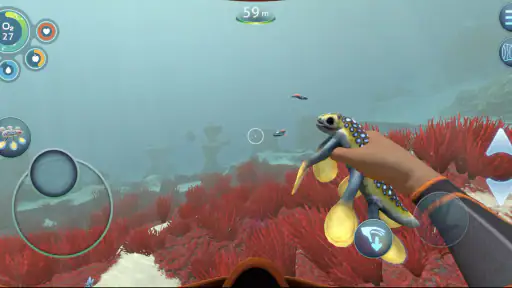
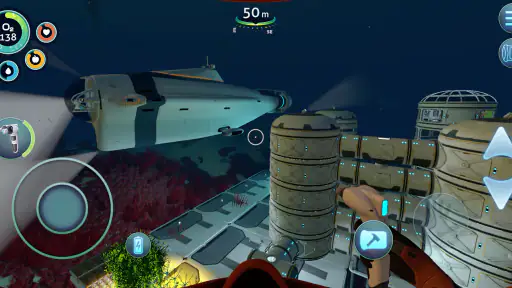
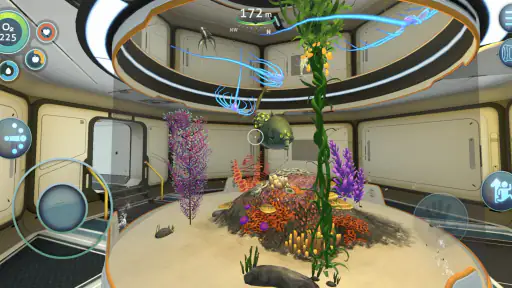
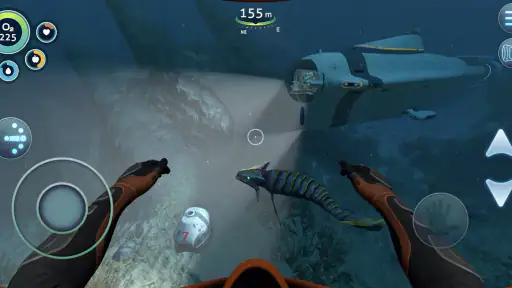
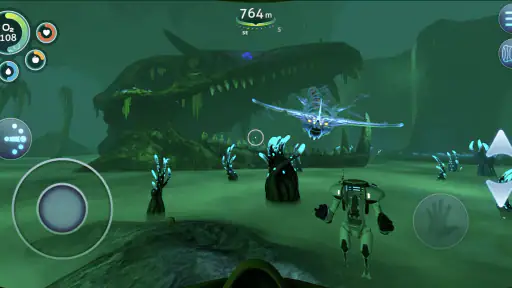
Analysis by Reviewed
Subnautica is the kind of adventure game that made me slow down and pay attention to my surroundings. Instead of pushing me through a line of objectives, it places me in an underwater world and asks me to survive, explore, and work out what matters. I spent much of my time balancing curiosity against sensible caution: a deeper trench might reveal something important, but it might also leave me short on air or supplies.
That tension is the main reason I found the game memorable. It is not simply an ocean sightseeing experience, and it is not a conventional action game either. The adventure comes from understanding an unfamiliar environment, learning which areas are safe enough to revisit, and gradually becoming better prepared for places that initially feel impossible. Unknown Worlds has built an experience that rewards patience more than constant speed.
How the underwater adventure works in practice
The game begins with a simple problem: staying alive in an ocean that clearly contains more than I understand. Early exploration is deliberately constrained by basic equipment and limited breathing time. Every trip away from safety becomes a small planning exercise. I had to decide what to carry, how far to travel, and when to turn back rather than treating the environment as an endless playground.
That early pressure gives ordinary discoveries real importance. A resource found close to the starting area can be more useful than an impressive sight far below the surface if it helps me prepare for the next outing. I learned to treat familiar locations as supply routes instead of assuming that every journey needed to uncover something new. This makes progression feel earned because knowledge, not only equipment, changes what I can do.
The open-world structure also creates a pleasing lack of certainty. I often noticed a landmark while doing something unrelated, then changed my plans to investigate it. Sometimes that led to a useful discovery; sometimes it produced a dangerous detour. The game is at its best when it lets curiosity guide me without making every interesting object an obvious task marker.
Why the setting carries so much of the experience
The ocean is not just a backdrop. Depth, darkness, visibility, and unfamiliar creatures all affect how I make decisions. A calm-looking area can still become stressful when I am far from safety, while a frightening location can become manageable once I understand its layout. That gradual shift in confidence is more satisfying than simply unlocking a stronger weapon.
I also appreciated how the environment encourages observation. Before entering a new region, I found myself checking the route, thinking about escape options, and noticing patterns in the creatures around me. This is one of the less obvious strengths of the game: careful observation is often more valuable than rushing toward the next objective.
For a realistic everyday scenario, imagine playing after work with only a short session available. I might begin by collecting materials near a familiar base, organize what I found, and make one focused trip rather than attempting a major expedition. That kind of session still feels productive. The game supports both long exploratory evenings and smaller visits where preparation, crafting, or mapping out a route becomes the entire goal.
Progression rewards preparation instead of repetition
Progression is most enjoyable when I could connect a new tool or piece of knowledge to a specific problem. A deeper area stopped being an abstract challenge and became a destination I could approach with a reason. The result is a strong sense of personal progress: I was not merely watching numbers rise, but learning how to use the world more intelligently.
One useful habit is to keep separate mental categories for immediate supplies and expedition supplies. If everything is consumed casually near safety, a later journey can become frustrating before it even starts. I found it better to reserve certain materials for planned trips and return from exploration with enough room to store what I discovered. That workflow reduces backtracking and makes the limited inventory feel like a meaningful planning tool rather than an annoyance.
Another practical tip is to treat returning safely as part of the objective. It is tempting to judge a trip only by what I found, but a discovery that remains stranded in an inventory or is lost during a reckless return has less value. I became more efficient once I began setting a clear turnaround point before entering unfamiliar territory.
What makes the game different from usual adventure alternatives
Compared with a typical action-adventure game, this one gives the environment more authority. There is less comfort in assuming that the next encounter can be solved by attacking quickly. Compared with a relaxed exploration title, it carries more survival pressure and asks me to care about resources, preparation, and retreating at the right time.
That combination makes it a better fit for players who enjoy discovery with consequences. If I want constant combat, a faster reward cycle, or a clearly marked route from one objective to the next, another adventure game may feel more immediately satisfying. Here, the most rewarding moments often come after uncertainty, and the game expects me to tolerate some confusion while I learn.
The underwater setting also changes the emotional rhythm. Open spaces can feel peaceful, but that calm is never completely separate from vulnerability. The same environment can be beautiful during one visit and intimidating during another, depending on how prepared I am. That contrast gives the world a character that many land-based exploration games do not achieve as consistently.
Cost, platform details, and what the purchase means
This is a paid game listed at $9.99, so the value question is straightforward: I would judge it as a complete premium adventure rather than expecting free access. It also lists in-app purchases at $0.49 per item, which is worth noticing before buying, especially if I prefer a purchase experience with no additional spending decisions. The price makes sense to me when I want a substantial world to explore over time, not when I am looking for a quick casual distraction.
The game is listed for Everyone 10+, and its adventure content is suitable for players who can handle suspense and survival pressure without needing a relentlessly intense action experience. I would still consider the individual player, because the darkness, isolation, and occasional danger can feel more demanding than the age label alone suggests.
On Android, the listed minimum operating-system requirement is Android 10. The current version shown is 1.22.83416, which is useful to check against the device before purchasing. I would also make sure the phone or tablet has enough comfortable storage and a control setup I can tolerate, because underwater navigation benefits from a clear view and responsive movement. A larger screen may make orientation easier than a small phone display, particularly during longer exploration sessions.
The game has an average rating of 4.6 from around 6,300 ratings, along with over 500,000 installs. Those figures suggest that the mobile release has attracted a meaningful audience, but they do not replace my own compatibility check. A demanding open-world experience can feel very different depending on screen size, controls, and how comfortable I am playing for extended periods on a mobile device.
Where the value is strongest
The strongest value comes from the way one discovery changes later decisions. A location is not necessarily useful only once. It can become a reference point, a route, a source of materials, or a warning about what I am not ready to face. That layered usefulness gives exploration more staying power than a checklist of collectibles.
I also found value in the game’s ability to create self-directed goals. I could spend a session improving my preparation, investigating a suspicious area, organizing resources, or simply learning the geography around a familiar region. Players who enjoy making their own plans will likely get more from the purchase than players who need constant external direction.
A less obvious advantage is that failure can teach something even when it costs progress. A dangerous encounter may reveal a boundary, a poor route, or a preparation mistake. I did not always enjoy the setback in the moment, but it often made the next attempt more deliberate. The trade-off is that the game expects me to learn from mistakes rather than smoothing them away.
The friction you should expect before buying
The same freedom that makes exploration compelling can also make the game feel vague. I occasionally had to decide what to investigate next without a perfectly clear instruction. That uncertainty is part of the design, but it may frustrate anyone who prefers a tightly guided campaign. I would not recommend buying it solely because the underwater setting looks attractive; the real experience includes planning, waiting, returning, and sometimes getting lost.
Inventory and travel decisions can also interrupt the sense of adventure. Carrying too much leaves less room for discoveries, while carrying too little can force an early return. I eventually accepted this as part of the survival loop, but players who dislike resource management may see it as busywork. The game is more enjoyable when I treat organization as preparation for exploration rather than as a chore between exciting moments.
Another trade-off is pacing. The opening hours can feel more restrictive than the later experience because I am still learning the world and working within narrow limits. That gradual expansion is rewarding, but it asks for patience. If I only have time for short sessions and want immediate spectacle, the purchase may not deliver that feeling every time I launch it.
Mobile play introduces its own practical question: whether touch controls suit the player. I found that careful movement and environmental awareness matter too much for me to ignore control comfort. Anyone considering the game should try to play in a position that keeps the screen visible and the device steady. A poor grip can turn an otherwise thoughtful exploration session into unnecessary frustration.
Who will get the most from it
I would recommend this adventure to players who enjoy exploration with a genuine sense of risk. It is especially appealing if I like discovering systems gradually, keeping track of useful locations, and making decisions without a constant stream of instructions. The game also suits people who enjoy alternating between calm preparation and tense expeditions.
It is a good choice for a player who wants one world to revisit rather than a short sequence of disconnected levels. The ability to return to familiar areas with better knowledge gives the setting continuity. I found myself remembering routes and hazards, which made later journeys feel personal rather than procedurally interchangeable.
I would skip it if my priority is fast combat, instant rewards, or a dependable objective marker at every moment. I would also hesitate to recommend it to someone who dislikes backtracking, inventory decisions, or the possibility of losing time because a trip was poorly planned. A different adventure game will be better if clarity and momentum matter more than discovery and atmosphere.
For families, the Everyone 10+ rating makes it easier to consider for younger players, but I would still explain that survival tension is central to the experience. It is not a purely peaceful ocean simulator. A child who enjoys exploration and problem-solving may find it fascinating, while one who dislikes darkness or sudden danger may not have a comfortable time.
My buying recommendation
For me, the purchase is worthwhile when I want a premium adventure that can support both focused short sessions and longer expeditions. The listed price is reasonable for the depth of the experience I received, provided I am genuinely interested in learning an open world instead of merely visiting it. The extra per-item purchase option is something I would keep in mind, but it does not change the core appeal of the game for me: the main value comes from exploration and preparation.
I would buy it on a compatible device if I enjoy patient discovery, survival planning, and an atmosphere that can shift from peaceful to unsettling without warning. I would skip it if I need a quick, highly directed game or if touch-based exploration is likely to feel uncomfortable. In my experience, the best reason to choose Subnautica is not the promise of an underwater world, but the satisfaction of gradually learning how to belong in it.
Unknown Worlds has created an adventure that trusts the player to notice details, make mistakes, and form their own routines. That trust can produce confusion and occasional friction, but it is also what makes the experience feel personal. I came away remembering decisions and routes rather than only set pieces, which is a strong sign that the game offers more than a striking setting. If that kind of slow-burn discovery sounds appealing, this is one of the more distinctive paid adventures I would recommend trying.
Pros
- Immersive underwater world with varied biomes to explore.
- Strong survival mechanics reward planning and resource management.
- Compelling story unfolds through exploration and discovered logs.
- Base building offers plenty of creative freedom and customization.
- Atmospheric sound design makes the ocean feel alive and mysterious.
Cons
- Large creatures can cause sudden difficulty spikes for new players.
- Resource gathering becomes repetitive during extended play sessions.
- Some objectives are unclear without carefully tracking discovered clues.
- Performance may suffer on older devices or during complex base builds.
- Limited combat options may disappoint players seeking action-focused gameplay.

- Category
- Adventure
- Version
- 1.22.83416