Street Dude - Homeless Empire
- 4.56K
- 4.6
- Installs
- 5.00M
- Price
- Free

Screenshots

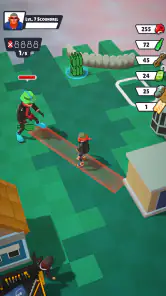
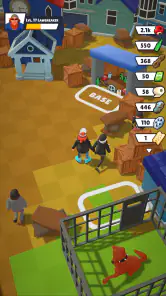


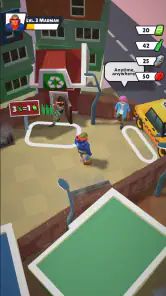

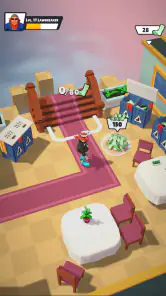
Analysis by Reviewed
I approached Street Dude - Homeless Empire as a casual adventure game rather than as a serious simulation of homelessness. That distinction matters. Its central idea is a rise-from-nothing journey through a street setting, but the experience is built for quick decisions, simple progression, and light entertainment. I found it easiest to enjoy when I treated it as a short-session mobile game, not as a detailed management or narrative adventure.
The game is free to start and comes from SayGames Ltd. It sits in the adventure category, carries an Everyone 10+ age rating, and has reached over 5 million installs. Its average rating is 4.6 from around 102 thousand ratings, which suggests that the basic loop appeals to a broad mobile audience. After spending time with it, I can see why: the premise is immediately understandable, the presentation is approachable, and the game does not demand a long explanation before you can begin.
How the street adventure feels to play
Readable goals and straightforward navigation
The strongest accessibility quality here is the clarity of the basic objective. You begin at the bottom and work toward a wealthier, more successful position. That gives each activity an obvious purpose, even when the individual actions are simple. I rarely felt lost about the general direction of progress, which is useful for players who prefer games with a visible short-term aim instead of a complicated quest structure.
The interface is designed around the conventions of a mobile game. Menus, rewards, and progression elements are presented as part of a compact screen layout, so the experience feels more suitable for tapping through brief sessions than for studying a large world map. I could pick it up, understand what needed attention, and put it down without having to remember a complicated control scheme.
That simplicity also makes it a reasonable choice for someone who does not regularly play adventure games. A friend who finds traditional role-playing games overwhelming would probably understand the broad idea quickly. The game does not ask the player to learn a large set of commands before the premise becomes clear.
There is a trade-off, though. Simple navigation is not the same as perfect readability. Mobile interfaces can become visually busy when several rewards, prompts, and upgrade-related elements compete for attention. Players with reduced vision may need to hold the phone closer or use a larger display. I would not choose this game specifically for someone who needs large text, high contrast, or extensive interface customization, because I did not find those needs addressed as a central part of the design.
Why short sessions work well
In my experience, the game fits naturally into small gaps in the day. I can imagine playing while waiting for an appointment, during a short commute when it is safe to do so, or for a few minutes before bed. The premise gives those sessions a feeling of progress, even when I do not have enough time for a long adventure.
A realistic example is a player who has ten minutes during a lunch break. They can open the game, complete a few actions, collect progress, and close it without needing to reach a dramatic story checkpoint. That is more convenient than a console-style adventure that expects uninterrupted attention for half an hour.
The same design may frustrate somebody looking for deep exploration. The street setting provides the identity of the game, but the experience is not comparable to a large open-world adventure with extensive dialogue, branching stories, or detailed environmental puzzles. I would recommend it to someone who wants a light progression loop, not to someone expecting a fully developed social or economic simulation.
Motor demands and touch interaction
The game is built for touch interaction, which keeps the physical barrier relatively low for players comfortable with tapping and swiping on a phone. I did not need a controller to understand the basic play. That makes it more approachable than an action game that depends on precise virtual buttons, rapid camera movement, or several simultaneous inputs.
Still, touch controls are not automatically accessible to everyone. Players with tremors, limited fine-motor control, or difficulty holding a phone steadily may find repeated tapping less comfortable than it appears. A large-screen phone or tablet could make the interface easier to handle, but that is a practical workaround rather than a dedicated accessibility feature.
One useful habit is to play with the device supported on a table instead of holding it in the air. That reduces fatigue and can make taps more deliberate. I also found that short sessions are preferable to long ones because repeated interaction with a small screen can become tiring. This is a modest but important trade-off: the game is easy to start, yet its comfort depends heavily on how the player holds and views the device.
Players who need switch access, voice control, haptic alternatives, or highly adjustable touch timing should be cautious. I would not assume that the game will adapt well to those methods. Someone who relies on specialized input may have a better experience with a title that advertises explicit control customization or broader device support.
Visual and sensory considerations
The colorful mobile presentation helps communicate that this is a playful adventure rather than a realistic depiction of hardship. That tone may make the game approachable for people who prefer stylized environments. At the same time, bright colors, animated movement, and changing on-screen elements can be tiring for players sensitive to visual stimulation.
I recommend lowering the device brightness and taking regular breaks if the screen feels intense. Playing with a larger display can also help separate small interface elements, although it may not solve every readability issue. If you are sensitive to motion or busy animation, try a brief session first rather than committing to a long play period.
Sound is another situational concern. I would not treat audio as essential to understanding the broad progression, so playing quietly or with the volume reduced is practical for public spaces and for people who prefer less sensory input. However, anyone who depends on audio cues should test the game personally before assuming that every important event is communicated clearly through sound.
The Everyone 10+ rating gives families a useful starting point, but it is not a substitute for a parent’s judgment. The premise involves homelessness and social survival, presented through a humorous and simplified game format. A younger player may understand the objective as a cartoon climb toward wealth, while an adult may notice the gap between the playful mechanics and the real-life subject matter.
Playing in different everyday situations
Street Dude works best when the player can give the screen undivided attention for a few minutes. It is not a good choice while walking, crossing roads, cooking, or doing anything that requires awareness of the surroundings. The game’s short-session character makes it tempting to open anywhere, but safe use still depends on choosing the right moment.
For travel, the main advantage is that the game feels self-contained as a quick activity. I would use it during a wait rather than during a busy journey. On a crowded bus or train, small interface elements may be harder to tap accurately, and glare can reduce readability. A quiet seat and a stable grip make a noticeable difference.
It may also suit households where different people share a device, because the premise is immediately recognizable and does not require a long tutorial explanation before the game makes sense. On the other hand, shared-device players should pay attention before making purchases. The game includes in-app purchases ranging from $0.99 to $49.99 per item, so accidental taps or an unsupervised child using the device deserve consideration.
Because it is free to download, the first step is relatively low risk. I would still recommend deciding in advance whether you are comfortable with optional spending. Players who want a completely uninterrupted experience with no purchase pressure may prefer a paid game with a clearer one-time model, even if that means giving up the convenience of starting for free.
Progression, patience, and spending choices
The appeal comes from watching a modest starting position develop into something more successful. That kind of upward movement is satisfying in short bursts because each return to the game can feel connected to the previous one. I enjoyed the sense that small actions were part of a larger climb, even though the overall structure remains lighter than a traditional adventure campaign.
The important question is whether you enjoy gradual progression. If you like checking in, collecting progress, and making the next improvement, the design has a clear attraction. If you prefer puzzles with a definite solution, a story that advances through carefully written scenes, or combat that rewards precise skill, this may feel too repetitive.
My practical advice is to avoid treating every available upgrade or reward as something that must be purchased immediately. Play long enough to decide whether the basic loop is enjoyable on its own. That approach makes the free entry point more useful and helps prevent the common mobile-game mistake of spending money before knowing whether the core activity holds your attention.
The presence of purchases also changes how I would recommend it to children. Even with an Everyone 10+ rating, I would explain that free installation does not mean every item inside the game is free. On a family device, purchase protections are worth considering. That is not a criticism unique to this title, but it is especially relevant when the game’s progression encourages the player to think about becoming richer and improving their position.
Remaining barriers for different players
The biggest barrier is not learning the premise; it is deciding whether the simplified treatment matches your expectations. The game uses homelessness as the starting point for a playful rise-to-riches structure. Some players may find that framing uncomfortable or too shallow, particularly if they want a thoughtful treatment of poverty, housing insecurity, or social inequality. In that case, a narrative game focused on lived experience would be a better choice.
Another barrier is repetition. Short-session progression can be relaxing, but it can also lose its appeal if the player wants constant novelty. I would skip this game if you need complex problem-solving, rich character development, or a large amount of player control. Its strength is convenience, not depth in every direction.
Visual accessibility may also limit the audience. Without relying on claims about special accessibility modes, I would say plainly that people who need adjustable text size, strong contrast options, reduced motion, or alternative input methods should investigate the current device experience carefully before settling in. A tablet may improve comfort, but it cannot guarantee that every personal need will be met.
Performance expectations should remain modest as well. The current version is 1.3.2 and supports devices running Android 8.0 or later. That broad compatibility helps many Android users get started, but an older phone can still be less comfortable for a visually busy mobile game than a newer, brighter device. I would keep the game updated and use the screen size that makes tapping easiest.
Who I would recommend it to
I would recommend Street Dude to players who want a free adventure game with an immediately understandable climb from poverty to wealth, especially if they enjoy checking in for short sessions. It is a good fit for casual players, people new to mobile games, and anyone who prefers progress that can be enjoyed without committing to a long story at once.
I would also suggest it to someone who likes the feeling of building upward but does not want a demanding strategy game. The game gives that ambition a simple mobile form. It is easy to imagine opening it briefly, seeing what has changed, and deciding what to work toward next.
I would not recommend it as the first choice for players seeking realism, emotional storytelling, extensive accessibility customization, or a premium experience without optional purchases. Those players may be happier with a carefully written narrative adventure, a deeper management game, or a paid title that focuses on a single complete campaign.
My inclusive verdict
After trying it as both a casual adventure and a game that needs to work in ordinary situations, I see Street Dude as approachable but not universally accommodating. Its clear premise, touch-based design, and short-session rhythm lower the entry barrier. The free starting point also makes it easy to test without committing money immediately.
Its limitations are equally clear. Small-screen play may challenge some users, repeated touch interaction may be uncomfortable for others, and the colorful mobile presentation will not suit every sensory preference. The simplified treatment of homelessness also deserves consideration before recommending it to someone who expects social realism rather than cartoon-like progression.
My final recommendation is to try it for its compact climb-and-progress loop, while setting realistic expectations about depth and accessibility. The game is at its best when I want a quick, readable diversion and do not mind optional purchases appearing along the way. If that describes you, SayGames Ltd has made a convenient adventure for spare moments. If you need extensive control options, a quieter visual experience, or a more serious story, I would choose a different game instead.
Pros
- Simple controls make it easy to pick up and play.
- Short missions suit quick gaming sessions.
- The humorous style keeps the experience lighthearted.
- Unlockable items add variety to progression.
- Runs well on many older mobile devices.
Cons
- Frequent ads can interrupt gameplay and progression.
- Some tasks become repetitive after extended play.
- The humor may not appeal to every player.
- Progress can feel slow without optional purchases.
- Limited depth may disappoint players seeking a complex simulator.

- Category
- Adventure
- Version
- 1.3.2