Sprunki Ragdoll Playground
- 0.00
- 0.0
- Installs
- 10.00K
- Price
- Free

Screenshots
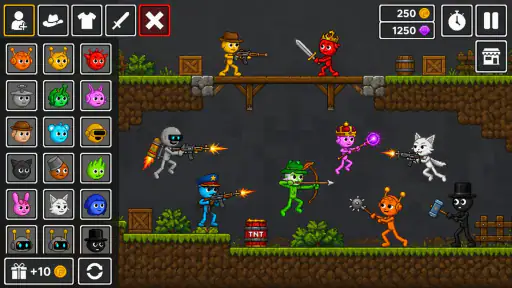
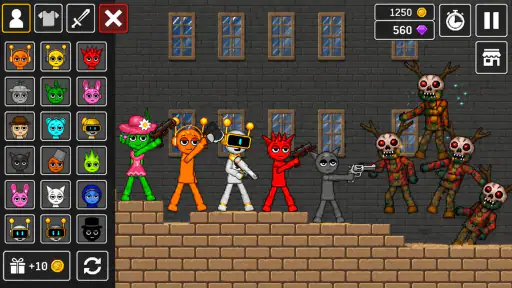
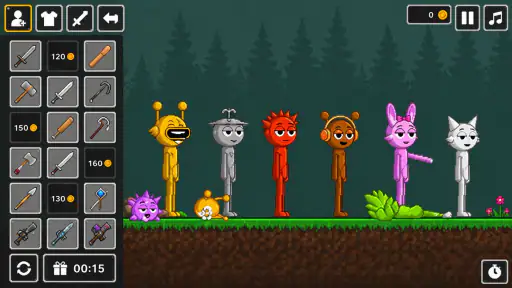
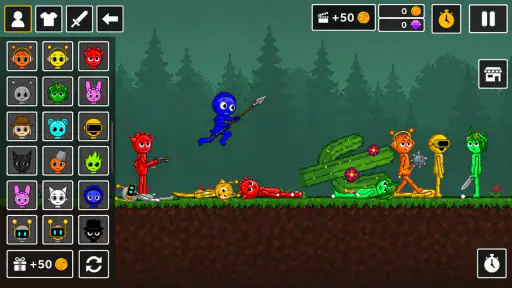
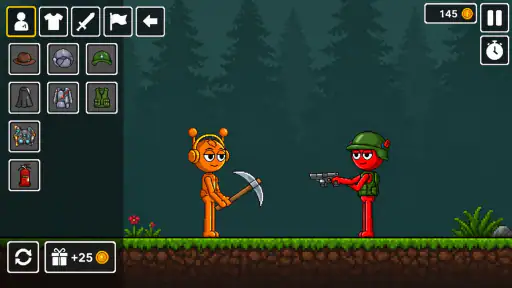
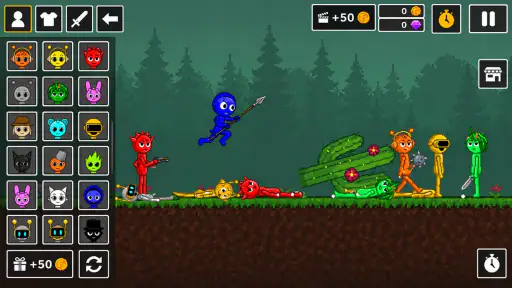
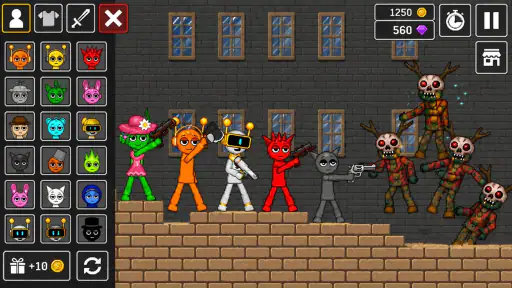
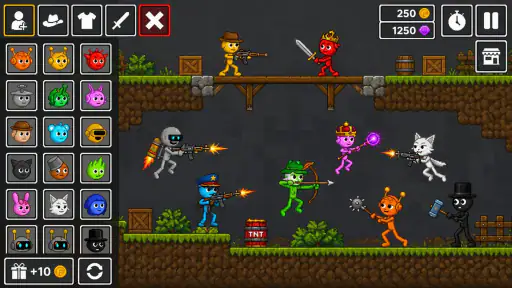
Analysis by Reviewed
I went into Sprunki Ragdoll Playground expecting a quick physics toy, and that is exactly where it works best: as a small, free simulation game built around playful experiments rather than a fixed campaign. I can place ragdoll characters, create a situation, watch the physics react, then tear the whole scene apart and start again. That simple loop makes it easy to pick up for a few minutes, but it also gives curious players room to invent their own challenges.
The game is made by Doublentil and sits in the simulation category. It is free to play, rated for Everyone, and currently has over ten thousand installs. Those details give a useful picture of its position: this is an accessible sandbox rather than a large, established production competing with the biggest physics games. I would recommend trying it if you enjoy experimenting with objects and characters without being pushed through missions, timers, or a traditional win screen.
How the playground feels in its current state
The central appeal is the freedom to build and destroy. Instead of treating destruction as a failure, the game makes it part of the entertainment. I found myself making a small arrangement, watching the ragdolls react, and then changing one element to see whether the result became more chaotic or more controlled. That kind of immediate cause and effect is the reason to install it.
It is also a good fit for players who like visual surprises. A carefully arranged scene can collapse in an unexpected way, and an ordinary setup can become entertaining simply because the characters move differently than anticipated. The experience is less about mastering a complicated rule set and more about learning how to create situations that produce interesting reactions.
That freedom does come with a trade-off. If you need clear objectives, a progression path, or a steady stream of unlocks, the open-ended format may feel thin. I would not choose this as my main game for a long commute if I wanted a campaign to work through. I would choose it when I wanted a low-pressure toy that lets me decide what happens next.
A practical way to start experimenting
My advice is not to begin by trying to make the biggest possible scene. Start with one character and one simple arrangement. Observe how the ragdoll responds, then add only one new element at a time. This makes it easier to understand which change caused a particular movement, collapse, or chain reaction.
Once the basic behavior feels familiar, build a repeatable setup. For example, I might create a narrow passage, place a character at one end, and then alter the surrounding structure in small steps. The point is not to find a single correct solution; it is to compare outcomes. This turns casual play into a lightweight physics experiment and gives the sandbox more staying power than random tapping.
A second useful habit is to leave space between objects. Crowding everything together may produce immediate disorder, but it can also make it difficult to see what is happening. A more open arrangement lets me identify the first movement and follow the consequences. For players who enjoy testing ideas, that visibility is more valuable than filling every part of the scene.
Why the ragdoll format works for short sessions
There is almost no preparation required. I can open the game, make a simple setup, watch it play out, and stop without losing progress in a story. That makes it suitable for a short break, especially when I want something interactive but do not want to learn a complicated control system.
It can also work as a shared activity. One person can suggest a setup while another decides what to change, creating small challenges such as building a stable arrangement or causing a particular kind of collapse. The game does not need to be competitive for this to be enjoyable. The fun comes from comparing predictions with what the physics actually does.
Parents should still remember that an Everyone rating describes broad suitability, not whether every child will enjoy the same style of slapstick physics. Some players will find the ragdoll reactions funny, while others may prefer calmer construction games. The simple presentation is approachable, but the appeal depends heavily on enjoying playful disorder.
What the current release tells me about its direction
The current version is 1.0, which is important context when judging the experience. I see it as a starting point rather than a mature sandbox with years of refinement behind it. The foundation is easy to understand: place things, create a situation, observe the reaction, and rebuild. That is enough to make the concept work, but a first release naturally leaves room for deeper tools and broader variety later.
The game was released on August 18, 2026, so I would separate what is available now from what I might hope to see in the future. At present, the reliable reason to play is the basic ragdoll playground itself. I would not install it based on expectations of future updates or assume that a feature common in another sandbox is already here. The current build should be judged on its immediate experimentation loop.
For existing users, the move to a version 1.0 release gives the experience a clear baseline. If you already enjoy simple physics play, you can treat this as a compact tool for making scenes and testing reactions. If you are waiting for a more elaborate system, it may be wiser to watch how Doublentil develops the project rather than expecting the first release to provide the depth of a long-running alternative.
How I would compare it with familiar alternatives
Compared with construction-focused simulation games, this one places more emphasis on the reaction after the setup. In a building game, I usually care about planning, materials, structural stability, or completing a design. Here, the arrangement is often a means to an entertaining result. That makes it quicker to enjoy, but it may feel less rewarding to someone who wants detailed engineering or a persistent creation.
Compared with action games that include ragdoll effects, the difference is that the physics is the main attraction rather than a brief moment inside a larger combat system. I do not enter this expecting missions, character development, or a competitive match. I enter it to test a scene. That narrower purpose is a strength when I want experimentation, but a weakness when I want variety supplied by the game itself.
It also differs from more elaborate sandbox titles that offer extensive inventories, advanced building systems, or large communities sharing creations. Those alternatives can provide more long-term structure and inspiration. Sprunki Ragdoll Playground is easier to approach because its idea is immediate, but players who enjoy designing complex machines may eventually want a deeper toolset.
Three ways to get more from the simple concept
Use controlled changes instead of random changes. Keep the basic arrangement the same and modify one part after each test. This makes the physics easier to read and helps turn a funny accident into a repeatable experiment.
Create a before-and-after challenge. Build a scene, predict what will happen, then make one adjustment and compare the result. This gives short sessions a purpose without forcing the game into a formal mission structure.
Design for observation, not just impact. Leave enough room to see the initial movement and the chain reaction that follows. A smaller, clearer setup can be more interesting than a crowded scene because it reveals how each change affects the outcome.
These approaches matter because an open sandbox can otherwise become repetitive. The game supplies the playground, but I have to supply the questions. Asking “what changes if I move this one object?” is more rewarding than repeatedly filling the scene and resetting it without a plan.
Who should install it, and who should skip it
I think it is a good choice for casual players who enjoy physics toys, visual experimentation, and short sessions with no pressure. It is also suitable for someone who likes making their own mini-challenges instead of following instructions. Because it is free and rated for Everyone, the barrier to trying it is low, particularly for families or friends who want a simple game to explore together.
I would be more cautious if you are looking for a long progression system. The current version does not give me a reason to expect the layered structure of a major simulation title, and the open-ended format can lose its novelty if you need constant new goals. Players who prefer strategy, competitive scoring, story missions, or detailed construction should probably look at alternatives built specifically around those priorities.
It is also not the best match for someone who dislikes unpredictable physics. The same freedom that creates funny moments can make results feel inconsistent from a planning perspective. If your enjoyment depends on precise control and dependable outcomes, a puzzle game with fixed solutions may be a better fit.
What I would like to see develop
Since this is version 1.0, I would watch for improvements that make experimentation easier without taking away the simplicity. Better ways to organize a setup, clearer feedback about what is happening, and more reasons to revisit an old arrangement would all strengthen the core idea. Those are sensible areas to watch because they support the game that exists now rather than changing it into a different genre.
I would also pay attention to whether future development adds depth while keeping the first-minute experience understandable. The game benefits from being approachable. If new systems become too complicated, they could make the playground feel like a technical editor. On the other hand, carefully added variety could help experienced players continue finding new experiments after the initial novelty fades.
For someone deciding whether to download it today, my advice is straightforward: install it if you want a free ragdoll sandbox for creative messing around, and approach it as a toy rather than a full campaign game. Give yourself a small experiment first, then decide whether the physics keeps surprising you. That test tells you more than the premise alone.
My overall impression is positive but measured. Doublentil has created an accessible simulation game with a clear identity, and the build-destroy-repeat loop is easy to enjoy. Its limitations are tied to that same focus: there is less structure for players who need progression, and the long-term depth depends on how much imagination the player brings. The best reason to play is the freedom to invent a situation and immediately see it react.
At no cost, it is an easy recommendation for curious players who like playful physics and do not mind setting their own goals. I would not present it as a replacement for a large, feature-heavy sandbox, but I would keep it installed for short experiments and quick bursts of chaotic creativity. For its current release, that focused role suits it well.
Pros
- Simple physics-based gameplay that is easy to understand immediately.
- Sandbox format encourages experimentation with different objects and setups.
- Short sessions make it suitable for quick breaks or casual play.
- Ragdoll reactions can create funny and unpredictable moments.
- Usually works well for players who prefer relaxed
- non-competitive games.
Cons
- Physics interactions may feel repetitive after extended play.
- Some scenes can become cluttered when many objects are active.
- Controls may take practice when positioning items precisely.
- The game may offer limited goals beyond experimenting in the sandbox.
- Ads or optional purchases may interrupt gameplay
- depending on the version.

- Category
- Simulation
- Version
- 1.0