Slow Mo Strike: Knives in Time
- 183.00
- 4.6
- Installs
- 5.00M
- Price
- Free
Screenshots




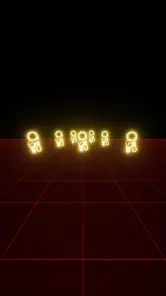


Analysis by Reviewed
Slow Mo Strike makes a very small promise: line up a group of knives, let time hang for a moment, then watch the whole attack unfold. I like that its central idea is easy to grasp without a tutorial-heavy setup. The pleasure is in planning a clean sequence and seeing it resolve all at once, rather than managing a long list of moves. That makes it a natural fit for a short break when I want something active but don’t have the patience for a complicated action game.
Made by KAYAC Inc., this free action game has drawn an average rating of 4.6 from around 8,900 ratings and has passed 5 million installs. It is rated Teen, and its current version is 017. Those figures suggest a broad audience, but they don’t tell you whether its particular rhythm will suit you. The key question is whether you enjoy tracing an attack and trusting your preparation more than steering through continuous combat.
A small action scene with a clear visual language
First impressions: planning before the payoff
The appeal is immediate: the action is built around a deliberate pause followed by a concentrated burst. You are not simply tapping as quickly as possible; you trace a route for the knives, then release them together. That distinction gives each attempt a tiny moment of authorship. Even when the scene is brief, I’m making a choice about how the action should travel rather than just waiting for an animation to finish.
The best way to approach a run is to treat the tracing step as the main decision, not as a race. Look at the layout, decide what you want the knives to pass by, and draw with a steady hand. A hurried, tangled path can make the outcome feel less intentional; a simpler line is often more satisfying because you can read the result. This is a practical tip for anyone who finds the first attempts messy: slow down before release, and aim for a route you can understand at a glance.
That setup makes the game easy to pick up in spare moments. I can imagine opening it while waiting for a friend or taking a short pause between tasks, playing a few rounds, and putting it away without needing to remember a story or a complex loadout. It is not the kind of action game I would choose for a long evening of exploration. Its strength is a compact loop with a clear beginning, decision, and payoff.
How the setting and art support the action
The visual concept and the mechanics are closely matched: a suspended moment gives the player room to plan, while the eventual release turns that plan into motion. The contrast is the point. If the game were constantly frantic, the tracing would lose its purpose; if everything stayed still, the burst would have little impact. That push and pull gives the action a readable mood without needing a sprawling world to explain what is happening.
I find this kind of focused presentation useful on a phone because it keeps attention on the route and its result. The scene is there to frame the attack, not to compete with it. That also means expectations should stay grounded: people looking for a richly developed setting, character drama, or a sense of traveling through a large world may find the experience too narrow. The atmosphere is built around one memorable action, not a deep fictional landscape.
For a more satisfying attempt, I would pay attention to the shape of the scene before tracing rather than drawing the same broad sweep every time. A deliberate path lets you see how your choice affects the unfolding action and makes a successful release feel earned. It also helps reveal the game’s specific pleasure: the point is not just that many knives move, but that the movement follows a plan you made during the pause.
Sound and rhythm: the pause matters as much as the strike
The central rhythm has a natural dramatic arc: a quiet planning interval, a release, and a quick visual resolution. That structure gives the burst its punch. The pause is not dead time; it is where the player reads the situation and commits to a path. If you rush through that moment, the payoff can feel arbitrary. If you take a second to make a considered trace, the same burst feels more like a result you shaped.
Sound matters most in a game organized around that contrast. A sharp cue at release can make a short action feel decisive, while a restrained lead-in leaves space for concentration. I would not approach this as a soundtrack-led experience where music is the main attraction. Its identity comes primarily from the timing of the interaction and the visual release. If you usually play mobile games in noisy places, the core idea remains understandable because the route and burst are visible; sound can add emphasis, but it is not the only way to follow what you are doing.
There is a trade-off in that compact rhythm. Players who want constant input may find the pause-and-release pattern too stop-start, especially if they prefer action games where every second involves movement or reaction. Others will appreciate that the game creates tension without demanding sustained concentration. I would describe it as a brief tactical gesture rather than an endurance test: make a plan, commit, and enjoy seeing it play out.
Mechanical fit: who will enjoy tracing the attack
The core interaction suits people who like spatial decisions and quick visual feedback. You do not need to master a large control scheme to understand the basic appeal, but there is still room to be intentional about how you draw. That makes it approachable for casual players while giving careful players a reason to refine their approach. The useful question is not whether you can perform a complicated combo, but whether you enjoy making a small plan and watching its consequences.
It is also a different proposition from the usual action alternatives. A conventional arena fighter asks for ongoing movement and reactions; a platform action game asks you to navigate obstacles; a shooter often emphasizes aim and repeated fire. Slow Mo Strike: Knives in Time puts its emphasis on tracing before the action begins. Choose it when you want a compact, visual puzzle inside an action wrapper. Pick another style if you want a long campaign, precise character control, or continuous combat that rewards reflexes every moment.
One useful habit is to vary the route instead of assuming that a longer trace is automatically better. A clean, readable line can make it easier to understand why an attempt worked or fell short. That matters because a short game loop can otherwise encourage mindless repetition. Treat each release as a quick experiment: change one aspect of your path, notice the difference, and keep the approach that feels most controlled. This turns brief sessions into small exercises in judgment rather than a string of identical taps.
Another practical consideration is the play setting. Since the main interaction asks you to draw a route, a stable grip and an unobstructed view are more helpful than they would be in a simple one-tap game. On a crowded commute, the short session length is convenient, but cramped one-handed play may make careful tracing less comfortable. I would save the more deliberate attempts for a moment when I can hold the phone steadily. That is a modest friction, yet it can affect whether the central mechanic feels satisfying or fiddly.
Where the experience can feel limited
The same focus that makes the game easy to understand also narrows its appeal. If you want a layered progression system, elaborate stages, or a constantly changing set of combat verbs, this is unlikely to be the right choice. Its main pleasure comes from the trace-and-release idea, so players who tire quickly of repeating one central interaction may reach that point sooner than fans of broader action games. I would not recommend it as a substitute for a full-scale action adventure.
There is also a fine line between satisfying control and trial-and-error. If a route does not produce the result you hoped for, the useful response is to simplify and make a more legible adjustment rather than drawing more aggressively. A short loop is best when each attempt teaches you something; it is less compelling if you are expecting deep strategic variety from every round. Going in with the right expectation helps: this is a focused action snack, not a sprawling system to master over weeks.
For parents or younger players, the Teen age rating is worth checking before handing over a device. For everyone else, the free price makes trying the central mechanic a low-commitment decision, though free does not by itself tell you how much long-term variety a player will find. I would judge it on whether the first few tracing sessions feel playful and readable. If they do, its compact format is a benefit; if they feel repetitive, a broader action game is a better use of your time.
The atmosphere verdict: a focused mood, not a large world
What stays with me is the match between mood and mechanics. The held moment gives the player space to think, and the sudden coordinated motion gives that thought a visible payoff. The art direction, setting, sound, and pacing work best when they keep attention on that contrast. Rather than promising a huge world, the game makes a small scene feel charged by the decision to release the knives.
I would recommend Slow Mo Strike to someone who likes quick action with a planning wrinkle, especially if they want a game that can fit into a short break and does not ask them to learn a complicated control scheme. I would steer away from it if your ideal action game is a long campaign, a demanding reflex challenge, or a rich world to explore. Its strongest quality is focus, and its clearest limitation is the same: nearly everything depends on whether tracing and watching the resulting burst is satisfying to you.
Overall, I see it as a neat, mood-led pick for players who enjoy setting up a moment rather than reacting without pause. Give each trace a little thought, keep your paths readable, and judge the game by how good the release feels—not by how much content you expect from a larger action title. If that particular rhythm clicks, it offers an easy way to turn a spare minute into a small, deliberate burst of play.
Slow Mo Strike: Knives in Time Frequently Asked Questions
What is Slow Mo Strike: Knives in Time?
Slow Mo Strike: Knives in Time is a casual action game built around timing and slow-motion effects. Players aim or launch knives at targets and try to complete each challenge without making a costly mistake. Its simple premise makes it easy to understand, while the changing situations test your reactions and precision. Check the store listing for screenshots and a current description before downloading, as features and content can vary by version.
How do you play Slow Mo Strike: Knives in Time?
The game centers on judging when and where to strike, with slowed-down action giving you a moment to assess moving targets or obstacles. Controls are designed for quick interaction, so the main challenge is usually accuracy and timing rather than learning a complicated control scheme. Follow the instructions shown in each level, and take care not to hit anything the game identifies as off-limits, since that may end a run or prevent progress.
Is Slow Mo Strike: Knives in Time free to download, and does it include purchases or ads?
Availability, pricing, advertising, and in-app purchase options can differ by platform, region, and app version. Before installing, review the Google Play or Apple App Store listing to see whether the game is free, whether optional purchases are offered, and what the developer discloses about ads. If you are downloading for a child, check purchase controls and parental settings as well, since store policies and monetization details can change over time.
Can I play Slow Mo Strike: Knives in Time offline?
Offline access is not guaranteed just because a game can be installed on your device. Some games allow their main levels to run without a connection, while others need internet access for loading content, advertisements, updates, or account-related features. The store page may not explain every offline limitation, so check the game after installation while disconnected if this matters to you. Avoid assuming that online features or progress syncing will work without a connection.
Is Slow Mo Strike: Knives in Time suitable for children, and what should I check before downloading?
The knife-based action may be unsuitable for very young players or anyone who prefers games without weapon imagery, even if the presentation is stylized rather than realistic. Age ratings and content classifications differ between Google Play and the App Store, so check the rating for your region and read the listing details. Also review requested permissions, privacy disclosures, device compatibility, and recent user feedback before installing.
Pros
- Simple controls make it easy to start playing.
- Slow-motion effects make each knife throw satisfying to watch.
- Short rounds suit quick play sessions.
- A clear aim gives each level an immediate challenge.
- The arcade-style premise is easy to understand.
Cons
- Repeated knife-throwing can feel monotonous over time.
- Timing mistakes may require replaying levels.
- The concept offers limited variety in gameplay.
- Visual effects may make precise timing harder to judge.
- Progress can feel dependent on trial and error.
- Category
- Action
- Version
- 017