Shooting Battle
- 17.63K
- 4.8
- Installs
- 10.00M
- Price
- Free
Screenshots
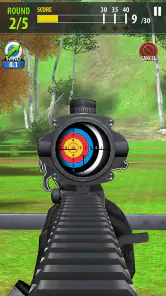
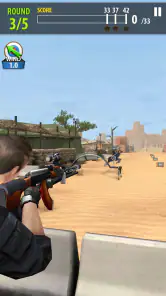
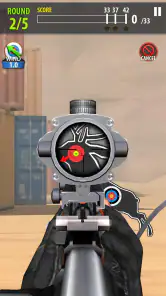
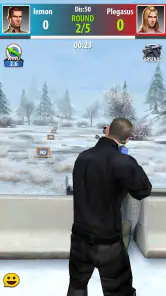
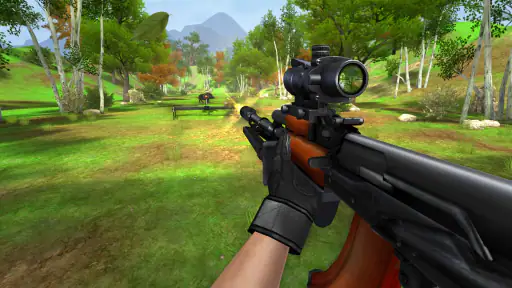
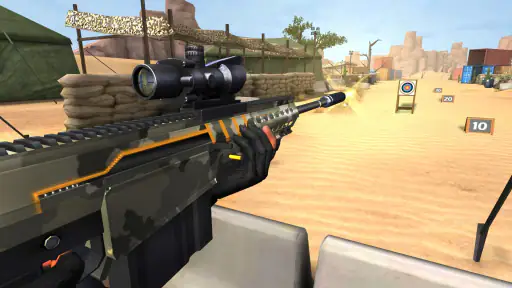
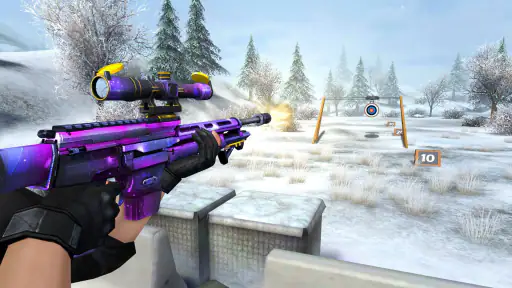
Analysis by Reviewed
I went into Shooting Battle expecting a quick mobile shooting game, and that is exactly where it makes its best first impression. It is a sports game built around testing shooting skill in competitive first-person matches, but it keeps the presentation compact enough for a phone. I found it easy to understand within the first few sessions: aim, react, make each shot count, and try to improve the next attempt rather than getting lost in a complicated setup.
That simplicity is important. Doodle Mobile Ltd. has not tried to turn this into a broad military simulation or a story-heavy action game. The appeal is much more immediate. You open it when you want a focused burst of target practice and competition, not when you want a large world to explore. In my experience, that clear identity makes it more approachable than many mobile FPS games that bury the basic shooting under menus, equipment screens, and long introductions.
The game is free to download, which makes it straightforward to try before deciding whether its particular style suits you. It is rated Everyone 10+, and the current version is 1.19.4 for devices running Android 5.0 or later. Those details make it accessible to a wide range of Android users, although the experience will still depend on how comfortably your phone handles touch aiming and fast visual movement.
How the presentation shapes the first few matches
The first thing I noticed was how strongly the game depends on readable action rather than elaborate storytelling. Its setting exists to support the shooting challenge. You are not asked to study a large map or follow a long narrative before playing. The visual language points you toward the target, the weapon, and the next decision. That keeps the opening approachable, especially for someone who normally avoids competitive shooters because they seem difficult to learn.
At the same time, this focused design gives the game a particular mood. It feels more like stepping into a compact shooting contest than entering a realistic battlefield. I think that distinction matters when choosing it. If you want cinematic scenes, a detailed campaign, or a strong character-driven setting, this will feel deliberately light. If you prefer a game that gets to the central action quickly, the limited presentation works in its favor.
My most useful early habit was to stop treating every attempt as a race. The pressure of a competitive shooting game can make you move too quickly, especially on a small screen. I got better results by taking a moment to read the target area, keeping my finger movement controlled, and then firing with intention. That sounds basic, but the compact format makes small mistakes obvious. A rushed swipe can matter more than an imperfect strategy.
The game also benefits from being easy to pick up in ordinary situations. I can imagine playing it while waiting for an appointment, taking a short break, or looking for something more active than a puzzle but less demanding than a full session of a large FPS. The short-session design is one of its strongest practical qualities. It does not require me to remember a complex objective after being away for a day.
There is a trade-off, though. A game built around immediate shooting has less room for surprise than a shooter with exploration, objectives, and changing environments. Once the novelty of aiming wears off, your enjoyment depends heavily on whether improving your accuracy is satisfying by itself. For me, it is enjoyable in bursts, but I would not use it as my only action game.
A visual style that keeps the target in charge
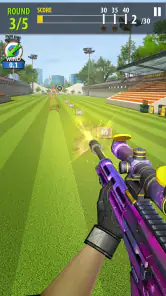
The art direction works best when it stays out of the way. The game’s visual identity is organized around the shooting task, so I never felt that decorative detail was competing with the target. That is a sensible choice on a phone, where a crowded image can make touch controls feel less precise. The overall mood is direct and competitive rather than dramatic or atmospheric in the traditional adventure-game sense.
This also affects how I read the setting. Instead of inviting me to wander through a believable place, it frames each encounter as a controlled test of reaction and accuracy. That framing gives the matches a clean purpose. I know what I am looking for and why the next shot matters. The environment is therefore functional, but not empty: it creates the visual boundary in which the contest takes place.
One practical tip is to play with the screen clean and your grip stable. Because the game is based on touch interaction, a thumb placed too close to the active area can make a careful adjustment feel clumsy. I had a better time holding the phone firmly with one hand and using the other for deliberate aiming, rather than trying to make fast movements while constantly shifting my grip. This is especially useful during longer practice sessions.
Another useful approach is to treat visual calm as an advantage. Instead of flicking at every movement, I tried to identify the target’s position first and then make the smallest correction needed. That method fits the game’s art direction: the screen is giving you a task to read, not a landscape to admire. Players who enjoy precision may appreciate this more than players who want explosive visual chaos.
Sound and the feeling of each attempt
The audio is most effective as part of the game’s rhythm. Shooting games need sound to make an action feel finished, and here the feedback helps separate one attempt from the next. I found that the sound cues contribute to the sense of closure after a shot, even when the match itself is brief. They help turn a simple tap or swipe into a more satisfying action.
What matters most is not whether the soundscape feels like a film production, but whether it supports concentration. The game’s mood is competitive and focused, and the audio reinforces that rather than pulling attention toward a story or a large fictional world. When I wanted to judge my own consistency, I preferred playing with sound enabled. It made each exchange feel more distinct and helped maintain a sense of pace.
There are times when silent play is more practical, of course. This is a good candidate for a quick break in a public place, and muting the device does not remove the basic appeal. The visual response still makes the action understandable. I would simply say that the sound adds texture to the experience, while the controls carry the real responsibility for making the game enjoyable.
The pacing is similarly compact. Matches do not ask for a long emotional build-up before delivering the central challenge. That gives the game a useful pick-up-and-play quality, but it also means that the mood can become repetitive if I play for too long without a personal goal. I got more from it when I set a simple purpose for a session, such as concentrating on steadier aim instead of playing until the action started to blur together.
Where the mechanics fit the presentation
The shooting mechanics and the visual direction generally agree with each other. The game presents itself as a contest of skill, and the controls keep the focus on that skill. I did not feel that I needed to master a complicated inventory or learn a large set of abilities before I could enjoy a match. That makes it a reasonable choice for someone who wants an FPS-style experience but prefers a smaller mechanical commitment.
However, “simple” does not mean effortless. Touch aiming has its own learning curve. A mouse or controller gives a level of physical precision that a phone screen cannot always match, and I occasionally found myself correcting too much after an initial movement. The best solution was not to become faster immediately; it was to become more economical. Small, repeatable gestures were more reliable than dramatic swipes.
I would also recommend adjusting your expectations about competition. This is not the right pick if you are searching for the deep team tactics, expansive maps, or highly customizable loadouts associated with larger mobile shooters. Its competitive quality comes from the pressure of performing the shot, not from managing a complex squad or building a long-term tactical plan. That narrower focus is a strength for casual players and a limitation for dedicated FPS fans.
The free entry point makes experimenting easy, but the game includes in-app purchases ranging from $0.99 to $99.99 per item. I would approach those purchases carefully and first decide whether the core shooting loop is already satisfying. For me, the sensible workflow is to play several short sessions without spending, identify whether I am enjoying improvement rather than simply chasing progress, and only then consider optional purchases. The price range means it is worth keeping personal spending limits in mind.
That advice is particularly relevant for younger players. The Everyone 10+ rating makes the game broadly approachable, but the presence of in-app purchases still means a family should discuss purchasing expectations before handing over a device. This is not a criticism of the shooting mechanics; it is simply part of using a free game responsibly.
One non-obvious strength is how well the game can serve as a warm-up before a more demanding shooter. I used short rounds to get my eyes and hand moving before playing something with more complicated controls. It is not a replacement for that larger game, but the emphasis on quick visual decisions makes it useful as a brief accuracy exercise. The reverse is also true: if you are tired after a long competitive session, this can feel like a lighter way to keep playing without committing to a full match.
A second trade-off is the relationship between repetition and mastery. The same focused structure that lets me improve quickly can also make weaknesses more visible. If my aim is inconsistent, I cannot blame a complicated objective or a teammate; the result feels personal. That can be motivating, because progress is easy to understand, but it can also become frustrating after a run of poor attempts. Taking a break is more productive than forcing another round while annoyed.
Who will enjoy it, and who should choose another game
I think Shooting Battle is a good fit for players who want a free sports game with FPS-style shooting, quick access to the action, and a clear skill focus. It suits casual Android users, younger players within the age rating, and experienced shooter fans who want a compact practice option. Its 4.8 average from around 144 thousand ratings and more than 10 million installs suggest that the straightforward format has found a large audience, although popularity alone does not guarantee that its focused loop will suit everyone.
I would recommend it especially to someone who says, “I want to play a shooter, but I do not want to learn a huge game.” The controls and presentation are easier to approach than a full-scale alternative, and the matches fit naturally into spare moments. It is also a sensible choice for a phone with limited storage or an older Android setup, provided the device meets the stated minimum system requirement and the controls feel responsive in practice.
I would steer a different player elsewhere if they want a campaign, character progression, driving sections, large-scale team battles, or a realistic military atmosphere. A conventional multiplayer FPS will offer more variety in objectives and tactics. A sports game centered on a ball or a full league structure will be better for someone who wants traditional athletic competition. This title is specific: it wants you to judge, aim, and shoot, then try to do it better.
It is also not ideal for someone who dislikes touch controls. No amount of visual clarity can completely remove the difference between tapping glass and using a physical controller. Before deciding that the game is unfair, I would test it with a comfortable grip and enough screen space for controlled movement. If aiming still feels imprecise, another platform or a controller-focused game may be the better choice.
My verdict after living with the shooting loop
What stayed with me was the consistency between the game’s mood and its mechanics. The art direction keeps attention on the contest, the sound gives each action a sense of finish, and the pacing supports short bursts rather than extended storytelling. Nothing feels designed to distract from the central test. That coherence is more valuable than a long feature list when the basic aim is to make a quick shooting session feel clear and rewarding.
My main reservation is also tied to that consistency: the experience is narrow. I enjoyed it most when I treated it as a precision game with an FPS presentation, not as a substitute for a full competitive shooter. Sessions are easy to start, but longer play can expose repetition, and touch aiming will not satisfy every player. The in-app purchase range is another reason to keep spending deliberate rather than automatic.
Still, I would recommend giving it a try if you want a focused mobile shooting challenge. The developer, Doodle Mobile Ltd., has kept the idea accessible enough for casual play while leaving room for players to care about accuracy and rhythm. Its best quality is the direct connection between what you see, what you hear, and the shot you make. If that kind of immediate feedback sounds appealing, this free sports game is worth space on your Android device; if you need a richer world or deeper tactical variety, choose a larger shooter instead.
Pros
- Fast-paced matches are easy to start and finish in a few minutes.
- Simple controls make the game accessible to casual players.
- A variety of weapons adds some tactical choice during battles.
- Bright visuals and effects make combat easy to follow.
- Frequent action keeps matches engaging without long downtime.
Cons
- Matchmaking can feel uneven when experienced players face newcomers.
- Weapon balance may make some loadouts feel noticeably stronger.
- Repeated arenas can reduce variety during longer play sessions.
- The game may require a stable connection for smooth online matches.
- Ads or optional purchases can interrupt the overall experience.
- Category
- Sports
- Version
- 1.19.4