Seven Hearts Stories
- 114.00
- 4.0
- Installs
- 500.00K
- Price
- Free

Screenshots




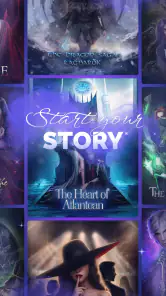

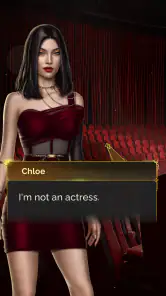

Analysis by Reviewed
I went into Seven Hearts Stories expecting a straightforward visual-novel collection, but its appeal is more specific than that. This is an adventure game from Sinomi Games built around reading, choices, and following several storylines rather than mastering reflexes or exploring a large interactive map. After spending time with it, I see it as a good fit for players who enjoy letting a narrative set the pace and who do not mind that the experience is closer to interactive fiction than to a traditional action adventure.
The first practical detail is easy to understand: the game is free to download. That makes it simple to try without committing money at the start. It also contains in-app purchases ranging from $1.99 to $114.99 per item, so “free” should be read as free access, not as a promise that every part of the experience will feel equally open without spending. I would begin with the free portion, learn how the stories handle choices, and only then decide whether paying adds enough value for my own reading habits.
How the collection feels in everyday use
A story-first adventure rather than a conventional game
The strongest part of the experience is its focus. Seven Hearts Stories presents itself as a collection of visual novels, and that description tells me more than a broad adventure label would. I am not opening it for fast combat, complicated controls, or a demanding puzzle loop. I am opening it when I want to read a scene, make a decision, and see how the narrative develops.
That distinction matters when comparing it with the usual alternatives. A conventional mobile adventure game may use dialogue as a short break between battles or exploration. Here, the dialogue and illustrated presentation are the main event. Players who enjoy character-driven fiction can settle into it more easily than someone looking for constant interaction. If I want a game that rewards quick reactions, this would not be my first choice. If I want a portable story with decisions at its center, the format makes much more sense.
The collection approach is also useful for people whose attention changes from day to day. I can approach one storyline when I have time to become absorbed, then return later without needing the same kind of mechanical practice demanded by an action title. The trade-off is that the experience depends heavily on whether the writing, characters, and presentation suit my taste. There is no combat system to rescue a story that fails to hold my interest.
What the free entry point really offers
The cost structure makes the game approachable, but it also requires a little discipline from the player. Since access begins without a purchase, I can test the tone, pacing, and style before spending anything. That is a meaningful advantage over a paid story game whose quality I have to judge before opening it. I would use the opening as a compatibility check: do I enjoy reading on the phone, do the choices feel worth considering, and do I want to continue more than one storyline?
I would not treat the listed purchase range as a reason to buy immediately. The lower end may be easy to justify for a story I genuinely want to continue, while the upper end is a much more serious commitment. Because individual players value fictional worlds differently, the sensible approach is to connect spending to a specific personal reason, such as wanting to support a favorite storyline or unlock more content that has already earned my attention. Free entry is the advantage; careful spending is the responsibility.
There is another useful habit here: I would avoid buying simply because a choice feels urgent inside the story. In a visual novel, emotional momentum can make a purchase seem more important than it is. Taking a moment to close the game, think about whether I would still want the content later, and then return is a practical way to keep the free-to-play structure from controlling the decision.
Reading rhythm and the best way to play
This is the kind of game I would keep on my phone for short reading sessions rather than launch only when I have a whole evening free. A realistic use case would be opening it during a quiet commute, reading through a scene while waiting for an appointment, and stopping at a natural break before returning later. The format suits that rhythm better than an action game that punishes interruptions.
For longer sessions, I would keep a simple mental note of the storyline I am following and the decisions I made. That sounds unnecessary, but it helps when a collection offers multiple narrative paths or when I return after several days. I would also avoid starting every available story at once. Choosing one main route first makes it easier to remember relationships, motivations, and the consequences of earlier choices.
A second useful approach is to treat decisions as part of the reading experience instead of trying to optimize every outcome immediately. Players who reload or restart constantly may turn the game into a checklist. I would first follow the route that feels natural, then revisit only if I am genuinely curious about another direction. That preserves the emotional effect of the story and prevents the collection from becoming a repetitive sequence of taps.
Where the game may create friction
The same story-heavy design that attracts visual-novel fans can frustrate players who expect a more traditional adventure. If I am impatient with extended conversations, I may feel that progress is slow. The absence of action-focused variety means the writing has to carry the session, and not every player wants that much reading from a mobile game.
Choice-based stories can also create a particular kind of uncertainty. I may wonder whether a decision has lasting importance, whether I should choose based on personality or strategy, and whether I have missed a better route. That uncertainty can be enjoyable, but it can also encourage repeated playthroughs or outside guidance. I would recommend accepting imperfect outcomes on the first run instead of trying to control every branch.
The mature age rating is another important filter. The game is intended for adults, with a 17+ content rating, so I would not hand it to a younger player simply because it is presented in a visual-novel format. Parents should treat the age label seriously, and adult players should still consider whether the themes and tone are comfortable for them. The rating does not make the game better or worse; it defines the audience it is meant to serve.
Performance, access, and the practical details
The game requires Android 6.0 or later, which keeps it available to a broad range of devices that are not running the newest software. I would still judge the day-to-day experience on the particular phone or tablet I plan to use, especially if I prefer reading on a larger screen. A compatible operating system is only the starting point; comfort, text readability, and how easily I can focus on a smaller display matter just as much for this genre.
The current version is 2.100.67, and the game was released on June 3, 2022. Those details place it in the category of an established mobile title rather than a brand-new launch. In practical terms, that makes it reasonable to approach with the expectation of a developed collection, while still remembering that updates can change how an app feels over time.
Its audience is not tiny: the game has passed 500 thousand installs, with an average rating of 4.0 from around 12 thousand ratings. I read that as a sign of solid interest rather than universal approval. The rating is encouraging for someone already interested in visual novels, but it is not a substitute for matching the game to my preferred tone and reading style. The smaller review count, at just over a hundred, also reminds me to treat individual opinions as personal experiences rather than a complete consensus.
What value is actually being delivered
The value here is not measured by the number of mechanics on offer. It comes from having a collection of narrative experiences available without an upfront purchase, then deciding which ones deserve more of my time. For me, that is worthwhile when I want fiction that asks me to participate through choices instead of merely watching a video or reading a static novel.
The collection format can also provide variety within a single app. Rather than buying separate story games one by one, I can explore the material available in one place and see whether the overall style works for me. That is especially useful for someone new to visual novels. I can learn whether I enjoy the genre before seeking more specialized paid titles.
Still, value depends on patience. A player who skips dialogue or wants immediate rewards may receive less from the same download. I would not recommend judging it by the standards of a premium action game, because the appeal is not mechanical depth. Conversely, I would not recommend paying simply because the app contains multiple stories. A collection is valuable only when I actually want to read more than one of them.
One of the more important trade-offs is between convenience and control. Having stories gathered in one app is convenient, but in-app purchases can make the boundaries of that convenience less obvious. I would keep track of what I am choosing to pay for and avoid assuming that every story or route has the same cost. The free starting point gives me room to evaluate, so I would use that room rather than treating the purchase menu as the main path through the game.
Who should download it, and who should skip it
I would recommend trying it to fans of visual novels, interactive fiction, romance or drama-focused mobile stories, and readers who like making decisions without dealing with complex controls. It is also a reasonable option for someone who wants an adventure game that can be played in quiet, interrupted sessions. The free download lowers the risk of discovering that the format is not for them.
I would be more cautious about recommending it to players who need constant gameplay variety. If the ideal mobile session includes combat, exploration, character builds, or timed challenges, this collection may feel too passive. I would also suggest skipping it if mature-rated material is not appropriate for the intended player, or if the possibility of optional spending would be a problem in the household.
For readers who already own premium visual novels, the decision is less about replacing them and more about adding another source of stories. A paid standalone title may offer a more controlled purchase and a single, focused narrative. Seven Hearts Stories is more flexible as a free starting point, but its purchase model means I should evaluate each extra commitment separately. Neither approach is automatically better; it depends on whether I value experimentation or a clearly defined one-time purchase.
My verdict after weighing the trade-offs
My overall view is positive but selective. Seven Hearts Stories is worth trying because its free access makes the initial decision easy, its adventure identity is built around visual-novel storytelling, and its collection format gives readers more than one narrative direction to explore. I would recommend it to a friend who enjoys reading on a phone and wants choices to shape the experience.
I would not call it a universal recommendation. The mature rating narrows the audience, the story-first pace will not satisfy action fans, and the in-app purchase range means I would approach additional spending carefully. The right way to use it is to begin for free, follow one storyline without rushing, and pay only when the content has already shown clear personal value.
For me, that makes the game a good low-risk introduction to mobile visual novels rather than an automatic replacement for every adventure title. Download it if you want interactive fiction with an accessible starting point and are comfortable making your own choices about optional purchases. Skip it if you are looking for fast gameplay or a completely purchase-free experience. My buy-or-skip verdict: try the free access, then let the stories—not the purchase prompts—decide whether it earns more of your time.
Pros
- Branching choices make each story feel personal and replayable.
- Multiple romance routes offer varied character dynamics and endings.
- Episodes are easy to follow during short play sessions.
- The fantasy setting adds mystery
- drama
- and visual appeal.
- Regular story updates can give returning players new content.
Cons
- Some choices may require premium currency to unlock the best outcomes.
- Energy or ticket systems can slow progress between episodes.
- Story quality may vary depending on the route or chapter.
- The app may take considerable storage because of its visual content.
- Players seeking fast action may find the dialogue-heavy gameplay slow.

- Category
- Adventure
- Version
- 2.100.67