ScaleMan
- 123.00
- 3.9
- Installs
- 10.00M
- Price
- Free

Screenshots
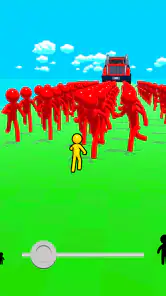
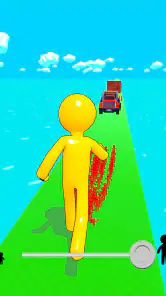
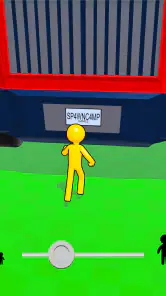
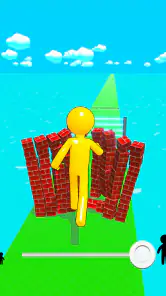
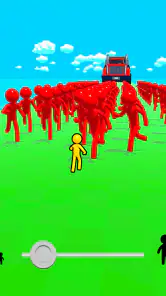
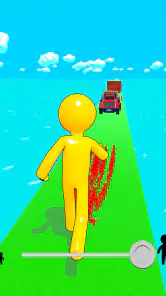
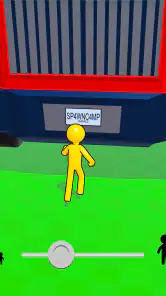
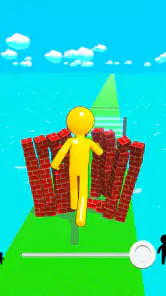
Analysis by Reviewed
I like games that can turn a few spare minutes into a small test of timing and judgement, and ScaleMan has a neat hook for that: changing your character’s size to deal with the path ahead. I can imagine passing a phone around at home and letting each person try a level, then comparing how they handled the same obstacle. It works best as a quick, shared diversion rather than a game that asks everyone to settle in for a long session.
A quick game to pass around
In a household, the appeal is easy to understand: one person can play while others watch, suggest whether to shrink or grow, and take a turn after a stumble. That makes the changing-size mechanic a natural conversation starter, especially for people who enjoy solving a simple problem together. I’d treat it as informal shared play, though, not assume that progress or settings are designed for separate family members. Before handing over a device, it’s sensible to check what is open on the phone and decide whose turn it is.
A simple way to make those turns fair is to agree on a stopping point before starting: one attempt at an obstacle, or a short stretch of play, then pass the device along. That prevents the most experienced person from quietly taking over because they can react faster. It also gives a new player room to work out the resize timing for themselves. If someone is stuck, a small hint such as “look at what comes next” is more useful than calling every move.
Keep the device handoff simple
Because this is a game for a phone or tablet, the smoothest household routine is to agree on short turns and keep the device with the person who is playing. A younger player can try to judge the obstacle, while an older sibling or adult offers a hint without taking over. That small distinction keeps the challenge satisfying: the point is to let the player make the size decision, not have someone else solve every section for them. If you want separate progress for several people, don’t assume a shared device will provide a clean account boundary; choose another arrangement if keeping play histories apart matters.
That boundary is worth thinking about even when the game is only being shared for a few minutes. Passing a device does not necessarily mean passing only the game, so I’d close unrelated screens first and keep the handoff visible rather than leaving a child to browse around the phone. This is ordinary shared-device care, not a special feature of the game. It helps make the play session feel intentional and reduces the chance that one person changes something another person was using.
First Impressions
Upon launching ScaleMan, you are greeted with a colorful and easy-to-navigate interface. No fuss, no muss, just straightforward gameplay waiting to be explored. The graphics are simple but effective, making use of bright colors and smooth animations that are pleasing to the eye. From the very start, I felt drawn into its quirky world. KAYAC Inc. made this a free simulation game, and its scale-changing premise gives it a more hands-on feel than a typical management or life-simulation title. It has a 3.9 average from around ten thousand ratings and has passed ten million installs, so it has found a broad audience without needing a complicated pitch.
That genre distinction matters when deciding what to expect. The simulation label may suggest building, managing resources, or shaping a world over time, but the experience here is closer to a compact obstacle challenge organized around controlling size. I’d approach it for quick decisions and immediate feedback, not for the long-term planning that defines many familiar simulation games. That makes it easier to share casually, but it also means players who want a world to develop between sessions may find the premise too narrow.
More From Our News Desk

Clash of Clans Is Won Between the Battles

Android Auto Makes the Case for Quieter Car Software

MobiOffice: Transforming Mobile Productivity with Seamless Integration

EA SPORTS FC™ Mobile Soccer: Redefining Mobile Sports Gaming

How Microsoft OneDrive Became a Mobile Productivity Giant

How Google Translate Breaks Language Barriers Effortlessly
Gameplay Mechanics
Here’s where things get interesting! The core mechanic of ScaleMan revolves around resizing your character to overcome obstacles in various levels. It’s a smart twist on the classic platformer genre. Each level presents its own unique set of challenges, requiring you to think on your feet. Will you shrink to slip through a narrow passage, or grow to reach a high platform? The choice is yours, and it makes for an engaging experience. My practical tip is to read the obstacle before changing size: reacting too early can make the next move harder, while waiting until the last moment can leave little room to correct a mistake. That makes it more about judging the sequence than simply tapping as fast as possible.
A useful habit is to look beyond the obstacle immediately in front of you. A size that seems ideal for the current gap may leave you poorly positioned for what follows, so I try to treat each change as part of a short sequence rather than a one-off fix. When I get a move wrong, I’d focus on identifying whether I misread the space or acted too late before repeating it. That turns a retry into a small lesson instead of a frustrating reflex test, and it gives onlookers something concrete to discuss during shared play.
The controls are intuitive, making it easy for anyone to pick up and play. Whether you’re a seasoned gamer or just looking for something to pass the time, the learning curve is just right. The game's difficulty ramps up gradually, keeping you on your toes without feeling overwhelming. This makes it a reasonable choice for a short break when you want interaction rather than a passive video, but it is less suited to someone looking for a long narrative, deep character development, or a layered simulation to manage. Compared with more conventional platform games, its appeal rests on the size-changing decision; if that central idea stops feeling fresh, there is less reason to keep playing.
Compared with a standard platformer, the main trade-off is focus. A platform game with more movement options may offer a wider range of skills to master, while this one asks you to pay particular attention to scale and timing. Compared with a management or life-simulation game, it offers quicker starts and less commitment, but not the same sense of building something over time. I’d choose it when I want an obstacle puzzle I can understand at a glance, and choose another game when I’m in the mood for exploration, elaborate controls, or a story that carries me from one session to the next.
The Fun Factor
One of the aspects I truly appreciate about ScaleMan is its ability to keep you entertained without demanding too much of your time. It's a perfect companion for those short breaks or long commutes. The game rewards your progress with a variety of unlockables and challenges, ensuring that there’s always something to strive for. Plus, the sound effects and background music are catchy, adding an extra layer of enjoyment to the gameplay. In everyday use, I’d pick it up while waiting for a ride or during a quiet pause at home, then put it down when the break ends. If you prefer to play without sound, the visual decisions still carry the central challenge, though the audio does add personality.
For a realistic household moment, I can picture one person playing while dinner is being prepared, with someone else watching and offering a single suggestion when a tricky passage appears. Because the central choice is visible, it is easy to follow without needing a long explanation. A short session also fits a shared living room better than a game that demands everyone’s attention for an extended stretch. I would still keep expectations modest: it can give people a common activity, but it is not a substitute for a cooperative game built around several players acting together.
The game’s short-session appeal also makes it a practical choice for waiting rooms or transit, where interruptions are likely. I’d avoid beginning a difficult section when I know I have to hand the device over immediately; a little breathing room makes it easier to finish a thought and pass the phone cleanly. At home, it can work as a brief break between chores rather than a reason to postpone them. That kind of self-imposed stopping point is useful for anyone who enjoys quick mobile games but does not want one to take over the evening.
If you're the competitive type, you'll love the leaderboard feature. It allows you to see how you stack up against other players worldwide, adding a competitive edge that keeps you coming back for more. For shared play, I’d use that comparison as an optional extra rather than the main event: different people may have different amounts of time to practise, and a leaderboard is not the same as taking turns face to face. It suits players who enjoy seeing how their performance compares, but anyone who would rather avoid score-chasing can focus on getting through the obstacles at their own pace.
In a family setting, the leaderboard can create a different kind of conversation from taking turns: players may compare results, but a higher position does not necessarily make for a better shared session. I’d keep it light and avoid making a child’s enjoyment depend on beating someone with more practice. If competition makes the game less fun, the obstacle decisions themselves provide a reason to play without chasing a ranking. That flexibility is one of the better ways to use a competitive feature without letting it set the tone for everyone.
Age, expectations, and trust
The game is rated Teen, so I’d check that age context before offering it to a younger child, rather than judging suitability from its bright presentation alone. The rating is a useful starting point for a household conversation, not a substitute for an adult deciding what fits a particular player. If several people use one device, make the handoff deliberate and keep any unrelated personal activity out of reach before play begins. I wouldn’t choose this as a family game on the assumption that it includes dedicated child accounts or parental controls; it is better approached as a game played with ordinary device supervision.
For a younger player, I’d make the decision based on the age rating and the adult’s own comfort, not on the simple visuals or easy-to-understand premise alone. An adult can first play alongside the child, see how the experience feels, and decide whether it suits that household. This also gives the child a chance to learn the basic resize judgement with someone present. For teenagers and adults, the appeal is more straightforward: it is an accessible way to compete informally or pass a short break, provided they enjoy repeating obstacle sections to improve.
It is also worth setting expectations about what “shared” means here. The game can be passed between people, and its visible choices make it easy for others to comment, but that is different from having separate profiles or built-in family coordination. If several people care about preserving individual progress, a shared device may not be the right setup. If they are comfortable treating the game as a communal turn-taking activity, agreeing on turns beforehand is likely enough to avoid most friction.
Who will enjoy it most
I’d recommend it to people who like compact, tactile challenges and enjoy thinking through a visible obstacle rather than learning a complicated control scheme. It can suit a casual player who wants something more interactive than scrolling, as well as a household that enjoys taking turns and talking through a decision. The best fit is someone who can appreciate a focused mechanic and does not need every mobile game to provide a large world, a cast of characters, or an ongoing story.
I’d steer away from it if your main reason for downloading a simulation game is to build, decorate, collect resources, or manage a system over many sessions. It is also a weaker pick for someone who dislikes retries, short obstacle courses, or score comparisons. A more expansive platformer would be better for players who want varied movement and exploration; a deeper simulation would suit those who want to make long-term choices. Knowing that distinction before starting is a better guide than relying on the genre label alone.
The Verdict
All in all, ScaleMan is a fantastic addition to any mobile game library. Its simple yet clever mechanics, combined with its vibrant presentation and addictive gameplay, make it a must-try for anyone looking for a new game to dive into. Whether you’re playing for a few minutes or a few hours, it’s bound to bring a smile to your face. So go ahead, give it a try, and see for yourself why it’s such a hit! It is free, and version 1.3.1 supports Android 7.0 and up. I’d recommend it to people who like short, tactile obstacle challenges and don’t mind replaying a section to improve a decision. I’d skip it if you want a substantial simulation, a story-led adventure, or clearly separated household profiles. Its Teen age rating is worth considering when sharing a device with younger players, and a quick turn-taking agreement makes casual family play more comfortable.
Overall, I see it as a handy shared-device game when the goal is a quick round of playful problem-solving, not a deep family gaming setup. It asks little from a new player at the start, gives people a clear decision to discuss, and works naturally with brief turns. The limits are just as important: its focused mechanic will not satisfy everyone, and ordinary device supervision matters when it is passed to a younger user. If that sounds like the kind of modest, easy-to-share diversion you want, it is worth a try; if you need separate household progress or a more substantial simulation, I’d look elsewhere.
ScaleMan Frequently Asked Questions
What kind of game is ScaleMan?
ScaleMan is a simulation game from KAYAC Inc. Its short description is simply “ScaleMan,” while its store summary promises “Large and small!” That gives the game a playful premise centered on changing scale. If you enjoy mobile games built around a simple, unusual idea, this may be worth considering before you download it.
Is ScaleMan free, and what age rating does it have?
ScaleMan is free to download and is rated Teen. That can help you decide whether it is suitable for you or someone you are choosing a game for. The game is available as a mobile download, so check the rating and the purchase details shown on your device’s app store before installing or making any spending decisions.
What is ScaleMan and how does it work?
ScaleMan is an innovative mobile application designed to help users measure and scale objects in the real world using augmented reality technology. By utilizing your smartphone’s camera, ScaleMan allows you to point at an object and instantly get its dimensions, making it a useful tool for designers, architects, and DIY enthusiasts alike.
Is ScaleMan available for both Android and iOS devices?
Yes, ScaleMan is available for download on both Android and iOS platforms. The app can be found in the Google Play Store and the Apple App Store, ensuring that users across different operating systems can benefit from its features and functionalities.
Does ScaleMan require an internet connection to operate?
No, ScaleMan does not require an active internet connection for basic functionalities like measuring and scaling objects. However, for accessing certain advanced features or updates, an internet connection may be necessary. This makes it convenient for users who are in areas with limited connectivity.
Pros
- Intuitive user interface
- Highly customizable features
- Lightweight and fast performance
- Accurate scaling tools
- Supports various file formats
Cons
- Limited free version features
- Occasional bugs in updates
- Requires in-app purchases for full features
- Not available on all platforms
- Steep learning curve for beginners
- Category
- Simulation
- Version
- 1.3.1