Sandbox In Space
- 530.00
- 4.4
- Installs
- 10.00M
- Price
- Free

Screenshots
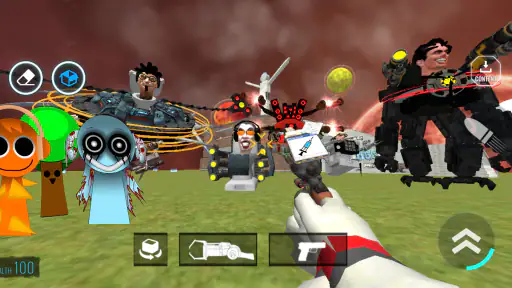
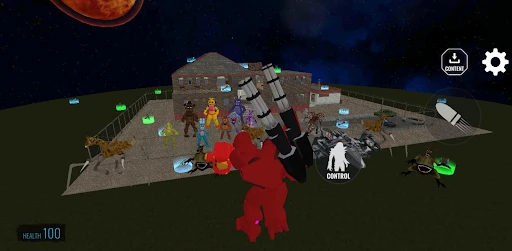
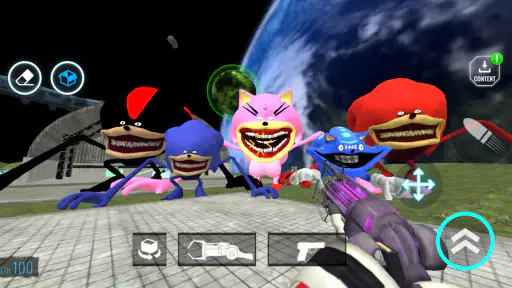
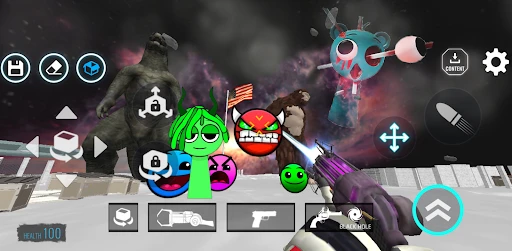
Analysis by Reviewed
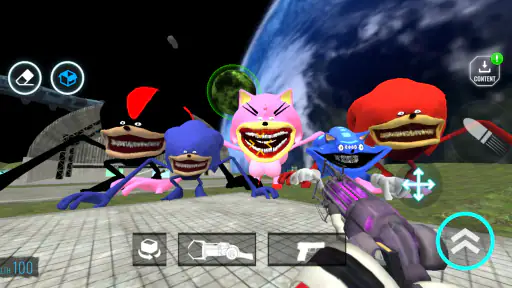
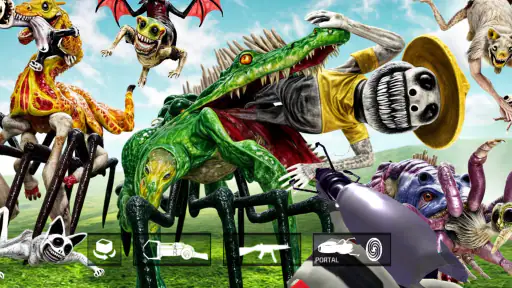
What makes this space sandbox interesting to me is the switch from making a scene to having to survive inside it. I can spend a moment shaping a nextbot, then immediately feel the pressure of its pursuit. That contrast gives the game a more specific identity than a space title focused only on building or drifting around. It also means the fun depends partly on the situations I choose to create: a chase should be tense, but still leave me room to react.
A useful way to settle into the loop
On a first visit, I would resist trying to make the biggest or most complicated setup. Start with a simple nextbot and a space you can learn quickly, then pay attention to how the pursuit feels. If the route leaves no chance to turn or find a way through, simplify the setup; if it feels too easy to escape, try making the next attempt less predictable. This small test-and-adjust habit is more useful than treating creation as decoration, because the thing you make directly shapes the play that follows.
That approach also helps answer a practical question: is the game mainly for creating or for being chased? In my view, those sides work best together. Making something is satisfying when I can then try it out, and the chase gives the creative part an immediate purpose. If I only want an open-ended building tool, the pursuit may feel like an unnecessary extra; if I only want a tightly directed chase game, the self-made setup may feel less focused than a designed sequence.
Blast Off into the Universe of Creativity
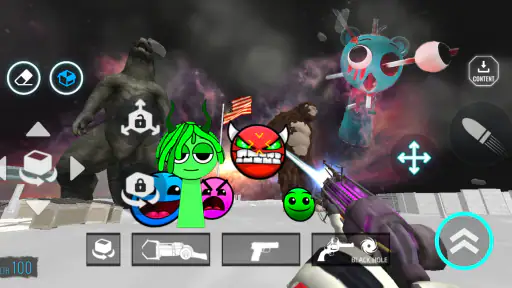
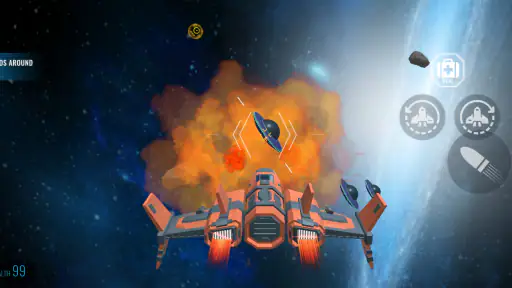
Upon launching Sandbox In Space, I was immediately drawn into its vibrant universe. This app is not just a game; it's a galactic playground where your imagination is the only limit. Imagine having a blank canvas that stretches across galaxies, where you can build, explore, and conquer. That's exactly what Sandbox In Space offers. Its intuitive interface makes it super easy to start crafting your cosmic creations. Whether it's building a space station or designing your own fleet of spaceships, every tool you need is at your disposal.
The practical way I’d approach the creative side is to start with one small idea rather than trying to make an elaborate project at once. Create a nextbot, test how it behaves in the space, and then adjust your setup around the chase. That loop gives a new player a clear first goal and helps separate what is fun to make from what is actually fun to play against. A creation that looks clever but makes every escape impossible may be less enjoyable than a simple one that creates a fair, readable pursuit.
Reading the space as part of the challenge
One of the standout features for me is the app's phenomenal graphics. The visuals are stunning, making the entire experience incredibly immersive. The attention to detail in the design of planets, stars, and spacecraft is truly impressive. Plus, the app runs smoothly without any lag, which is crucial when you're navigating through the stars at warp speed.
The setting matters most when it supports the chase rather than distracting from it. Space gives the play area a distinct identity, while the nextbot supplies a simple source of pressure: watch where you can move, decide when to turn, and avoid getting cornered. I’d treat the visual space as part of the navigation challenge, not just decoration. When trying a new setup, take a moment to learn its sightlines and routes before focusing on speed; that can make a close escape feel earned instead of random.
More From Our News Desk

Weather by Xiaomi Review: Clear at a Glance, Less Clear Up Close

X Under Pressure: Can It Recover When Posting Goes Wrong?

Clash of Clans Is Won Between the Battles

Android Auto Makes the Case for Quieter Car Software

MobiOffice: Transforming Mobile Productivity with Seamless Integration

EA SPORTS FC™ Mobile Soccer: Redefining Mobile Sports Gaming
This is also where the game’s visual mood can help a new player. Rather than rushing straight into another attempt, I’d first look around and work out which directions seem readable and where a turn might leave me exposed. That quick survey turns a chase from pure reaction into a small decision-making exercise. It is a modest but useful habit for anyone who finds the first pursuit hectic: understanding the space can matter more than trying to move quickly from the outset.
Why the rhythm suits short play
For me, the strongest pacing comes from alternating between the unhurried act of setting up a creation and the sudden urgency of being chased. That makes the game easy to pick up for a short break: I can spend a few minutes experimenting, then see whether my idea creates an interesting escape. It is a more hands-on rhythm than a conventional space simulator, where the main activity is often managing systems over a longer stretch.
I would not choose it expecting a deep campaign or a carefully staged story. The pleasure is in making a small scenario and reacting to it, so the experience depends on whether that create-then-evade loop clicks for you. If you prefer calm exploration with no pursuer, the chase may feel like an interruption; if you enjoy quick bursts of suspense, it gives the sandbox a useful purpose.
That rhythm makes it a plausible fit for an everyday gap rather than a game I’d plan an entire evening around. For example, if I have a short wait before heading out, I can try one small change to a setup and see how it affects the next escape. If I have more time, I can keep refining the idea instead of relying on a new objective to appear. The trade-off is that players who want the game to provide a fresh, directed task each time may have to supply more of their own motivation.
Making a shared challenge out of it
Another feature I found quite engaging is the multiplayer mode. It allows you to connect with friends or other space enthusiasts around the globe. You can join forces to build colossal structures or engage in epic space battles. It’s like having a universe of friends at your fingertips, ready to embark on adventures with you.
With friends, I’d use the creative freedom to set a shared challenge rather than simply wandering around: one person can make a chase scenario, while the others see how long they can stay out of reach. That gives a group a clear reason to experiment and makes comparing ideas more fun. For someone playing alone, the same basic appeal is testing a creation and seeing whether its layout produces a satisfying escape. The game is at its best when the player supplies a goal instead of waiting for a long sequence of objectives to arrive.
For a casual group, a simple house rule can make this more engaging without adding complexity: agree on one small design idea before starting, then let everyone try the resulting chase and compare what felt fair or awkward. This keeps the focus on the game’s distinctive combination of making and evading, rather than expecting a formal competitive structure. It is a good option when friends want to improvise together; for a group looking for carefully balanced matches or a clear tournament format, a dedicated competitive game would be a better fit.
Who is likely to enjoy this kind of sandbox?
This is a good fit if you like sandbox games but want more immediate action than a large construction project usually provides. It may also suit younger players who enjoy making things and then turning those creations into a playful challenge, though its content rating is Teen. I’d skip it if you want a realistic astronomy experience, a guided story, or a polished competitive shooter; those priorities point toward different kinds of games.
Compared with familiar simulation games built around managing a city, vehicle, or economy, this one feels more spontaneous and less concerned with long-term progression. Compared with a dedicated horror chase game, its creative angle gives you more room to shape the setup, but the focus is not the same as a scripted narrative. That trade-off is the point: it favors quick, player-made situations over a structured journey.
It is also worth being honest about the limits of that freedom. A sandbox can feel open, but it does not automatically provide a reason to keep playing once the basic loop is familiar. Here, the player’s own ideas carry much of the replay value. If inventing small variations sounds fun, that can be a strength; if you would rather follow a sequence of clear missions or gradually unlock a long-term goal, the game may feel thin beside a more structured simulation.
What to consider before installing
Now, I know what you're thinking: "Do I really need another app on my phone?" But trust me, Sandbox In Space is worth every megabyte. It's not just a game; it's a creative outlet. It's where you can let your imagination run wild, unbound by the laws of physics or the constraints of reality. Whether you're a hardcore gamer or someone who just wants to unwind, this app offers something for everyone.
There are a few practical details worth weighing before you install it. The game is free to download, with optional in-app purchases ranging from $2.99 to $49.99 per item, so I’d try the core loop first and only consider spending if I know I’m sticking with it. It is developed by HOOKAH GAMES IT SERVICE L.L.C, has a 4.4 average from around 82,000 ratings, and has passed 10 million installs. Those figures suggest a sizeable audience, but they don’t tell you whether the create-and-chase style suits your taste.
It was released on October 20, 2023, and the current version is 3.1.55, with Android 7.0 as the minimum operating system requirement. For a casual player, the useful question is less about version numbers and more about whether the phone meets that requirement and whether the game’s quick, self-directed sessions sound appealing. If you need a clearly guided objective every time you open a game, you may find that you have to invent your own reasons to keep playing.
My practical recommendation is to treat the optional purchases as a later decision, not part of the reason to start. First see whether creating a nextbot and testing an escape holds your attention. That is the central appeal, and spending does not change the basic question of whether this style of play is for you. The Teen rating is another point to consider when choosing a game for a younger player, alongside whether they enjoy playful pursuit rather than a purely peaceful construction experience.
Moreover, the developers are constantly updating the app with new content, so there's always something fresh to look forward to. They’ve built an active community where players can share their creations and even suggest new features. It’s this kind of engagement that keeps the game exciting and the community thriving.
When I think about who should choose it, I come back to the player’s preferred kind of freedom. It suits someone who enjoys testing an idea, noticing what went wrong, and trying a slightly different version. It is less suitable for someone who wants a hands-off, relaxing space to build without pressure, or for someone who needs a strong story to pull them from one session into the next. Those are not flaws in the same sense for every player; they are simply consequences of putting a player-made chase at the center.
A mood with a clear purpose
In conclusion, Sandbox In Space is more than just an app; it's an experience that promises endless adventures and creative freedom. So, if you're ready to explore the unknown and unleash your inner space architect, give it a try. Who knows, you might just discover a universe of possibilities right in the palm of your hand!
My recommendation is to approach it as a playful sandbox with a chase at its center, not as a full-scale space simulator. If making a scenario and then testing your escape sounds like a satisfying way to spend a short break, it has a clear, unusual hook. If you want a long campaign, detailed management, or a purely peaceful building game, I’d look elsewhere. For the right mood, though, the mix of cosmic setting, player-made situations, and sudden pursuit gives this small-scale simulation its own character.
What I like most is that the setting and the central mechanic point in the same direction: the space environment gives each attempt its own sense of place, while the chase keeps the experience from becoming only an exercise in making things. The result is more about a brief burst of tension than a long, plotted adventure. For me, that is a coherent mood rather than a substitute for depth, and it makes the game easiest to appreciate when I arrive with a small idea to try.
Sandbox In Space Frequently Asked Questions
Can I play Sandbox In Space without paying?
Sandbox In Space is free to download and play, so you can try its space-themed sandbox without an upfront purchase. Optional in-app purchases are available, with prices ranging from $2.99 to $49.99 per item. If you decide to buy something, review the purchase details first and make sure any spending is appropriate for the person using the device.
What age group is Sandbox In Space designed for?
Sandbox In Space has a Teen content rating, so it is intended for teen players and older audiences. Parents and guardians may want to consider that rating when deciding whether it is appropriate for a younger child. The game’s space-themed sandbox setting invites creative play, while its chasing nextbot element may feel tense for players who prefer calmer experiences.
Is Sandbox In Space suitable for younger players?
Sandbox In Space has a Teen content rating, so it is intended for teen players and older audiences. Parents and guardians may want to consider that rating when deciding whether it is appropriate for a younger child. The game’s space-themed sandbox setting invites creative play, while its chasing nextbot element may feel tense for players who prefer calmer experiences.
What is Sandbox In Space?
Sandbox In Space is an innovative sandbox-style game that allows players to explore and build in a vast, open universe. It provides the freedom to create galaxies, construct space stations, and engage with various cosmic phenomena. The game combines elements of creativity and strategy, making it an engaging experience for those who enjoy open-ended gameplay. Its store summary also describes a galaxy playground where players create nextbots and hide from a chasing nextbot.
How do I play Sandbox In Space?
To play Sandbox In Space, players start by creating their own space avatar and are given a set of basic resources. The game involves exploring different planets, collecting resources, and using them to build and expand your space empire. The controls are intuitive, and there is a tutorial to help new players get accustomed to the gameplay mechanics. The game’s central premise also includes creating nextbots and hiding from one that chases you.
Pros
- Engaging space exploration theme.
- Realistic physics simulations.
- Creative building tools.
- Multiplayer collaboration feature.
- Regular content updates.
Cons
- Steep learning curve for beginners.
- High battery consumption.
- Occasional server issues.
- Limited offline functionality.
- In-app purchase requirements.
- Category
- Simulation
- Version
- 3.1.55







