Sage's Path: Convergence
- 22.00
- 3.2
- Installs
- 100.00K
- Price
- Free

Screenshots

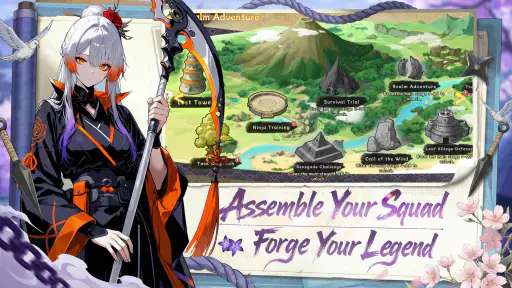
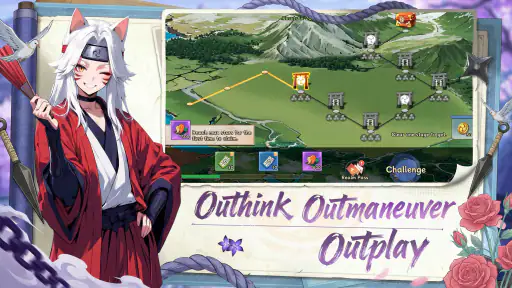
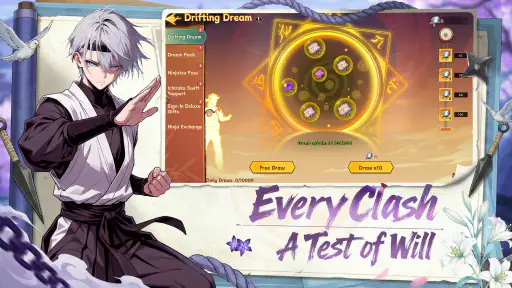
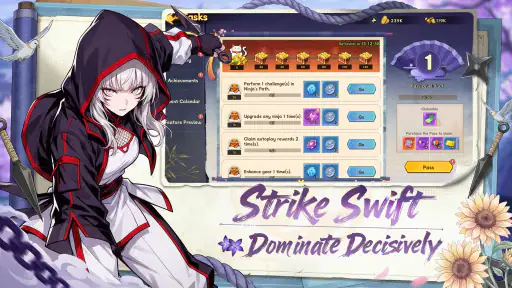

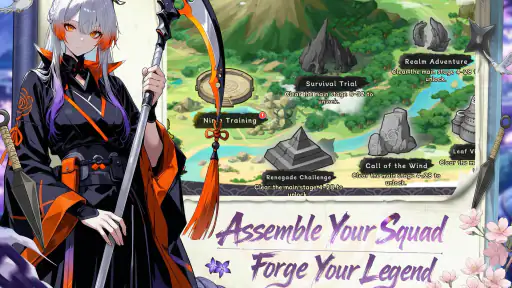
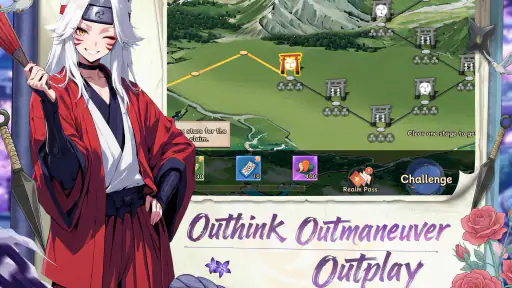
Analysis by Reviewed
Sage's Path: Convergence is an adventure game built around a simple but appealing idea: the future of its ninja world is placed in the player’s hands. I approached it as something to try in short sessions rather than as a game that would immediately take over my evening. That distinction matters, because the early version feels more like a developing experience than a fully mature adventure.
Created by Gwillz Limited, the game is free to start and carries an Everyone age rating. It is available for Android devices running Android 6.0 or later, while the current release is version 0.0.2. Those details place it within reach of many older phones and tablets, although the age rating should not be mistaken for a guarantee that every child will understand optional spending or the broader themes of making choices in a fictional ninja setting.
How Sage's Path: Convergence works in a shared household
The most useful way I found to think about this game is as a personal adventure that can also become a small household conversation. If one person plays on a family tablet, another player may naturally become curious about the choices being made, the direction of the ninja world, or what happens next. That makes it suitable for a parent and child to discuss together, or for siblings to take turns while keeping their own progress and decisions in mind.
It is not the same as a board game where everyone acts in one shared session. The person holding the device is still the active player, so others are observers, advisers, or people waiting for their turn. I would set that expectation before handing over a shared phone. Otherwise, a child may assume that watching someone play means they are also contributing to the same adventure.
For a household, the strongest use case is a short, focused play window. One player can explore, pause to explain a decision, and let another family member suggest what to do next. This works better than passing the device constantly, especially when a choice feels personal to the person controlling the game. I found that the game’s premise naturally encourages discussion, but the family still needs to agree on whether advice is welcome or whether the current player has the final say.
That small rule prevents a surprisingly common problem with shared games: one person makes a choice, another person feels it was “their” decision, and the session ends in an argument. I recommend treating each save as belonging to the player who started it. If the household wants a group experience, it is better to create a separate routine around watching and discussing than to assume the game itself will manage everyone’s participation.
What the free starting point means in practice
The free price makes trying the adventure straightforward. I could see a household installing it to judge the tone and play style before deciding whether it deserves regular space on a shared device. That is a better approach than treating the purchase model as an afterthought, particularly when children may use the same phone or tablet.
Optional purchases range from $0.99 to $99.99 per item. The wide gap between the smallest and largest listed purchase is the main reason I would establish a household rule before anyone plays. A free download can be harmless to test, but a shared device can turn a casual game into a spending conversation if the person playing does not understand that an in-game choice may involve real money.
I would not hand the game to a young player with unrestricted access to a payment method. That is not a criticism unique to this title; it is simply sensible practice whenever a free game offers purchases. The Everyone rating describes the content category, not the player’s ability to judge value, urgency, or the difference between a helpful addition and an unnecessary expense.
For older players, the purchase range is easier to evaluate personally. My advice is to play long enough to decide whether the core adventure itself is enjoyable before considering anything optional. If the game only becomes interesting after spending, that is a poor fit for a budget-conscious household. If the basic experience already holds attention, a player can make a calmer decision about whether an extra item is worth it.
Keeping accounts and progress separate
Shared-device use also raises a practical boundary: who owns the progress? I would avoid letting several people treat one save as a communal project unless everyone is comfortable with the consequences. A choice made by one player may change the direction that another player wanted to explore, and the game’s central promise makes those decisions more important than they would be in a purely repetitive arcade title.
Before installing it on a family device, I would agree on a simple arrangement. One person can have the main run, while others watch and offer suggestions, or each player can use a separate device if they want complete control. I would not assume that the game provides family profiles, child accounts, or special household tools; those are not features I would count on when planning shared use.
This is also where account boundaries matter. A child’s progress, a teenager’s spending, and an adult’s preferred play style are not automatically interchangeable. If the device is used by several people, the safest habit is to check which account is active before playing and to keep purchase decisions with the account holder. That small pause avoids confusion over both progress and payment.
I especially recommend this separation for households where one person enjoys experimenting and another prefers a careful, planned route. The game’s ninja-world premise invites different interpretations of what the “right” path should be. A family can enjoy debating those interpretations, but the debate works best when nobody believes a shared save is being silently redirected.
Coordination, trust, and the age context
Although the game is labeled for Everyone, I would still introduce it differently depending on the player. A younger child may focus on the ninja theme and the excitement of shaping a fictional future. An older child or adult may be more interested in the consequences of decisions and the satisfaction of seeing a chosen direction develop. The same game can therefore support different kinds of conversation without requiring the household to treat it as educational software.
For a parent, the most useful role is not to dictate every decision. I would ask the child why a particular path seems appealing, then let the child explain the reasoning. That turns the game into a low-pressure way to talk about choices, patience, and consequences. It also keeps the experience from becoming a test in which the adult is searching for the “correct” answer.
Trust is important here because the game’s appeal depends on ownership. If an adult repeatedly takes the device away to correct every decision, the child may stop feeling that the adventure belongs to them. On the other hand, leaving a very young player alone with a free game that includes purchases is not a responsible substitute for supervision. The right balance is to protect spending and device access while allowing the player genuine control over the fictional decisions.
I would also explain that the Everyone label does not mean the game will suit every child equally. Some children may enjoy the ninja setting immediately, while others may find the open-ended direction less clear than a game with obvious missions and rewards. If a child becomes frustrated because the next step is not obvious, a short conversation about the current goal can help. If the child wants fast action with constant feedback, this may not be the best choice for that particular player.
For a shared household, coordination can be as simple as choosing a regular time to play and agreeing on who gets the first turn. That sounds minor, but it changes the mood around a shared device. Without a plan, the game may become another source of disputes over screen time. With a plan, it can become a short activity that siblings or parents revisit together.
Where it fits among adventure games
Compared with a traditional single-player adventure, this title is easier to approach casually because it is free to begin and does not require the household to commit money before understanding the experience. Compared with a competitive multiplayer game, it is better suited to families that want to avoid ranking pressure, direct rivalry, or the need for everyone to be online at once.
Its trade-off is that a player looking for a large, polished adventure with a long-established progression structure may find the early release too limited or unfinished. The current version, 0.0.2, signals that I should judge it as an evolving game rather than compare it only with highly developed alternatives. That does not make it unworthy of attention, but it does change what I expect from it.
The average rating is 3.2 from around one thousand ratings, with twenty-two written reviews. I read that as a reason to approach it with measured expectations rather than as a final verdict. The game has enough visibility to attract a substantial audience, yet the rating suggests that its appeal is not universal. In my view, that fits a title whose early form may work for curious players but may not satisfy people seeking a finished, feature-rich adventure.
Its strongest alternative is not necessarily another ninja game. For a family that wants a clear, shared challenge, a local puzzle game may be easier to coordinate. For someone who wants deep exploration and a carefully built world, a premium adventure with no purchase interruptions may be a better fit. For a player who wants quick matches against others, a competitive action game will probably provide more immediate excitement. Sage's Path: Convergence makes the most sense for someone who values the idea of guiding a fictional world and is willing to accept a developing product.
Practical habits that improve the experience
My first tip is to treat the opening sessions as orientation rather than a race. Instead of rushing through every available action, I would pay attention to what kind of decision the game is asking for and what the player actually enjoys: exploring the setting, shaping the direction, or simply following the ninja theme. That helps a household decide whether the game belongs on a shared device before it becomes part of the daily routine.
My second tip is to keep purchase decisions outside the excitement of a play session. If a player sees an appealing item, wait until the session is over and discuss whether it adds enough value. This is especially useful for children, but adults benefit too. The largest purchase option is substantial enough that I would never treat it as an impulsive tap on a family device.
My third tip is to make a quick note of whose turn it is and what the player intended to do next. That sounds unnecessary for a short game, yet it helps when several people share one tablet. It also protects the player’s sense of direction: a sibling who picks up the device later is less likely to change the path accidentally.
A fourth useful approach is to let each household member describe the kind of ninja future they would prefer before playing. One person may want a cautious route, another may want bold decisions, and another may simply want to see what happens. This creates a clear reason to replay or compare separate runs without pretending that every player is working toward one agreed outcome.
I would also keep the first session short if the player is young. That gives the family time to see whether the controls, pacing, and decision-making feel comfortable without turning the game into a long screen-time block. If the child remains interested after the session ends, that is a more reliable sign of fit than enthusiasm during the first few minutes.
Who should install it, and who should skip it?
I would recommend trying it to a player who likes adventure games with a strong theme and enjoys feeling responsible for the direction of a fictional setting. It is also a reasonable candidate for a family looking for something one person can play while others discuss choices nearby. The free entry point lowers the risk of testing it, provided the household handles purchases carefully.
It is less suitable for someone who needs a fully established game with extensive content, highly polished presentation, or a clearly documented long-term structure. The early version makes patience part of the bargain. Players who dislike experimenting with a developing release may be happier with an older adventure that has already settled into its final form.
I would also skip it for a household that cannot agree on device access or spending boundaries. The game itself cannot solve every shared-tablet problem. If siblings regularly overwrite one another’s progress, or if payment access is not controlled, the friction around ownership may outweigh the enjoyment of the adventure.
Likewise, it may not be right for a child who wants constant action and immediate rewards. The central idea is about shaping a path, not merely reacting to rapid challenges. A more direct action game could provide a clearer experience for that player, while a story-led adventure may be preferable for someone who wants richer character development and a more guided narrative.
My household verdict
After looking at it through the lens of shared use, I see Sage's Path: Convergence as a promising trial rather than an automatic family recommendation. Its free starting point, Everyone rating, and accessible Android requirement make it easy to consider, while the ninja-world premise gives families something specific to discuss. The game is at its best when one player remains the decision-maker and everyone else understands that role.
The important cautions are equally clear. Separate progress when possible, decide who controls spending, and do not assume that an age rating replaces parental judgment. The broad purchase range deserves particular attention on a shared device. I would also remember that version 0.0.2 represents an early stage, so expectations should be realistic.
My final view is favorable but measured. I would install it for a curious child, teenager, or adult who enjoys experimenting with an adventure’s direction, especially if the household wants a game that can prompt conversation rather than competition. I would not choose it for a family seeking built-in coordination tools, guaranteed long-term depth, or a completely finished alternative to established adventure games. Try it as a low-risk shared activity, protect the account and payment boundaries, and let the player’s own decisions remain the heart of the experience.
Pros
- Thoughtful puzzles reward patience
- observation
- and logical experimentation.
- The minimalist presentation keeps attention focused on the path and its mechanics.
- A calm atmosphere makes it suitable for short
- relaxing play sessions.
- Progression introduces ideas gradually without overwhelming new players.
- Its unusual concept feels distinct from typical mobile puzzle games.
Cons
- Some solutions can feel obscure without clear clues or feedback.
- The slow pace may not appeal to players seeking action or constant rewards.
- Later puzzles may become repetitive once the core mechanics are familiar.
- Limited visual variety can make extended sessions feel monotonous.
- The game may offer less replay value after completing its main challenges.

- Category
- Adventure
- Version
- 0.0.2