RUSH: Xtreme
- 2.45K
- 4.6
- Installs
- 10.00M
- Price
- Free

Screenshots

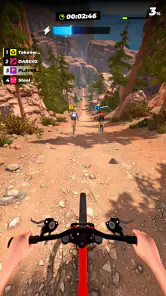
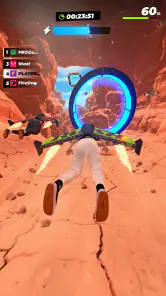
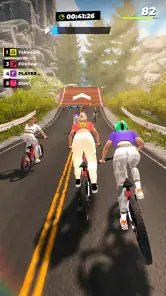
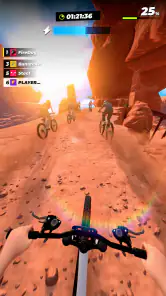
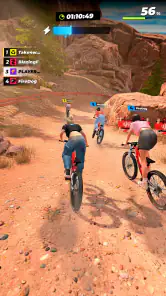
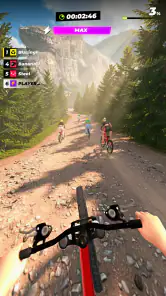

Analysis by Reviewed
RUSH: Xtreme makes its pitch through motion: this is a bike-racing game for moments when I want to get straight to the sense of speed rather than spend time learning a complicated simulation. Its appeal is easy to understand, but the real question is whether the racing stays engaging after the first burst of excitement. My impression is that it works best as a quick, focused arcade-style ride, with a visual and audio mood built around momentum.
That makes RUSH: Xtreme a reasonable pick for short breaks, especially if you enjoy racing games that put the feeling of riding ahead of detailed vehicle management. It is less suited to someone looking for a deep motorcycle sim, a sprawling career, or the careful handling demands of a technical track racer. I would approach it as a compact dose of speed, not as a substitute for a full racing game.
Speed first, with a clear arcade identity
A first impression built around movement
Developed by SayGames Ltd, this free racing game is rated Everyone 10+ and is currently at version 1.6.5. It has a 4.6 average from around 581,000 ratings and has passed 10 million installs, so it has found a substantial audience among players looking for accessible bike racing. Those figures are useful context, but they do not tell me whether the game fits a particular taste: the pace and presentation are the more important clues.
Articles Related to RUSH: Xtreme
The store’s description frames it as a realistic extreme bike racer, but I would read “realistic” as a promise of a racing mood rather than assume it is a strict simulation. The central attraction is the sensation of going fast. That distinction matters: if you want precise tuning, deep rider physics, or a long series of decisions about how to prepare a bike, you may be more satisfied by a dedicated sim. If you want a race that feels immediate and energetic, this is a more natural match.
In practical use, that focus can make the game a handy choice for a brief commute wait or a short pause between other tasks. I would treat it as something to open when I have a little time for a concentrated burst, rather than a game that necessarily asks me to settle in for a lengthy session. That kind of fit is valuable, but it also means the experience depends on whether the core racing remains satisfying once the novelty of speed wears off.
A visual language that supports the ride
The setting and art direction matter in a bike racer because the rider’s motion needs to read clearly. RUSH: Xtreme’s extreme-racing identity gives the visuals a straightforward job: make the action feel urgent and keep attention on the ride. I prefer that kind of coherence to a busy presentation that competes with the road for attention. For a game built around speed, the scene should help me sense momentum rather than make me stop to decode what I am seeing.
There is a trade-off here. A strong racing mood can make a short session feel exciting, but atmosphere alone cannot replace variety or meaningful control. Players who judge racing games mainly by rich environments, detailed bike models, or a large range of visual customization should be cautious about expecting a full showcase. The game’s identity is more clearly about the rush of racing than about serving as a motorcycle encyclopedia.
You May Like

How Microsoft OneDrive Became a Mobile Productivity Giant

How Google Translate Breaks Language Barriers Effortlessly

Why Google Sheets Is the Ultimate Mobile Productivity Tool

Unveiling the Dynamic World of My Talking Tom Friends

Free Fire MAX: Dominating the Battle Royale Arena

Free Fire: Winterlands – The Ultimate Winter Gaming Adventure
One useful way to approach it is to notice how the visual presentation helps you stay oriented while moving quickly. If you find yourself reacting to the race rather than staring at decorative details, the design is doing its job. If you prefer races where the scenery and track complexity are the main attraction, a more simulation-focused or track-focused alternative may suit you better.
Sound and pacing make short play feel purposeful
Sound is part of the mood in any high-speed game: it can make acceleration and movement feel more immediate, or it can become tiring when every moment is pushed at maximum intensity. Here, I would pay attention to whether the audio supports the pace without overwhelming it. That matters especially during quick sessions, when repeated loud effects can turn an otherwise lively game into noise.
The pacing is best understood as a reason to play in short stretches. Rather than treating every visit as a long campaign session, I would use the game for a handful of races when I want a clear, active break. This also offers a practical test before committing more time: play when you can give the action your attention, then see whether the race rhythm feels rewarding or merely frantic. A player who prefers slow, tactical progression may find the emphasis on immediacy less appealing.
For an everyday scenario, imagine waiting for a friend who is running late. A racing game with a simple premise can be easier to pick up than one that expects you to remember a complicated setup or follow a long story. RUSH: Xtreme’s speed-centered identity makes it a plausible option for that moment. I would still avoid starting a race when I need to put my phone down instantly; racing is more enjoyable when I can focus rather than interrupt the action halfway through.
Where the mechanics fit—and where they may not
The key choice is whether you want arcade immediacy or simulation depth. RUSH: Xtreme belongs closer to the first end of that divide. That does not make it shallow by definition; a straightforward race can still be satisfying when the controls, pacing, and feedback work together. But it does set expectations. I would not choose it primarily for realistic vehicle setup, granular physics, or the kind of long-term mastery built around learning every corner of a demanding circuit.
A practical tip is to judge the controls by consistency, not by how complicated they seem. In a fast bike game, a small input mistake can feel more significant than it would in a slower racer. Give yourself a few runs to understand how the game responds before deciding that a race is unfair or that the controls are awkward. If you continue to feel that your actions do not match what happens on screen, that is a meaningful limitation for your own play style, not something to ignore just because the presentation is energetic.
Another trade-off worth considering is the relationship between free access and optional spending. The game is free to download, with in-app purchases ranging from $0.99 to $99.99 per item. That is a wide range, so I would check the purchase prompt carefully and decide in advance whether I want to spend anything. A free starting point makes it easy to try, but the presence of purchases may be a drawback if you prefer games with a single upfront price or want to avoid optional spending altogether.
It is also worth thinking about what kind of progression motivates you. If you mainly want a repeated burst of racing, a focused game can be enough. If you need a strong sense of a long career, a large collection of modes, or detailed bike-building decisions to keep returning, look for those qualities in a different racing game rather than assuming they come with the extreme-bike theme. That is a more useful distinction than judging the game only by its genre label.
Who should give it a try
I would recommend trying it if you enjoy quick racing, like the visual language of extreme bike action, and do not need a realistic simulator to feel involved. It may also suit players who want a game they can sample without paying upfront, as long as they are comfortable with optional in-app purchases. The Everyone 10+ content rating gives families a basic age guide, though parents should still make their own choice about spending and whether the racing style suits a younger player.
I would skip it if your ideal bike game is about patient cornering, mechanical detail, or a carefully structured career. The same goes for anyone who dislikes high-intensity pacing or gets frustrated when a game expects quick reactions. In those cases, a slower motorcycle racer or a broader racing title with more emphasis on setup and track strategy is likely a better fit.
Compared with the usual alternatives, its strongest case is focus: it sells the sensation of extreme riding rather than trying to be every kind of racer at once. That clarity is an advantage when I want fast action, but it is also a boundary. Fans of more comprehensive racing games may regard it as a side option for short sessions rather than their main game.
A measured verdict on the atmosphere
What holds the experience together is the alignment between its name, its racing premise, and its emphasis on speed. The visuals, sound, and pace should all serve that one mood, and the game is most convincing when they make a quick ride feel cohesive instead of cluttered. The mechanics still need to earn their place: an energetic presentation is not enough if the controls do not feel dependable to you.
With a 4.6 average and a large player base, RUSH: Xtreme has clearly attracted plenty of attention, but I would use those numbers as a reason to consider it, not as proof that every racer will enjoy it. Its best audience is someone who wants an accessible, high-energy bike game and can accept the limits of a focused arcade experience. The combination of free entry and optional purchases also makes it sensible to try cautiously: enjoy the racing first, and only consider spending if you are sure the game’s rhythm is one you want to return to.
My overall recommendation is straightforward: give it a look if speed and short, lively races are what you are after. I would not pick it as my only racing game if I wanted depth, long-form progression, or sim-level control. But for a quick hit of bike-racing atmosphere, RUSH: Xtreme has a clear identity, and that focus is its most appealing quality.
Making a short session work
For a more useful first session, I would play when I am not multitasking and treat the opening races as a check on feel rather than a test of skill. That gives me a fair chance to learn the timing and judge whether the speed is exciting or simply hard to read. If I am playing on a small screen, keeping my view clear and avoiding distractions matters more than trying to rush through several races at once.
This is also where the game’s audience becomes easier to define. It is a better fit for someone who enjoys repeating a compact action loop than for a player who needs every session to unlock a major story beat or reveal a new system. If I only have a few minutes, the focused premise is an advantage; if I want a substantial evening game, I would compare it with racers built around broader progression before settling in.
What to expect before installing
The release date is July 15, 2025, and the minimum operating system requirement is version 8.0. Those details are worth checking against your device before downloading, particularly if you use an older phone or tablet. The game is free to start, but the listed purchase range makes it sensible to keep purchase settings and spending expectations in mind, especially on a shared family device.
My practical recommendation is to try the racing first and decide later whether it earns a place in your regular rotation. You do not need to approach it as a commitment to a long campaign: its clearest appeal is the immediate riding mood. If that mood clicks but you later want more tactical depth, a simulation-oriented racer can complement it rather than replace the quick, energetic role this game fills.
RUSH: Xtreme Frequently Asked Questions
What kind of game is RUSH: Xtreme?
RUSH: Xtreme is a mobile racing game built around high-speed off-road driving. It focuses on short races, jumps, and rugged tracks rather than realistic road traffic or long simulation events. You steer through courses, try to keep control over uneven terrain, and compete to finish ahead of other racers. The overall appeal is its fast, arcade-style action, though the exact modes and available content can vary by version.
Is RUSH: Xtreme free to download and play?
The game may be available to download for free, but that does not necessarily mean every item or feature is free to access. Mobile racing games commonly offer optional purchases, such as currency, upgrades, or other in-game content, and may include advertisements. Check the store listing on your device for current pricing, in-app purchase details, and any regional restrictions before installing. Avoid assuming that a free download provides an entirely ad-free experience.
Can I play RUSH: Xtreme offline?
Offline availability can depend on the game version and the feature you want to use. Some racing games allow basic solo play without a continuous connection, while online competitions, account services, rewards, or certain menus may require internet access. If you expect to play while traveling or away from Wi-Fi, check the current store description and test the game before relying on offline access. An initial download or update will require a connection.
What should I know about RUSH: Xtreme’s controls and difficulty?
RUSH: Xtreme is designed for quick racing sessions, with mobile-friendly steering and driving controls that may take a little practice on bumpy courses. Jumps and sharp turns can make it easy to lose speed or drift off the ideal route, so early races are useful for learning how your vehicle responds. If the game offers control or sensitivity options, adjusting them can help. Performance and handling may also differ between devices.
Is RUSH: Xtreme suitable for my phone or tablet?
Compatibility depends on your device’s operating system, hardware, and the requirements of the version currently offered in your region. Before downloading, confirm that your Android or iOS version meets the store listing’s requirements and check the available storage space, since game data and updates can add to the initial download size. Older or lower-powered devices may experience longer loading, reduced visual quality, or less smooth gameplay than newer models.
Pros
- Fast-paced races make quick sessions easy to enjoy.
- Multiple tracks add variety to each race.
- Responsive controls help you steer through tight turns.
- Unlockable vehicles give you goals as you progress.
- The arcade-style action is easy for newcomers to pick up.
Cons
- Races can feel repetitive after extended play.
- Progress may require substantial time or repeated races.
- Frequent crashes and sharp turns can frustrate beginners.
- Visual effects may make the action hard to follow at times.
- Performance can vary depending on your device.

- Category
- Racing
- Version
- 1.6.5