Ragdoll City Playground
- 274.00
- 3.3
- Installs
- 10.00M
- Price
- Free
Screenshots
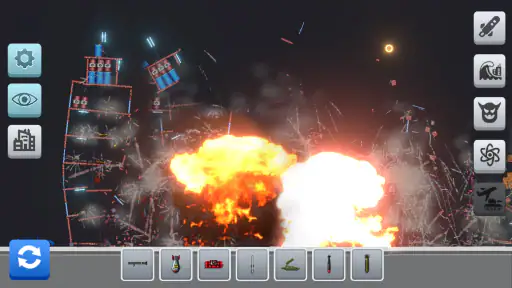
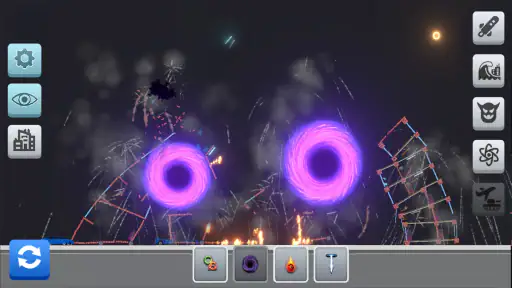
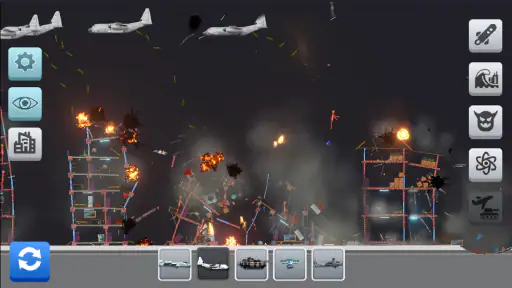
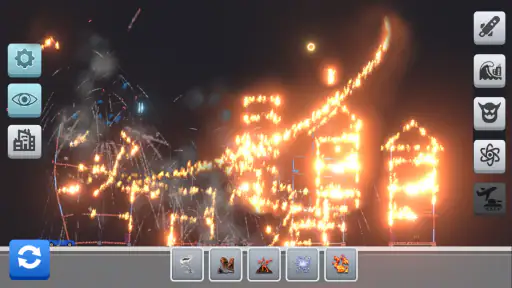
Analysis by Reviewed
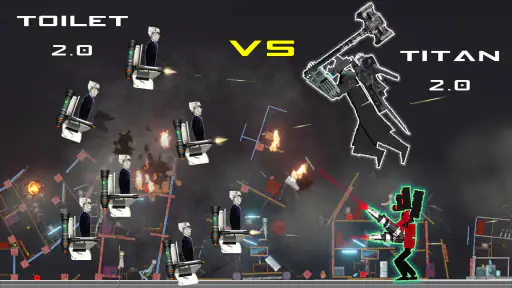
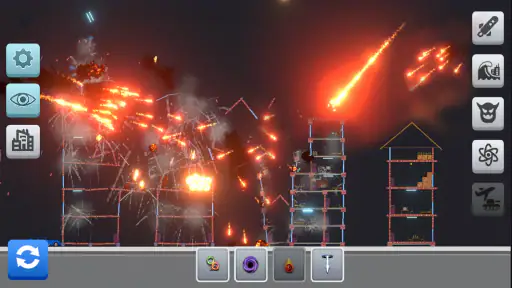
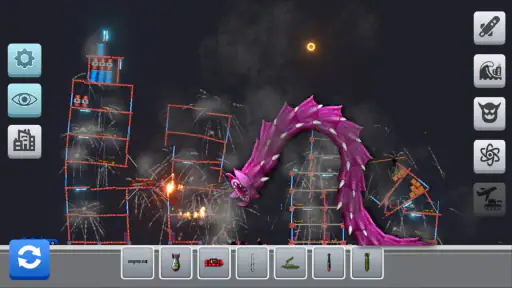
Ragdoll City Playground is the kind of simulation game I open when I want a quick, uncomplicated sandbox rather than a long campaign or a carefully balanced challenge. Its central appeal is easy to understand: you enter a city-like playground, interact with ragdoll characters and objects, and experiment with physical chaos at your own pace. I found the experience more entertaining when I treated it as a toy box than when I expected a structured mission game.
That distinction matters for a first-time player. You are not downloading this for a deep story, competitive ranking, or realistic city management. You are downloading it for short experiments, funny collisions, and the freedom to see what happens when you arrange a scene and then disturb it. The best way to enjoy it is to think like an experimenter, not a score chaser.
Reggae True Love presents the game as a free simulation, and it is available for players aged Everyone 10+. The game has attracted over ten million installs, while its average rating sits at 3.3 from around eight thousand ratings. That combination tells me there is clear curiosity around the concept, but also that the experience will not satisfy everyone equally.
What the first few minutes really feel like
When I first approached Ragdoll City Playground, I had to adjust my expectations. The title suggests a broad city sandbox, but the fun does not come from building a detailed urban ecosystem or completing a traditional management loop. Instead, the pleasure is in manipulating a scene and watching ragdoll-style movement produce unexpected results.
The opening experience is therefore less about learning a complicated rule set and more about learning what can be touched, moved, placed, or triggered. I recommend spending the first minute simply scanning the environment. Look for characters, props, vehicles, structures, and any visible controls before trying to create a dramatic scene. This small pause makes the interface feel less random and helps you understand the playground’s boundaries.
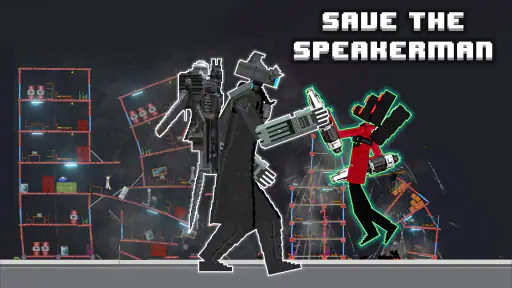
The physics-driven presentation is the main personality of the game. Characters do not behave like ordinary platform-game heroes, and that awkward movement is intentional. A fall, collision, or sudden change in direction can be more amusing than a successful objective. At the same time, physics-based humor is unpredictable, so a scene that looks promising may end quickly or behave differently after a restart.
I also noticed that the game works best in short sessions. It is easy to play while waiting for an appointment or taking a brief break, because you can create a small experiment without committing to a long level. The trade-off is that players who need constant unlocks, narrative progress, or clearly defined goals may feel that the playground lacks direction.
Starting without getting lost
For a first session, I would avoid trying to understand every available interaction at once. Choose one character or object and test it in an open area. Move it, observe how it reacts, and then repeat the same action near a wall or another object. This gives you a practical sense of how the environment responds without turning the first attempt into visual clutter.
A useful habit is to change only one thing between experiments. If you move several characters, add multiple objects, and alter the scene simultaneously, it becomes difficult to know what caused the result. Testing one variable at a time makes the game feel more deliberate and reveals small differences in movement that are easy to miss during chaotic play.
The free entry point is helpful here. You can try the basic experience before deciding whether it deserves regular space on your phone. The game includes optional in-app purchases priced from $1.99 to $7.99 per item, so I would first decide whether the core sandbox loop holds your attention before spending anything. For me, the value depends less on finishing content and more on how often I feel like setting up another experiment.
Getting to a first satisfying result
Your first meaningful success does not need to be a spectacular chain reaction. I would define it as creating a scene that behaves roughly as you intended. Place or position one element, introduce a second element, and watch how the ragdoll reacts. If the result is amusing, surprising, or simply different from the starting arrangement, you have already found the game’s main reward.
One practical approach is to begin with a controlled setup near a flat, open area. Avoid crowded spaces during the first attempt because several simultaneous movements can make the result hard to read. Once you understand how a character responds to contact and falls, move closer to denser parts of the city and try a more complicated arrangement.
I found it more satisfying to capture a mental “before and after” rather than repeatedly resetting without a plan. First observe the untouched scene, then make one change, and finally compare the result. This turns random play into a simple creative workflow. It is also a good way to decide whether the game’s physics feel amusing to you or merely messy.
Another small tip is to avoid judging a setup after a single attempt. Ragdoll movement can produce a different outcome from the same starting position, so repeating an experiment once or twice may reveal more than immediately abandoning it. That unpredictability is a strength when you enjoy emergent comedy, but a weakness when you want precise control.
Why the city playground can be more interesting than it looks
The city setting gives your experiments context. A character falling in an empty space is one thing; the same movement near buildings, streets, or other objects feels more like a miniature scene. I enjoyed creating situations that looked almost ordinary at first and then introducing one disruptive action. The contrast makes the ragdoll behavior easier to appreciate.
There is also a useful difference between watching and intervening. Sometimes the funniest outcome comes from arranging the starting position and then leaving the scene alone for a moment. At other times, direct interaction produces the better result. Switching between these two styles keeps the game from becoming a repetitive sequence of taps.
For younger players within the age guidance, the simple cause-and-effect loop may be approachable, but I would still explain that the game is about playful destruction and physical reactions rather than traditional goals. For adults, it works better as a casual stress reliever or a source of short visual jokes than as a serious simulation.
Where first-time players may become confused
The biggest source of friction is the absence of a strong sense of progression. In a conventional simulation game, the next task is usually obvious: earn resources, expand an area, complete a contract, or unlock a tool. Here, the player often has to supply the objective. If you enter expecting instructions to guide every minute, the open-ended design can feel empty.
My recommendation is to create personal prompts. Try to make one character reach a particular area, arrange a scene with the fewest moving parts possible, or reproduce an amusing result with a different starting position. These self-made challenges give shape to the sandbox without pretending that it is a mission-based game.
Another possible confusion is the difference between visual activity and meaningful interaction. A busy scene may look impressive, but not every moving element necessarily contributes to a better experiment. I learned to simplify scenes when the screen became difficult to read. Fewer objects often make the ragdoll reaction clearer and help you identify which interaction caused the outcome.
Controls and physics can also feel imprecise if you approach them like a conventional action game. A ragdoll does not always travel exactly where you expect, and a collision may produce an awkward pause or an unexpected tumble. I would not call that a defect in the entire concept, because the humor depends on imperfect movement, but it does limit the game’s appeal for players who prefer exact commands.
The current version is 1.5.9, and the game supports devices running Android 7.1 or later. That makes it accessible to a wide range of compatible Android phones, although the experience can still vary with screen size, touch responsiveness, and general device performance. On a smaller display, crowded scenes may be harder to read, so I would keep early experiments simple rather than filling the view immediately.
When the free model affects the experience
Because the game is free to download, it is easy to test without making an immediate commitment. The important question is whether optional purchases improve something you already enjoy or merely encourage you to continue searching for a more satisfying loop. I prefer to play long enough to understand the basic sandbox before considering any purchase.
For someone who wants a relaxing toy-like game, the free starting point is a genuine advantage. For someone looking for a complete, polished simulation with a clear economic system, detailed customization, or a long-term objective, the purchase options will not solve the underlying mismatch. Spending money cannot turn an open playground into a traditional management game.
I would also keep expectations realistic about replay value. The game can generate many different scenes because the interactions are unpredictable, but that does not automatically create deep progression. Its longevity depends on your willingness to invent situations. If you enjoy making your own challenges, that freedom is valuable. If you need the game to provide a steady stream of authored content, you may run out of reasons to return.
How it compares with familiar alternatives
Compared with a conventional city-building simulation, this game is much lighter on planning and much stronger on immediate physical interaction. You are not managing budgets, zoning districts, or a growing population. The reward arrives in seconds rather than after a long construction cycle. That makes it better for spontaneous play, but worse for anyone who enjoys strategic development.
Compared with a physics puzzle game, it offers more freedom but usually less precision. A puzzle normally teaches a specific rule and asks you to solve a carefully designed problem. Here, you can experiment without a single correct answer, yet the lack of a target means your own curiosity has to provide the motivation. Players who like testing possibilities may prefer this openness; players who want measurable mastery may prefer a puzzle alternative.
It also differs from a story-driven action game because the ragdoll characters are not there to carry a narrative. Their value is physical and visual. I would choose this game over a story game when I have only a few minutes and want immediate interaction, but I would choose the story game when I want character development, atmosphere, or a reason to keep moving forward.
Who should install it, and who should skip it
I think it is a good fit for players who enjoy sandbox experimentation, slapstick physics, and short sessions with no pressure to perform perfectly. It is especially suitable if you like setting up a scene, changing one detail, and watching the result unfold. The game can also work well as a casual shared activity: one person proposes a setup, another chooses the object to introduce, and both watch the outcome.
I would be more cautious if you are searching for a deep simulation, a structured campaign, or a carefully tuned challenge. The open-ended design may feel repetitive if you do not enjoy inventing your own goals. It is also not the best choice for anyone who becomes frustrated by unpredictable movement, because the same kind of interaction may not produce exactly the same result every time.
The age guidance of Everyone 10+ is worth keeping in mind when choosing it for a family device. The presentation is playful, but the appeal comes from crashes, falls, and destructive-looking experiments. I would explain that context to younger players rather than presenting it as a conventional educational city simulator.
A practical routine for getting more from each session
My preferred routine has three stages. First, I create a clean starting scene and observe it. Second, I introduce one change and watch closely instead of tapping repeatedly. Third, I repeat the setup with a small variation. This simple structure prevents the game from becoming meaningless button pressing and gives each short session a beginning, experiment, and result.
When a scene becomes too chaotic, I reset mentally by returning to a single character and a single nearby object. That is not just a beginner tip; it remains useful later because simple setups make the physics easier to interpret. I also recommend trying the same arrangement from a different position, since the angle and surrounding space can alter the final movement.
If you are playing during a short break, set yourself one modest goal rather than trying to explore everything. For example, spend the session creating one funny interaction and then stop when you have achieved it. This keeps the game refreshing and avoids the feeling that you must extract a full campaign from a playground.
After several sessions, you will know whether the game’s unpredictability is a strength for you. If you find yourself laughing at unexpected tumbles and returning to test another idea, it has earned a place among your casual games. If you keep waiting for missions, upgrades, or a clearer definition of success, that reaction is useful information: a more structured simulation will probably serve you better.
My final view is positive but specific. Ragdoll City Playground succeeds as a free, physics-focused city sandbox that lets me create quick scenes and enjoy the results without a demanding learning curve. It does not replace a full city simulator, a puzzle campaign, or an action game with precise controls, and its 3.3 average rating reflects the fact that the open-ended formula will divide players.
Still, I think it is worth trying if you understand what you are getting. Start slowly, test one interaction at a time, and treat the first amusing result as the beginning of the experience rather than a final objective. Developed by Reggae True Love, it offers an accessible way to experiment with ragdoll chaos on compatible Android devices, with no download price and optional items available if the basic loop genuinely works for you.
For me, the deciding factor is simple: this is a game for making moments, not completing a checklist. If that sounds like the kind of small, unpredictable distraction you want, install it and begin with one character, one object, and one clear idea. If you need a guided path from the first tap to a long-term achievement, choose a more structured alternative instead.
Pros
- Creative sandbox encourages experimentation with physics and objects.
- Large city setting offers plenty of space for varied scenarios.
- Simple controls make it accessible for casual players.
- Ragdoll reactions create funny and unpredictable moments.
- Playable offline
- making it convenient without an internet connection.
Cons
- Physics can occasionally behave inconsistently or cause objects to glitch.
- The gameplay may feel repetitive after extended sessions.
- Some content or features may be locked behind ads or purchases.
- Graphics are fairly basic compared with more polished simulation games.
- Frequent ads may interrupt gameplay
- depending on the version installed.
- Category
- Simulation
- Version
- 1.5.9