Puppet Lord 3D
- 119.00
- 4.5
- Installs
- 5.00M
- Price
- Free

Screenshots




Analysis by Reviewed
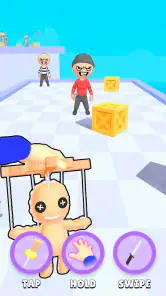
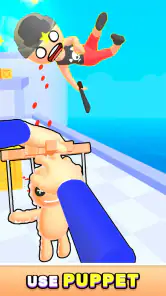
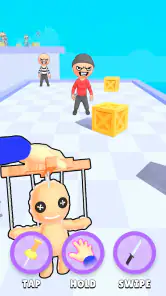
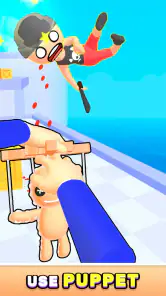
Puppet Lord 3D is the kind of action game I open when I want a quick, silly power trip rather than a serious combat challenge. Its central idea is simple: I control a puppet-like character and use physical manipulation to deal with enemies. That premise gives the game an immediately playful identity, and it is easy to understand within moments. I do not need a long tutorial or a complicated set of rules before I can start experimenting.
My overall impression is positive but specific. This is best enjoyed as a lightweight arcade experience built around short bursts of interaction, funny movement and direct control. It is not the game I would choose for deep strategy, a demanding campaign or carefully balanced competitive combat. If you approach it expecting a relaxed action toy with a strange puppet theme, it makes much more sense.
What makes the puppet-based action work
The strongest part of the design is the way the puppet concept changes the feeling of ordinary enemy encounters. Instead of presenting combat as a standard sequence of attacks and counters, the game encourages me to think about positioning, movement and the awkward physical behavior of the character. That makes even a simple encounter feel more playful than a conventional button-mashing action game.
There is a useful distinction between controlling a polished hero and handling a puppet. A traditional action game usually rewards memorizing attack patterns, selecting abilities and reacting to precise signals. Here, the appeal comes more from seeing how the character responds when I try something. The slight separation between intention and movement creates room for amusing outcomes, especially when an interaction does not unfold exactly as expected.
That makes the game particularly suitable for short sessions. I can play while waiting for an appointment, taking a break from work or looking for something uncomplicated before bed. The action does not demand the same concentration as a competitive arena game, yet it still gives me enough control to feel involved rather than simply watching an animation play out.
One practical tip is to avoid rushing into every encounter. I found the puppet theme more enjoyable when I first looked at the space and considered how an enemy might react to my movement. Even when the solution appears obvious, taking a second to approach from a better angle can make the interaction cleaner. This is not a deep tactical system, but a small amount of patience helps prevent the game from feeling like random tapping.
The game comes from Yso Corp, a developer known for compact mobile concepts that can be understood quickly. That background is reflected here: the design puts its unusual central mechanic ahead of a large amount of explanation. The result is accessible, although players who prefer detailed progression systems may find the experience intentionally light.
As an action title, it sits closer to a casual physics-flavored toy than to a traditional fighting game. That comparison matters. Someone looking for precise combos, a large move list or a demanding boss structure should adjust expectations. Someone who enjoys trying a strange mechanic, seeing how enemies respond and moving through brief challenges will probably connect with it faster.
Where it fits among mobile action games
Compared with endless runners, Puppet Lord 3D gives me more direct influence over what happens on screen. I am not simply steering around obstacles while the game carries the momentum. Compared with competitive action games, it is less stressful and less dependent on perfect timing. Compared with physics puzzle games, it keeps a stronger sense of immediate confrontation because enemies are central to the experience.
That middle position is one of its advantages. It can appeal to players who want action without the pressure of online competition, and to puzzle fans who enjoy experimenting but do not want every stage to become a lengthy logic exercise. The trade-off is that it may not satisfy either audience completely. It is not as strategically rich as a dedicated puzzle game and not as mechanically precise as a focused combat game.
I also think the visual theme does more work than it might seem at first. A puppet character gives the encounters a slightly absurd tone, which softens failure. When a move goes wrong, the result can feel funny rather than frustrating. That tone is important for a free mobile game because it encourages experimentation. I am more willing to try an unusual approach when the game presents mistakes as part of the entertainment.
For a realistic everyday scenario, imagine having ten minutes before a train arrives. A large role-playing game would take too much commitment, while a competitive match might be interrupted at the worst moment. This game is better suited to that gap: I can start quickly, interact with a few enemies and stop without needing to remember a complicated story or maintain a long-term build.
The limitations I noticed during play
The same simplicity that makes the game approachable also limits its long-term depth. After the novelty of manipulating a puppet begins to settle, players may want more variety in objectives, stronger progression or more meaningful decisions. If the main interaction remains familiar for too long, the experience can start to feel repetitive rather than surprising.
This is the central weakness I would explain to a friend before recommending it. The game has a clear hook, but a hook alone does not guarantee lasting engagement. I enjoyed the early experimentation more than the idea of committing to extended sessions. It works best when treated as a compact diversion, not as the only action game on a phone.
Another point is control sensitivity. Puppet-style movement can be entertaining precisely because it is not as rigid as a conventional character. However, that looseness can also make an outcome feel less predictable. When I wanted a precise response, the physical presentation could become a source of friction. Players who dislike imprecise movement or who expect every input to produce a perfectly controlled action may find this aspect irritating.
My advice is to separate failure caused by a poor decision from failure caused by an awkward interaction. If I approach an enemy carelessly, changing my position usually helps. If the movement itself feels difficult to predict, repeating the same attempt without changing anything is unlikely to improve the experience. In those moments, I would rather experiment with timing and distance than simply tap faster.
The free entry point is welcome, but the presence of in-app purchases priced at $3.99 per item means I would be cautious about spending before deciding whether the core loop has enough variety for me. I would first play without buying anything, learn how much I enjoy the manipulation mechanic and only then consider whether an optional purchase improves my personal experience. That is especially sensible for younger players, since the content rating is Teen.
Device compatibility is fairly broad for an older Android phone, since the game requires Android 7.0 or later. That does not tell me how every device will perform, but it does make the game accessible to people who are not using the newest hardware. The current version is 1.0.24, so I would still keep the app updated through the normal store process rather than assuming an old installation behaves exactly like the current release.
Who should try it, and who should skip it
I would recommend this game to players who enjoy unusual mobile mechanics, short action sessions and a little physical comedy. It is also a good choice for someone who wants a game that can be understood quickly without learning a large collection of systems. The puppet theme gives it a more distinctive personality than many interchangeable tap-based action titles.
It may also work well for families sharing a device, provided the Teen rating fits the player. The controls and premise are easy to demonstrate: I can show someone the basic idea quickly, then let them try different approaches. That makes it more immediately social than a game whose appeal depends on hours of progression, even though the experience itself is not built around a multiplayer feature.
I would skip it if my priority were a serious story, deep character development, carefully tuned competitive combat or a long strategic campaign. I would also look elsewhere if I became frustrated by unpredictable physical movement. A traditional action game with fixed attacks would be a better match for someone who wants reliable combos and exact control, while a dedicated puzzle game would offer more substantial planning.
One of the more useful ways to approach it is as a palate cleanser between larger games. I would not install it expecting it to replace a major action title. Instead, I would keep it available for moments when I want something visually amusing and mechanically direct. That framing makes the limited depth feel like a reasonable design choice rather than a disappointing omission.
The audience response suggests that this approach has found a sizeable mobile audience: the game has passed five million installs and holds a 4.5 average from around 3.8 thousand ratings. Those figures do not change my personal assessment, but they do support the idea that its quick, unusual action loop is easy for many players to pick up. The game also has 119 written reviews, which can be useful for spotting whether other players value the same short-session appeal.
My final recommendation
After spending time with it, I see Puppet Lord 3D as a focused experiment that succeeds when I let it be small. Its best qualities are immediate accessibility, a memorable puppet-centered premise and the freedom to approach enemy encounters with curiosity instead of following a rigid combat routine. I especially like that the tone makes experimentation feel low-pressure.
Its weakness is equally clear: the concept may not provide enough variety for players seeking a substantial long-term action game. The physical style can also trade precision for humor, and that trade will not suit everyone. I would not describe those points as deal-breakers, but they should shape the decision to install it.
Because it is free, trying it is straightforward. I would give it a chance if I wanted a casual action game from Yso Corp that could fill short pauses with puppet-based chaos. I would avoid purchases until I had tested the basic loop thoroughly, and I would choose another title if I wanted a serious campaign or exact combat control.
My verdict is that this is a fun, disposable action toy rather than a deep mobile adventure. For the right player, that is precisely its value. It offers a quick way to experiment, laugh at awkward encounters and enjoy a distinctive idea without a large learning curve. I recommend it to casual action fans who appreciate odd mechanics and short sessions, while more demanding players should treat it as a brief side game rather than their next main experience.
Pros
- Simple controls make the game easy to pick up.
- Short levels are convenient for quick gaming sessions.
- 3D visuals give the puppet battles a playful style.
- Progression encourages players to keep unlocking new stages.
- Offline play is useful when you have no internet connection.
Cons
- Gameplay can become repetitive after extended sessions.
- Some levels may feel too easy for experienced players.
- Ads may interrupt the experience between levels.
- Limited customization reduces long-term personalization.
- Performance may vary on older or less powerful devices.

- Category
- Action
- Version
- 1.0.24