Punishing: Gray Raven
- 8.37K
- 4.4
- Installs
- 5.00M
- Price
- Free

Screenshots

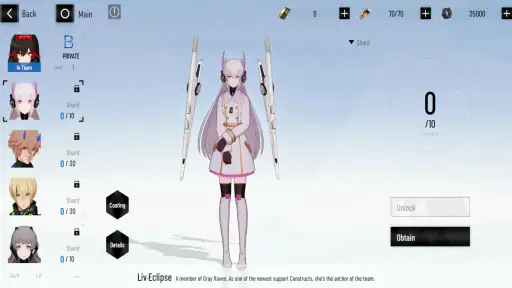
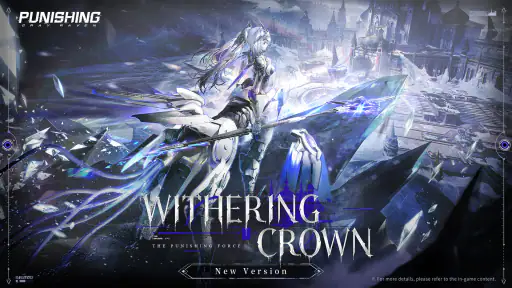
Analysis by Reviewed
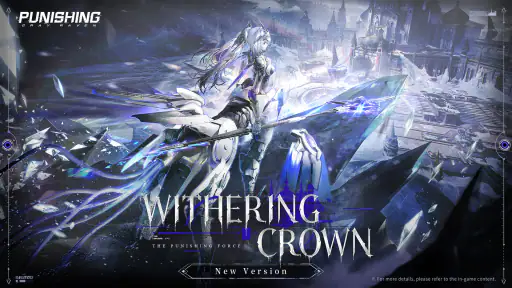
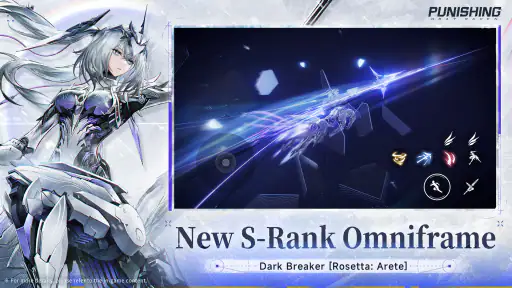
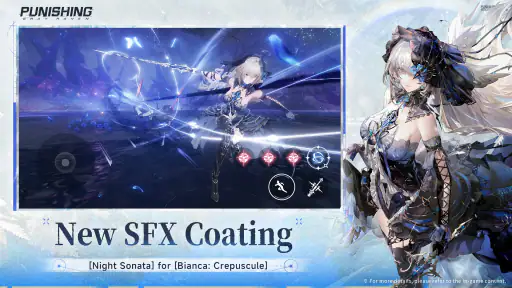
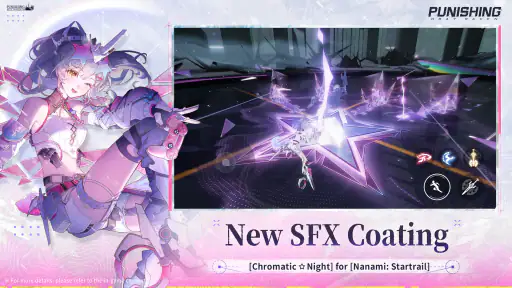
I came to Punishing: Gray Raven expecting a familiar mobile action RPG, but its real identity became clear almost immediately: this is a game built around making quick combat decisions under pressure. The post-apocalyptic science-fiction setting gives the battles a strong mood, yet the reason I kept returning was the way movement, attacks, dodges, and skill choices constantly ask for my attention. It feels closer to a compact action game than to a routine menu-driven role-playing experience.
That distinction matters because this is not the best choice for someone who wants to collect characters, tap through automated fights, and check in only occasionally. I get the most from it when I am willing to watch enemy behavior, react to openings, and learn why a battle went wrong. The game is free to start, carries a Teen age rating, and is published by KURO TECHNOLOGY (HONG KONG) CO., LIMITED. Its current version is 4.7.0.1785245667, and it runs on Android 7.0 or later.
Why its fast combat is the feature that defines the whole game
The central capability here is responsive, fast-paced combat. Instead of treating attacks as a simple sequence of taps, the game makes timing and positioning part of the role-playing layer. I am not only asking which character or equipment is strongest; I am also deciding when to commit to an attack, when to evade, and how to turn a brief opening into a useful chain of actions.
That approach gives every encounter a more active rhythm than I usually expect from a mobile RPG. A weaker team can sometimes feel effective when I understand the fight, while a stronger setup can still struggle if I become careless. This is one of the game’s best qualities: progress is not presented as a replacement for skill. Improving my account helps, but learning the combat language helps just as much.
The result is a game that rewards concentration in short sessions. I can play for a limited amount of time and still feel that I practiced something specific, such as recognizing an enemy’s warning animation or avoiding damage instead of simply absorbing it. That makes the action feel meaningful rather than decorative.
It also explains why the game can be more demanding than other mobile titles in the same broad category. Many action RPGs let me rely on generous auto-play or repeatable routines. Here, those habits can make me feel disconnected from the fight. The most satisfying moments come when I am actively controlling the outcome, not merely watching a powerful team clear a stage.
What the combat asks from your hands and attention
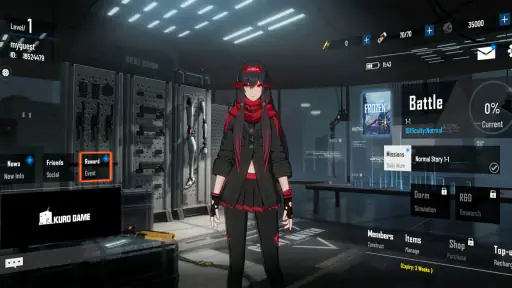
The controls are designed for touch, but the important question is not whether the buttons are easy to find. It is whether I can use them without losing sight of the battlefield. During a busy encounter, I need to keep track of incoming attacks, my character’s position, available actions, and the opportunity to switch my approach. That creates a useful tension: the interface is accessible enough to learn, while the timing becomes more demanding as enemies become less forgiving.
I recommend starting slowly rather than treating the early battles as a test of speed. I first focus on identifying what causes damage and what signals an attack. Once those patterns become familiar, combat feels less chaotic. This is a practical tip that made a noticeable difference for me: I stopped trying to press every available action and began waiting for a clear reason to act.
Another useful habit is to treat evasion as part of offense, not merely an emergency button. Avoiding a hit can preserve the rhythm of a battle and leave me in a better position for the next exchange. When I rush constantly, I often create my own problems by attacking into danger. When I pause for a moment, the same encounter becomes easier to read.
The game’s action focus also means that playing on a small screen can affect comfort. I found that longer sessions require more concentration than casual puzzle or idle games. A stable connection and a device that handles the presentation smoothly are especially valuable, because interruptions or stutter can make a timing-based encounter feel unfair even when the underlying design is reasonable.
How the role-playing layer supports the action
The role-playing structure gives the combat a reason to continue beyond individual battles. I am not simply repeating fights for their own sake; I am building a stronger setup and learning how different choices affect the way encounters unfold. That progression creates a useful loop: a difficult stage shows me a weakness, improvement gives me another attempt, and better execution can finish the job.
I prefer this structure to a system where upgrading alone solves every problem. It encourages me to ask whether I need more power or better decisions. Sometimes the answer is both, but separating those two issues saves time and resources. If I lose because I repeatedly stand in danger, immediately spending resources on upgrades may not address the real problem.
For new players, I would avoid spreading attention across every available option at once. Concentrating on a practical core team and learning how it behaves makes the early experience easier to understand. Experimentation is still worthwhile, but constant switching can make it difficult to tell whether a result came from a better strategy or simply a stronger setup.
This is also where the game differs from a straightforward character collector. The appeal is not only in acquiring new possibilities. I enjoy seeing how a familiar battle changes when I approach it with a different rhythm, and I value the feeling that my own control remains important after progression has made the team more capable.
A realistic everyday session
Imagine having twenty minutes before leaving for work or school. I would use that time for a focused run rather than beginning with the expectation of completing every available activity. I might replay a stage that previously exposed a mistake, pay attention to one enemy pattern, and then spend the remaining time improving the team or testing a different approach.
That kind of session suits the game better than distracted play. If I am watching another screen, answering messages, or trying to rush through a difficult encounter, I lose much of what makes the combat distinctive. The game can fit into a daily routine, but it rewards deliberate short sessions more than half-attentive multitasking.
On a longer evening, I would use the same principle in reverse: alternate demanding battles with progression and experimentation instead of pushing through frustration. This keeps the experience from becoming a cycle of repeating the same failed attempt without understanding it. The most useful question after a loss is not “How do I get stronger?” but “What exactly defeated me?”
Where it stands beside other mobile action RPGs
Compared with turn-based mobile RPGs, this game gives me less time to plan and more responsibility during the encounter itself. Turn-based alternatives are often better when I want to think through each move or play while frequently interrupted. Punishing: Gray Raven is better when I want the satisfaction of reacting directly and seeing my decisions immediately affect the fight.
Compared with idle or heavily automated games, it demands more involvement. Those alternatives are convenient for background progression, while this one asks me to participate. I would not replace an idle game with it if my main goal were effortless daily rewards. I would choose it when I want the battle itself to be the reason I open the app.
It also occupies a middle ground between a traditional console-style action game and a character-focused mobile RPG. The touch controls and progression systems keep it approachable, but the combat has enough timing and pressure to discourage completely passive play. That combination is its strongest point, though it is also the source of its biggest limitation: players seeking a relaxed, low-attention experience may find it tiring.
The trade-offs behind the free entry point
The game is free to download and play, but it includes in-app purchases ranging from $0.99 to $99.99 per item. That range is important to keep in mind before getting invested. I can begin without paying, yet the presence of optional purchases means I would approach progression with a personal spending limit rather than making decisions impulsively after a difficult stage.
My advice is to judge the game by the quality of its combat before considering any purchase. If the controls, pacing, and learning curve do not feel enjoyable on their own, spending money will not solve that mismatch. If the combat does appeal to you, patience is still valuable because understanding the systems can be more rewarding than trying to bypass every obstacle.
There is also a time trade-off. Fast combat sounds immediately accessible, but mastering it takes repetition. I need to accept occasional failure and resist the temptation to treat every loss as evidence that the game is unfair. At the same time, players who dislike repeated practice should know that the action focus can become a barrier rather than a benefit.
The Teen rating is another practical consideration for families. I would not describe this as a gentle children’s game simply because it is available on a phone. Its darker science-fiction setting and combat presentation make it more suitable for older players who are comfortable with that tone.
Who will gain the most from playing
I think the best audience is someone who enjoys action games but also wants the long-term structure of an RPG. You will probably appreciate it if you like learning enemy patterns, refining a team, and feeling that better timing can change a result. The game is especially appealing when you want mobile combat that asks for more than repeated tapping.
It is also a good fit for players who enjoy gradual mastery. I found the most satisfaction in returning to a difficult encounter with a clearer plan, not simply with a larger number attached to my characters. That makes the game suitable for people who enjoy practice and experimentation more than instant success.
I would be more cautious recommending it to someone who wants a calm game for commuting with frequent interruptions. I would also steer away players who dislike in-app purchases on principle, even though the game can be started for free, because the purchase structure remains part of the overall experience. Those looking for a purely automated RPG or a story-first game with minimal combat pressure may be happier elsewhere.
New players should give themselves time to learn the controls before judging the difficulty. The early temptation is to play aggressively and assume that faster inputs are better. In my experience, deliberate movement and attention to enemy cues are more useful. A short pause to observe can save an entire attempt.
My final recommendation after living with the action
The combat is worth trying before anything else. That is the feature that gives Punishing: Gray Raven its personality, and it is also the clearest test of whether the game belongs on your phone. If you enjoy direct control, quick reactions, and an RPG progression loop that does not completely replace personal skill, I think it is a strong free starting point.
The game has reached over 5 million installs, with an average rating of 4.4 from around 180 thousand ratings and roughly 8.4 thousand written reviews. Those figures suggest a substantial audience, but they do not remove the need to consider the fit. Popularity cannot make a timing-heavy action game enjoyable for someone who prefers automation.
For me, the best way to approach it is with modest expectations and a clear routine: learn one combat behavior at a time, build a focused team, avoid spending simply because a stage is frustrating, and play when I can give the encounter my full attention. That approach lets the game’s strongest idea come through. It is not just a science-fiction RPG with action on top; it is a mobile game where the quality of my decisions remains visible in every fight.
Pros
- Fast
- responsive combat with satisfying dodges and combo chains.
- Distinct character kits make team composition and playstyles feel meaningful.
- Stylish sci-fi visuals and impressive ultimate attack animations.
- Regular events provide new challenges
- rewards
- and story content.
- Playable without spending
- with generous rewards for active players.
Cons
- Energy limits can slow progress during longer play sessions.
- Many menus and upgrade systems may overwhelm new players.
- Late-game content often requires carefully built teams and gear.
- Some farming tasks become repetitive after extended play.
- Large updates can require substantial storage and download time.

- Category
- Action
- Version
- 4.7.0.1785245667