Project Jazzgame
- 99.00
- 4.6
- Installs
- 500.00K
- Price
- Free

Screenshots
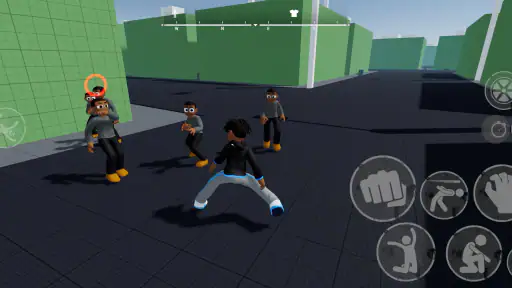
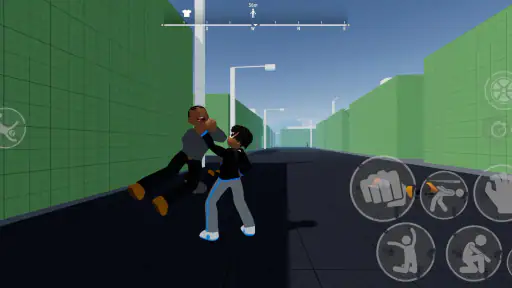
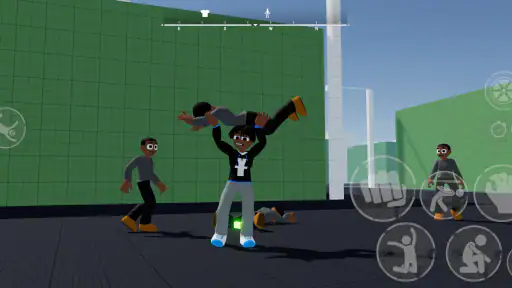
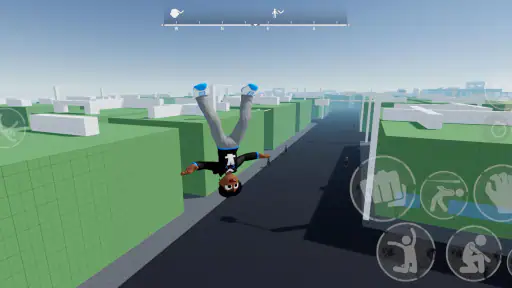
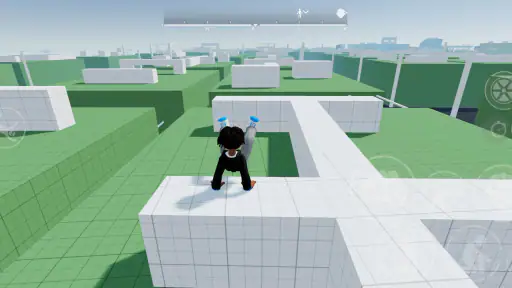
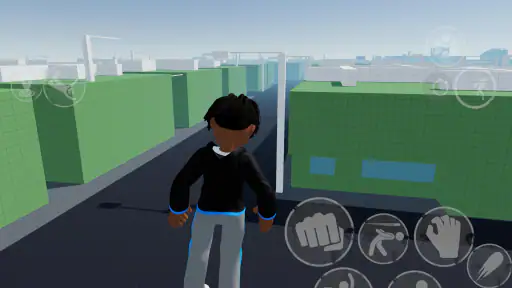
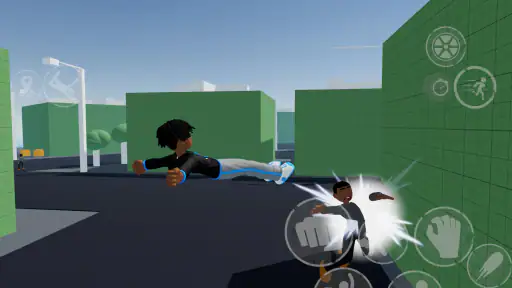
Analysis by Reviewed
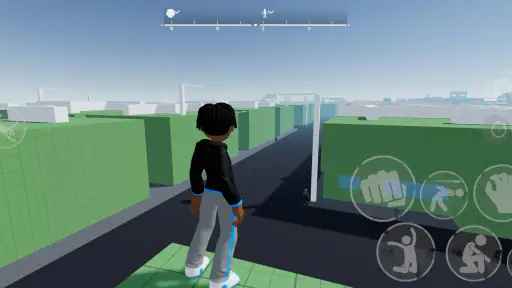
Project Jazzgame caught my attention because it aims at a combination that is easy to describe but difficult to make enjoyable: open-world movement, parkour, and battles in one adventure game. After spending time with it, I see it as a particularly interesting choice for players who want to move through a game world actively instead of simply walking from one objective to the next. Its appeal is less about a complicated premise and more about the feeling of deciding how to approach a space, when to move quickly, and when to confront an enemy.
The game comes from VEETEE Games and is available free of charge for players who meet its Everyone content rating. It has already attracted more than half a million installs and holds a 4.6 average from roughly 5,400 ratings, which gives it a useful level of early player interest. I would not treat those figures as a guarantee that it will suit everyone, but they do suggest that the basic idea has found an audience.
My main advice is to judge it by the kind of play you want from an adventure title. If you enjoy experimenting with movement and like the thought of combining traversal with combat, this is worth trying before spending money elsewhere. If you want a tightly scripted story, a large collection of polished systems, or a familiar role-playing structure, a more traditional adventure game may be a better fit.
How I would decide whether to play it
Movement is the first question to ask
The most important decision point is whether parkour sounds like a central reason to play rather than a decorative extra. In Project Jazzgame, the promise of moving through an open world changes how I look at every area. I am not only asking where the next objective might be; I am also considering how to reach it, whether a faster route could be safer, and whether movement can help me create distance during a fight.
That makes the experience feel different from an adventure game built around ordinary exploration. In many comparable games, traversal is mainly a pause between missions. Here, movement is part of the identity. Even a short session can feel active because the player is encouraged to think about space instead of treating the world as a background.
I found this especially useful when I did not want to commit to a long play session. A quick visit can still have a purpose: explore a nearby route, practice getting through an area, or test how movement and combat work together. That makes the game easier to fit into spare time than an adventure that requires a long story sequence before anything meaningful happens.
Combat should be judged together with traversal
The battles matter, but I would not approach this as a combat-first game. Its more distinctive idea is the relationship between fighting and movement. When enemies are present, the surrounding space becomes part of the decision. I naturally pay more attention to where I can move, how much room I have, and whether staying in one place is really the safest option.
This creates a useful trade-off. A direct attack may be quicker, but moving first can give me a better position. On the other hand, constantly looking for a clever route can slow down a simple encounter. The game is most enjoyable when I treat movement as a tool rather than an obligation. I do not need to turn every moment into an elaborate stunt; I only need to use the environment when it gives me a practical advantage.
That is one of the less obvious strengths of the concept. Parkour is not only there to make the character look agile. It can change the rhythm of an encounter and encourage a more alert style of play. Players who like making small tactical choices will probably get more from this than players who prefer pressing through battles with a fixed routine.
Think about your preferred kind of open world
“Open world” can mean different things to different players. Some expect a huge map packed with activities, deep side systems, and a long progression path. Others mainly want freedom to roam and the ability to choose their own route. I would place Project Jazzgame closer to the second expectation when deciding whether it belongs on your device.
The open-world idea is most valuable here because it supports movement and discovery. I enjoy having room to make choices rather than being pushed along a narrow corridor. Still, anyone downloading it should focus on the core loop: explore, move, and battle. It is not sensible to choose it solely because the words “open world” suggest the scale of a much larger console-style production.
This distinction also helps set expectations for younger players. The Everyone rating makes it approachable from a content standpoint, while the action-oriented design still gives it enough energy for players who want more than a quiet exploration game. Parents looking for a game that is easy to understand may find the premise accessible, although the child’s enjoyment will depend on whether they like action and free movement.
Device compatibility and the free entry point
On Android, the game requires version 8.0 or later. That is worth checking before planning to play, particularly if you are using an older phone or tablet. Compatibility is not the same as a promise of identical performance across every device, so I would begin with a short session rather than assuming that a demanding open-world experience will feel the same everywhere.
The free starting price is a genuine advantage. It lowers the risk of trying an unfamiliar game built around a specific movement style. I can install it, learn whether the controls suit me, and decide from actual play instead of relying only on screenshots or a brief description. Optional purchases range from $2.99 to $4.99 per item, so I would keep the purchase decision separate from the initial download.
My practical approach would be simple: play without buying anything, see whether the movement feels natural, and only consider an item if it solves a problem I actually have. A free game is not automatically inexpensive if it encourages purchases before the basic loop has earned my interest. Here, the best value comes from treating the free version as a trial of the whole idea.
Where the game stands out
A more active way to explore
The strongest reason to choose Project Jazzgame is that it makes getting around feel like part of the adventure. I like games where the route itself can be interesting, and parkour gives ordinary travel more personality. Instead of seeing exploration as downtime, I can use it to improve my movement decisions and become more comfortable with the world.
This is also the point where it separates itself from many conventional adventure games. A standard alternative may offer a clearer mission structure or a more familiar progression system, but it may not give movement the same importance. If your favorite part of an adventure game is finding a way through a space, this title has a stronger reason to exist than a game that simply adds a large map around routine objectives.
One useful habit is to avoid rushing immediately toward the obvious destination. I get more out of the design when I first observe the area and consider possible paths. Even without turning exploration into a formal challenge, that pause makes the world feel more interactive. It also helps me arrive at battles with a plan instead of reacting after the encounter has already started.
Combat that rewards awareness of space
I also like the way the game invites me to think of combat as a spatial problem. In a typical action adventure, the safest habit can be to remain close to an enemy and repeat the most reliable attack. Project Jazzgame encourages a different mindset because movement is always relevant. I am more likely to ask whether I can reposition, escape pressure, or use open space before committing to the next exchange.
This does not mean every battle becomes a deep tactical puzzle. The value is in the small decisions between attacks. A player who pays attention to surroundings may feel more in control than someone who treats each encounter as a simple damage race. That makes the game a good match for people who enjoy action with a light layer of planning rather than purely reflex-based play.
A concrete tip is to practice movement away from immediate danger, not only during dramatic moments. Learning how the character handles ordinary traversal can make later battles less stressful. I find that the best time to understand a movement option is before I urgently need it. This kind of preparation is easy to overlook, yet it is one of the clearest ways to make the parkour-combat combination work for you.
Easy to try, but still distinctive
Free access matters because the game has a narrower appeal than a generic adventure. Not everyone enjoys movement-heavy play, and the only reliable way to know whether it clicks is to control the character yourself. The lack of an upfront price gives curious players a fair chance to test the idea.
The game’s early reception also makes it easier to recommend as a trial. A 4.6 average from about 5,400 ratings is encouraging, and the install count is above 500,000. I still prefer to describe those figures as signs of interest rather than proof of universal quality. Reviews can reflect different devices, expectations, and play styles, so my own decision would remain based on whether the controls and loop feel right.
Another point in its favor is the clear identity. Some free adventure games blur together because they offer a little exploration, a little combat, and a little progression without a memorable center. Project Jazzgame has a more recognizable hook: movement through an open environment combined with battles. Even if that formula is not perfect for me, I know what I am testing when I start it.
When another type of game may fit better
Choose a traditional adventure for story-first play
I would not recommend this as the first choice for someone whose priority is a carefully directed narrative. A story-led adventure usually works best when missions, characters, and pacing are the main attractions. Project Jazzgame’s identity points instead toward movement and action, so a player who wants long conversations, dramatic set pieces, or a strongly guided sequence may feel that the open-world freedom gets in the way.
The same applies to players who dislike wandering. Freedom can be exciting, but it can also create uncertainty. If you want the game to tell you exactly where to go and what to do next, a linear adventure will probably feel more comfortable. There is no benefit in forcing yourself to enjoy exploration when the appeal of another category is its clarity.
Choose a focused action game for immediate intensity
There is also a case for choosing a more focused action game. A compact combat title can deliver faster encounters with less travel and fewer decisions about routes. If I only have a few minutes and want a concentrated battle experience, an arena-style alternative may be more efficient.
Project Jazzgame earns its place by combining activities rather than maximizing one of them. The time spent moving through the world is part of the value, but it also means the game may feel less direct than a title built entirely around combat. Players should decide whether they enjoy the transitions and exploration, not merely whether they like fighting.
Choose a deeper role-playing game for long-term systems
Players looking for character builds, extensive equipment choices, or a highly developed progression framework should compare carefully before committing. I would not download this expecting it to replace every large role-playing game. Its strongest appeal is the moment-to-moment combination of traversal and battle, not the promise of a complex spreadsheet of upgrades.
That difference affects replay value. A systems-heavy role-playing game may keep me returning because of builds, loot, or long-term planning. Project Jazzgame is more likely to bring me back when I want to move around, experiment with routes, and enjoy its central action loop. If I stop finding that movement satisfying, additional content around it may not be enough to hold my attention.
Consider the practical trade-off of optional purchases
The free model is helpful for discovery, but I would still set a personal spending limit. Items cost between $2.99 and $4.99 each, and even modest purchases can change how I evaluate a game. My rule would be to avoid buying anything during the first session and to ask whether the purchase improves a problem I genuinely experience rather than simply satisfying impatience.
This is especially important for younger players because the Everyone rating describes content suitability, not spending habits. I would keep purchase decisions in the hands of the device owner and make sure the player understands that free installation does not make every item free. That small bit of planning prevents the most common frustration with optional purchases.
What switching to it feels like in everyday use
A short-session example
Imagine having a short break after work or school. You do not have enough time for a long story chapter, but you want something more engaging than a passive distraction. Project Jazzgame can fit that moment if you enjoy active control. I would enter the game with one modest goal: explore a nearby section, practice a route, and handle any enemy encounter that appears naturally.
That approach works better for me than opening it with an oversized expectation. I am not demanding a complete adventure in one sitting. I am using the session to improve familiarity with movement and learn how the world feels. The advantage is that progress does not depend entirely on finishing a long mission; the disadvantage is that players who need a strong sense of completion may find a free-roaming session less satisfying.
A good workflow for learning the game
My recommended starting workflow has three stages. First, spend time moving without worrying about combat. Second, notice how the available space affects an encounter. Third, repeat a route and see whether a different approach feels more efficient or safer. This turns the first sessions into practical learning rather than a test of whether you can immediately play perfectly.
The second stage is particularly important. Many players focus on attacks because combat gives immediate feedback, but the parkour element becomes more valuable when I use it before danger peaks. I try to preserve room to move and avoid allowing an encounter to trap me in an awkward position. That is a simple habit, yet it changes the game from reaction-only action into something more deliberate.
I would also avoid judging the game after only one rushed attempt. Movement-based games often depend on comfort with controls, and the first minutes can feel less natural than later sessions. At the same time, I would not force a long trial if the basic movement already feels unpleasant. The free entry point makes a short, honest test the sensible approach.
The cost of changing from another adventure game
If you are coming from a story-heavy adventure, the biggest adjustment is accepting that travel is not merely a connection between important moments. You may need to create your own small objectives and appreciate the act of moving through the environment. That is a rewarding change for curious players, but it can feel like extra work for anyone accustomed to constant mission direction.
If you are switching from a combat-focused game, the adjustment goes the other way. You will spend more attention on positioning and routes instead of treating every encounter as a self-contained test. The reward is a broader rhythm, but the trade-off is that the action may feel less concentrated.
Because the download is free, the financial cost of switching is low. The real cost is time and attention: learning a different rhythm, deciding whether open-world movement deserves your focus, and resisting optional purchases until you understand the game. That is a favorable trade for me because I can test the central idea without committing to a purchase first.
My recommendation for different players
Who should install it
I recommend Project Jazzgame to players who want a free adventure game with a clear movement-based identity. It is a strong candidate if you enjoy finding routes, staying mobile during battles, and making your own short-term goals in an open environment. It is also a sensible option for anyone curious about parkour games but unwilling to pay before knowing whether the controls suit them.
It may be particularly enjoyable for players who like sharing a device with family members, since its content rating is Everyone. I would still supervise optional purchases where appropriate, but the accessible rating makes the game easier to consider for a broad audience. Android users should also check that their device runs version 8.0 or later before trying it.
Who should skip it
I would skip it if my main requirement were a deep story, a highly structured campaign, or an elaborate role-playing system. I would also look elsewhere if I wanted nothing but rapid combat with minimal exploration. In those cases, a linear narrative adventure or a focused action game would probably deliver the desired experience more directly.
I would be cautious if I disliked learning movement systems. The game’s central idea depends on being willing to experiment with traversal, and that means the first sessions may involve some trial and error. Players who want immediate mastery may become frustrated, while those who enjoy gradually developing control are more likely to appreciate the design.
What the current release tells me
The current version is 0.0.498, and the game was released on November 1, 2025. Those details place it in a relatively early stage of its life, so I approach it as a project that may continue to take shape rather than as a finished substitute for every established adventure game. That is not automatically negative; early access to a developing idea can be appealing when the core concept already interests you.
For me, the right expectation is to evaluate the foundation: does moving through the world feel good, and do battles become more interesting because of that movement? If the answer is yes, the game has earned a place on my device. If I need a complete, mature package with every surrounding system fully developed, I would wait for a more established alternative instead.
My final decision
My recommendation is to try Project Jazzgame before deciding whether it deserves a permanent place on your phone. The free price, accessible rating, and distinctive blend of open-world exploration, parkour, and battles make the experiment easy to justify. I especially like that its best moments come from choosing how to move, not simply following a fixed path.
I would keep expectations focused and practical. Treat it as a movement-centered adventure rather than assuming it is a full replacement for a story-first role-playing game. Give yourself time to learn the routes, use space intelligently during encounters, and postpone optional purchases until the core loop has proved enjoyable.
In my experience, that is the fairest way to approach it. Project Jazzgame is not the universal answer for adventure fans, but it has a specific personality and a low-risk entry point. For players who want to run, explore, and fight with more freedom than a conventional adventure provides, it is an easy game to recommend trying.
Pros
- Simple rules make it easy for new players to start quickly.
- Short matches are convenient for casual play sessions.
- Jazz-themed visuals give the game a distinctive atmosphere.
- Lightweight gameplay runs well on many mobile devices.
- Replay value comes from trying different strategies and scores.
Cons
- Limited content may feel repetitive after extended play.
- Progression can seem shallow for experienced gamers.
- Some features may require an internet connection.
- Ads may interrupt gameplay in the free version.
- The interface may feel less polished on smaller screens.

- Category
- Adventure
- Version
- 0.0.498