Pro Kick Soccer
- 154.00
- 3.9
- Installs
- 10.00M
- Price
- Free

Screenshots
Analysis by Reviewed
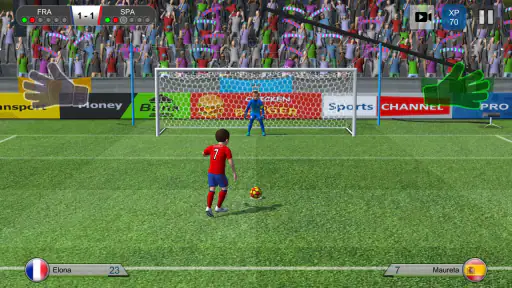
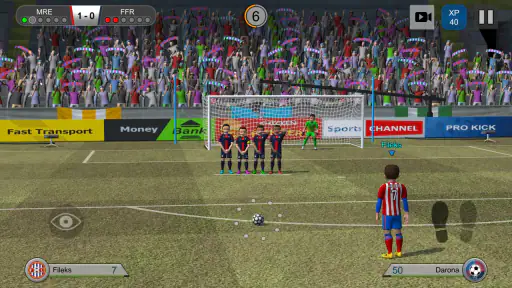
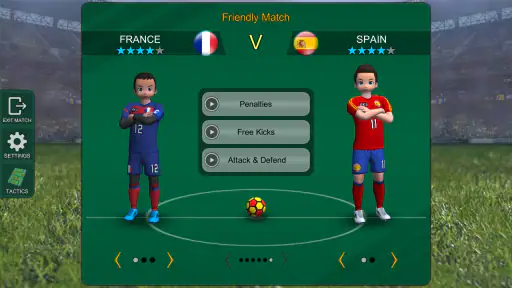
Penalty games are easy to understand and surprisingly difficult to keep interesting. Pro Kick Soccer takes that narrow idea and turns it into a quick sports game built around penalties and free kicks. I found the appeal almost immediately: there is no long tutorial to study, no large team roster to manage, and no need to commit to a full match. You simply focus on the shot in front of you, judge the target, and try to make the next attempt count.
That simplicity is both its strongest quality and its biggest test. During the first few sessions, the compact format makes the game feel ideal for spare moments. After the novelty fades, the question becomes whether repeating the same kind of football challenge still feels rewarding. My answer is mixed but positive: it works best as a short-session game for people who enjoy improving their timing and accuracy, rather than as a complete football simulation.
How the first sessions feel
Rasu Games has kept the central experience focused. Instead of presenting football as a broad management or match-day experience, the game concentrates on set pieces. That makes it approachable for someone who wants to play football on a phone without learning complicated controls. I could pick it up quickly, make an attempt, and understand the result without needing to remember a long sequence of commands.
The first-week appeal comes from the immediate feedback. A successful kick feels satisfying because the outcome depends on a small decision made at the right moment. A poor attempt is also easy to understand: the shot did not go where I wanted, or the timing was not good enough. This clarity encourages another try, especially when I know the mistake was mine rather than the result of an elaborate system I do not yet understand.
That makes it a natural choice for short breaks. I can imagine playing while waiting for an appointment, during a commute, or between other tasks when a full match would be inconvenient. The game does not ask me to reserve a long block of time for one session. Its sports category identity is clear, but its rhythm is closer to a focused arcade challenge than to a traditional football game.
The free-to-play entry point also helps with that casual role. There is no purchase required to try it, so a player can quickly decide whether penalty and free-kick challenges are enjoyable enough to revisit. Its Everyone age rating makes it suitable for a broad audience, including younger players who may prefer a straightforward sports activity over a more complex football title.
One useful way to approach the opening sessions is to treat them as practice rather than as a test of instant skill. I found that rushing each attempt made the game feel more random than it really was. Taking a moment to read the shooting situation, choose a target, and then commit to the motion produces a more satisfying rhythm. That small pause is important because the game’s appeal depends on feeling responsible for the result.
Why the controls matter more than the presentation
In a full football game, a missed chance can be balanced by defending, passing, positioning, and team tactics. Here, the kick itself carries much more weight. That places unusual importance on control response and visual feedback. When the input feels predictable, each attempt becomes a small skill exercise. When I make a mistake, I want to believe I can correct it next time.
This is also why the game may appeal more to players who enjoy repetition with a purpose. Someone looking for a wide football sandbox may find the narrow focus limiting, while someone who likes refining one action can appreciate the concentration. The difference is not simply about skill level. It is about whether you prefer variety across many football systems or depth within a single type of chance.
Compared with the usual alternatives in the sports category, this is less demanding than a conventional football simulator and less structurally involved than a team-management game. That makes it easier to start but gives it fewer ways to surprise me later. It is a good companion game, not a replacement for a full football title.
What keeps it useful after the novelty
The more important test came after the initial excitement. A penalty game can be fun for an evening because every attempt is immediate, but lasting value depends on whether the player has a reason to return. In my experience, the recurring value comes from the personal challenge of becoming more consistent. I am not returning to build a club or follow a long football story; I am returning because I want the next set piece to be cleaner than the last one.
That distinction matters when deciding whether to keep it installed. If you enjoy chasing a better personal performance, the focused design can remain appealing. You can use short sessions to work on patience, target selection, and timing instead of treating every launch as a major event. The game fits neatly into a routine where the goal is improvement in small steps.
A practical habit is to stop after a few focused attempts rather than continuing until every miss becomes irritating. Because the core action is repetitive, fatigue can arrive before the player notices it. Ending a session while the challenge still feels sharp makes it easier to return later. I found this more effective than trying to extract a long play period from a game designed around compact moments.
Another useful approach is to play it as a warm-up before a longer sports game. It puts attention on one decision at a time and can be a pleasant change from managing an entire team. It also works as a low-pressure alternative when I want football-themed entertainment but do not want to track a match, league, or roster. That is a modest use case, but it is one the game serves well.
The game’s audience size suggests that the format has broad reach. It has passed ten million installs and holds an average rating of 3.9 from around thirty-three thousand ratings. I would not treat those figures as proof that every player will enjoy it, but they do indicate that the simple set-piece concept has attracted a substantial audience. The more useful takeaway is that its appeal is easy to understand even if its long-term fit depends heavily on personal taste.
Who will keep coming back
I would recommend it to players who like arcade sports, quick retries, and skill-based repetition. It is especially suitable for someone who wants football without the time commitment of a full match. Younger players may also appreciate the direct objective, while experienced sports-game players can use it as a lighter alternative when they want something less demanding.
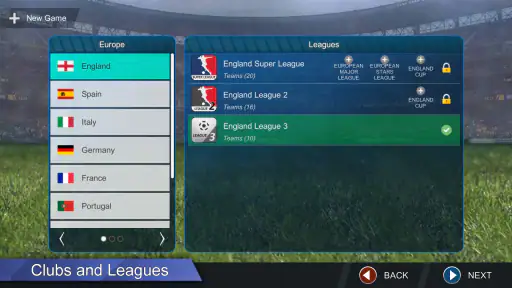
I would be more cautious about recommending it to someone who expects realistic team play, career progression, tactical control, or a broad collection of football modes. The focus on penalties and free kicks is not a temporary part of the experience; it defines the experience. If that specific slice of football does not appeal to you, the game is unlikely to become more satisfying simply because you spend longer with it.
It is also not the best choice for a player who needs constant novelty. The first sessions provide discovery, but the long-term loop is based on repeating the same general kind of challenge. Players who prefer changing opponents, evolving strategies, or a strong sense of progression may find a conventional football game more rewarding.
Maintenance, friction, and the cost of returning
One advantage of this focused design is that it has a low mental maintenance burden. I do not need to remember a complicated control scheme or reconstruct a long campaign after leaving it for a week. Returning after a break is simple because the central task remains obvious. That makes it more convenient than games that punish an interrupted routine with layers of menus and systems to relearn.
The current version is 1.0.21 and supports devices running Android 5.1 or later. For someone using an older compatible phone, that broad operating-system reach may make it easier to try than newer sports games with heavier requirements. I would still judge performance on the individual device, but the stated minimum makes the game feel accessible rather than aimed only at recent hardware.
Its maintenance burden is low in another sense: the player does not have to organize a large collection of content to enjoy a session. There is no need to prepare a lineup or plan a long campaign before taking a kick. That is useful when the game is installed as a secondary option rather than as a main hobby.
There is a trade-off, though. Low maintenance can also mean low attachment. When I return to a game with a large team, story, or evolving world, I often have a reason to check in. With this one, the reason is mostly my own willingness to practice. If I stop caring about improving the next attempt, there may be little else pulling me back.
The free price lowers the risk of that limitation. I can keep it available for occasional use without having committed money to a deeper football system. At the same time, free access does not automatically solve repetition. I would still suggest giving it a short trial period and asking whether the act of taking set pieces remains enjoyable after the initial curiosity has passed.
Where fatigue begins
The main source of fatigue is the narrow loop. Penalties and free kicks are naturally dramatic in football, but they are still variations on a small set of actions. Early on, each attempt feels like a fresh opportunity. Later, the player may begin to feel that the outcome depends on repeating a familiar motion rather than discovering a new problem.
That fatigue is more likely if you play for too long in one sitting. The game is better suited to brief visits than extended sessions, and forcing it into a long play period exposes its limited range quickly. I would not criticize it for failing to become a full football simulation; that is not its purpose. I would, however, treat its focused scope as a real limitation when comparing it with broader alternatives.
Another possible friction point is the difference between a mistake that teaches something and a miss that simply feels disappointing. The more clearly the game communicates why a shot failed, the easier it is to stay motivated. My advice is to look for repeatable patterns in your own attempts rather than judging the game by one unlucky result. If you cannot identify what to change, the challenge may start feeling less like practice and more like repetition without control.
There is also a personal preference involved in the level of pressure. Some players enjoy the tension of having one kick decide the moment. Others prefer football games where a mistake can be repaired through passing, defending, or a later attack. This title naturally favors the first group. The same concentrated drama that makes a successful shot satisfying can make a miss feel disproportionately frustrating.
How it compares with broader football games
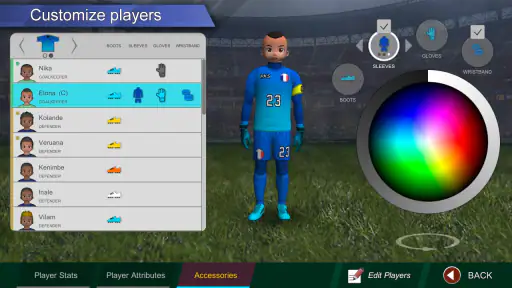
Compared with full football simulations, this game is easier to learn and faster to play. I do not need to understand formations, player movement, or match management before I can enjoy it. That makes it a strong option for quick entertainment and for players who find traditional football controls overwhelming.
Compared with football management games, it offers almost none of the planning appeal that comes from building a squad or making long-term decisions. Its reward is immediate execution rather than strategic ownership. A manager-game player may appreciate it as a change of pace, but probably will not see it as a substitute.
Compared with other arcade sports games, its strength is concentration. It does not need a large collection of rules to create tension; it makes one kick matter. The weakness is equally clear: an arcade game with a single central activity must rely heavily on the feel of that activity. If the controls or repeated attempts do not click with you, there is not a second major system waiting to rescue the experience.
This makes the installation decision fairly straightforward. Choose it if you want a free, accessible football game for short sessions and enjoy practicing a precise action. Choose a broader alternative if you want matches, team identity, tactical variety, or a long progression structure. Neither preference is wrong; they simply describe different reasons for playing sports games.
My long-term verdict
After the first-week appeal wears off, Pro Kick Soccer earns its space only if you genuinely enjoy the rhythm of penalties and free kicks. I like its directness, its low commitment, and the way it turns a familiar football moment into a compact skill challenge. It is easy to recommend as a casual download because the price is free, the age rating is Everyone, and the basic idea can be understood almost immediately.
My recommendation comes with a clear condition: keep your expectations focused. This is not the game I would choose when I want a complete football season, a deep career, or a realistic matchday experience. I would choose it when I have a few minutes, want something competitive without a long setup, and feel like testing whether I can make the next kick more accurate than the previous one.
The best long-term routine is to use it in short bursts, leave when the attempts stop feeling meaningful, and return when the challenge sounds appealing again. That approach respects both its strength and its limitation. It avoids turning a sharp little sports game into a chore while preserving the satisfaction of gradual improvement.
Rasu Games has made a game with a clear identity rather than an all-purpose football package. Its lasting value is personal and skill-based, not content-heavy. For the right player, that is enough: a dependable set-piece challenge that fits into everyday gaps. For anyone needing constant variety, it will probably feel thin once the first excitement disappears. I would install it for quick football sessions, keep it as a lightweight option, and recommend it honestly to friends who enjoy precision more than football management.
Pros
- Responsive controls make passing
- shooting
- and tackling easy to learn.
- Matches are short enough for quick gaming sessions.
- Team and player upgrades add useful progression between matches.
- The broadcast-style presentation gives games a more authentic feel.
- Offline play is convenient when you have no internet connection.
Cons
- Some advanced features may require in-app purchases.
- Opponent difficulty can feel uneven during certain matches.
- The game may become repetitive after extended play.
- Ads can interrupt the experience for free players.
- Older or less powerful devices may experience occasional lag.

- Category
- Sports
- Version
- 1.0.21