Pondlife — Fish, Frogs & More!
- 1.52K
- 4.6
- Installs
- 1.00M
- Price
- Free

Screenshots
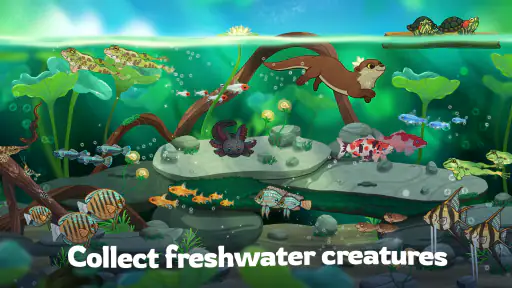
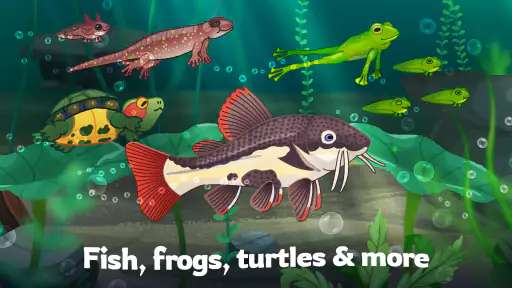
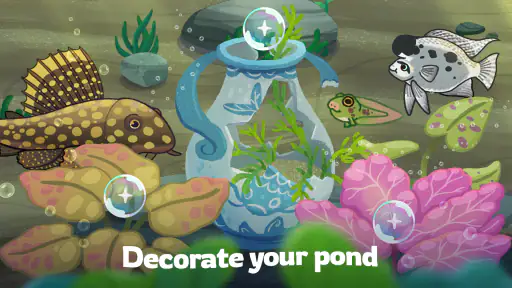
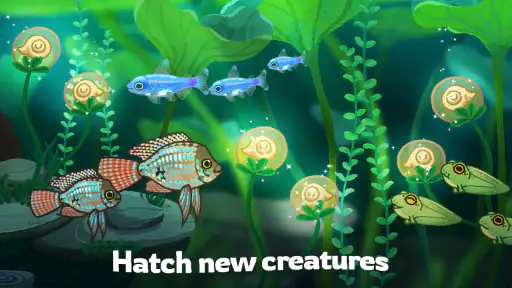
Analysis by Reviewed
I went into Pondlife – Fish, Frogs & More! expecting a small, quiet simulation, and that is exactly where its appeal lies. It is a gentle pond-management game from Runaway Play, built around caring for aquatic creatures rather than chasing a demanding score. The basic rhythm is easy to understand: look after the animals, help the pond develop, and return when you want a few calm minutes.
That simplicity makes it an inviting choice for players who find traditional simulation games too busy. At the same time, it means the experience depends heavily on whether you enjoy gradual progress and repeated care tasks. I found it most enjoyable as a short, relaxing visit between other activities, not as a game I would sit with for a long uninterrupted session. That distinction is important before downloading it.
How the pond establishes its early goals
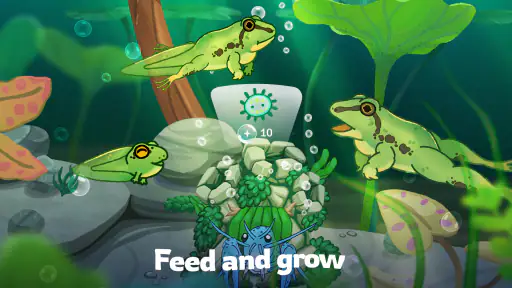
The first goals are deliberately approachable. Feeding and growing fish and frogs gives the game an immediate purpose, while the pond setting keeps the mood softer than a typical management title. I never felt overwhelmed by a large tutorial or a complicated set of menus. The game’s central question is simple: what can I do now to make this little habitat healthier and more interesting?
That clarity is one of the strongest parts of the design. A player can understand the basic loop without studying a guide, which makes it suitable for a quick first session or for someone who does not usually play simulation games. The age rating is Everyone, and the peaceful presentation should also appeal to families looking for something less competitive.
Still, the early simplicity is a trade-off. Players who want deep construction tools, detailed resource chains, or a demanding economic puzzle may find the opening too light. This is not the kind of simulation where I constantly calculate production efficiency. Its appeal comes from watching a small environment develop through care, not from mastering a complex spreadsheet of decisions.
My most useful early habit was to treat each visit as a brief routine rather than trying to force progress. I would check the pond, handle the available care actions, and then leave instead of repeatedly searching for something dramatic to happen. That approach made the game feel relaxing. Trying to turn every visit into a major advancement made the slower pace more noticeable.
What makes the first sessions approachable
The fish and frogs provide an immediate sense of life, and the broader “more” implied by the game’s presentation gives the pond a feeling of room to grow. I liked that the setting itself carries much of the atmosphere. There is no need for a grand story to explain why I should care about the habitat; the small act of maintaining it is the point.
One practical strength is that the game works well for players who prefer low-pressure goals. If I had only a few minutes, I could still feel that I had checked in meaningfully. That makes it a better fit for a commute, a short break, or a quiet evening than a game that requires a long uninterrupted run to achieve anything worthwhile.
The limitation is that “relaxing” can also mean “undemanding.” I did not get the same sense of urgency I would expect from a survival simulation or a time-limited management game. If your motivation comes from failure states, tight deadlines, or difficult optimization, the pond may not provide enough friction. The early goals are there to guide attention, not to pressure the player.
How progress feels once the pond starts growing
The most satisfying progress signal is the changing sense of ownership. At the beginning, the pond feels like a small responsibility. As I continue caring for it, the creatures become the reason to return, and the habitat feels less like a menu screen and more like a place I am maintaining. That emotional shift matters because the game’s rewards are tied closely to the pond’s atmosphere rather than to spectacle.
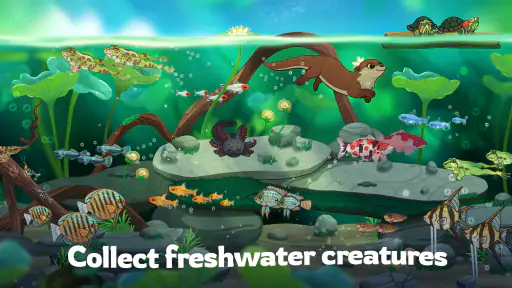
I also appreciated that progress is easy to read at a glance. The presence of fish, frogs, and other pond life gives each visit a visible focus. Even without a complicated explanation, I can tell that care is meant to lead toward a livelier environment. This is a useful design choice for a casual simulation: the player does not have to remember a long list of objectives to understand whether the session mattered.
A tip that improved my experience was to pause after each meaningful change and look at the pond as a whole. It is tempting to tap through care actions quickly, especially when the interface makes the next task obvious. Taking a moment to notice the result made the gradual development feel more rewarding. In a game built around a small habitat, observation is part of the reward, not wasted time.
There is also a subtle difference between progress and activity. A busy session is not automatically a productive one, and the game’s calm structure makes that clear. I sometimes returned expecting a major new development, only to find that the value of the visit was simply caring for the pond again. Players should know that the game’s progression is likely to feel more like tending a garden than clearing a sequence of dramatic missions.
Unlocks and the value of returning
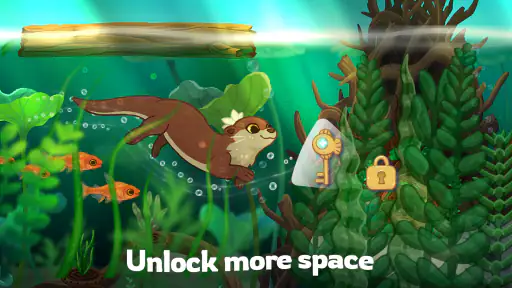
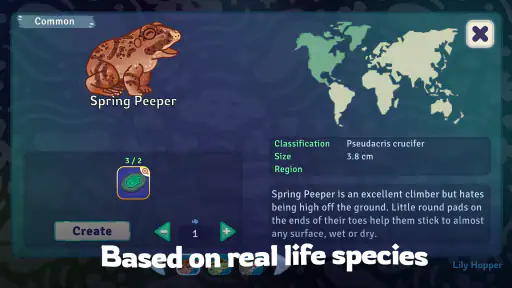
The promise of additional pond life gives the game a natural reason to continue. Fish and frogs are not just decorations; they are the creatures around which the care loop is organized. Seeing the pond become more varied is a more fitting reward here than a flashy victory screen would be.
That said, the appeal of unlocks depends on personal taste. I enjoyed the anticipation because I like collecting and gradually improving a small space. Someone who needs constant novelty may feel that the rewards arrive too quietly. The game does not seem designed to overwhelm the player with a rapid stream of dramatic unlock moments, and that restraint is either a strength or a weakness depending on what you want from a simulation.
For me, the best way to use the progression was to set a modest personal target for each visit: care for the current animals, notice what has changed, and stop before the routine becomes repetitive. This kept the game from turning into a chore. It also made each return feel intentional rather than automatic.
Difficulty, pacing, and the point where patience matters
The difficulty curve is gentle. I did not approach the pond with the fear that one poor decision would ruin a long-term plan. That makes the game welcoming, but it also means the challenge is mostly self-imposed. The question is not usually whether I can survive a difficult scenario; it is whether I am interested enough in the pond to keep tending it.
This is where the game differs from many familiar simulation alternatives. A city builder asks me to balance systems. A farming game often combines schedules, crops, upgrades, and larger daily objectives. A creature-collection game may push me toward battles or completion targets. Pondlife sits apart from those formats by keeping attention on a compact aquatic habitat and a calmer care routine.
I would recommend it over those alternatives when I want a softer experience with less planning overhead. I would choose a more involved management game when I want meaningful failure, layered strategy, or a strong long-term campaign. The comparison is not about which format is better; it is about whether I want to relax with a pond or solve a larger system.
The pacing can feel slow if I play continuously. After the initial curiosity, the game asks me to appreciate small changes and repeated care. That works beautifully in short sessions but becomes less compelling when I expect a constant stream of new tasks. My practical advice is to avoid treating it like a conventional level-based game. It is better approached as a digital place to revisit.
Another trade-off is that a low-pressure difficulty curve can reduce the satisfaction of mastery. There is less opportunity to prove that I have become an expert strategist because the game’s central pleasure is observation and upkeep. Players who enjoy optimizing every action should keep that expectation in check. The pond is not trying to turn care into a high-stakes contest.
Retention pressure and the question of spending
The game is free to download, which makes it easy to try without committing money first. Its store presence shows an average rating of 4.6 from around 18 thousand ratings, and it has passed one million installs. Those figures suggest that the relaxed pond concept has found a substantial audience, although popularity alone does not guarantee that its slower structure will suit everyone.
There are in-app purchases ranging from $0.99 to $99.99 per item. That is the point where I would encourage a little self-control. A calming game can make repeated small purchases feel harmless, especially when the player is returning often and wants to speed up or expand the experience. I would decide in advance whether I am comfortable spending at all, rather than making that decision during a moment of impatience.
The free entry is a genuine advantage for curious players, but the presence of purchases may create pressure for people who want every part of the pond immediately. The most comfortable way to play is to accept the intended slower rhythm. If I start measuring every visit against what might be available through spending, the relaxing atmosphere becomes less effective.
This is also where the game may not be right for younger players using a shared device without supervision. The Everyone rating describes the content, not a guarantee that every purchasing situation will be effortless for a family. I would make sure the device’s purchase controls are configured appropriately before handing it to a child.
For adults, the practical question is whether the basic loop remains enjoyable without rushing. In my experience, it does when I treat the pond as a small routine. If I need fast access to everything or feel frustrated by gradual development, the purchase structure can become more noticeable. That is not a reason to reject the game outright, but it is a reason to play at its natural pace.
A realistic everyday use case
Imagine finishing work with ten quiet minutes before dinner. A competitive game might demand concentration, while a large simulation might require remembering a complicated plan. Here, I can open the pond, care for the animals, watch the habitat for a moment, and close the game without feeling that I abandoned a major task. That is the situation in which its design makes the most sense.
It can also work as a gentle wind-down game, provided the player is comfortable with screen use before bed. The lack of aggressive competition makes it less mentally noisy than many alternatives. I would not recommend it as a replacement for a game night with friends or for a long weekend session built around challenge. Its strongest use is as a small, repeatable pause.
Who should play it and who should skip it
I think the best audience is someone who enjoys virtual pets, collecting pond life, and gradual environmental development without intense pressure. It is also a good introduction to simulation games for a player who might be put off by complicated building systems. The calm subject matter and Everyone rating make it broadly approachable.
I would be more cautious recommending it to players who need a clear campaign, frequent surprises, or demanding objectives. If your favorite part of a simulation is solving bottlenecks and recovering from mistakes, this pond may feel too forgiving. Likewise, if you dislike games that ask you to return regularly for small improvements, the central rhythm may become repetitive.
The developer is Runaway Play, and the current version is 1.25.11. It runs on Android 7.1 or later, so the operating-system requirement is relatively accessible for compatible devices. I would still check available storage and device performance before installing, especially on an older phone, but the listed minimum system requirement should make it reachable for a wide range of Android players.
One detail I value is that the game does not need to be treated as a serious commitment. You can try it free, decide whether the pond’s pace works for you, and leave it alone if the routine does not click. That low barrier is important because the game’s appeal is personal: some players will find the quiet care loop soothing, while others will quickly want more structure.
My progression verdict
After spending time with the pond, I see its progression as intentionally modest rather than underpowered. Early goals teach the care routine, later progress comes from a livelier habitat, and the challenge rests mainly in maintaining interest over time. The pacing is strongest when I play in short visits and weakest when I demand constant advancement from it.
The game succeeds because it understands its own scale. Fish, frogs, and the surrounding pond provide enough focus for a relaxing simulation, while the uncomplicated structure keeps the experience welcoming. I especially liked the way it turns small improvements into something worth noticing. That is a different kind of satisfaction from winning, and it will not appeal to everyone.
My main reservation is the combination of slow progression and optional purchases. Players who are content to wait can enjoy the gentle rhythm, but players who want rapid unlocks may feel pressure to spend. The high end of the purchase range also makes it sensible to establish a personal limit before getting deeply invested.
Overall, I would recommend it to a friend who wants a peaceful pond game for brief daily check-ins and who enjoys gradual growth more than difficult strategy. I would steer a strategy-focused player toward a deeper management alternative instead. The best reason to play is not to conquer the pond, but to enjoy returning to a small living space that changes at an unhurried pace.
For me, that makes it a pleasant free simulation with a clear identity. It is not a substitute for every type of management game, and its relaxed tempo requires patience, but it delivers a focused experience for the right player. If feeding fish, caring for frogs, and watching a pond slowly become more inviting sounds satisfying, this is an easy one to try.
Pros
- Relaxing pond simulation with fish
- frogs
- and other wildlife.
- Simple controls make it easy to explore and interact with the pond.
- Pleasant nature sounds create a calming atmosphere.
- Different creatures add variety and encourage regular visits.
- Suitable for short
- casual play sessions without complex objectives.
Cons
- Progress may feel slow for players seeking constant action.
- The peaceful gameplay can become repetitive over time.
- Some content or features may require in-app purchases.
- Small pond details can be difficult to see on smaller screens.
- Limited competitive elements may not appeal to achievement-focused players.

- Category
- Simulation
- Version
- 1.25.11