Overtake Rush 3D: Car Game
- 2.93K
- 4.5
- Installs
- 10.00M
- Price
- Free

Screenshots
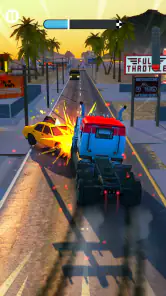
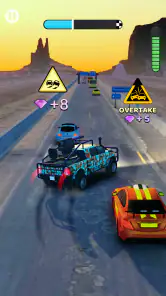
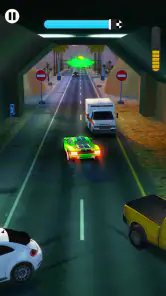
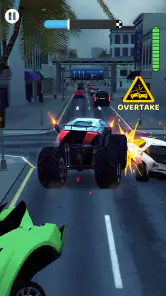
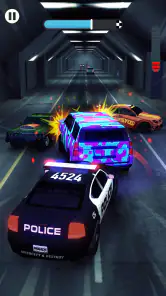
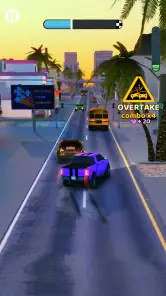
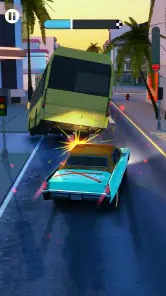
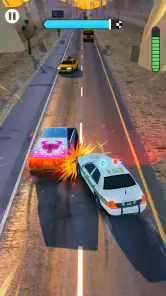
Analysis by Reviewed
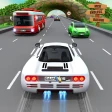
Overtake Rush 3D: Car Game is the kind of racing game I reach for when I want immediate action rather than a long career mode or a serious driving simulator. It puts the focus on weaving through traffic, judging gaps, and surviving police pressure while the road keeps moving beneath the car. After spending time with it, I see its appeal clearly: it is built around quick decisions and a strong sense of motion, not around collecting a huge garage or learning complicated racing rules.
That makes it easy to understand within a few minutes. You drive, overtake, react to danger, and try to keep control when the traffic becomes less forgiving. The game is free to download, and its Everyone 10+ age rating makes it a fairly approachable choice for younger players and casual adults alike. Its store summary presents it as a realistic traffic-racing experience with extreme driving and police chases, and that description matches the central mood without needing a long explanation.
How the speed feels during ordinary play
The most important question for a traffic racer is whether the road feels fast enough to make every overtake matter. In my experience, the speed comes less from complicated track design and more from the constant need to read the vehicles ahead. A gap that looks comfortable at first can disappear quickly, so I found myself looking several cars forward instead of staring only at the bumper directly in front of me.
That creates a different rhythm from a conventional lap-based racer. There is no comfort in knowing that the next corner is familiar after several laps. Traffic changes the situation continuously, and the pressure comes from deciding when to move rather than simply following an ideal racing line. The police-chase element adds another layer of urgency, especially when I was already committed to a risky pass and had little room to correct it.
I would not describe the experience as a full simulation. The realistic feeling is mainly about road awareness, timing, and the consequences of poor positioning. Players looking for detailed vehicle tuning, technical cornering, or a deep motorsport structure may find it too direct. Players who enjoy the small burst of satisfaction that comes from slipping through two vehicles at the right moment will probably understand the attraction immediately.
One useful habit is to treat overtaking as a sequence rather than a single move. I had better results when I checked the open space beyond the next car before changing position. This matters because a gap can be safe for one second and blocked the next. The game rewards patience more than constant swerving, even though its presentation encourages aggressive driving.
For a short session, that balance works well. I can play while waiting for an appointment, take a few runs during a commute break, and stop without feeling that I have abandoned a complicated campaign. It is also suitable for someone who wants a racing game that communicates its basic purpose quickly. The trade-off is that repeated sessions may feel less varied to players who need new tracks, extensive objectives, or a strong sense of long-term progression.
What happens when the road gets busy
The heavier moments are where the game earns its place as a traffic racer. When several vehicles occupy nearby lanes, the challenge is not simply pressing forward. I have to choose whether to stay behind a slower car, move early, or wait for a cleaner opening. That decision-making gives the game more substance than a basic endless drive where the player only reacts at the last possible instant.
Police pressure changes how I approach those moments. A normal traffic mistake is frustrating, but a chase makes the same mistake feel more expensive because I am already trying to maintain momentum. I found that aggressive movement is not always the fastest route. A controlled pass followed by a brief return to a safer line can be more effective than making several rapid lane changes in succession.
This is also where the game can become demanding for the player, even if the controls themselves remain easy to understand. The mental load rises when traffic, speed, and pursuit pressure arrive together. Someone playing casually with one hand may enjoy the tension at first but could find longer sessions tiring. I recommend shorter attempts if you notice yourself making hurried decisions simply because the screen feels busy.
A practical everyday scenario shows the game at its best. Imagine having only a few minutes before leaving home. You do not want to remember a story, manage a large inventory, or wait through a long setup. You can start a run, focus on the next safe opening, and finish with a clear sense of whether your reactions were good enough. That compact structure is more valuable here than a large number of decorative systems would be.
There is a trade-off in that simplicity. Heavy-use moments are exciting because the core loop stays concentrated, but the same concentration can expose repetition. If your idea of a racing game is completing varied circuits against a field of competitors, this may feel narrow compared with a traditional race title. If you prefer testing your reactions against traffic and pursuit situations, the narrower design is actually a strength.
Stability and what I expect from a quick session
Overtake Rush 3D is published by CASUAL AZUR GAMES and has reached more than ten million installs, with an average rating of 4.5 from around two hundred thirty-three thousand ratings. Those figures suggest that the straightforward traffic-racing format has found a substantial audience. They do not replace personal testing, but they do place the game among the more established casual choices in its space rather than making it look like an obscure experiment.
In practical terms, I judge reliability here by how easily the game lets me return to the road and whether the short-session design creates unnecessary friction. A game built around quick runs needs to feel ready when I have a few spare minutes. The simpler the entry point, the more noticeable any interruption becomes, so I value predictable transitions and controls that do not require a long warm-up.
Recovery is especially important in a game where a failed overtake can end a promising attempt. I prefer restarting with a clear understanding of what went wrong rather than feeling that the result was random. The useful recovery lesson is usually straightforward: wait longer for an opening, avoid stacking several risky moves, and keep attention on the traffic pattern instead of reacting only to the nearest vehicle.
I also like that the game does not ask me to approach it as a serious racing simulator. That makes it easier to recover mentally after a bad run. I can identify a mistake, try again, and change one part of my approach. In a more complex racing game, a poor result might involve setup choices, braking points, tire management, and track knowledge. Here, the feedback loop is more immediate, which suits casual play.
Still, reliability is not the same as depth. A stable, accessible game can remain too repetitive for someone who wants a long-term project. The available version is 1.1.12, and the game was released on November 14, 2020, so I would approach it as an established pick for quick racing rather than expecting a recently designed, constantly expanding simulator. That distinction helps set the right expectations before downloading it.
Device demands and the cost of keeping it installed
The listed minimum operating-system requirement is Android 7.0, which gives the game a broad compatibility range for Android users. That is useful for players with older phones who may not want to install a demanding modern racer. I would still keep expectations sensible: compatibility with an operating system does not guarantee identical smoothness on every device, especially during busy traffic scenes or chase sequences.
Perceived performance in this type of game depends heavily on whether the screen remains readable while vehicles pass close together. A small pause at the wrong moment can affect an overtake more than it would in a slower puzzle game. For that reason, I would close other demanding apps before playing on an older phone and avoid judging the game from a single crowded run. The important test is whether the device remains comfortable across several attempts.
Resource-conscious players should also consider the difference between a short burst and extended play. A quick run is a modest commitment, while repeated sessions can make heat, battery use, or general device comfort more noticeable on older hardware. I would not install it expecting the lightest possible app experience simply because it is casual; three-dimensional traffic scenes still ask the phone to draw moving vehicles and a changing road.
The game is free, but optional in-app purchases range from $0.99 to $5.99 per item. That makes it easy to try without paying upfront, while still giving players a reason to keep an eye on spending if they are tempted by extras or convenience. My advice is to play the free version long enough to decide whether the traffic-and-chase loop genuinely holds your attention. If it does not, paying for an advantage will not fix the underlying mismatch.
This is also relevant for families. The Everyone 10+ rating makes the game approachable, but parents should still remember that free games with optional purchases can be better enjoyed with purchase controls handled in advance. The age rating describes suitability, not whether every child will make sensible spending choices. For a shared device, that small bit of preparation is worthwhile.
Where it fits among other racing games
Compared with a traditional circuit racer, this game is easier to start and harder to master through long-term consistency. There is no need to learn a complete track before the driving becomes enjoyable. The road itself provides the changing challenge, and the player’s main skill is reading traffic under pressure. That makes it a better alternative for quick reaction-based play than for anyone who wants structured races with a clear finish line and detailed competition.
Compared with a realistic driving simulator, it is much more forgiving in concept and much less concerned with technical authenticity. I would choose a simulator for careful braking, vehicle behavior, and a slower learning curve. I would choose this game when I want the fantasy of dangerous overtakes and police pursuit without turning the session into a study of driving technique.
It also differs from arcade racers that focus mainly on drifting or spectacular jumps. The satisfaction here comes from finding space in traffic. That means players who enjoy precision and anticipation may get more from it than players who want constant stunts. The best comparison is not “small version of a console racer,” but rather a compact traffic challenge that uses racing presentation to make ordinary lane decisions feel urgent.
One non-obvious strength is how useful the game can be for practicing restraint. Because the visual language encourages speed, the natural impulse is to keep moving. Yet the stronger choice is often to delay an overtake until the road beyond it is clear. That lesson gives the game more replay value than its simple premise suggests, particularly for players who enjoy improving decisions rather than only chasing spectacle.
One limitation is that this same focus may not satisfy players who measure progress through customization or collection. If you want to spend time building a garage, adjusting a car, or comparing detailed statistics, another racing game will probably be a better fit. This one is strongest when the act of driving through traffic is enough of a reward.
Who should download it and who should skip it
I recommend it to casual racing fans who want immediate movement, clear danger, and sessions that can be short or repeated. It is a good match for players who enjoy testing reaction time, spotting openings, and learning from near misses. It is also a sensible option for Android users who need support beginning with Android 7.0 and would rather try a free game before committing money.
I would be more cautious if you dislike pursuit pressure, repeated traffic patterns, or games where a single poor judgment can ruin a run. The police-chase theme is not just decoration in the experience; it contributes to the tension. Players who want calm scenic driving should look elsewhere, as should anyone seeking a deep simulation with extensive controls and technical detail.
For younger players, the Everyone 10+ rating makes it a reasonable candidate, but I would still explain that the goal is not to drive safely in a real-world sense. The game turns risky overtaking into entertainment, so it is better framed as an arcade challenge rather than a lesson in actual road behavior.
If you are unsure, the best test is simple: play several runs without buying anything and notice what keeps you coming back. If you start thinking about better timing, safer gaps, and how to handle the next busy section, the core loop is working for you. If every attempt feels like the same interruption between crashes, the game is probably not offering enough variety for your taste.
My performance verdict after living with the format
My overall impression is that Overtake Rush 3D succeeds by keeping its priorities narrow. It wants to make traffic, speed, and police pressure feel immediate, and it does not bury that idea under a complicated presentation. The perceived speed is strongest when several decisions arrive close together, while the main performance concern is whether an older device stays comfortable during those crowded moments.
Its stability appeal comes from the short-session structure and the clarity of its central loop. I can return after a break and understand what I am doing immediately. Recovery is also approachable: failed runs usually point toward a change in timing or positioning rather than demanding a complete strategy overhaul. That makes it friendly to casual players, even when the road itself becomes stressful.
The weaknesses are equally clear. The focused design may feel repetitive beside fuller racing games, and free-to-play elements mean I would avoid spending until I know the basic driving remains enjoyable. It is not the right choice for detailed simulation, deep car management, or a large competitive campaign. Those are not minor omissions if they are the reasons you play racing games.
For me, the deciding strength is the way it turns a few minutes into a concentrated test of judgment. I can play it when I want a quick rush, but I also have enough control over my decisions to feel improvement from one attempt to the next. With more than two thousand nine hundred written reviews alongside its broad rating base, it is clear that many players have found value in that formula.
My recommendation is to try it as a focused traffic racer, not as a complete driving simulator. If you have a compatible Android device, want a free starting point, and enjoy threading through moving hazards while pursuit pressure builds, it is worth your time. If you need extensive progression, detailed realism, or consistently fresh race formats, choose a more substantial alternative instead. For quick, tense overtaking sessions, though, this game knows exactly what it wants to be.
Pros
- Simple controls make it easy for anyone to start racing.
- Short races are ideal for quick gaming sessions.
- Bright 3D visuals give the tracks a lively appearance.
- Overtaking traffic creates an engaging sense of speed.
- The game is lightweight and suitable for many devices.
Cons
- Gameplay can become repetitive after extended play.
- Progression may feel limited for experienced racing fans.
- Frequent advertisements can interrupt the racing flow.
- Precise overtakes are difficult on smaller screens.
- The game may offer limited customization options.

- Category
- Racing
- Version
- 1.1.12