Offroad Drive
- 5.00
- 3.4
- Installs
- 100.00K
- Price
- Free

Screenshots
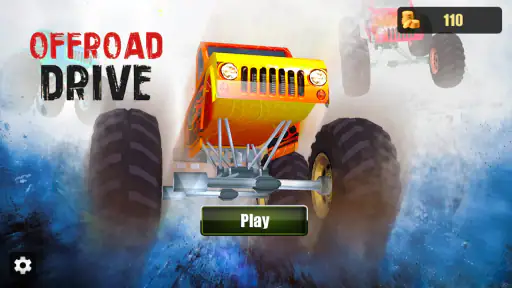
Analysis by Reviewed
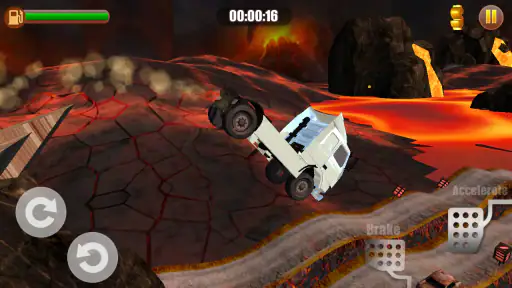
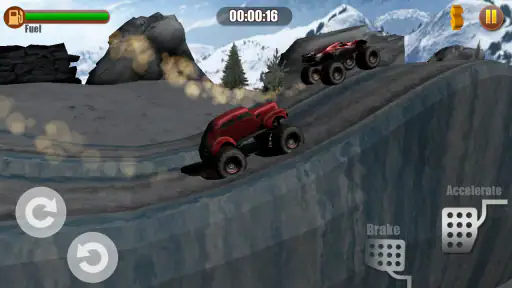
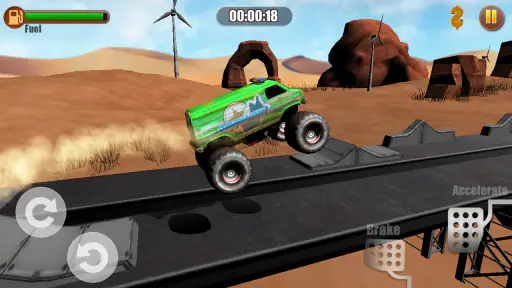
I approached Offroad Drive expecting a straightforward racing game, but its appeal is more specific than a typical fast-lap racer. Developed by SCRAP-سكراب, this free off-road game focuses on the weight, awkward movement, and visual drama of monster-truck driving. Instead of chasing the clean lines of a track car, I found myself thinking about momentum, steering correction, and whether the truck could stay composed when the terrain became demanding.
That difference matters. If you want a polished arcade racer built around instant speed, this may feel rough around the edges. If you enjoy the idea of taking a large vehicle through uneven environments and learning how to control it, the game has a more deliberate kind of attraction. Its store summary promises a realistic monster-truck simulation, and my experience is that the simulation angle is the main reason to try it rather than treating it as just another racing download.
How the first drives establish a reason to keep playing
The early appeal comes from learning what the truck can and cannot do. A monster truck looks powerful, but power alone does not make every section easy. The vehicle’s size changes how I approach turns, slopes, and rough ground. I had to stop driving as if I were using a small sports car and start making wider, calmer corrections.
That creates a useful first goal: become comfortable with the vehicle before worrying about perfect performance. The game works best when I treated each attempt as practice rather than immediately demanding a flawless run. A short session can still feel worthwhile because I usually leave it understanding one more part of the truck’s behavior.
For a new player, I recommend beginning with gentle inputs. Overcorrecting the steering is an easy way to lose control, especially when the vehicle is already moving across uneven ground. I also found that approaching difficult sections with a little restraint is more productive than simply holding the accelerator and hoping the truck survives. That is not a flashy lesson, but it is the foundation of the game’s driving feel.
The early goals are therefore less about a complicated checklist and more about building control. You are learning how the truck reacts, how much space it needs, and when speed helps or hurts. Players who enjoy mastering handling will appreciate this. Players who need immediate unlocks, constant rewards, or a clearly explained campaign may find the opening less motivating.
What progress feels like when the vehicle is the main lesson
In many racing games, progress is communicated through new cars, performance upgrades, or a long sequence of events. Here, the strongest progress signal is personal: a section that previously caused a mistake becomes manageable. I noticed improvement when I could enter a rough stretch with a plan instead of reacting late.
More From Our News Desk

Weather by Xiaomi Review: Clear at a Glance, Less Clear Up Close

X Under Pressure: Can It Recover When Posting Goes Wrong?

Clash of Clans Is Won Between the Battles

Android Auto Makes the Case for Quieter Car Software

MobiOffice: Transforming Mobile Productivity with Seamless Integration

EA SPORTS FC™ Mobile Soccer: Redefining Mobile Sports Gaming
That kind of progress is satisfying, but it depends heavily on whether you enjoy repetition. The game does not need to shower me with rewards for a successful attempt because better control is its own reward. However, that also means the experience can feel light for anyone who expects a deep progression structure around the driving.
I would describe the pacing as learning-led rather than reward-led. A good run gives me confidence, while a poor run shows where my approach needs adjustment. The most useful habit is to change one thing at a time: reduce speed before a difficult area, make smaller steering movements, or give the truck more room to recover. Changing everything at once makes it harder to understand why a run improved.
This is also where the game separates itself from conventional arcade racing. In a standard racer, restarting after a mistake often means trying to take a corner faster. In Offroad Drive, restarting can mean trying to take the same section with better balance. That distinction gives the game a more physical character, even if it may feel slower than a pure speed-focused alternative.
Challenge and the way the difficulty builds
The challenge comes from managing the vehicle rather than simply finding the shortest route. Large vehicles make small mistakes more noticeable. A late correction can become a bigger problem because the truck has momentum and needs room to settle. I found that the difficulty feels fairest when I accepted that the game was testing patience as much as reflexes.
There is a learning curve here, but it is not the kind that rewards reckless experimentation forever. Early attempts may be messy because the controls and vehicle behavior need to become familiar. Once that happens, the challenge shifts toward consistency. It is one thing to succeed through a section by accident; it is another to repeat the result when the approach changes slightly.
My practical advice is to avoid judging the game after one rushed attempt. Give yourself several runs focused on observation. Watch where the truck begins to lose stability, notice whether a turn is easier with a wider entry, and resist the urge to correct too aggressively. This approach makes the challenge feel more readable and reduces the impression that failures are random.
That said, the game is not ideal for people who want a gentle, highly guided introduction. The simulation-minded handling can feel demanding when you are hoping for immediate control. It is also less suitable for a quick competitive session where the main pleasure comes from overtaking opponents and shaving time from a familiar circuit. The off-road focus changes the source of excitement.
Where the pacing succeeds and where it can lose momentum
The pacing works best in short bursts. I can play for a limited period, focus on one driving problem, and stop after making progress. That makes it a reasonable choice for a commute, a waiting room, or an evening when I want something interactive without committing to a long story.
A realistic everyday scenario would be taking a few attempts during a break, then returning later with a clearer idea of how to handle the section that caused trouble. Because the core satisfaction comes from improving control, the game does not require a long uninterrupted session to make sense. A small improvement can be enough for one sitting.
The trade-off is that repetition may become noticeable if the available goals do not keep changing in a meaningful way for you. Players who need frequent surprises, new mechanics, or a strong narrative reason to continue may lose interest sooner. The game’s loop is strongest when the act of driving itself remains interesting.
I also think the pacing depends on your expectations about realism. The game’s presentation encourages careful driving, but it should not be approached as a complete professional vehicle simulator. It is still a mobile racing game, and its value is in the feel of controlling a monster truck on off-road terrain, not in replacing a dedicated simulation setup.
Unlocks, motivation, and the pressure to continue
Progression is the area I would examine most carefully before recommending the game. The central attraction is the truck and its off-road handling, but players who choose racing games mainly for extensive unlock trees may want a more system-heavy alternative. I would not install this expecting a huge management layer around the vehicle.
The game’s retention comes more naturally from challenge than from collection. When I failed, I wanted to try again because I believed a better approach could work. That is a healthy form of motivation when the controls feel understandable. It becomes less effective if a player does not enjoy repeating a route or refining small decisions.
The free entry point makes it easy to test that loop without paying first. At the same time, in-app purchases range from $1.99 to $209.99 per item, so I would advise setting a spending boundary before making purchases. The broad range means the game can remain free to start while still presenting optional spending decisions that deserve attention. I would not spend simply because a difficult section feels frustrating; first decide whether the underlying driving is genuinely enjoyable.
This is one of the game’s important trade-offs. A player who likes improving through practice may find that the free version gives enough reason to continue. Someone who dislikes repeated attempts may feel pressure to look for a quicker route through progression. My recommendation is to treat purchases as optional conveniences only if they clearly improve your enjoyment, not as a substitute for learning the truck.
The Teen content rating is another practical point for families. I would still check the device’s purchase controls before handing the game to a younger player, particularly because optional items can have substantially different prices. That is a simple precaution and does not require changing how the game is played.
How it compares with ordinary racing alternatives
Compared with a typical circuit racer, Offroad Drive is less about clean laps, dramatic overtakes, and perfect cornering lines. Its identity comes from the off-road monster-truck setting. If you prefer asphalt racing with immediate acceleration and highly predictable surfaces, another racing game will probably be a better fit.
Compared with a full simulation, this is easier to pick up and more convenient for casual mobile play, but it should not be judged by the depth of a dedicated simulator. The useful middle ground is its focus: it gives me a taste of heavy off-road handling without asking me to build an entire racing setup around it.
It also differs from stunt-focused games. A stunt game usually rewards spectacle first, while this experience is more interesting when I think about control and recovery. A dramatic jump may catch the eye, but the lasting challenge is keeping the truck manageable before and after the exciting moment. That makes it a better choice for players who enjoy vehicle behavior rather than only visual chaos.
One non-obvious advantage is that the truck’s size gives mistakes a clear cause. When a small car spins, it can feel like a quick arcade penalty. When a monster truck becomes unstable, I can often trace the problem to speed, steering, or poor preparation. That clarity makes practice more useful, provided I am willing to slow down enough to notice it.
Device expectations, version, and practical setup
The game is available for Android devices running at least Android 8.0, and the current version is 4.6.1. I would still keep expectations sensible on older hardware. Off-road scenes and large vehicles can make performance feel more important than it would in a simple two-dimensional racer, so closing unnecessary background apps is a sensible first step if the game feels less responsive.
Control response matters especially here. A small delay or inconsistent touch can make a difficult section feel unfair, even when the real issue is device performance. Before deciding that the handling is not for you, I would test the game in a quiet setting, use a stable connection if the device requires one for its normal store or account functions, and make sure the phone is not struggling with other tasks.
The game has passed the point where it is an unknown experiment: it has more than one hundred thousand installs, an average rating of 3.4 from around one hundred ratings, and five written reviews shown alongside its store presence. Those figures suggest a modest but established audience rather than a universally loved blockbuster. I read that as a reason to approach it with specific expectations, not as a verdict by itself.
It was released on December 10, 2017, which also helps explain why I would not compare its presentation directly with the newest high-budget mobile racers. Its appeal is narrower and more mechanical. If you want the newest graphics, the largest online scene, or the most elaborate progression design, look elsewhere. If you want an older-style off-road driving experience centered on a monster truck, its age does not automatically remove its value.
Who should play it and who should skip it
I would recommend Offroad Drive to someone who enjoys heavy vehicles, rough terrain, and the satisfaction of gradually improving a difficult drive. It is particularly suitable for players who like short practice sessions and do not need every attempt to deliver a new reward. The game can also suit people who want a break from conventional road racing and prefer a vehicle that feels less nimble and more demanding.
I would skip it if your ideal racing game is built around constant speed, online competition, a large garage, or a clearly presented unlock journey. I would also be cautious if you become frustrated by repeating the same challenge, because the game’s strongest motivation is learning to handle the truck rather than collecting endless new content.
For families, the Teen rating and the wide range of optional purchase prices make parental controls worth setting up in advance. For older phones, I would test performance before investing much time. For players who are unsure about the handling, the free price is useful: try the basic driving loop first and decide whether the physical feel is enjoyable before thinking about any optional spending.
My progression verdict
My final view is that the game sustains play when its driving challenge is enough to motivate you on its own. The early goal is learning the truck, the progress signal is improved control, and the difficulty becomes more rewarding once you stop treating every section like an arcade sprint. That is a coherent loop, even if it is not designed for players who need a constant stream of unlocks and rewards.
The best reason to keep playing is the feeling that a failed run taught you something specific. I like that the vehicle’s weight gives each correction a consequence, and I appreciate that short sessions can still produce a small but noticeable improvement. The main limitation is equally clear: once the handling stops feeling fresh, the game needs your personal interest in off-road driving to carry the experience.
For me, that makes it a focused recommendation rather than an automatic one. I would download the free version if I wanted a monster-truck game with a more careful, simulation-leaning rhythm than ordinary mobile racing. I would choose a different title for a broad career mode, intense competition, or a reward-heavy progression system. As a compact off-road driving experience from SCRAP-سكراب, it earns a try from the right player, but its appeal depends on enjoying the drive itself more than chasing an endless list of unlocks.
Offroad Drive Frequently Asked Questions
How much storage space should I have available before downloading Offroad Drive?
It is sensible to leave some free storage on your device before installing Offroad Drive, as with any mobile game. The game is free to download, but its installation and any updates still need room to complete. If your device is nearly full, consider clearing space first so the download and installation can proceed smoothly.
Which devices can run Offroad Drive?
Offroad Drive is available for Android devices that meet its minimum operating-system requirement of Android 8.0. Before downloading, check your device’s software version and make sure it is up to date. The game is a racing title built around off-road driving, so a compatible device is also important for a comfortable play experience.
Is Offroad Drive free to download, and are there optional purchases?
Offroad Drive is free to download, so you can try the game without paying an upfront price. It offers in-app purchases, with individual items priced from $1.99 to $209.99, so keep that in mind if you share a device or manage a spending limit. Check purchase settings before playing if you want to avoid accidental transactions.
What is Offroad Drive, and what can I expect from the gameplay?
Offroad Drive is an off-road driving game focused on controlling vehicles across challenging natural environments rather than racing on conventional tracks. You can expect muddy paths, steep slopes, rocks, uneven terrain, and obstacles that require careful acceleration, steering, and braking. The experience is generally more about maintaining control and completing routes than simply driving as fast as possible.
Is Offroad Drive suitable for beginners?
Offroad Drive can be enjoyed by beginners, although the vehicle handling may take some time to understand. Off-road surfaces behave differently from normal roads, so rushing into steep inclines or rough sections can quickly lead to losing control. New players should begin with easier routes, learn how the controls respond, and use gradual movements when climbing, turning, or crossing difficult terrain.
Pros
- Realistic off-road physics make every climb
- rut
- and descent feel rewarding.
- A wide range of vehicles offers different handling styles and driving challenges.
- Open environments encourage exploration beyond the main routes and objectives.
- Vehicle upgrades help improve performance for tougher terrain and longer drives.
- Offline play lets you enjoy the game without a constant internet connection.
Cons
- Controls can feel difficult to master
- especially on steep or uneven surfaces.
- Progress may require repetitive driving and completing similar challenges.
- Some vehicles and upgrades can take considerable time to unlock.
- Graphics look dated on newer devices compared with modern racing games.
- The game may drain battery quickly during longer off-road sessions.
- Category
- Racing
- Version
- 4.6.1