NoomiClone
- 79.00
- 4.4
- Installs
- 5.00M
- Price
- Free

Screenshots
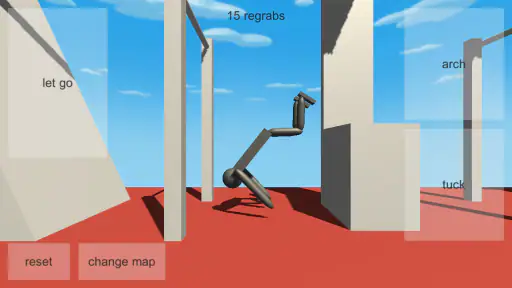
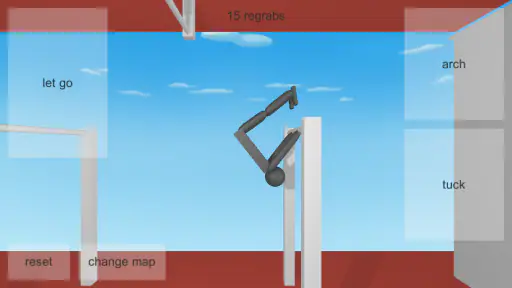
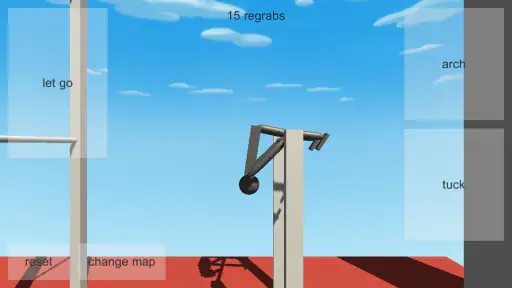
Analysis by Reviewed
Some mobile games are easiest to enjoy in short bursts, and NoomiClone fits that kind of shared-device moment well. I see it as a physics-driven gymnastics toy: you try to guide a loose-limbed character through bar tricks, bodyweight-style moves, and parkour combinations, then enjoy the awkward or satisfying results when momentum takes over. It is a simulation game rather than a structured training tool, so the appeal is experimentation, not learning real gymnastics technique.
Passing the phone around without losing the fun
On a couch or during a quiet wait, the game can work as a small turn-taking activity. One person can attempt a movement, hand over the phone, and let someone else try to improve the result. The ragdoll physics make imperfect attempts part of the entertainment: a failed sequence can be amusing instead of feeling like a serious setback. That makes the game more forgiving as a casual shared activity than a precision-focused sports title.
The useful way to share it is to keep each turn simple. Pick one kind of challenge—such as getting a clean bar movement or linking a few actions—rather than turning every attempt into a competition over who can produce the most elaborate routine. The game’s emphasis on combinations gives players room to experiment, but the same freedom can make the goal feel vague if everyone expects a clearly guided level-by-level journey.
For a household device, I would treat it as a game that people take turns playing, not as a shared record of separate players’ progress. Before passing the phone around, agree on whether the next person is continuing the current attempt or starting fresh. That small bit of coordination avoids the familiar shared-device problem of someone changing a setup or interrupting another player’s run.
What to expect from the controls and physics
The central pleasure is seeing how movement responds when the character’s body is not perfectly controlled. A bar trick can look graceful one moment and turn into a floppy landing the next. That unpredictability is a strength when I want a playful physics sandbox, but it also means that a result may not feel as repeatable as a move in a conventional platform game. If you prefer exact inputs and consistent timing, the loose physical character may test your patience.
A practical approach is to change one thing at a time. If a combo goes wrong, try adjusting the timing or the order of your actions on the next attempt instead of changing the whole sequence. This makes it easier to tell whether you are learning how the movement behaves or simply getting a different ragdoll outcome. It is a small habit, but it turns random-feeling play into more deliberate experimentation.
I would also avoid judging a session by a single awkward landing. Physics-based games often produce amusing surprises, and those moments are part of the point here. If you are playing with someone else, describing what you are trying to do before the attempt can make the turn more engaging: the other person can watch for the planned movement rather than just waiting for a score or a win screen.
Keeping expectations clear on a shared device
There is no need to treat this as a workout or coaching app. Its gymnastics and calisthenics theme may suggest exercise, but the experience is built around controlling a game character and arranging movement combinations. I would not use it to teach a child safe technique or to decide whether a real-world trick is manageable. For actual training, a qualified coach or a purpose-built instructional resource is the better choice.
If several people use one phone or tablet, set a simple boundary around play time and purchases before handing it over. The game is free to start, with optional in-app purchases priced from $1.99 to $26.99 per item. That range is worth discussing on a device used by children or by people who can make purchases through the device account. I would check the device’s purchase settings rather than assume the game itself provides household spending controls.
That boundary matters more than a complicated family workflow. The most straightforward arrangement is one person handling any purchase decision, while everyone else plays without being asked to approve or enter payment details. This is especially sensible when the phone is shared and the person currently holding it is not the account owner.
Age suitability and trust in context
The game has an Everyone content rating, and its core premise is light, physical play with a ragdoll character. That can make it an approachable choice for a family device, but an age label does not settle every household question. Younger players may need help understanding that the in-game movement is not a guide to copying gymnastics or parkour in the living room, at school, or outdoors.
I would frame the game as cartoon-like movement play and keep real stunts separate from what happens on screen. That distinction is useful because the words “gymnastics,” “calisthenics,” and “parkour” can sound instructional even when the activity is simulated. If a child is looking for practical exercise ideas, this is not the substitute I would choose; if they simply enjoy playful physics and trying combinations, it is a more fitting match.
For adults sharing a device with children, the main trust question is less about the character’s antics and more about managing optional purchases and keeping turns respectful. NoomiClone is free, but that does not mean every possible in-game choice is cost-free. A quick explanation before play helps avoid surprises and keeps the focus on the movement challenges rather than a payment prompt.
How it compares with other simulation games
Compared with a conventional sports simulator, this game appears better suited to improvisation than to realistic technique or match structure. A sports game usually gives a clear contest, rules, and an opponent; NoomiClone’s appeal is closer to testing a physical toy, seeing how a body reacts, and refining combinations. If you want leagues, team management, or a serious progression path, I would look elsewhere in the simulation category.
It also differs from a standard platformer. Platform games generally reward reliable jumps and carefully repeated routes, while ragdoll movement introduces a more physical, sometimes unruly feel. That difference is exactly why I would recommend it to someone who enjoys tinkering with movement, but not necessarily to someone who gets frustrated when a character does not respond with frame-perfect precision.
There is a useful middle ground for players who enjoy both styles: treat each attempt as a short experiment, not as a test of mastery. Try a different sequence, observe how the character swings or lands, and then decide whether to repeat it. That approach gives the game a purpose even when a run ends messily, while a player who needs a clear objective in every session may find the open-ended feel thin.
Who I would recommend it to
I would recommend it to casual players who like physics-based movement, short experiments, and the comedy of a plan going slightly wrong. It is particularly easy to share with someone who does not want to study a long ruleset: explain the basic idea, let them try a movement, and let the result speak for itself. NoomiClone is developed by NoomiClone Dev, and its store average is 4.4 from around 16 thousand ratings, with over 5 million installs. Those figures suggest it has found a sizeable audience, though they do not guarantee that its loose controls will suit every player.
I would skip it if your main goal is realistic gymnastics instruction, a polished competitive sports career, or a game built around highly consistent input. I would also be cautious about recommending it to someone who dislikes trial and error. The physics can create memorable moments, but the same looseness that makes a funny landing possible can make a carefully planned combination feel difficult to reproduce.
It is free to download, while in-app purchases range from $1.99 to $26.99 per item, so I would decide on a household purchase rule before leaving the game on a shared device. It is rated for Everyone, and the minimum Android requirement is version 8.0. The current version is 2.3.2; the game was released on December 9, 2020. I would check that the device meets the system requirement before expecting it to run, especially on an older phone kept around for shared use.
A practical household verdict
For my kind of casual play, NoomiClone works best as a low-pressure movement sandbox that can be passed between people for a few attempts at a time. It offers a different feel from rule-heavy sports games and exacting platformers, with ragdoll physics making experimentation the main attraction. The trade-off is that it does not promise realistic coaching or the same consistency as a tightly controlled action game.
In a household, I would make the boundaries simple: take turns, avoid overwriting someone else’s attempt, keep real-world stunts out of the game’s influence, and let the account owner handle any purchase decision. With those expectations, it can be an entertaining shared-device pick for people who enjoy playful movement and do not mind a bit of unpredictability. If that sounds like your kind of fun, NoomiClone is worth trying; if you want structured sport, instruction, or precise competitive control, another game will be a better fit.
NoomiClone Frequently Asked Questions
What is NoomiClone, and what does it do?
NoomiClone is the name of an app, but without a verified store listing or reliable product details, its exact purpose and features cannot be confirmed. Before downloading, check the official Google Play or Apple App Store description, screenshots, and developer information. Those sources can clarify whether it is a game, a utility, or another type of app, and whether its advertised features match what you need.
Is NoomiClone available for Android and iOS?
Availability may differ by platform, region, and device, and the app name alone is not enough to verify whether NoomiClone has an official Android or iOS release. Search for it directly in Google Play or the Apple App Store, and confirm that the developer name and app details match the source you intended to use. Avoid unofficial download pages, which may offer outdated, altered, or unsafe installation files.
Is NoomiClone safe to download?
No app can be judged safe from its name alone. Before installing NoomiClone, review its developer, recent user ratings, update history, privacy policy, and requested permissions in the official store. Be cautious if a download asks you to install an unfamiliar file, disable device protections, or grant permissions that do not seem necessary for the app’s stated purpose. These checks can help you make a more informed decision.
Does NoomiClone cost money, or does it include ads and in-app purchases?
The price and monetization model for NoomiClone cannot be confirmed without a current official store listing. Check the app’s store page for its price, advertising disclosures, and in-app purchase details before installing. A free download may still offer paid features, subscriptions, or optional purchases, and these can vary by country. If the app requires an account or payment, review the terms carefully before sharing billing information.
What should I check before installing NoomiClone?
First confirm that NoomiClone is listed by a recognizable developer in the official app store for your device. Then check the minimum operating-system requirements, app size, recent updates, privacy disclosures, permissions, and user feedback. Make sure your device has enough storage and that you understand any account, subscription, or network requirements. If reliable information is unavailable, consider waiting rather than installing a copy from an unverified source.
Pros
- Simple controls make it easy to start playing.
- Short rounds suit quick gaming sessions.
- A compact game concept is easy to understand.
- Works well as a casual
- pick-up-and-play experience.
- Can provide a light challenge without a steep learning curve.
Cons
- Gameplay may feel repetitive after extended play.
- Limited depth may not appeal to strategy-focused players.
- Difficulty can feel uneven for some players.
- Ads or in-app prompts may interrupt the experience.
- Performance and availability can vary by device and region.

- Category
- Simulation
- Version
- 2.3.2