Need for Speed Most Wanted
- 14.25K
- 3.8
- Installs
- 1.00M
- Price
- $4.99

Screenshots
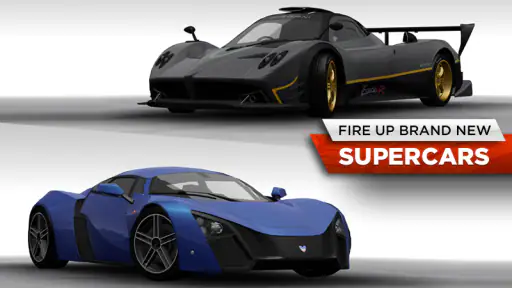
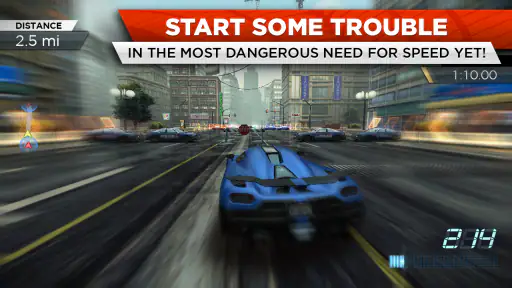
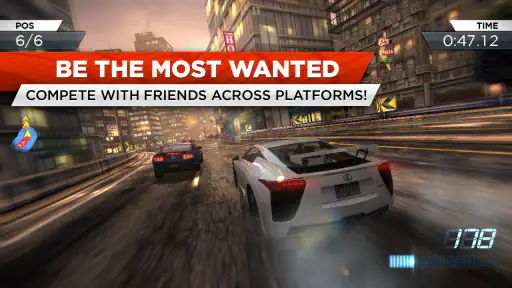
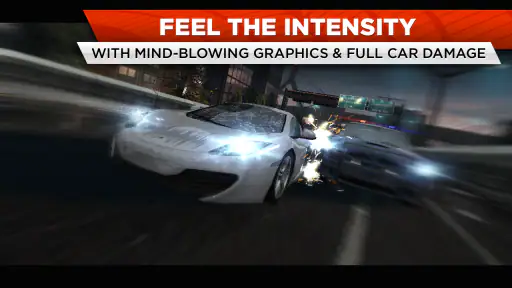
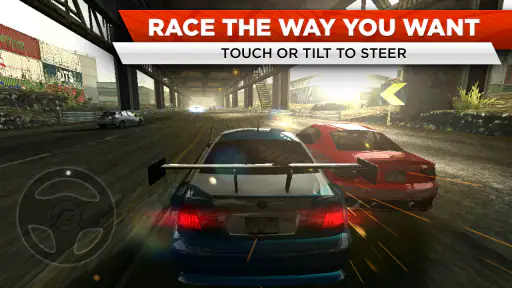
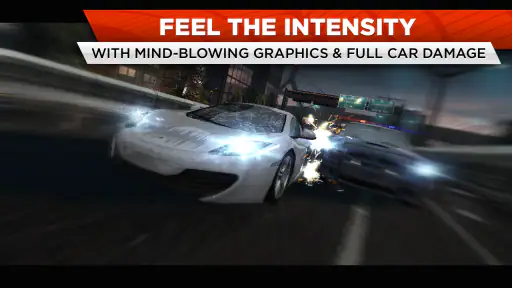
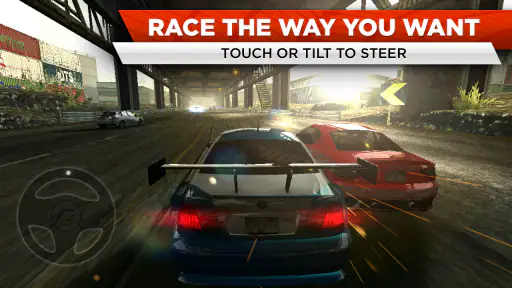
Analysis by Reviewed
I approached Need for Speed Most Wanted as a paid mobile racing game rather than as a free trial with a few optional extras. That distinction matters immediately: the game costs $4.99, and it also includes in-game purchases priced from $2.99 to $24.99 per item. My experience was strongest when I treated the initial purchase as the main entry point and the optional spending as something to evaluate carefully, not as part of the basic promise.
Developed by ELECTRONIC ARTS, this racing release is aimed at players who want a recognizable street-racing atmosphere on a phone or tablet. It carries an Everyone 10+ age rating, so it is a better fit for older children, teenagers, and adults than for very young players. The game has been available since October 29, 2012, and its current version is 1.3.128, with Android support beginning at version 4.1. That combination tells me this is an established mobile title, but not necessarily one designed around the expectations of newer free-to-play racers.
How the purchase feels and what you receive
The clearest value question is whether a one-time price of $4.99 feels reasonable for the experience. In my view, it can, especially if you want a focused racing game that you can open for a few quick events without first building a daily routine around it. The paid download gives the game a more direct identity than many free racing alternatives: you are paying to get into the experience, while the additional purchases remain a separate consideration.
That does not make the cost structure completely simple. The store identifies the game as including in-game purchases, and those optional items range from $2.99 to $24.99 each. I would therefore check the purchase controls on the device before handing the game to a child, even though the age rating is Everyone 10+. The important practical point is that the advertised price and the possible later spending are two different decisions. Someone comfortable with a paid game may still dislike the idea of extra purchases, while another player may see them as optional conveniences.
The title also has a substantial audience behind it, with over a million installs, around forty-seven thousand ratings, and roughly fourteen thousand written reviews. The average sits at 3.8, which feels like a useful warning against expecting a flawless conversion of a console-style racing experience. That score does not tell me that the game is poor; it suggests that device compatibility, age, controls, and expectations probably matter a great deal to the final impression.
On a compatible device, I found the strongest value in the immediacy of the races. This is not a game I would choose because I want a quiet simulator with detailed tuning spreadsheets. I would choose it when I want the fantasy of taking a fast car into a dangerous urban race, making a quick decision, and trying again after a mistake. The paid entry makes more sense for that kind of player than for someone who only wants a free game to fill a few minutes.
The kind of racing experience it offers
The appeal is built around speed, pursuit, and the feeling that every race has more tension than a simple lap around a closed circuit. In practice, that changes how I play. I do not approach each event as a perfect driving exercise; I watch for openings, react to traffic, and accept that a risky shortcut or close pass can decide the result. The most satisfying moments come from recovering after a bad corner rather than driving an immaculate line from start to finish.
More From Our News Desk

Weather by Xiaomi Review: Clear at a Glance, Less Clear Up Close

X Under Pressure: Can It Recover When Posting Goes Wrong?

Clash of Clans Is Won Between the Battles

Android Auto Makes the Case for Quieter Car Software

MobiOffice: Transforming Mobile Productivity with Seamless Integration

EA SPORTS FC™ Mobile Soccer: Redefining Mobile Sports Gaming
That design also makes the game suitable for short sessions. If I have only a few minutes, I can start with the intention of completing one event instead of committing to a long campaign. If I have more time, the same structure encourages another attempt because a near miss feels like a reason to improve rather than an unavoidable stop. This is a useful distinction from slower racing games, where the preparation before an event can take nearly as long as the race itself.
My first practical tip is to spend time learning the control response before judging the difficulty. Mobile racing controls can feel different depending on screen size, grip, and how the device is held. I found that small, deliberate movements were more reliable than constantly correcting the car. Oversteering into a corner may feel dramatic, but it often leaves less room to react when the road becomes crowded.
A second tip is to avoid treating every pursuit as a contest of maximum speed. The fastest route is not always the safest one when traffic or obstacles interrupt the line. I got better results by entering busy sections with a little space to maneuver, then accelerating once the road opened. That approach may sound conservative, but it reduces the chain of small errors that turns a competitive run into a restart.
Where the paid value is strongest
The best argument for buying this game is its atmosphere. It aims for a more dramatic street-racing mood than a basic arcade racer, and that gives each short session a clear purpose. I enjoy games that let me feel progress through better decisions rather than requiring a long setup, and this one works well when I want action quickly.
It is also a better match for players who prefer a known racing identity over a generic collection of cars and menus. The Need for Speed name carries a particular expectation: aggressive driving, urban roads, and the thrill of escaping pressure. The mobile version is most convincing when it leans into that identity instead of being judged as a technical showcase for every modern phone.
There is value in the age of the release as well, although that comes with an important qualification. A game released in 2012 may run on older Android hardware, with the minimum operating-system requirement set at 4.1, but compatibility is not the same as a modern presentation. I would not buy it expecting the visual polish, interface conventions, or device-specific refinement of a recent racing game. I would buy it because an older, established design can be direct and easy to understand.
The optional purchases complicate the value slightly. If I can enjoy the core racing without needing to spend beyond the $4.99 purchase, the overall proposition is attractive. If I feel pushed toward the higher-priced optional items to keep the experience comfortable, the original price becomes less persuasive. That is why I would decide in advance whether I am willing to spend anything more. Setting that boundary makes the purchase easier to evaluate honestly.
Tradeoffs that affect everyday play
The biggest tradeoff is between immediacy and depth. The game is easy to pick up for a burst of racing, but players who want a highly detailed simulation may find the arcade focus too loose. I prefer the forgiving, dramatic side of the genre when I am playing on a touchscreen, yet I understand why a dedicated racing fan might want more control over every technical aspect of the car.
Another tradeoff is between the recognizable older design and modern mobile habits. The game’s long availability and modest minimum operating-system requirement can be useful for people with older compatible hardware. At the same time, anyone accustomed to newer free racers may miss the constant stream of updates, social systems, or contemporary presentation they associate with that category. I would not call that automatically a weakness; it is simply a different kind of product.
Device choice matters more than a store summary can communicate. On a phone, the action feels immediate, but the smaller display can make distant traffic and upcoming turns harder to read. On a larger screen, I find it easier to anticipate the road and make controlled corrections. If you are buying specifically for a small older handset, I would be more cautious than if you have a recent tablet or a phone with a comfortable display.
My third practical insight is to judge a race by consistency, not by one spectacular attempt. A flashy run can hide a fragile route that depends on perfect timing. I improved faster when I repeated the same event and identified one problem at a time: entering a turn too quickly, reacting late to traffic, or taking a shortcut without enough room. That method also helps reveal whether the controls suit you before you consider any optional purchase.
The in-game purchase range deserves a separate warning because the upper end is much higher than the initial entry cost. A player who only wants a paid game should resist assuming that every available item is necessary. I would first play enough to understand what the standard experience feels like, then decide whether an optional purchase solves a real annoyance or merely encourages faster progression. For a child’s device, I would make that decision myself rather than leaving it to impulse during play.
How it compares with other mobile racers
Compared with a completely free racing game, this title has a clearer upfront value proposition but less room for a player who refuses all paid entry. Someone who wants to download several racers at no cost and keep only the one that clicks should start elsewhere. Someone who already knows they enjoy the Need for Speed style may find the $4.99 easier to justify than spending time navigating several free games.
Compared with a serious simulation racer, this is the more accessible choice. I would choose it for dramatic street action, quick restarts, and a sense of danger. I would choose a simulation instead if my priority were realistic handling, careful setup, and the satisfaction of managing a car’s technical behavior. Neither preference is wrong, but expecting simulation depth here would make the purchase feel disappointing.
It also differs from newer free-to-play racers in how I think about sessions. A free alternative may be built around recurring engagement and optional spending from the beginning. Here, the initial $4.99 purchase changes the mental calculation: I can ask whether the racing itself is worth the entry price before thinking about extras. That is a healthier way for me to approach it, although the presence of purchases means I still keep an eye on the total cost.
For a commuter or someone waiting between appointments, the game is appealing because its racing fantasy is easy to understand immediately. For a player who wants a calm game to play one-handed while multitasking, it is a poor match. The attention required by speed, traffic, and sudden changes means I need to look at the screen properly. I would not recommend it as background entertainment.
Who should buy it and who should skip it
I would recommend the game to a player who misses direct arcade racing and wants a paid mobile title with a strong street-racing identity. It is especially suitable for someone who enjoys repeating an event to improve a route, prefers action over menus, and is comfortable making the initial purchase before deciding whether optional items have any value.
It is also a reasonable choice for an older-device owner whose operating system meets the 4.1 minimum and who wants to try an established racing game. I would still consider the screen size and control comfort before buying. Meeting the operating-system requirement does not guarantee that every device will provide the same enjoyable experience, so I would be ready to test the controls during the purchase period allowed by the relevant store.
I would skip it if your main requirement is a completely free download with no paid entry. I would also skip it if you want a current competitive ecosystem, a deep simulation, or a game designed around the newest hardware. The 3.8 average rating reinforces my view that this is a selective recommendation rather than an automatic one for every racing fan.
Parents should think about the distinction between the age rating and spending. Everyone 10+ describes the content suitability, while the separate in-game purchases affect the financial side. I would use device-level purchase protections and explain the $4.99 entry cost before installing it for a younger player. That small step prevents the game from becoming an unexpected spending problem.
My buy-or-skip verdict
I would buy Need for Speed Most Wanted when I wanted a recognizable, fast arcade racer and was happy to pay $4.99 for direct access. The purchase feels worthwhile when the goal is a short, energetic race rather than a free-to-play routine or a realistic driving lesson. Its strongest quality is not that it tries to satisfy every racing audience; it is that it commits to a particular kind of street-racing excitement.
I would skip it if the optional purchase model would bother me from the start, if I expected modern mobile presentation, or if I needed precise simulation handling. The possible $2.99 to $24.99 items mean I would not describe the total cost as automatically limited to the initial purchase. I would play first, keep optional spending separate, and only consider it if the core experience already felt enjoyable.
Overall, my recommendation is positive but targeted. The game delivers its best value to players who understand what they are buying: an established racing title from ELECTRONIC ARTS, not a free sampler and not a technical driving simulator. If that description matches the way you like to play, the entry price is defensible. If it does not, a free racer or a more simulation-focused alternative will probably serve you better.
My bottom line: buy it for focused street-racing action and quick repeatable sessions, but make the decision based on the paid entry alone and treat every additional purchase as optional. That approach gives the game a fair chance without letting the extra-cost model decide whether the experience is worth your money.
Need for Speed Most Wanted Frequently Asked Questions
Is Need for Speed Most Wanted suitable for younger players?
Need for Speed Most Wanted has an Everyone 10+ content rating, so it is generally aimed at players aged ten and older. Its high-speed races, crashes, and police pursuits are part of the arcade-style action. Parents may want to review the rating and consider whether those themes suit the individual child before downloading.
How much does Need for Speed Most Wanted cost, including optional purchases?
Need for Speed Most Wanted is a paid mobile game, priced at $4.99, rather than a completely free-to-play title. It also includes in-app purchases, with items priced from $2.99 to $24.99. Consider both the initial purchase and optional purchases when deciding whether it fits your budget. The game is published by ELECTRONIC ARTS, and its age rating is Everyone 10+.
What kind of game is Need for Speed Most Wanted, and who developed it?
Need for Speed Most Wanted is a racing game developed by ELECTRONIC ARTS. It is built around arcade-style driving, with an emphasis on fast races and dramatic action rather than a simulation-focused approach. If you enjoy mobile racing games and want a title centered on competitive driving, it may suit you. Its age rating is Everyone 10+, which is worth checking before downloading for a younger player.
What is Need for Speed Most Wanted like on Android and iOS?
Need for Speed Most Wanted is an arcade-style racing game focused on high-speed street races, police pursuits, and unlocking increasingly powerful cars. The mobile version delivers a polished experience with responsive touch controls, dramatic crashes, and a strong sense of speed. It is designed for quick races, although progressing through the career requires improving your vehicle and learning each track.
Is Need for Speed Most Wanted free to download and play?
Need for Speed Most Wanted is a paid mobile game, priced at $4.99, rather than a completely free-to-play title. It also includes in-app purchases, with items priced from $2.99 to $24.99. Consider both the initial purchase and optional purchases when deciding whether it fits your budget. The game is published by ELECTRONIC ARTS, and its age rating is Everyone 10+.
Pros
- Fast-paced races with exciting police pursuits
- Large selection of licensed cars to unlock and customize
- Responsive touch controls with multiple control options
- High-quality graphics and detailed urban environments
- Works well for short gaming sessions on mobile
Cons
- Paid game with no free trial version
- Limited story depth compared with console editions
- Some cars and upgrades require significant grinding
- Large download size may consume considerable storage
- Performance can vary on older phones
- Category
- Racing
- Version
- 1.3.128