My Little Universe
- 28.54K
- 4.5
- Installs
- 10.00M
- Price
- Free

Screenshots
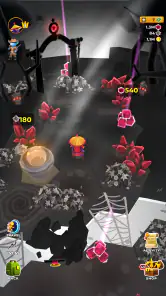

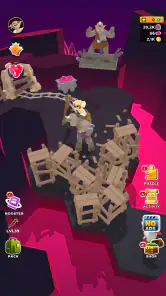
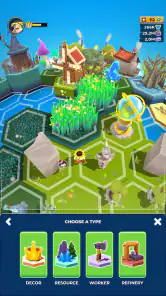
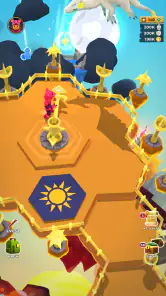
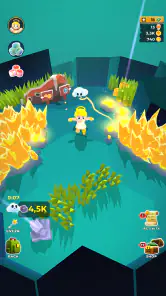


Analysis by Reviewed
When several people share one phone or tablet, a casual game can become a small group activity: one person makes progress, then passes the device to someone else. My Little Universe suits that arrangement better as a take-turns game than as a shared project with separate roles. Its central loop—collecting resources, crafting and fighting while expanding a planet—gives each player an easy way to contribute, but it is worth agreeing on who is making decisions about progress before everyone starts tapping.
Making room for a shared game
For a household sharing a phone or tablet, this is the kind of game that can prompt a quick “what should we work on next?” conversation. One person might enjoy gathering materials while another prefers pushing into new areas or dealing with fights. That makes it easy to pass the device back and forth informally, though I would treat that as taking turns rather than assume the game offers separate household profiles or shared progression tools.
Setting expectations before handing over the device
The game is free to download, while optional in-app purchases range from $0.99 to $119.99 per item. That is worth discussing before a child plays, especially on a device where purchases are available. I would check the device’s purchase settings and agree on a simple rule—such as asking an adult before buying—rather than rely on the game itself to manage spending. It is also sensible to decide whose progress matters if several people use one device, since casual turn-taking can become awkward when players expect separate saves.
That conversation can be brief and practical: decide whether the device owner is the only person who changes the world, or whether everyone can choose the next task when their turn comes. This is not about making play formal. It simply avoids the familiar shared-device disagreement where one person wants to explore and another wants to save resources for a different goal. If the players would rather each have a world they control independently, a game designed around individual profiles may be a better household fit.
Taking turns without losing the thread
A practical way to share play is to agree on one small aim for a session: gather what is needed for an expansion, craft toward a particular improvement, or make progress through an obstacle. That gives the next person a clear starting point without turning the game into a chore chart. If you are the main player, it can help to pause at a natural stopping point and leave the next task obvious; otherwise a younger or less familiar player may spend the first few minutes figuring out what to do.
This approach also helps when play happens in short gaps. For example, if a child has a few minutes before dinner, the adult who last played can point out a simple next step rather than expect them to remember a long plan. I would avoid promising that every session will produce a major unlock: gathering and gradual expansion are part of the appeal, but they make progress feel incremental. A small shared goal keeps that pace satisfying without turning the game into a competition over who did more.
Age context and everyday fit
The content rating is Everyone, so the game is positioned for a broad audience. In a family setting, I would still make the first session a shared one: not because the rating is alarming, but because mining, crafting and fighting may appeal differently to different children. The straightforward premise can be approachable, while the repeated resource work may not hold the attention of someone who wants a fast-changing story or constant novelty.
More From Our News Desk

Weather by Xiaomi Review: Clear at a Glance, Less Clear Up Close

X Under Pressure: Can It Recover When Posting Goes Wrong?

Clash of Clans Is Won Between the Battles

Android Auto Makes the Case for Quieter Car Software

MobiOffice: Transforming Mobile Productivity with Seamless Integration

EA SPORTS FC™ Mobile Soccer: Redefining Mobile Sports Gaming
For a parent or caregiver, the useful distinction is between age suitability and personal fit. A child can be within the intended audience and still find the routine dull, or enjoy the collection loop but need help understanding why a particular resource matters. I would watch how the first few turns go rather than assume the broad rating guarantees that every player will enjoy it. The same applies to adults: the calm, incremental structure is a strength for some and a reason to move on for others.
What kind of casual game is it?
Compared with a puzzle game, this asks for more ongoing investment in a growing world; compared with a deep sandbox, it gives the player a more directed loop of collecting, crafting and fighting. That middle ground is the point. If I had only a few minutes while waiting for an appointment, I could focus on one manageable task. If I wanted a creative game with extensive building freedom or intricate planning, I would look elsewhere: the central satisfaction here comes from gradual expansion, not from designing every detail or mastering a complex system.
It also differs from a quick arcade-style game, where the main goal is usually to react well in a brief round and then start over. Here, the appeal is carrying progress forward and seeing the world develop. That makes it easier to return to, but less ideal when I want an instantly complete activity with no resource gathering between moments of action. Players who prefer a puzzle with a clear finish, or a sandbox where nearly every element can be arranged freely, should choose accordingly.
One useful trade-off is that resource gathering can feel satisfying when each trip contributes to a visible goal, but repetitive when you are collecting without a clear next step. I’d choose a target before a play session and avoid treating every available task as equally urgent. That small habit makes the progress feel more purposeful and helps keep a short session short. Players who dislike repetition, or who want action without preparation, may find the gathering side a drag.
Getting Started with Your Universe
When you first dive into My Little Universe, it might feel a bit overwhelming. You start with nothing but a pickaxe, and from there, you mine resources to build your universe piece by piece. The controls are straightforward, using simple taps and swipes to get things done. But don’t let that simplicity fool you! The game has a way of pulling you in as you manage resources and expand your little world.
For a first session, I would resist the temptation to treat every visible task as a priority. Pick one clear objective and use it to learn the rhythm of collecting and spending materials. That gives the player a useful sense of why resources matter, instead of leaving them to gather without direction. It is especially helpful if the device is shared: the next person can continue from an understandable goal rather than inheriting a collection of half-finished decisions.
The Art of Creation
The heart of the app lies in crafting and expansion. You’ll find yourself engrossed in mining different resources like wood, stone, and metals. Each resource plays a crucial role in crafting tools and expanding your universe. The crafting system is intuitive, allowing you to easily combine resources to create new items. As you progress, you unlock new areas to explore, each with unique challenges and resources.
That progression gives collecting a purpose beyond building up a stockpile. When deciding what to do next, I would look for the connection between the materials on hand and the next expansion or crafted item. If a player is unsure why they are gathering a particular resource, pausing to identify a concrete target can make the loop feel less like busywork. The trade-off is that this is still a game about repeating a useful action to earn progress; players who need constant mechanical variety may tire of that structure.
Challenges Along the Way
Of course, creating a universe isn’t all sunshine and rainbows. You’ll face various challenges, from managing your resources efficiently to dealing with pesky creatures that seem intent on interrupting your progress. These elements add a layer of strategy and excitement to the game, ensuring you’re always on your toes.
The mix of preparation and interruption is part of what separates it from a pure crafting toy. A player may have a straightforward gathering plan, then need to deal with a fight before returning to expansion. That can keep a session from feeling entirely passive, although it also means someone looking for uninterrupted building may find the combat a distraction. I would recommend it to players who like a little friction in their progress, not to someone seeking a quiet, open-ended design space.
How it fits into an ordinary day
A realistic use for this game is a short wait at an appointment or a quiet stretch at home when there is no time to settle into a long story. I would open it with one modest aim, make progress toward that aim, and stop when the next step is clear. That is a better fit than expecting a complete adventure in one sitting. The expanding world gives a reason to return, while the resource loop makes it possible to make small gains in spare moments.
On a shared tablet, an adult could play first and leave a child with a simple goal, then pick up the device later and decide whether to continue or change direction. The useful boundary is that the person holding the device is still affecting the same play experience unless the household has separate arrangements outside the game. I would not use it as a substitute for a game where independent saves or carefully divided responsibilities are essential.
Trust, spending and device boundaries
Because the game is free to download and offers optional purchases, the household decision is not only whether to install it but also how purchases are handled on the device. The listed purchase range runs from $0.99 to $119.99 per item, so I would not leave a child to guess what a button does or assume that every purchase is a small one. Check the device’s purchase settings, explain the household rule, and keep the agreement consistent for everyone who takes a turn.
This is a sensible precaution for any shared device, not a claim that the game requires a purchase to be enjoyable. A family that wants to avoid spending can set expectations before play and make clear that progress should come from playing rather than buying. If different adults manage the device, it is worth agreeing on the same rule so a child does not receive conflicting answers. The app itself should not be treated as the household’s spending boundary.
Who is likely to enjoy it?
I would recommend it to someone who likes a visible sense of growth and does not mind repeating a core activity to earn the next step. It can suit casual players who want a world to return to, families comfortable with taking turns on one device, and people who enjoy alternating between gathering, making things and dealing with obstacles. The broad age rating may make it worth considering for a mixed-age household, while each player’s patience for resource collection remains the more important question.
I would skip it if I wanted a tightly paced narrative, deep building freedom, a puzzle that can be completed in a single sitting, or separate household progress without having to coordinate informally. It is also a weaker choice for a player who finds repeated harvesting irritating or who wants every minute of play to be fast action. Those are not flaws that a different expectation can fix; they are signs that another kind of casual game would suit better.
A growing audience, with familiar caveats
SayGames Ltd developed this casual game, which has a 4.5 average from around 602,000 ratings and over 10 million installs. It is free, rated Everyone, and its current version is 2.13.8, with Android 8.0 or later required. Those figures suggest a well-established audience, though popularity alone cannot tell you whether its repetitive resource loop will suit your taste.
For a household deciding whether to try it, those details are useful context rather than a guarantee. The game’s free entry point lowers the commitment to trying its style, but the optional purchase range makes a quick device-settings check worthwhile. The Android requirement matters if you are installing it on an older phone or tablet; I would check compatibility before planning a shared session around a device that may not support it.
Final Thoughts
Overall, My Little Universe offers a unique and engaging experience for anyone who loves crafting and adventure games. The satisfaction of seeing your universe grow from a tiny plot of land to a sprawling world is incredibly rewarding. While it may not be the most complex game out there, its charm lies in its simplicity and the joy of creation.
My main reservation is that the same simple loop that makes it easy to understand can also become repetitive. The best way to judge that is to try a few focused sessions: choose a goal, see whether collecting and crafting feel rewarding, and notice whether the interruptions from combat add variety or get in the way. If the routine is enjoyable, the gradual growth can make it an appealing game to revisit. If it feels like chores before the interesting part, a puzzle or action-focused alternative will probably be a better use of your time.
For a shared household device, my verdict is cautiously positive: it can work well as a low-pressure game to take turns with, provided everyone understands that purchases need a clear boundary and that shared-device progress may not suit players who want independent ownership. I’d recommend it to someone who enjoys watching a world grow through small, tangible steps. If your household wants separate accounts, intricate creative freedom, or a game that stays fresh without repeated gathering, another option will be a better fit. As a free download, it is reasonable to try, keeping those expectations—and the purchase settings—in mind.
My Little Universe Frequently Asked Questions
What should I know about My Little Universe before downloading it?
My Little Universe is a casual game about mining, crafting, fighting, and building your own little planet. It is free to download, and optional in-app purchases are available. The game is rated Everyone, so it is presented as suitable for a broad audience. If you are deciding whether it fits your tastes, its central appeal is a simple loop of gathering resources and using them to expand your surroundings.
Who makes My Little Universe, and which version is available?
My Little Universe is developed by SayGames Ltd. The current version is 2.13.8, and the game was released on Aug 5, 2021. Those details may help when checking whether you are looking at the right game before downloading. Its short store description is simply “My Little Universe,” while its main premise is to mine, craft, and fight your way toward making your own little planet.
What kind of game is My Little Universe?
My Little Universe is a casual game centered on mining, crafting, and fighting as you build your own little planet. Its straightforward premise makes it easy to understand before you begin: gather what you need, use it to develop your surroundings, and keep exploring as your universe grows. It is free to download, with optional in-app purchases.
Is My Little Universe free to download, and what purchases does it offer?
My Little Universe is free to download and play, but it includes optional in-app purchases priced from $0.99 to $119.99 per item. You can start playing without paying, while purchases provide an additional spending option for players who choose to use it. If children will be playing, it is sensible for parents to review their device’s purchase controls before downloading.
What is the main objective of My Little Universe?
In My Little Universe, your primary objective is to create and expand your own vibrant world. Players start with a small piece of land and, through mining resources, crafting tools, and building structures, they gradually transform their tiny universe into a bustling, thriving environment. The game emphasizes creativity and strategic planning as you manage resources and explore new territories.
Pros
- Engaging sandbox gameplay with creative freedom.
- Wide variety of environments to explore.
- Regular updates with new content.
- Suitable for all age groups.
- Offline mode available.
Cons
- Graphics can be slightly demanding on older devices.
- In-app purchases can be expensive.
- Occasional bugs affecting gameplay.
- Limited multiplayer options.
- Large initial download size.
- Category
- Casual
- Version
- 2.13.8