Monster Fishing 2026
- 9.01K
- 4.5
- Installs
- 10.00M
- Price
- Free

Screenshots
Analysis by Reviewed
I came away from Monster Fishing 2026 with the feeling that it understands the best reason to play a mobile fishing game: sometimes I want a quiet, focused break rather than a complicated competitive experience. Developed by Nexelon inc., this free sports game puts its main appeal in a three-dimensional fishing presentation and the freedom to play without an internet connection. That combination makes it easy to pick up during a commute, while waiting for an appointment, or whenever I want something more active than a simple puzzle.
My overall view is positive, but not uncritical. The game is most enjoyable when I treat it as a compact fishing session, not as a complete replacement for a large console simulation. Its accessible format, broad audience rating, and offline support are genuine strengths. On the other hand, players who expect deep realism, a highly social experience, or a completely purchase-free progression system may find the design less satisfying over time.
What makes the fishing feel convincing on a phone
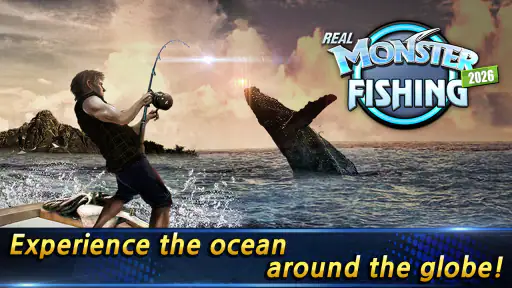
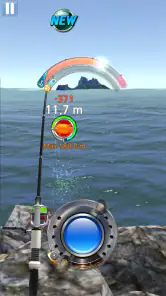
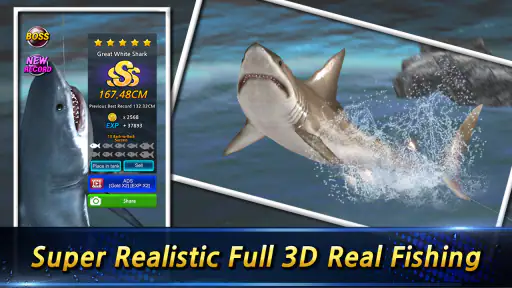
The first thing I noticed is how much the three-dimensional presentation helps the basic activity. Fishing can easily become a dull loop of waiting and tapping, but the visual treatment gives each catch more presence. Even when I am only playing for a few minutes, seeing the fish and the water in a more dimensional setting makes the action feel less like selecting an icon from a menu.
That does not turn the game into a full simulation, and I would not approach it with that expectation. Instead, it sits in a useful middle ground between an arcade game and a more serious fishing title. The controls are approachable enough for casual play, while the subject matter gives the sessions a calmer rhythm than many sports games. I can start without needing to study a long rule set, yet the fishing theme provides enough context to make each attempt feel connected to the next.
The offline capability is particularly important in everyday use. I tested the idea of treating it as a travel game rather than something that requires a constant connection, and that is where it makes the most sense to me. A train journey with unreliable reception, a flight, or a waiting room becomes a practical opportunity to play. I also appreciate that the game does not force me to reserve my leisure time for places with dependable mobile data.
That feature changes how I judge the experience. With a connected-only sports game, I usually expect interruptions, loading concerns, or a design built around live activity. Here, the appeal is more personal. I can play on my own schedule and stop after a short session without feeling that I have missed an event. For people who want a dependable offline option, that is more meaningful than a flashy feature that only works under ideal conditions.
The right way to approach progression
I found the game easier to enjoy when I focused on gradual improvement instead of trying to rush toward the strongest equipment or the largest catches. Fishing games naturally encourage players to compare one catch with the next, but that can make the early stages feel slower if every session is judged by an immediate reward. My better routine was to play a few attempts, learn how the interaction responds, and then decide whether I wanted another round.
More From Our News Desk

Weather by Xiaomi Review: Clear at a Glance, Less Clear Up Close

X Under Pressure: Can It Recover When Posting Goes Wrong?

Clash of Clans Is Won Between the Battles

Android Auto Makes the Case for Quieter Car Software

MobiOffice: Transforming Mobile Productivity with Seamless Integration

EA SPORTS FC™ Mobile Soccer: Redefining Mobile Sports Gaming
This approach also helps with the game’s monetization. Monster Fishing 2026 is free to download and play, but its in-app purchases range from $1.49 to $43.99 per item. That is a wide enough span that I would recommend deciding in advance whether I am comfortable spending anything. The free entry point is useful for trying the core experience, while the purchase options mean players should avoid assuming that every later convenience will be earned at the same pace.
For me, the sensible strategy is to treat purchases as optional rather than as part of the basic cost of playing. I would first spend time with the free experience, then ask whether the game is still enjoyable without paying. If the answer is yes, the game has done its job as a casual fishing title. If progress starts to feel like a chore unless I buy something, that is a sign to slow down rather than spend automatically.
Another practical tip is to play in short, deliberate sessions. The game works well when I have a small amount of time, but longer sessions can expose the repetition more clearly. A quick fishing break preserves the relaxing quality; an extended session may make the cycle feel more mechanical. That is not unusual for the genre, but it is worth knowing before choosing it as a main game.
Where the game is strongest compared with other sports apps
Compared with sports games built around rapid matches, Monster Fishing 2026 feels less demanding. I do not need the same reflex-heavy commitment that I would expect from a racing or action-focused sports title. The slower pace gives it a different purpose: it is something I can use to unwind while still having a clear goal in front of me.
It also has an advantage over fishing games that depend heavily on online features. If my priority is shared competition, live events, or interaction with other players, I would look elsewhere. But if my priority is being able to fish without arranging my day around an internet connection, this game is the better fit. The comparison is not simply about graphical quality; it is about whether the game respects the way I want to play.
Against a dedicated fishing simulator, the trade-off is equally clear. A specialist simulation may offer greater depth and more detailed decision-making, while this title is easier to approach and better suited to brief mobile sessions. I would choose the simulator when I wanted to study equipment, conditions, and technique in detail. I would choose Nexelon inc.’s game when I wanted the feeling of fishing without turning the activity into homework.
The large existing audience supports the idea that this balance works for many people. The game has an average rating of 4.5 from around 168 thousand ratings, with roughly 9 thousand written reviews and more than 10 million installs. Those figures do not guarantee that every player will enjoy it, but they do show that the basic concept has reached far beyond a tiny niche.
The limitations I would want to know before installing
The biggest limitation is repetition. Fishing itself is a repetitive activity, and a mobile adaptation has to work hard to keep that repetition satisfying. Monster Fishing 2026 succeeds when I am in the mood for a calm loop, but it is less convincing if I need constant novelty. Players who quickly lose interest when the central action stays similar may run out of enthusiasm before the game becomes a regular habit.
The realistic three-dimensional look is another area where expectations matter. It improves the atmosphere, but visual realism alone does not create the depth of a full simulation. I would not buy into the idea that a more convincing image automatically means every part of the fishing process is equally detailed. The presentation supports the experience; it does not remove the boundaries of a mobile game designed for accessibility.
The free-to-play structure can also create friction. The purchase range is not automatically a problem, especially because I can try the game without paying, but it makes self-control important. A player who dislikes any form of optional spending may feel more comfortable with a premium game, even if that alternative costs more at the start. This is one of those cases where the right choice depends on how I react to gradual progression and purchase prompts.
I would also skip it if my main goal were social play. The offline focus is a strength for solo users, but it also signals that this is not the ideal choice for someone looking for a community-centered sports experience. I would rather select a game designed around multiplayer competition than install this one and hope it provides an experience it was not built to prioritize.
Who will get the most from it
I think the best audience is made up of casual players who enjoy fishing as a theme and want a game that can work away from a reliable connection. It suits someone who likes to play in small pieces: a few minutes before work, a quiet break during the afternoon, or a relaxed session at home when a more intense game feels like too much effort.
It is also a sensible choice for players who are new to fishing games. The sports category can sometimes be intimidating when a title assumes knowledge of complicated controls or real-world tactics. Here, the accessible mobile format gives beginners a chance to decide whether they enjoy the rhythm before committing to a more demanding simulation.
The Everyone content rating makes it easier to recommend for a broad household audience. I would still consider the individual player’s tolerance for repetition and optional purchases, but the rating supports its role as a generally approachable game rather than a niche title aimed at a narrow age group.
One realistic use case is a parent looking for a quiet game to play during a short break while traveling. Because an internet connection is not required, the game can be useful when connectivity is inconvenient. The short-session structure also means I do not need to plan a long uninterrupted block of time. I can finish a small piece of play, put the phone away, and return later without turning the game into a major commitment.
Another good fit is someone who enjoys the atmosphere of fishing but does not have access to the real activity. The game cannot reproduce the outdoors, the patience, or the physical setting of actual fishing, yet it offers a small digital version of the theme. I see it as a convenient substitute for the mood, not a replacement for the real thing.
I would recommend skipping it if you want a story-driven adventure, a serious competitive ladder, or a game that constantly introduces new forms of action. I would also hesitate to recommend it to anyone who finds in-app purchases distracting. In those situations, a premium offline game or a deeper simulation may provide a cleaner experience, even if it lacks this title’s easy entry point.
Device expectations and long-term value
The game supports devices running Android 7.0 or later, which gives it a broad compatibility window for Android users. That is useful if I am playing on an older phone rather than a recent flagship. Still, compatibility does not mean every device will deliver the same visual smoothness, so I would keep expectations sensible on aging hardware, especially when a three-dimensional game is involved.
The current version is 0.4.76, and the game has been available since December 28, 2017. That long presence gives it a more established feel than a newly launched experiment. I value that history because it suggests the title has had time to find its identity, but it also reinforces my view that this is a mature, focused experience rather than a brand-new game built around constant reinvention.
For long-term value, I would measure success by how often I genuinely want a calm fishing session. If I return because the offline format is convenient and the activity remains pleasant, the free download offers good value. If I need continuous rewards or major changes to stay interested, the game may work better as an occasional app than as a daily destination.
My personal recommendation is to avoid judging it after only one rushed attempt. The appeal is not based entirely on immediate excitement. I would give it enough time to see whether the fishing rhythm fits my habits, while keeping an eye on how progression feels without purchases. That small test answers more than the store summary can: do I enjoy the process itself, or am I only attracted to the idea of catching something impressive?
My final verdict
Monster Fishing 2026 is a solid choice for players who want approachable three-dimensional fishing in a free, offline-friendly format. Its strongest qualities are practical rather than extravagant: I can start easily, play alone, and use it in places where an online game would be inconvenient. The sports setting gives it a clear identity, and the visual presentation helps the simple fishing loop feel more engaging than a bare-bones tap game.
Its weaknesses are just as clear. Repetition can become noticeable, realism has limits, and the optional purchase system may not suit everyone. I would not recommend it as a substitute for a deep fishing simulator or a social sports game. I would recommend it to a friend who wants a relaxed mobile activity, enjoys fishing as a theme, and values being able to play without an internet connection.
In short, I see this as a dependable casual game rather than an all-purpose fishing masterpiece. Try the free version with modest expectations, play in short sessions, and decide based on whether the core rhythm remains enjoyable without spending. For the right player, that focused simplicity is exactly what makes it worth keeping installed.
Monster Fishing 2026 Frequently Asked Questions
What does “Super Realistic 3D Fishing” mean in Monster Fishing 2026?
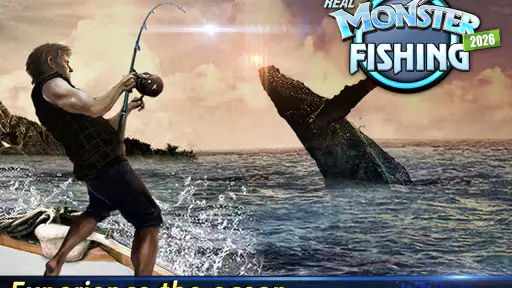
Monster Fishing 2026 is presented as a fishing game with realistic 3D visuals, so the central appeal is seeing the fishing action and catches in a three-dimensional style. The visual approach may make each session feel more immersive, while the basic activity remains approachable for casual play. If you enjoy sports games built around fishing rather than fast-paced competition, its presentation may suit you.
Can I try Monster Fishing 2026 without committing to a purchase?
Yes. Monster Fishing 2026 is free to download, so you can install it and explore the game before deciding whether to spend money on optional extras. In-app purchases are available, but downloading the game does not require paying an upfront price. If you share your device with children, consider using its purchase controls so that any optional spending is deliberate.
Who developed Monster Fishing 2026, and how popular is it?
Monster Fishing 2026 is a sports game developed by Nexelon inc. It has attracted a large player base, with over 10 million installs and an average rating of 4.5 from around 168,000 ratings. Those figures suggest it has broad appeal among mobile fishing fans, though your own experience will depend on whether its fishing mechanics and progression suit the way you like to play.
Can I play Monster Fishing 2026 without an internet connection?
The game is presented as not requiring an internet connection, which makes it appealing for playing while traveling or in places with limited connectivity. Offline play can be useful when you want to enjoy a fishing session without relying on mobile data or Wi-Fi. Keep in mind that online-dependent services, if used, may not be available while disconnected.
What is Monster Fishing 2026, and what can I expect from the gameplay?
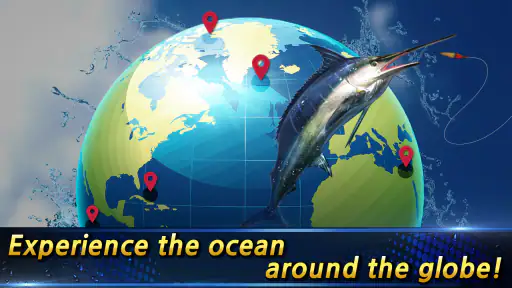
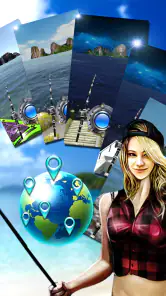
Monster Fishing 2026 is a fishing game focused on catching a wide variety of fish in different locations. From exploring its menus and fishing areas, the main experience combines choosing equipment, casting, reacting to fish movement, and improving your tackle. It is designed for casual sessions, but stronger catches generally require patience, better gear, and learning how each fishing situation works.
Pros
- Easy-to-learn controls make it accessible for casual players.
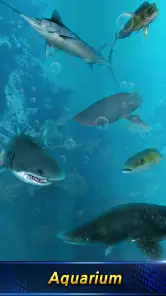
- Wide variety of fish keeps each fishing trip feeling different.
- Short sessions work well for quick mobile gaming breaks.
- Progression gives you reasons to upgrade gear and revisit locations.
- Colorful visuals make the underwater environments enjoyable to explore.
Cons
- Energy or waiting systems may limit longer play sessions.
- Some advanced equipment can require significant grinding.
- Touch controls may feel imprecise during difficult catches.
- The game can become repetitive after mastering familiar fishing spots.
- Ads or optional purchases may interrupt the overall experience.
- Category
- Sports
- Version
- 0.4.76