Mob Wars LCN: Mafia Empire RPG
- 1.49K
- 4.5
- Installs
- 5.00M
- Price
- Free

Screenshots

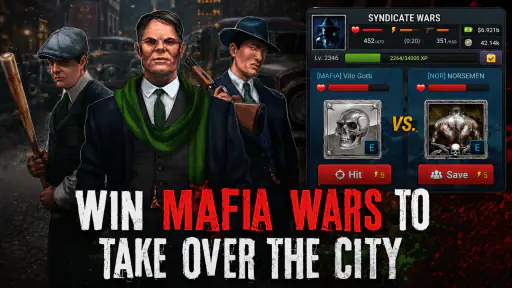
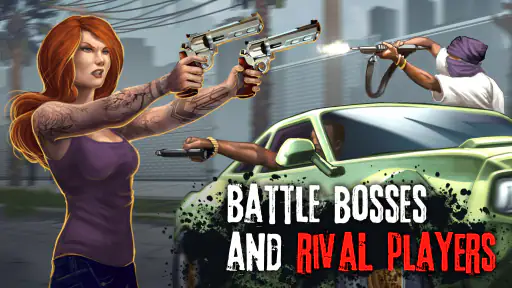
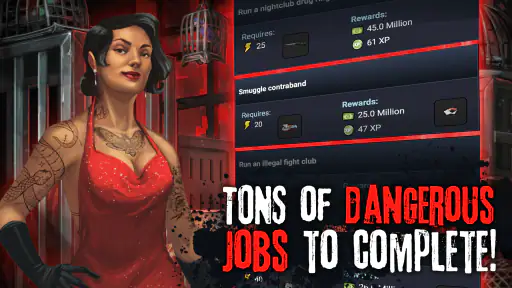

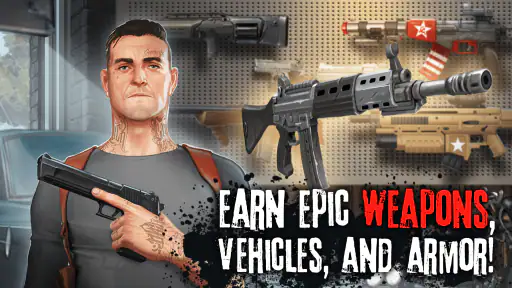

Analysis by Reviewed
I went into Mob Wars LCN: Mafia Empire RPG expecting a quick crime-themed role-playing game, and I found something more patient and routine-driven. Its main appeal is not fast action or a cinematic story. Instead, it asks me to build influence gradually, make choices about how to grow my mob, and keep returning to manage the next step. That makes it a surprisingly easy game to fit around a busy day, although it also means the experience can feel repetitive if I want constant excitement.
Developed by Kano Games, this free-to-play role-playing game puts the focus on creating a criminal empire and competing with rival players. It has been available since April 20, 2016, and its long life is reflected in a large community: the game has passed five million installs, with an average score of 4.5 from roughly thirteen thousand ratings. Those figures do not automatically make it a good match for everyone, but they do suggest that the basic formula has found a durable audience.
How the mafia RPG plays in everyday use
The most useful way to understand this game is to think of it as a collection of short management decisions rather than a traditional action RPG. I can open it for a brief session, check what needs attention, make progress, and leave without feeling that I have abandoned a long real-time battle. That structure works well when I have only a few minutes while commuting, waiting for an appointment, or taking a break from work.
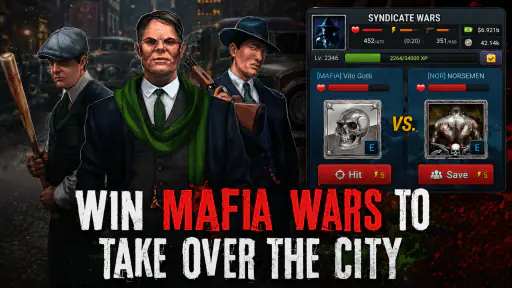
The central fantasy is straightforward: I am building a mob, expanding my position, and trying to stay ahead of rivals. The criminal setting gives ordinary progression systems a clear identity. Improving my position feels connected to the idea of running an underworld organization, while rival encounters provide a reason to think about strength and timing instead of simply collecting rewards.
What I like most is the sense of gradual ownership. The game encourages me to see progress as something assembled over many small choices. I am not relying on one dramatic victory to define the session. Instead, I am shaping an account over time, deciding when to push forward and when to strengthen what I already have. That slower rhythm is the strongest reason I would recommend it to someone who enjoys persistent mobile games.
There is also a social edge to the design. A mafia game naturally works better when rivals feel like more than anonymous obstacles, and the competitive framing gives progress some tension. Even when I am not playing for long, the idea that other players are part of the wider contest makes upgrades and strategic choices feel more meaningful than they would in a completely solitary progression game.
Why the progression feels satisfying
The game does a good job of turning small improvements into visible momentum. Early progress is especially motivating because each decision seems to open another practical goal. I can focus on building a stronger base, preparing for tougher opposition, or simply keeping my routine moving. That flexibility gives the game more staying power than a linear sequence of missions would have.
A useful habit is to decide what kind of session I am having before I start. If I only have a minute, I can handle the immediate tasks and stop. If I have more time, I can look at the broader direction of my mob and consider whether my next move should be aggressive or conservative. This prevents the game from turning every visit into aimless tapping.
I also found that the mafia theme makes resource decisions easier to remember. In many mobile RPGs, several currencies and upgrade paths can blur together. Here, the idea of investing in an organization gives those choices a little more context. I still need to pay attention, but the setting helps the systems feel connected rather than randomly attached to a character screen.
That said, the game is not built around twitch skill. Players looking for precise controls, elaborate exploration, or a combat system that rewards quick reactions may find the interaction too restrained. The challenge comes more from planning, patience, and deciding how to use progress than from mastering a difficult control scheme.
The practical role of competition
Rivalry is important because it gives long-term progress a purpose. If I were only collecting improvements for their own sake, the routine could become flat. Competing against other criminal organizations adds a target to the process. It makes me ask whether I am developing efficiently, whether I am ready to challenge stronger opponents, and whether a short-term gain is worth slowing down my broader growth.
My advice is not to treat every rival encounter as a test of pride. A common mistake in this type of game is spending resources simply because an opponent is available. I get better results when I first consider what I will gain, what I might delay, and whether the move supports my current plan. That small pause turns the game from a sequence of impulses into a more deliberate strategy experience.
This is one of the less obvious strengths of the title: it rewards self-imposed discipline. The game can be played casually, but it becomes more interesting when I set a purpose for each visit. I might concentrate on strengthening my organization, preparing for competition, or maintaining a steady growth cycle. Without that personal structure, the same systems can feel like chores.
Where the free-to-play model changes the experience
The game is free to download and play, but it includes purchases ranging from $1.99 to $99.99 for an item. That range matters because it changes how I evaluate progress. I can approach the game without paying, but I need to be comfortable with a slower pace and with seeing optional spending presented as a way to accelerate or support progress.
For me, the best approach is to decide on a spending boundary before becoming invested in the competition. Persistent games can make a small purchase feel harmless, followed by another purchase when a new obstacle appears. Setting a limit in advance keeps the choice deliberate. If I am unwilling to manage that pressure, a premium game with one upfront cost would be a better fit.
The trade-off is not simply about money. It is also about patience. A player who enjoys gradual progress may find the free route satisfying because every improvement feels earned over time. Someone who wants to reach the most competitive parts quickly may become frustrated by the slower route or tempted to spend more than planned. I would describe this as a game for people who can enjoy the process, not just the destination.
Another practical point is that the Teen content rating makes the game more suitable for older players than for young children. The mafia theme and criminal premise are central to the experience, so parents choosing something for a child should consider whether that setting is appropriate, rather than judging the game only by its cartoon-like mobile presentation.
What can become repetitive
The biggest weakness is the routine itself. The same short-session structure that makes the game convenient can also make it feel predictable. If I play frequently without changing my objective, I may feel that I am checking boxes instead of making meaningful decisions. The long-term design depends on accepting repetition as part of the genre.
I noticed this most when I opened the game without a clear reason. A focused visit felt productive; an unfocused visit made the progression seem slower. That is not entirely the game’s fault, but it reveals an important limitation. The title supplies a framework for ongoing management, yet I have to provide some of the motivation myself.
The competitive side can create another kind of friction. Players who compare themselves constantly with stronger organizations may feel behind, even when their own account is progressing normally. I prefer to judge improvement against my previous position rather than against the most advanced rivals. That makes the game more enjoyable and reduces the temptation to spend simply to close an artificial gap.
Players who want a rich narrative may also be disappointed. The crime setting is clear and gives the systems personality, but I would not choose this game primarily for deep character development or a story that carries the entire experience. Its strongest writing, in practical terms, is the language of ambition, rivalry, and empire-building rather than a detailed role-playing campaign.
How it compares with other mobile RPG choices
Compared with action-focused role-playing games, this one is calmer and less dependent on reflexes. It is a better choice for someone who wants to make progress in short bursts than for someone who wants to spend an hour controlling a character through demanding battles. I can put it down quickly, which is a genuine advantage, but I also lose the immediate excitement that action games provide.
Compared with story-heavy RPGs, the appeal is more systemic than dramatic. I am watching an organization develop rather than following a carefully staged adventure. That makes the game easier to revisit casually, but it may feel less memorable for players who value dialogue, exploration, and large narrative moments above all else.
Compared with other free-to-play management games, the mafia theme gives this title a stronger identity. The idea of building a mob and confronting rivals is more specific than managing an abstract collection of buildings or units. The downside is that players who dislike criminal settings will not find the progression meaningful simply because the underlying systems are convenient.
In short, I would choose this game over a faster RPG when I want a persistent account that fits into small gaps in my day. I would choose a different game when I want a self-contained adventure, a one-time purchase, or a more skill-based combat experience.
Who should give it a chance
This is a good match for players who enjoy incremental growth, competitive goals, and mobile games that do not demand uninterrupted attention. It also suits people who like checking in regularly and making a few purposeful decisions rather than completing long missions in one sitting.
It can work especially well for someone who enjoys spreadsheets of priorities in their head, even without literal spreadsheets on screen. I like deciding which improvement matters most, when to prepare for a rival, and whether a reward is worth changing my current plan. That kind of light optimization gives the game more depth than its simple premise first suggests.
I would be cautious about recommending it to players who dislike timers, repeated routines, or optional purchases in free games. It is also not ideal for anyone seeking a strong single-player story or intense combat. If the thought of returning to the same criminal empire day after day sounds like maintenance rather than entertainment, the game will probably wear thin.
For a first session, I suggest resisting the urge to chase every available objective. Instead, learn how the progression connects, identify what kind of growth you enjoy, and keep your early decisions consistent. This makes it easier to understand whether the game’s slower rhythm suits you before you invest serious time or money.
Device and version details worth knowing
The current version is 3.136.2, and the game supports devices running Android 7.0 or later. That broad compatibility makes it approachable for people who are not using a recent phone, although actual smoothness can still depend on the device and its general condition. I would keep expectations realistic on older hardware, especially if other apps are running heavily in the background.
Because the game is free, trying it involves less commitment than buying a premium RPG. The more important commitment is attention: the title works best when I accept its ongoing structure and decide how much time I want to give it. I would not install it expecting a short campaign with a clear finish line. I would install it as a continuing hobby.
The large existing audience is reassuring for a game built around rivalry and long-term progress. An established player base gives the competitive concept more life than an isolated management game would have. Still, popularity cannot remove the central trade-off: the more I want rapid advancement, the more likely the free-to-play design is to test my patience.
My verdict after settling into the routine
I see this as a solid, deliberately paced mafia RPG rather than an all-purpose role-playing game. Its strongest qualities are the clear criminal-empire theme, the convenience of short sessions, and the satisfaction of building an organization over time. Kano Games has created a title that understands why many mobile players return to the same account repeatedly: small decisions become meaningful when they accumulate.
Its limitations are just as clear. The routine can become repetitive, the competition may encourage unhealthy comparisons, and optional purchases require self-control. The game also leaves action fans and story-first players with little reason to stay. Those are not minor details; they define who will enjoy it.
I would recommend it to a friend who likes persistent strategy-flavored RPGs, can tolerate repetition, and prefers gradual progress over dramatic battles. I would suggest skipping it in favor of a premium or action-oriented alternative if the goal is a complete narrative or hands-on combat. For the right player, Mob Wars LCN: Mafia Empire RPG is an easy game to revisit and a surprisingly engaging way to turn a few spare minutes into steady progress.
My final advice is simple: play it patiently, keep spending intentional, and give each session a purpose. If that sounds satisfying rather than restrictive, this free Teen-rated game is worth trying. If it sounds like another daily obligation, its polished mafia premise will not be enough to overcome the repetition.
Pros
- Easy-to-learn mafia gameplay with clear menus and objectives.
- Large social element through alliances
- crews
- and player competition.
- Frequent tasks and events provide goals beyond basic missions.
- Character customization lets you specialize in different combat roles.
- Runs well on many devices without requiring high-end hardware.
Cons
- Progress can feel slow without spending premium currency.
- Energy and stamina limits may interrupt longer play sessions.
- Heavy focus on timers and resource management can become repetitive.
- Competitive rankings may favor players who make regular purchases.
- The interface can feel crowded for newcomers exploring its many systems.

- Category
- Role Playing
- Version
- 3.136.2