Mergeland
- 2.76K
- 4.5
- Installs
- 1.00M
- Price
- Free

Screenshots
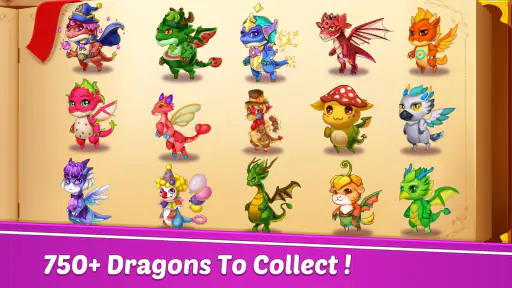



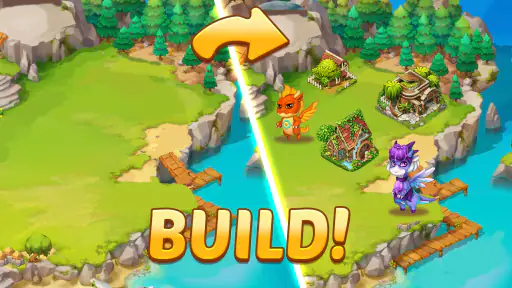
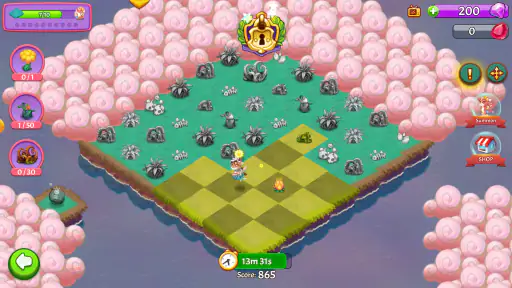
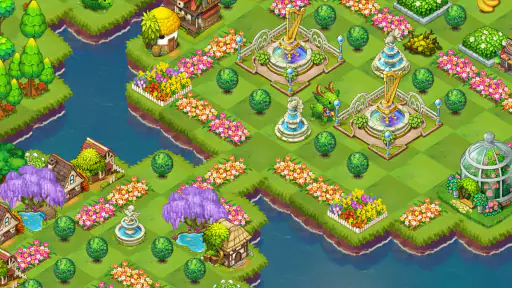
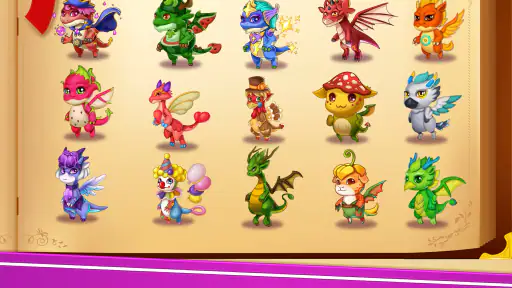
Analysis by Reviewed
I spent my time with Mergeland mainly to understand one idea: how much depth can come from dragging objects together and watching a small fantasy world take shape. That simple action is the heart of this free adventure game from MIPGAME, but it is also where most of its personality comes from. The game asks me to combine matching items, make room for new discoveries, and gradually build a home for hungry elves and other parts of its monster-filled setting.
My first impression was that it is easy to pick up without feeling completely empty. I do not need a long explanation before making the first move. The board communicates much of what I need through the objects themselves: similar pieces invite a merge, open space suggests expansion, and a crowded area tells me to stop collecting and start organizing. That makes it a comfortable choice for short sessions, especially when I want something more interactive than a passive puzzle but less demanding than a traditional action adventure.
Why the merge mechanic matters here
The important capability is not merely combining two or more things. It is deciding what deserves space now and what should wait. Every merge changes the shape of the play area, so a careless move can leave me with a messy board and fewer useful options. A thoughtful move, on the other hand, can turn a collection of low-level objects into something that supports the next stage of progress.
That creates a gentle form of planning. I am not solving a complicated riddle, yet I am still making choices about timing, position, and priorities. If I merge immediately whenever a match appears, I may clear one small problem while creating another. If I pause and scan the whole board first, I can often arrange objects more efficiently and preserve room for future pieces. This is the difference between the game feeling like a repetitive tapping exercise and feeling like a small, manageable adventure puzzle.
The setting gives that mechanic a reason to exist. I am not simply combining colored pieces in an abstract tray. The goal is connected to creating a home for hungry elves and developing a monster legend around that world. That framing makes the repeated actions easier to follow because each merge feels like a contribution to a growing place rather than an isolated score event.
I also like that the central action has a clear rhythm. I collect or arrange what is available, look for useful combinations, merge, and then reassess the board. The reassessment is where the real value lies. The game rewards me for looking beyond the next obvious match and considering how a move will affect the remaining space. Players who enjoy tidy layouts and gradual progress will probably get more from this than players who want constant surprises or rapid combat.
What a good session feels like
In practice, I usually begin by checking the entire play area instead of dragging the first matching items I notice. I look for clusters, identify which spaces are already constraining movement, and decide whether my immediate goal is to create a higher-level object or simply free room. This small habit makes the board feel less chaotic and prevents many unnecessary rearrangements.
A useful approach is to keep related objects close without sealing off the middle of the area. The temptation is to build neat little groups everywhere, but a perfectly tidy board is not always a flexible board. I found that leaving a working lane for movement is often more valuable than arranging every item symmetrically. When new pieces appear, that open route gives me somewhere to place them before I commit to a merge.
Another practical lesson is to avoid treating every available combination as equally urgent. Some merges help the current layout, while others can wait until I understand what the surrounding objects are doing. Holding a possible merge for a moment may let me combine a larger group more efficiently or prevent a useful area from becoming blocked. This is a minor decision, but it is the kind of decision that separates a calm session from constant board shuffling.
The game works particularly well when I have a few spare minutes. I can make progress without needing to memorize a complicated control scheme, and the drag-based interaction feels natural on a phone. At the same time, the board can invite longer sessions because each successful merge reveals another small organizational problem. I often intend to make one adjustment and then continue because the new arrangement makes the next objective feel close.
That convenience has a downside. The same loop can become repetitive if I am not in the mood for incremental progress. The game does not replace a story-heavy adventure, a platformer, or a combat-focused title. Its adventure identity comes through the world-building and progression around merging, not through fast exploration or direct character control. I would choose a different game if I wanted reflex challenges, deep narrative choices, or a large world to roam freely.
A realistic everyday use case
For me, the best everyday scenario is a short break when I want a game that lets me settle into a rhythm quickly. I can open it, inspect the board, make a few deliberate combinations, and stop after reaching a natural pause. It is less demanding than starting a long mission in a conventional adventure game, because the main interaction remains understandable even when I am playing casually.
It can also suit someone who likes organizing tasks visually. The act of grouping matching objects and protecting open space has a satisfying, almost desk-clearing quality. I would recommend it to a friend who enjoys sorting games but wants a fantasy setting and a sense that the arrangement is helping build a living place. The elves and monsters give the process more character than a plain merge board would have on its own.
However, I would not recommend it as a background game for someone who dislikes making repeated small decisions. Even when the controls are simple, the board benefits from attention. Playing without looking carefully can lead to inefficient merges and a cluttered layout. The game is relaxing for me when I engage with its planning, but it may feel slow to anyone who wants immediate rewards from every tap.
Where it sits beside other adventure games
Compared with a typical adventure game, this one puts far less emphasis on movement, combat, and direct exploration. Its challenge is spatial and incremental. That makes it easier to play in brief sessions, but it also means the experience depends heavily on whether the merge loop holds my interest. A conventional adventure may offer more dramatic moments, while this game offers a steadier sense of improvement.
Compared with a basic match or merge puzzle, the fantasy home-building angle gives my actions more continuity. I am not only clearing a board; I am working toward a setting populated by elves and connected to a monster legend. That context is the main reason I would pick this over an entirely abstract alternative. The trade-off is that players looking for a pure, compact puzzle may find the surrounding progression more involved than necessary.
It also differs from management games that expect constant scheduling or detailed resource accounting. Here, the drag-and-merge action remains the clearest focus. I can think about layout and progression without feeling that I need to run a full virtual economy. That simplicity is a strength for casual players, although people who enjoy complex production chains may eventually want more demanding systems than this format provides.
The friction points I noticed
The largest limitation is the possibility of board congestion. Because the experience revolves around placing and combining objects, space is not just decoration; it directly affects how comfortable the next few moves will be. When I make merges without a plan, I spend more time rearranging than progressing. The solution is not difficult, but it requires patience and a willingness to delay a satisfying combination.
There is also a natural repetition in the loop. The game can make small progress feel rewarding, yet the same pattern of arranging, merging, and reassessing may not satisfy players who need frequent changes in pace. I think it is best approached as a steady, low-pressure adventure rather than a game that constantly introduces new forms of challenge.
The free entry point is helpful, but the presence of optional purchases ranging from $0.99 to $99.99 per item means I would still pay attention to spending habits, especially if a younger player is using the device. The content rating is Everyone, which makes the theme broadly approachable, but an age-friendly setting does not remove the need for sensible purchase controls. I would treat the game as free to start, not as a promise that every possible shortcut or extra is free.
Another consideration is device compatibility. The current version is 3.46.0 and requires Android 7.0 or later. That covers many phones, but anyone using an older Android device should check compatibility before planning around it. On a supported phone, the touch-first design is straightforward; on an outdated device, the question is less about learning the controls and more about whether the game fits the hardware at all.
Small habits that improve the experience
My strongest tip is to treat empty space as a resource. I do not fill every gap just because an object is available. Keeping a clear area near the center or along one side gives me room to stage new pieces and inspect possible combinations. This matters more than making the board look perfectly arranged.
I also recommend taking a full-board pause before a major merge. A quick scan can reveal that two separate groups are closer to becoming useful than the first pair I noticed. This is especially valuable when several matching objects are scattered around the area. The extra moment of planning often saves several later drags.
Finally, I try to separate progress moves from cleanup moves. A progress move creates a more valuable combination or supports the home-building goal. A cleanup move simply makes the board easier to use. Both are necessary, but confusing them can make a session feel unproductive. When I recognize that I am only cleaning, I decide whether the improved space is worth the action or whether I should wait for a better opportunity.
Who will enjoy it most
Mergeland is strongest for patient casual players who enjoy visual organization, gradual discovery, and a fantasy setting that gives purpose to simple actions. It is a good fit if I want to play with one hand, make progress in short bursts, and think about small spatial choices without facing punishing difficulty. The one-million-plus install milestone and its 4.5 average from around 36 thousand ratings suggest that this style has found a substantial audience, and I can understand why: the basic interaction is immediately readable while still leaving room for better decisions.
The game is also suitable for someone who wants an adventure theme without the commitment of a long campaign. I can return to the board after a break and understand what I was doing quickly. That makes it more approachable than many story-driven titles, where forgetting a mission objective or control scheme can create friction.
I would steer competitive players, action fans, and people who need constant novelty toward another option. The merge system is the attraction, but it is also the boundary of the experience. If arranging objects feels like work rather than play, the fantasy presentation will not fully solve that problem. Likewise, anyone seeking a traditional adventure with exploration and combat should not download this expecting those elements to be the main event.
For a free adventure game, it offers a clear identity and a useful balance between relaxation and planning. MIPGAME has built the experience around a capability that sounds simple but becomes more interesting when space, timing, and the growing home all matter together. I would recommend trying it if that combination appeals to you, while keeping expectations realistic about repetition and optional spending.
My final view is positive, with one condition: enjoy the process, not just the destination. The most satisfying moments come from seeing a cramped board become workable because I made a few careful decisions. If that kind of gradual improvement sounds rewarding, this is an easy game to keep nearby for short breaks. If I wanted a faster, more dramatic adventure, I would choose something else, but for thoughtful drag-and-merge play with a friendly fantasy frame, it earns a place on my phone.
Pros
- Simple merge mechanics are easy to learn and enjoyable for casual play.
- Frequent events add variety and provide extra goals beyond the main map.
- The colorful art style makes the island and characters pleasant to explore.
- Offline play is useful when you want to play without a constant connection.
- New areas and objects unlock gradually
- giving progression a satisfying pace.
Cons
- Energy limits can interrupt longer play sessions.
- Some upgrades require patience or repeated merging.
- The screen can become cluttered when many items occupy the island.
- Event content may feel repetitive after several playthroughs.
- Optional purchases can speed up progress
- creating pressure to spend.

- Category
- Adventure
- Version
- 3.46.0