Master Hospital
- 12.00
- 3.7
- Installs
- 100.00K
- Price
- Free

Screenshots




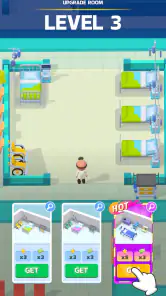
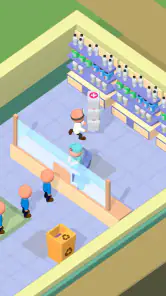
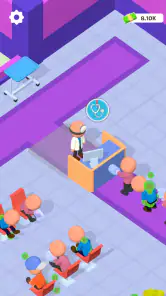

Analysis by Reviewed
I approached Master Hospital as a quick, hands-on management game rather than a detailed medical simulator. Its central appeal is the idea of growing a clinic by looking after patients and shaping a hospital business. That gives the game a clear, easy-to-grasp goal: make a small care setting feel more capable as you play. If you like role-playing games with a management angle, this is a lighter alternative to stories built around character dialogue or combat.
A clinic that gives you a management role
The hospital theme changes the usual building-game loop in a useful way. Instead of treating rooms as decoration alone, the premise ties development to patient care and the running of a medical center. I find that framing more engaging than a purely cosmetic builder: the decisions feel connected to the purpose of the place, even when the play session is casual. It is best approached as approachable role-play, not as a realistic lesson in healthcare operations.
For a practical session, I would open it when I have a few spare minutes and want a clear objective rather than a long narrative to follow. The hospital setting makes progress easy to understand at a glance: you are trying to make the clinic more useful and keep its business moving. That simple loop is a good fit for players who enjoy seeing a setting develop, but it may feel too light for someone seeking deep planning or medical detail.
What the hospital theme means in everyday play
A useful way to think about the game is as a small set of management choices wrapped in a healthcare setting. When deciding what to improve, I would prioritize changes that help the clinic serve patients over upgrades chosen only because they look appealing. That is a practical way to give each session direction, especially if you do not want to spend time debating every possible move. The reward is a sense of ownership; the trade-off is that players wanting complex systems may wish for more layers.
Imagine picking up your phone during a short break, checking how your clinic is developing, and making one considered improvement before returning to the day. That is the kind of everyday use I would recommend: brief visits with a small goal, rather than expecting a long, absorbing role-playing campaign. If you prefer a deeper simulation, a game with more explicit operational choices may suit you better; if you want a friendly hospital-management theme without a steep learning curve, this is easier to sample.
Your Journey Begins
From the moment you open Master Hospital, you’re greeted with colorful graphics and an intuitive interface. The game starts with a small clinic, and it’s up to you to transform it into a thriving healthcare facility. The setup is simple but engaging, allowing you to quickly get the hang of things. You'll be tasked with hiring staff, managing resources, and attending to patients. Each decision you make affects the growth and efficiency of your hospital.
Gameplay and Features
The gameplay is where this app truly shines. It offers a mix of strategy and simulation, keeping you on your toes at all times. You’ll find yourself juggling between building new wards, upgrading equipment, and ensuring your staff is well-trained. The app also introduces emergencies that require quick thinking and effective management. What I love most is the attention to detail; from the design of the hospital rooms to the animations of the patients and staff, everything feels thoughtfully crafted.
More From Our News Desk

Clash of Clans Is Won Between the Battles

Android Auto Makes the Case for Quieter Car Software

MobiOffice: Transforming Mobile Productivity with Seamless Integration

EA SPORTS FC™ Mobile Soccer: Redefining Mobile Sports Gaming

How Microsoft OneDrive Became a Mobile Productivity Giant

How Google Translate Breaks Language Barriers Effortlessly
Moreover, the app offers a variety of challenges and missions. Completing these not only boosts your hospital's reputation but also earns you rewards that can be used to further enhance your facilities. The game keeps things interesting with regular updates and seasonal events, so there’s always something new to look forward to.
Making short sessions count
The most useful way to approach the clinic is to give each visit a single purpose. Rather than switching among several improvements at once, I would decide whether the immediate priority is patient care, staff, or the facilities, then focus on that choice. This keeps the management loop readable and makes it easier to judge whether a change has helped. It also prevents a quick phone break from turning into aimless tapping through menus.
That focused approach matters most when the clinic presents competing demands. A tempting improvement may look satisfying, but it is worth considering whether it addresses a bottleneck you have actually noticed. In a hospital-themed game, the natural instinct is to make everything bigger; I find it more rewarding to think about whether the next step makes the care setting work better. The game’s appeal is less about perfect optimization than about making a sequence of understandable decisions.
How it compares with other role-playing games
Compared with the usual role-playing game built around quests, character progression, or battles, this one puts the focus on a clinic and its patients. That makes it a more natural pick for someone who likes to organize and improve a place than for someone looking for a plot-led adventure. I would also distinguish it from more serious management simulators: the accessible presentation is appealing, but players who want detailed control over every operational choice should look for a more demanding option.
Who benefits from the hospital setting
The hospital theme gives the game a different mood from fantasy adventures and combat-heavy RPGs. It offers a constructive objective: improve a service-oriented place rather than defeat an opponent. That can be a pleasant change if I want a sense of progress without following a long chain of story scenes. It also makes the management decisions intuitive to explain to a younger player, though the rating for Everyone should not be mistaken for a promise that every player will find the strategy engaging.
Compared with a conventional idle builder, the clinic premise gives upgrades a clearer context: a facility is meant to support care, not simply expand a decorative map. Compared with a deep tycoon simulator, however, the lighter presentation is a compromise. I would choose this when I want accessible hospital role-play, and choose a more detailed simulation when I want to tune complex systems or spend a session planning a highly specific operating strategy.
What Makes It Stand Out?
Master Hospital isn’t just about managing resources; it’s about creating a healthcare empire. The game encourages you to strategize and plan ahead, ensuring you’re always a step ahead of any crisis. The social aspect is another highlight; you can connect with friends, visit their hospitals, and even share tips and strategies. This sense of community adds a layer of fun and competitiveness to the game.
Another aspect worth mentioning is the in-app purchases. While they’re available, they’re not intrusive. You can enjoy the game fully without spending a dime, which is quite refreshing in today’s gaming landscape.
When the trade-offs matter
The main limitation for me is the gap between a hospital theme and a true medical or business simulation. The premise suggests care and operations, but I would not choose it to learn how hospitals function or to test detailed clinical decisions. Its value is in approachable management and visible development, not professional realism. If your enjoyment depends on deep systems, exact control, or a story with memorable characters, that distinction is important before you commit time.
There is also a pacing trade-off common to free management games: optional purchases can make spending feel like a shortcut if progress ever seems slow. I would avoid buying immediately and first work out whether the ordinary play rhythm feels satisfying. A practical rule is to spend only if the game already fits your routine and a particular purchase would improve that experience, not because you feel pressured to catch up. The listed price range is $5.99 to $9.99 per item, so keeping purchases deliberate is sensible.
For an everyday test, I would try it during a quiet break rather than start it when I need a substantial story to hold my attention. If a brief visit leaves me with a clear next decision, the management loop is doing its job. If I keep wishing for more tactical depth or richer role-play, that is a sign to move on to a more involved simulator or a narrative RPG rather than expecting this clinic game to become something different.
Who should give it a try
I would recommend it to casual players who enjoy a visible sense of development and a healthcare theme, especially if they want a game they can approach without committing to a long story. Someone choosing a game for a younger player may also appreciate that it is rated Everyone. By contrast, I would skip it if I wanted a realistic hospital simulator, a strong narrative, or a role-playing game centered on combat and characters; the clinic-management premise is the main reason to choose it.
It is free to play, with optional in-app purchases listed at $5.99 to $9.99 per item, so I would start without buying anything and decide later whether the pace works for me. The game is published by Supercent, Inc., has a 3.7 average from 127 ratings, and has passed 100K installs. It was released on Dec 21, 2023; version 0.34.0 is listed for Android 6.0 and later. Those details make it easy to identify the current Android edition, while the purchase choice remains simple: try the core experience first and spend only if you find the extra value worthwhile.
Choosing it for your routine
This is most appealing if you like a game that gives a small break some structure. A useful routine might be to open the clinic, check what seems to need attention, make one improvement, and stop once you have a clear next objective. That approach suits people who enjoy gradual progress but do not want to memorize a complicated campaign. It also makes the hospital’s growth easier to appreciate than trying to do everything in one sitting.
It is a weaker fit for someone who wants a game to fill a long evening with a carefully written plot, demanding tactical choices, or detailed medical procedures. I would also hesitate to recommend it to a player who dislikes management loops built around developing facilities and balancing resources. The key question is not whether hospital games sound appealing in general; it is whether you enjoy repeatedly making small decisions that shape one clinic over time.
Final Thoughts
In conclusion, Master Hospital is a delightful blend of strategy, management, and creativity. Whether you’re a fan of simulation games or just looking for something new to try, this app offers hours of entertainment. It’s challenging yet rewarding, and the developers have done a fantastic job in creating a realistic yet fun hospital management experience. So, if you’re ready to take on the challenge of running your own hospital, give Master Hospital a try. Trust me, it’s a game you’ll want to keep coming back to!
Master Hospital Frequently Asked Questions
Who developed Master Hospital, and what kind of game is it?
Master Hospital is a role-playing game developed by Supercent, Inc. Its central idea is running a hospital business: you care for patients and build a medical clinic center. That mix of management and role-playing gives the game a clear focus for players who enjoy growing a service business while keeping its day-to-day work moving.
What should I know about Master Hospital’s age rating and device requirements?
Master Hospital has an Everyone content rating, so its age classification is suitable for a broad audience. It requires Android 6.0 or later, which is worth checking before downloading if you are using an older device. The game is listed as version 0.34.0, giving you a quick way to compare its current version with the one available on your device.
What is the main objective of Master Hospital?
Master Hospital is a strategic simulation game where players take on the role of a hospital administrator. The primary objective is to build, manage, and expand a hospital while ensuring patient satisfaction and operational efficiency. Players need to balance resources, staff, and facilities to create a thriving healthcare environment.
What features does Master Hospital offer to enhance gameplay?
Master Hospital offers a variety of features, including customizable hospital layouts, a wide range of medical equipment, and diverse staff hiring options. Players can engage in strategic decision-making, manage emergencies, and participate in special events to earn rewards. The game also provides dynamic challenges that require tactical planning and resource management.
Is Master Hospital free to play, or does it require in-app purchases?
Master Hospital is free to download and play, but it includes in-app purchases for players who wish to enhance their gaming experience. These purchases can include additional resources, special equipment, or cosmetic upgrades. However, all in-game content can be accessed through regular gameplay without the necessity of purchasing.
Pros
- Intuitive user interface
- Wide range of medical tools
- Customizable hospital layouts
- Engaging patient care scenarios
- Frequent updates with new content
Cons
- Ads can be intrusive
- Requires a stable internet connection
- Limited offline features
- Can be resource-intensive on older devices
- In-app purchases can get pricey

- Category
- Role Playing
- Version
- 0.34.0