Love and Deepspace
- 6.80K
- 4.5
- Installs
- 5.00M
- Price
- Free

Screenshots







Analysis by Reviewed
I’m always more interested in a story game when my choices feel like part of the experience rather than a pause between cutscenes. Love and Deepspace caught my attention for that reason: its blend of romance, science fiction and interactive play gives each session a clear emotional pull. It is a free simulation game from InFold Pte. Ltd., and its 3D presentation is a big part of how it draws you into its world.
What the first session feels like
The opening appeal is immediate: you are invited into a futuristic setting where personal connections matter alongside the larger adventure. Instead of treating romance as a separate extra, the game places character interactions near the center of the experience. That makes it a natural fit if you enjoy choosing how to respond and seeing relationships develop through those exchanges.
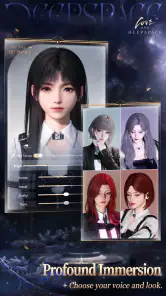
The presentation helps establish that mood. Character scenes use polished 3D visuals, giving expressions and gestures room to carry some of the emotion. I found that especially useful when a conversation shifts tone: the scene can feel more intimate than a page of dialogue alone. The trade-off is that this is a game to approach for its characters and atmosphere, not as a fast, action-first space adventure.
How the play-and-response rhythm works
The core loop is easy to understand: take part in a scene or activity, see how the game responds, collect the progress or rewards attached to it, then decide whether to continue or leave the next beat for later. Character moments provide the emotional feedback; the game’s visual and interactive presentation makes those moments feel like more than a simple text exchange.
That rhythm suits short visits. If I had a spare stretch after work, I could focus on a conversation or a small piece of progress instead of needing a long, uninterrupted evening. The useful habit is to decide what you want from a session before opening the game: follow a story moment, spend time with a character, or make a little progress. That keeps the experience focused rather than turning a casual check-in into aimless tapping.
What makes the rewards matter
Rewards work best here as reasons to return to the characters and scenes, rather than as the sole attraction. The emotional payoff is seeing more of the relationships and the world; progress gives that interest a practical next step. If you enjoy collecting and gradually opening up more of a game, that combination can be satisfying.
There is a monetization trade-off to keep in mind. The game is free to start, but it includes optional in-app purchases ranging from $0.49 to $99.99 per item. I’d treat spending as a personal limit to set in advance, not as a shortcut to enjoying the story. If a reward starts to feel like a reason to pay rather than a pleasant extra, it is worth pausing and deciding whether the moment is actually important to you.
More From Our News Desk

Weather by Xiaomi Review: Clear at a Glance, Less Clear Up Close

X Under Pressure: Can It Recover When Posting Goes Wrong?

Clash of Clans Is Won Between the Battles

Android Auto Makes the Case for Quieter Car Software

MobiOffice: Transforming Mobile Productivity with Seamless Integration

EA SPORTS FC™ Mobile Soccer: Redefining Mobile Sports Gaming
When to stop and what brings you back
A good stopping point is after a scene or a small goal, when you have received its feedback and can return later with a clear reason to continue. This kind of pacing makes the game easier to fit around everyday life, though anyone who dislikes waiting between pieces of progress may find the stop-start rhythm frustrating. I also wouldn’t choose it when I want a purely mechanical challenge with little dialogue; the character focus is central to its appeal.
For a realistic routine, I’d open it during a quiet break, check in on the story or an interaction, and stop once that session has delivered a satisfying beat. That approach keeps the game from competing with a busy evening and makes the next visit feel intentional. Players who prefer open-ended exploration, tactical depth, or a story that can be finished in one sitting may be happier with a different kind of game.
How it fits among story games
Compared with a conventional visual novel, the 3D scenes give interactions a more embodied feel; compared with a typical space simulation, the emphasis is less on managing a universe and more on relationships and narrative. That middle ground is its distinctive strength, but it also defines who should skip it. If you want a romance-led sci-fi story with a tactile presentation, it is a good match. If you mainly want ship systems, free exploration, or rapid combat, the premise may promise a different kind of game than you are looking for.
The Teen content rating makes it more suitable for teen audiences than a game aimed at adults alone, while its relationship themes may still be the main draw for older players. It has a 4.5 average from around 158,000 ratings, and has been installed over 5 million times. Those figures suggest a broad audience, but they cannot tell you whether its particular mix of romance and progression suits your taste.
The Cosmic Journey Begins
So, here's the deal. Love and Deepspace isn’t your typical app. It combines elements of a visual novel with space exploration, making for a rather intriguing experience. The game kicks off with you as the captain of a starship, tasked with exploring unknown galaxies while managing relationships with your crew. It's like being in your very own sci-fi movie!
What really caught my attention was the app's stunning visuals. The developers have done a stellar job (pun intended) with the graphics. Each scene is beautifully rendered, making the universe feel alive and vibrant. Whether you're navigating through asteroid fields or floating in the serenity of a nebula, the visuals pull you right in.
Characters That Come Alive
One of the standout features is the character development. The crew members aren't just pixels on a screen; they have depth, each with their own backstories and personalities. As you interact with them, you’re faced with choices that can affect your relationships and the story’s outcome. It’s a bit like real life – your decisions really do matter!
The dialogues are well-written and often sprinkled with humor, adding a nice touch of levity amidst the deep-space drama. I found myself genuinely invested in the characters and their stories, which is a testament to the game’s excellent writing.
Gameplay Mechanics
Now, let's talk about gameplay. It's a mix of decision-making and exploration. While the narrative is the heart of the game, the exploration aspect adds a layer of excitement. You get to chart your course through the stars, encountering various challenges and treasures along the way.
What I appreciated is how intuitive the controls are. Navigating the game feels smooth, and the interface is user-friendly, making it easy to immerse yourself in the adventure without getting bogged down by complicated mechanics.
Soundtrack to the Stars
Can we take a moment to appreciate the soundtrack? It’s atmospheric and perfectly complements the game’s tone. Whether you’re in the middle of a tense standoff or sharing a tender moment with a crew member, the music enhances the emotion of the scene. I found myself caught up in the ambiance, making the experience all the more immersive.
Final Thoughts
Overall, Love and Deepspace is a captivating app that offers a fresh take on storytelling in the gaming world. It’s more than just a game; it’s an experience that combines adventure, emotion, and stunning visuals to create something truly memorable.
Whether you're a fan of sci-fi or just looking for a new way to experience interactive storytelling, this app is definitely worth checking out. So, go ahead, download it, and embark on your own cosmic journey. You won't regret it!
Practical details before you begin
The game was released on January 8, 2024, and its current version is 5.0.0. It requires Android 6.0 or later. I’d check that your device meets the minimum before downloading, particularly if you rely on an older phone. Its detailed 3D scenes are part of the appeal, so a small screen or a device that struggles with visually rich games could make the experience less comfortable.
One useful way to approach the early sessions is to pay attention to which parts you actually enjoy most: following dialogue, watching character scenes, or making progress through the game’s activities. That tells you whether to keep returning for the narrative or whether the repeated progression feels like a chore. I would also avoid spending simply because a limited moment feels urgent; decide what you value first, then keep optional purchases within a budget that feels comfortable.
Who will enjoy the loop
I’d recommend it to players who like romance-forward storytelling, polished character presentation, and a reason to check in for another scene rather than finish everything at once. It can work well as a small daily escape: on a commute break or while winding down, I’d play until one interaction or goal feels complete, then leave the next visit with something to look forward to.
It is less suited to anyone looking for a quiet, entirely offline-feeling novel, a deep space-management simulator, or a game where skillful combat is the main event. Its appeal depends on caring about the characters and accepting a progression loop around that interest. If those elements sound like a match, the feedback from each session can make returning feel natural; if they do not, the 3D presentation alone probably will not carry it.
My verdict on another session
What keeps the loop appealing is the connection between a scene, its response, and the next reason to come back. I like that the game gives emotional context to its progression, although I would not call every return equally compelling: players who want constant novelty may notice the repeated check-in structure more quickly than fans of character-led stories. It is best enjoyed at your own pace, with spending treated as optional and the narrative—not the urge to collect everything—as the reason to play.
A practical way to judge the fit
For a first few visits, I’d keep the goal modest rather than trying to understand every system at once. Follow one character thread, notice which scenes hold your attention, and see whether the activity between story moments feels enjoyable or merely necessary. That quick self-check is more useful than chasing every available reward: it tells you whether the combination of romance, 3D presentation, and progression is genuinely working for you.
This also helps answer whether the game is a good choice for a brief daily habit. If you like ending a session with one clear emotional beat, it can fit neatly into a lunch break or a quiet moment before bed. If you need a game to provide a complete beginning-to-end arc every time you open it, the ongoing structure may feel less satisfying. I’d think of it as something to revisit in small pieces, not a substitute for a self-contained story you can finish in one sitting.
Choosing it over other kinds of games
Its closest alternative depends on what you want from the romance. A conventional visual novel is usually the simpler choice if you primarily want to read branching dialogue without the added feel of 3D character scenes. A management or exploration game is a better fit if building systems and making strategic decisions matter more than relationships. This game sits between those expectations, and that blend is appealing only if both sides interest you.
That distinction matters when deciding whether to continue after the initial novelty wears off. The visual presentation can make a conversation feel present, but it does not turn the experience into a deep simulation of space travel. I’d recommend it for character-led sci-fi and interactive romance, not for someone expecting a detailed cockpit, open-ended navigation, or a combat game with a constant stream of challenges.
Small choices that make sessions better
One trade-off worth watching is how you treat rewards. If you notice yourself opening the game mainly to claim or collect something, pause and ask whether the related story or character moment still interests you. That separates a satisfying return from habit-driven checking. It also makes optional purchases easier to assess: I would only spend when I can name what I want from the purchase and feel comfortable with the cost, rather than reacting to a sense of urgency.
Another useful adjustment is to choose a natural stopping point before a session gets long. A completed scene or a small goal gives the visit a clear shape; stopping there protects the experience from becoming repetitive. The game’s short-visit appeal is strongest when you leave with curiosity about what comes next, rather than continuing only because you have already invested time.
Who should pass, and who should stay
I’d steer away from it if your main priorities are extensive freedom to roam, demanding tactical play, or a story with minimal relationship content. Those are not small side preferences here; they change what makes the game worth returning to. Likewise, if you dislike games that pace progress across repeated visits, its rhythm may become a source of friction rather than a welcome routine.
But if you enjoy romance woven into a science-fiction setting and want character scenes that feel more visually present than a text-only format, it has a clear niche. The best reason to stay is not simply that there is more to unlock. It is that you care enough about the people and their interactions to want another moment with them. When that connection is there, the loop makes sense; without it, the rewards and presentation are unlikely to do all the work.
My recommendation is to try it with a specific expectation: a relationship-focused story game with an ongoing return rhythm, rather than a free-roaming space adventure. If that sounds like the kind of small escape you want, it is easy to see why players keep coming back. If you want a more complete, self-contained narrative or a mechanically focused simulation, I’d choose a game built around that instead.
Love and Deepspace Frequently Asked Questions
Does Love and Deepspace have a story, or is it mainly a simulation experience?
Love and Deepspace is a simulation game with a romance-focused science-fiction setting and immersive 3D interactions. Its appeal is tied to the story and relationships as well as its interactive presentation, so it is not simply a traditional life simulator. If you enjoy character-centered experiences and a continuing narrative, that blend may be a good fit.
How large is the Love and Deepspace community?
Love and Deepspace has attracted a substantial audience, with over 5 million installs and an average rating of 4.5 from around 158,000 ratings. Those figures suggest that many players have tried it, although popularity alone cannot tell you whether its story, pacing, or style will match your preferences. Reading recent player reviews can help you decide what to expect.
Is Love and Deepspace suitable for teenagers?
Love and Deepspace is a romance-focused science-fiction simulation game with immersive 3D interactions. It carries a Teen age rating, so it may suit teenage players, though families should consider whether its romantic themes and character interactions are appropriate for them. The game’s presentation is designed around an ongoing story and relationships, rather than being a purely action-focused experience.
What is Love and Deepspace, and who developed it?
Love and Deepspace is a simulation game developed by InFold Pte. Ltd. Its appeal centers on immersive 3D interactions and romance set against a science-fiction backdrop. It is free to download, with optional in-app purchases. The game has an average rating of 4.5 from around 158,000 ratings, giving prospective players a useful sense of its popularity before they install it.
What is the main objective of Love and Deepspace?
Love and Deepspace combines elements of strategy and role-playing games, set in an expansive sci-fi universe. Players navigate through deep space, completing missions, building alliances, and uncovering the mysteries of love and connection within the cosmos. The game focuses on exploration, customization, and strategic decision-making.
Pros
- Beautifully designed user interface.
- Engaging storyline with multiple endings.
- Seamless integration with social features.
- Regular updates with new content.
- Supports offline play for convenience.
Cons
- Some in-app purchases are pricey.
- Occasional bugs affect gameplay.
- Requires a large amount of storage.
- Limited character customization options.
- Initial loading times can be long.
- Category
- Simulation
- Version
- 5.0.0








