King's Throne: Royal Delights
- 45.32K
- 4.2
- Installs
- 5.00M
- Price
- Free

Screenshots

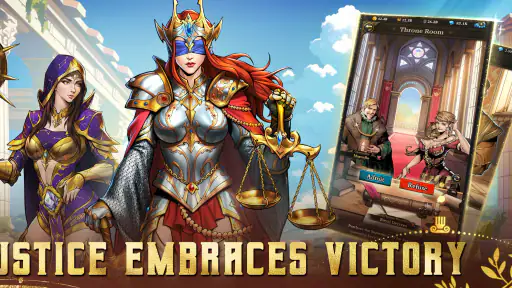



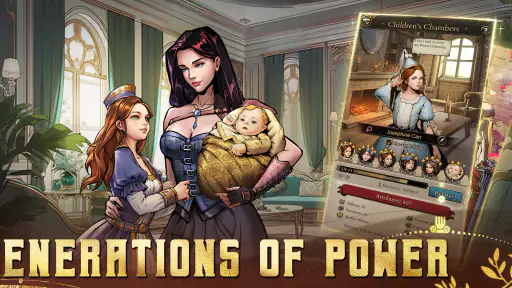

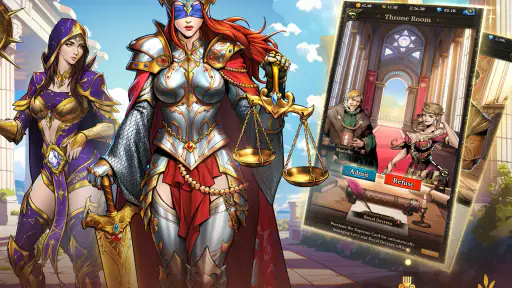
Analysis by Reviewed
King’s Throne: Royal Delights is the kind of role-playing game that looks easy to enter but asks for patience once the opening excitement settles. I found its central appeal in the mix of kingdom management, character progression, and romance-themed storytelling. The promise is not simply to win battles; it is to build influence, make choices around a royal court, and keep several long-term goals moving at once. That combination gives it a different rhythm from a straightforward action RPG.
Developed by GOAT Games, it is free to start and aimed at a mature audience aged 17 and over. The game has been available since August 15, 2019, and its Android listing shows a 4.2 average from roughly 605 thousand ratings, with more than 5 million installs. Those figures suggest a well-established player base, but they do not remove the need to decide whether this particular style of progression suits you.
What playing it actually feels like
My first impression was that the game is built around routine rather than constant action. You check the kingdom, collect what is ready, improve your characters, and then decide where to spend the next stretch of attention. That structure can be relaxing when I want something I can revisit in short sessions, but it can also feel slow if I am looking for immediate control and rapid combat.
The “royal romance” angle is more than a decorative theme in the presentation. It shapes the way the game frames its characters and gives the progression a courtly, personal layer. Instead of treating every upgrade as a purely numerical improvement, the game encourages me to think about which characters matter to my wider plan and how I want my court to develop.
That is also where the game can become confusing. Several activities may appear useful at the same time, and a new player can easily spend resources simply because an upgrade button is available. My strongest early recommendation is to pause before improving everything equally. Decide whether you are trying to strengthen your kingdom, advance a character relationship, or prepare for competition, then spend with that goal in mind.
The most important early habit is to treat resources as a schedule, not as spare change. A reward that seems small in isolation can become valuable when combined with later upgrades. I had a better experience when I stopped reacting to every notification and instead opened the game with one clear task in mind.
Where new players usually get stuck
The first common obstacle is not necessarily difficulty. It is information overload. A royal management game can present missions, characters, rewards, upgrades, and story prompts in quick succession. If you tap through everything without checking what each activity contributes, the result is a scattered account that progresses in several directions without becoming strong in any of them.
The second obstacle is misunderstanding the pace. This is not the best choice for someone who wants every session to deliver a major plot revelation or a dramatic battle. Some progress comes from returning regularly and making sensible small decisions. I think of it as a game for building momentum rather than chasing a single spectacular moment.
Another point of friction is the relationship between free access and optional spending. The game itself is free, but in-app purchases range from $0.99 to $99.99 per item. That wide range matters because the temptation is not limited to one inexpensive convenience. Anyone who dislikes stores, bundles, or pressure to accelerate progress should decide on a personal spending limit before playing, not after becoming invested in the kingdom.
I also would not recommend beginning with a competitive mindset. If your only aim is to reach the top as quickly as possible, the slower management loop may make the game feel like work. It is better suited to players who enjoy planning, collecting, and returning to an evolving court.
Setup checks that prevent avoidable frustration
Before blaming the game for a poor first session, I would check the basics. Make sure the device has enough free storage for installation and later updates, use a stable connection during downloads or account-related steps, and avoid switching repeatedly between networks while the game is loading. These are ordinary checks, but they prevent a surprising number of false alarms.
I also recommend starting with a stable connection rather than a weak mobile signal. A game built around ongoing progression can appear frozen when the real problem is a delayed connection. If a screen does not respond, I wait briefly before tapping repeatedly. Multiple taps can make it harder to tell whether the game is processing the first command or has genuinely stopped responding.
After installation, I would take a few minutes to learn the layout before spending anything. Look at where missions, character development, kingdom tasks, and rewards are presented. The goal is not to memorize every menu. It is to understand where the game expects you to return and which screens represent permanent decisions rather than temporary claims.
Notifications deserve a deliberate choice as well. They can help remind me when a task needs attention, but too many alerts can turn a relaxing game into a constant interruption. I prefer enabling only the reminders that support my routine. If I usually play during a lunch break or in the evening, I want the game to fit that habit instead of dictating it.
Because the content rating is Mature 17+, I would not treat this as a general family game. The romantic and royal drama may appeal to adults who enjoy that tone, but it is not the title I would hand to a younger player simply because the basic download is free.
A practical workflow for steady progress
My preferred routine begins with a quick scan rather than immediate upgrading. I check what has completed, collect available rewards, review current objectives, and then choose one priority. This takes less time than randomly opening every glowing icon, and it makes the session feel more purposeful.
For a short daily visit, I would focus on actions that advance several goals at once. If a task contributes to a mission while also improving the kingdom, it deserves attention before a purely cosmetic or low-impact choice. I would then spend remaining time on characters or relationships that support the direction I have already selected.
For a longer session, I separate planning from spending. First I inspect the available options; then I decide which improvement gives the best immediate value. This small pause is useful because role-playing games often make every upgrade look urgent. In this one, restraint is a genuine advantage. Saving for a meaningful improvement can be better than spreading the same resources across many minor boosts.
One non-obvious benefit of this approach is that it makes mistakes easier to identify. If I change several parts of the kingdom at once, I cannot tell which decision helped. If I make one or two deliberate changes, I learn the game’s priorities more clearly and can adjust without feeling that the whole account is inefficient.
Romance and court progression also benefit from consistency. I would not treat those elements as side content to rush through whenever a reward is visible. They help give the game its identity, and following them at a steady pace makes the royal setting feel more connected than simply collecting unrelated bonuses.
Recovering when progress seems to stop
When an objective appears stuck, I first reread its wording and inspect the relevant screen. In management RPGs, a task may require a particular action rather than a general increase in power. It is easy to assume that becoming stronger will solve everything, when the real requirement is to claim a reward, complete a sequence, or visit the correct section.
If a reward does not appear immediately, I avoid repeating the same action over and over. I wait, return to the previous screen, and reopen the task. If the interface still behaves strangely, I close and relaunch the game once. That simple recovery step is safer than making additional purchases or spending resources in an attempt to force progress.
For a loading problem, I would use a basic sequence: check the connection, close other demanding apps, restart the game, and then try again later if the service appears busy. I would also keep the game updated through the normal store process. These steps do not guarantee a solution, but they are sensible before deciding that an account or device is permanently affected.
Account recovery deserves care. If the game offers an in-game way to connect or protect progress, I would use it early and keep track of the sign-in method. I would not uninstall impulsively while uncertain about how progress is stored. Losing access because of a rushed reinstall is more frustrating than taking a moment to confirm the account situation first.
Payment issues should be handled separately from gameplay issues. If a purchase appears delayed, I would avoid submitting the same order repeatedly. Check whether the store shows the transaction as pending, then allow time for the purchase state to update. If the item still has not arrived, use the platform’s normal purchase-support route rather than trying to solve it through repeated taps inside the game.
When the game is not the real cause
Not every poor experience comes from the title itself. Older devices, limited memory, background downloads, unstable Wi-Fi, and aggressive battery-saving settings can all make a game feel unreliable. If the rest of the device is also slow, the problem is probably broader than one application.
Heat is another useful clue. If the phone becomes unusually warm while several apps are open, close unnecessary background activity and give the device time to cool. I would not continue forcing a long session on a hot phone simply to finish a task. Comfort and device stability matter more than completing one reward cycle.
Connection quality can also affect expectations. A game that depends on regular communication with its service may not behave well in airplane mode or in a location with intermittent reception. If it works normally on a reliable home connection but not during a commute, that points toward the network rather than the game installation.
There is a similar distinction between design friction and technical failure. Waiting for progression, managing several menus, or deciding how to spend resources may feel inconvenient, but those are part of the game’s structure. A crash, missing purchase, or repeated loading error is a different category of problem. Separating the two helps me decide whether to change my play style or troubleshoot the device.
How it compares with other role-playing choices
Compared with a conventional action RPG, this game gives me less emphasis on direct moment-to-moment control and more emphasis on preparation and court development. If I want fast movement, skill timing, and battles that depend mainly on reflexes, another role-playing game will probably be a better fit.
Compared with a pure idle or collection game, it has a stronger identity because the kingdom and romance framing give the progression a clear setting. However, players who prefer completely passive advancement may find the decisions and recurring checks more involved than expected.
It also differs from a story-only romance game. Here, the royal setting is tied to ongoing management, so I cannot approach every scene as a self-contained narrative choice. The broader progression matters. That makes it more appealing to someone who enjoys building an account over time, but less suitable for a reader who wants a short, tightly controlled story with a definite ending.
In practical terms, I would choose this over a combat-focused alternative when I want a game I can revisit in small windows during the day. I would choose something else when I need a fully offline experience, dislike recurring progression, or want every session to feel mechanically intense. The right comparison is not which game is objectively better; it is whether I want to manage a court or actively control a hero.
Who should try it, and who should skip it
I think the game is a good match for adults who enjoy royal drama, character collecting, gradual improvement, and decisions about where limited resources should go. It works especially well for someone who likes checking a game several times without needing to remain in a long battle. The free entry makes it easy to test that rhythm before deciding whether it deserves a regular place on the phone.
I would be more cautious if you dislike in-app purchases or find it difficult to ignore optional accelerators. The purchase range, from $0.99 to $99.99 per item, means self-control is part of the experience. A strict personal rule—such as never buying during frustration or never purchasing simply to recover from a poor decision—can keep the game enjoyable.
I would also skip it if you want a compact game that can be completed in a weekend. Its appeal depends on continued development, repeated visits, and gradual investment in the kingdom. That is a strength for patient players and a weakness for anyone who sees repeated routines as filler.
For an everyday scenario, imagine having ten minutes before an appointment. You can open the game, collect completed rewards, review the next objective, and make one considered improvement without needing to begin a long battle. Later, with more time, you can explore the court and work through broader progression. That flexibility is one of its most useful qualities, provided you are comfortable with a game that does not always deliver instant closure.
My verdict after settling into the routine
King’s Throne: Royal Delights succeeds when I approach it as a patient royal management RPG rather than a fast action game. Its combination of kingdom building, romance, and character progression gives the familiar mobile role-playing formula a distinctive setting. The mature tone and established audience also make its identity clearer than a generic fantasy title.
Its main weakness is the amount of attention it can quietly request. Menus, objectives, resources, and optional spending all compete for notice. New players who upgrade impulsively or expect constant action may become frustrated before they understand the rhythm. The best defense is simple: choose a priority, spend deliberately, and troubleshoot calmly instead of assuming every delay is a serious fault.
After trying the game’s style, I would recommend it to a friend who enjoys long-term progression and can treat the store as optional rather than necessary. I would not recommend it to someone seeking a reflex-heavy adventure or a completely frictionless free-to-play experience. For the right player, it is an engaging way to build a court in short, repeatable sessions; for the wrong one, its routines may feel like obligations.
As a free role-playing game from GOAT Games, it is worth testing with a clear spending boundary and realistic expectations. Give the opening systems time to make sense, protect your progress before experimenting, and judge it by the pleasure of gradually shaping the kingdom. That is where its strongest appeal lies.
Pros
- Large fantasy world with plenty of quests
- chapters
- and objectives.
- Regular events provide new challenges and limited-time rewards.
- Hero and kingdom upgrades offer meaningful long-term progression.
- Stylish character artwork and detailed medieval-themed visuals.
- Alliance features encourage cooperation and friendly competition.
Cons
- Progress can become heavily dependent on waiting timers and resources.
- Frequent pop-ups and offers may interrupt the overall gameplay flow.
- Some powerful rewards and advantages are tied to in-app purchases.
- Managing many heroes and upgrade systems can feel overwhelming at first.
- Later stages may require repetitive tasks to maintain steady progress.

- Category
- Role Playing
- Version
- Varies with device