Keyboard Escape: +1 Speed ASMR
- 17.00
- 3.4
- Installs
- 5.00M
- Price
- Free

Screenshots
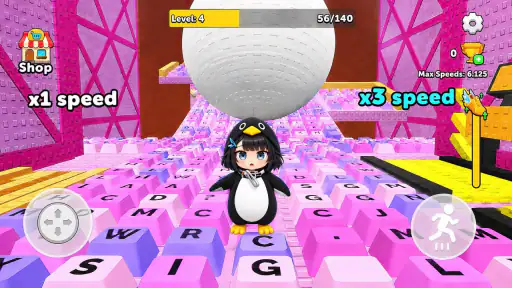
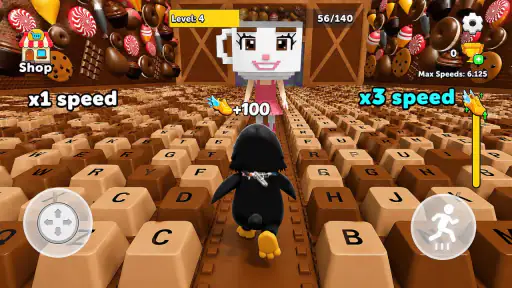
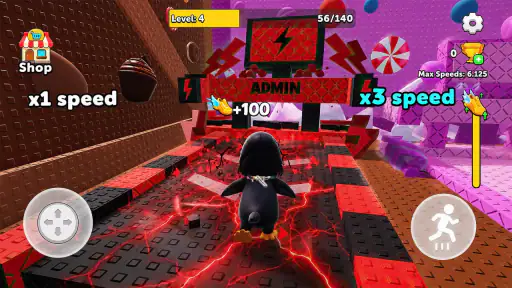
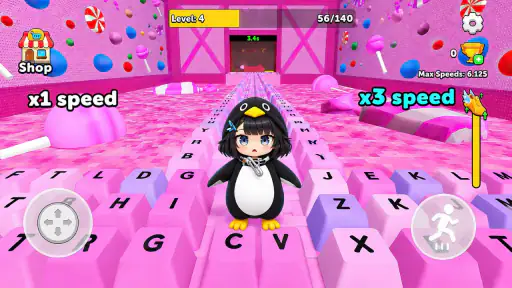
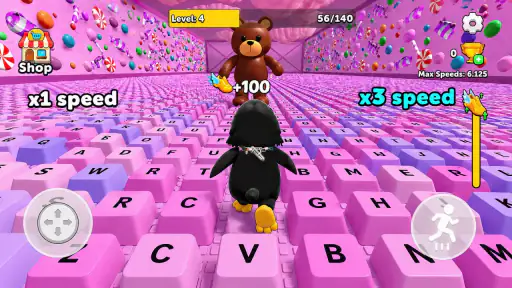
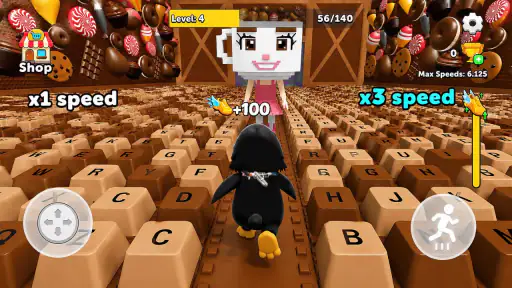
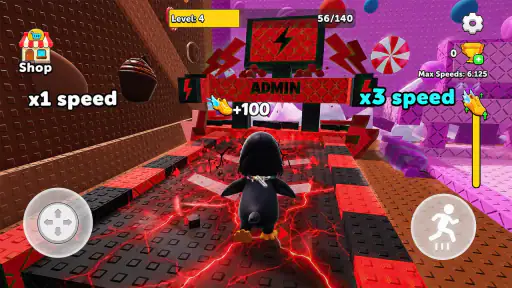
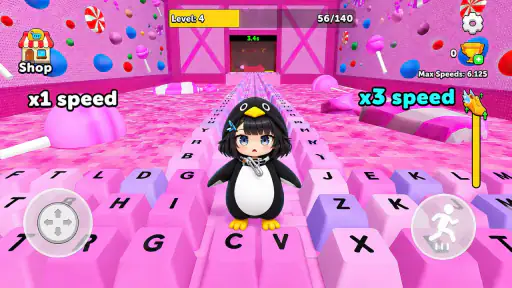
Analysis by Reviewed
I can see the appeal of a game built around the small pleasure of tapping keys and the simple urgency of getting out of danger. Keyboard Escape: +1 Speed ASMR is a free simulation game from Goldoint, and its central idea is easy to grasp: move, avoid obstacles, and build speed as you go. It is the sort of game I would try during a short break, not one I would approach expecting a deep campaign or a demanding simulation.
That focused premise is also the main test of its staying power. A quick, tactile loop can feel satisfying on the first day, but lasting value depends on whether the repeated actions remain enjoyable after the novelty wears off. My overall view is that this is best treated as a lightweight pick-up-and-play diversion. It may suit players who enjoy compact runs and keyboard-themed feedback, while people looking for substantial progression or varied challenges should be more cautious.
What the early appeal gets right
The first attraction is how little effort it takes to understand the goal. You are trying to escape, dodge what gets in your way, and become faster. That gives each attempt an immediate purpose instead of asking you to learn a long set of rules before the fun begins. The keyboard theme gives the action a distinct sensory identity, too: the promise is not only movement but a pleasing, ASMR-like feel around the interaction.
In a typical first session, I would use it in the gaps that are too short for a longer game: while waiting for food, taking a breather between tasks, or filling a few minutes before leaving home. The uncomplicated premise works in those moments because I can return to it without needing to remember a story, manage a roster, or plan a complicated build. That convenience is more meaningful than it sounds for a game designed around brief bursts.
Its rating sits at an average of 3.4 from around 2,400 ratings, while the game has drawn over 5 million installs. I read that combination as a sign of broad curiosity rather than proof that every player will stick with it. The install count suggests the concept is easy to sample; the more modest average rating is a reminder to judge the repeated play for yourself instead of assuming the initial hook guarantees a polished long-term experience.
The game is marked Everyone, which makes its simple premise accessible to a broad range of players. That does not automatically make it an ideal choice for every age or temperament: someone who dislikes repeated dodging or sound-led sensory feedback may still find the core loop irritating. I would let a child try it with the same common-sense attention I would give any game, especially if they are sensitive to repetitive audio or fast visual activity.
Why short sessions suit the design
The most practical way to approach the game is to treat each session as a small reset, not as a commitment to grind for a long time. When I have only a couple of minutes, a clear movement goal gives me a reason to play without turning the break into another obligation. If I find myself continuing only because I want to make one more attempt, that is a good sign the pace is working; if I am checking the clock or tapping without attention, it is time to stop.
One useful habit is to notice whether the keyboard sound and the action feel satisfying together, rather than judging the game only by how quickly speed rises. The sensory angle is part of its identity, so the best use case is probably a player who enjoys the rhythm of repeated input as much as the escape goal. If you mainly want a strategic simulation with decisions that change from run to run, this is unlikely to scratch that particular itch.
What could keep it interesting beyond the first week
The central question after the initial novelty is whether the basic loop itself is enough. Dodging and getting faster can create a simple sense of momentum, but a narrow premise naturally puts pressure on repetition. I would expect the game to work best when I approach it casually and let a short run be satisfying on its own, rather than measuring every session by a bigger milestone.
That makes it a different proposition from the usual simulation games built around managing a farm, city, vehicle, or daily routine. Those alternatives often give players several systems to maintain and longer goals to plan around. Here, the appeal is much more immediate and tactile. If you want a game that asks for sustained planning, choose a deeper management sim; if you want an uncomplicated action loop with a keyboard-flavoured sensory hook, this is the more natural fit.
For repeat play, I would also avoid making it the only game in a routine. Switching between it and a slower or more varied title can keep its quick feedback feeling fresh, while preventing the same sequence from becoming background noise. That is a personal-use strategy rather than a hidden game feature, but it matters: a compact game can remain enjoyable precisely because I do not ask it to provide every kind of entertainment.
The title’s +1 speed idea gives the premise a clear direction, but speed alone is not the same as variety. If your enjoyment depends on discovering new mechanics, changing environments, or a long progression path, you may want to look elsewhere. If, instead, you like trying to improve your sense of timing and staying engaged with a simple objective, the core concept may be enough for occasional return visits.
How much upkeep it asks of you
One of the advantages of a straightforward game is that it does not ask me to maintain a complicated routine outside play. I can open it when I want a short distraction and leave it alone when I do not. That low-commitment relationship is a strength for people who dislike daily check-ins, long tutorials, or the feeling that they are falling behind by taking a break.
Still, low commitment is not the same as lasting motivation. A game can be easy to pick up yet offer little reason to return once its central action feels familiar. My advice is to keep expectations modest: try it in brief sessions and decide based on whether the keyboard-focused feedback remains pleasant, not on a hope that it will gradually turn into a much larger simulation experience.
The current version is 0.0.9, so I would approach it as an early-stage release rather than a finished, mature game with a long-established body of content. That is a reason to be patient, not a promise that updates will add particular features. If you prefer stable, well-developed games with a lot to explore from the outset, you may be happier choosing an established alternative in the simulation category.
There is no need to build a complicated play schedule around it. I would try a few short sessions across different days and ask one simple question: do I still enjoy the feel of playing when I am no longer curious about the premise? If the answer is yes, it has earned a small place in a casual rotation. If not, there is little reason to keep returning out of habit.
Where repetition may start to wear thin
The same simplicity that makes the game approachable can become its biggest limitation. A loop centred on running, dodging, and gaining speed has a clear rhythm, but that rhythm can flatten if each attempt begins to feel interchangeable. Players who need a changing objective or a strong sense of progression may notice that fatigue sooner than someone who enjoys repeating a satisfying physical action.
The ASMR angle is also subjective. Some people find crisp, repetitive sounds calming and rewarding; others find them grating after a few minutes. I would not assume the sound element will be a universal benefit just because it is central to the game’s identity. If you are sensitive to repetitive audio, try a short session first and decide whether the feedback helps you concentrate or makes the experience harder to enjoy.
Another trade-off is that a highly focused game leaves less room for different moods. When I want something that lets me make choices, build a world, or settle into a longer session, this is not the option I would reach for. Its strength lies in quick engagement, and that naturally limits its usefulness as an all-purpose game. Knowing that boundary helps prevent disappointment: enjoy it for the brief, simple experience it offers rather than expecting the breadth of a full-scale simulation.
Goldoint’s game is free, which makes sampling it a low-friction decision, but free access alone does not make it worth keeping installed. I would judge that choice by how often I genuinely want the particular keyboard-themed escape loop. If I keep opening it because I enjoy the tactile rhythm, it has earned its space; if I only launch it out of curiosity, it may be a temporary novelty.
Who should keep it in their rotation
I would recommend giving it a try if you like compact arcade-like challenges, enjoy sensory feedback, and want something that does not demand a long attention span. It can fit neatly into a waiting-room pause or a short rest between more involved tasks. The strongest reason to choose it is the combination of an easy-to-understand escape goal with a keyboard-centred feel, rather than any expectation of extensive simulation systems.
I would skip it if your ideal game depends on deep management, varied missions, a substantial narrative, or a long-term progression plan. I would also be wary if repetitive sounds or repeated obstacle-dodging quickly tire you. In those cases, a slower strategy or management game is likely to offer more meaningful decisions, while a broader action game may provide more variety from one session to the next.
For anyone unsure, the sensible approach is to try it in short bursts and pay attention to the experience after the first few minutes. Does the sound remain satisfying? Does the simple goal hold your attention, or do you start wishing for another system to engage with? Those answers are more useful than chasing a score or forcing a daily habit. The game works best when it is a small treat, not another task.
My long-term verdict is that Keyboard Escape: +1 Speed ASMR earns a place for the right kind of player, but probably not as a mainstay for everyone. I like the clarity of its premise and the possibility of a quick, tactile break, yet its narrow loop makes fatigue a real risk. With over 5 million installs and a free entry point, it is easy to understand why people try it; whether it stays installed comes down to whether that keyboard-led rhythm continues to feel good after the novelty fades.
At 0.0.9, I would keep my expectations grounded and treat it as a small, evolving game rather than a complete answer to every simulation craving. Its Everyone age rating and straightforward concept make it approachable, while its average rating of 3.4 reflects that a simple hook will not work equally well for all players. If brief, sensory play sounds appealing, I think it is worth a casual try. If you want depth and durable variety, I would choose another game and leave this one as an occasional diversion.
Keyboard Escape: +1 Speed ASMR Frequently Asked Questions
What is Keyboard Escape: +1 Speed ASMR?
Keyboard Escape: +1 Speed ASMR is a casual game built around tapping keyboard-style controls to move through challenges and increase your speed. Its ASMR-inspired presentation gives the tapping and movement a satisfying, repetitive feel, while the simple premise is aimed at short play sessions. The exact modes and features may vary by version, so check the app listing and in-game information before downloading.
How do you play Keyboard Escape: +1 Speed ASMR?
The game is designed for straightforward touch controls: tap the on-screen keyboard or other prompts to advance and build speed as you play. Challenges may ask you to react quickly or keep up with changing obstacles, so paying attention to the screen matters even though the controls are simple. A brief tutorial, if available in your version, is the best way to learn its specific rules.
Is Keyboard Escape: +1 Speed ASMR free to download, and does it include ads or in-app purchases?
The price, advertising, and purchase options can differ depending on the platform, region, and current release. Before installing, review the Google Play Store or Apple App Store listing for labels such as in-app purchases and ads, and check recent user reviews for practical details. If the game offers optional purchases, you should be able to review their prices before confirming a transaction.
Can I play Keyboard Escape: +1 Speed ASMR offline?
Offline access depends on how the current version handles loading, advertising, and online features. The basic tapping gameplay may be available without a connection, but features such as rewarded ads, leaderboards, or content updates may require internet access. To avoid surprises, open the game once while connected, then test it in airplane mode; consult the store listing if offline play is essential to you.
Is Keyboard Escape: +1 Speed ASMR suitable for children, and what should I check before downloading?
The controls and quick, casual gameplay may be approachable for younger players, but suitability depends on the game's current content, advertisements, and purchase options. Check the age rating and privacy information on the relevant app store, and consider supervising children if ads or optional purchases are present. Also verify that your device meets the listed requirements and that the download comes from an official store.
Pros
- Quick
- simple escape gameplay is easy to pick up.
- Increasing speed adds a clear challenge as you progress.
- ASMR-style sounds give each run a distinctive feel.
- Short rounds work well for quick play sessions.
- The keyboard theme makes the game stand out from typical runners.
Cons
- Faster runs can become difficult to control.
- The gameplay may feel repetitive over time.
- ASMR sounds may not appeal to every player.
- Small mistakes can quickly end a run.
- It may offer limited variety for players seeking deeper gameplay.

- Category
- Simulation
- Version
- 0.0.9