Jujutsu Kaisen Phantom Parade
- 2.69K
- 3.3
- Installs
- 10.00M
- Price
- Free

Screenshots





Analysis by Reviewed
When I pick up a licensed role-playing game, I want more than familiar faces and a quick fight. I want a routine that makes sense on a phone: a clear reason to choose a team, battles I can fit into a spare moment, and enough connection to the series to make the time worthwhile. Jujutsu Kaisen Phantom Parade is built around those expectations, but its turn-based pace and team decisions make it a better fit for some players than others.
Start with one clear goal per session
For a first session, I would keep the plan simple: spend time understanding the battle flow, follow the story, and avoid trying to optimize every team choice at once. It is easier to tell whether I enjoy the game when I am not juggling several questions about lineups, presentation, and progression at the same time. A small goal—such as completing a mission or paying attention to how one character’s abilities fit the team—gives the session a useful shape.
That approach also helps answer a common practical question: is this suitable for quick mobile play? It can be, particularly when I have a few minutes and want a turn-based encounter rather than a reflex test. But the story and combat presentation deserve more attention than a very brief interruption always allows. I would use short breaks for a focused battle and save a longer stretch for narrative scenes, rather than expect every visit to feel equally satisfying.
Finding a comfortable daily rhythm
My most reliable way to approach the game is to treat each session as a small planning loop rather than rush through every fight. I look at the mission, consider what my current lineup can handle, and make one change at a time when a battle goes poorly. That makes the team-building easier to understand: if I replace several characters at once, I cannot tell which choice actually helped.
This is also a sensible way to play when I only have a short break. A turn-based battle gives me room to think instead of demanding constant taps, though watching combat animations can make a session feel longer than its decisions alone suggest. If I am in a hurry, I focus on a single goal instead of opening the game without knowing what I want to accomplish.
What to check before settling on a team
The game rewards experimenting with character combinations, but I would not swap the whole lineup after every difficult encounter. I start with a team I understand, pay attention to how its abilities work together, and then change one slot when I spot a specific weakness. That habit makes the tactical side more rewarding and avoids turning every mission into guesswork.
It is worth taking a moment to look through the available settings before getting absorbed in the story. I check the options that affect how comfortably I can play on my device, then leave them alone unless something feels inconvenient. I would not assume that a particular setting or shortcut exists without seeing it in the game; the practical point is to make the controls and presentation suit the way I plan to play.
More From Our News Desk

 Gmail
Gmail in a Busy Inbox: Who Benefits Most?
From first account to crowded workday, Gmail earns its place through dependable search and flexible sorting—but its best fit depends on how much inbox maintenance you can tolerate.

 Prime Video
Switching to Prime Video: What Changes in Your Viewing Routine
Prime Video can make a compelling second home for streaming, but switching means learning a different catalog, rental layer, and route from browsing to playback.

 Universal TV Remote Control
 Works Best as a Reliable Backup
A phone remote earns its place through quick setup and reliable habits. Here is how to get more from Universal TV Remote Control—and where its limits show.

 Weather - By Xiaomi
Weather by Xiaomi Review: Clear at a Glance, Less Clear Up Close
Xiaomi’s weather app makes everyday forecasts quick to scan, but its calm surface can leave useful details and recovery paths harder to find than they should be.

 X
X Under Pressure: Can It Recover When Posting Goes Wrong?
A resilience-focused review of X, examining setup, mistaken posts, interruptions, weak connections, and the gaps that matter when recovery needs to be dependable.

 Clash of Clans
 Is Won Between the Battles
Its raids are quick; its community is a long-term project of coordination, teaching, rivalry, and shared responsibility—with all the friction that entails.
Latest News



Settings and habits that reduce friction
I treat settings as a comfort check, not as a search for a magic performance switch. Before settling in, I look for any presentation or control options that make the game easier to use on my own device and choose what feels comfortable. If I am playing in a quiet place, I can give the visual presentation more attention; if I am somewhere noisy or distracting, I keep the session modest rather than trying to follow every scene while multitasking.
A useful habit is to decide in advance whether a visit is for story or for battle decisions. If I am following the narrative, I resist turning every pause into a team overhaul. If I am testing a lineup, I focus on the result of one change and leave other choices alone. This keeps the experience readable and helps me learn from a defeat without assuming that every part of the team needs replacing.
Small habits that make battles easier to read
One useful habit is to pause before committing to a turn and ask what I need the next action to do: deal damage, support the team, or set up a stronger follow-up. That keeps me from choosing an ability simply because its animation looks impressive. When I lose, I try the same mission again with one deliberate adjustment rather than treating a single defeat as proof that the whole team is wrong.
I also separate story sessions from team-testing sessions. When I want to follow the narrative, I avoid interrupting myself to rebuild the lineup after every encounter. When I want to experiment, I pay closer attention to which character choices change the result. This distinction is especially useful for fans who want the story to feel like a continuous experience instead of a series of menus and battles.
How the anime adaptation shapes the experience
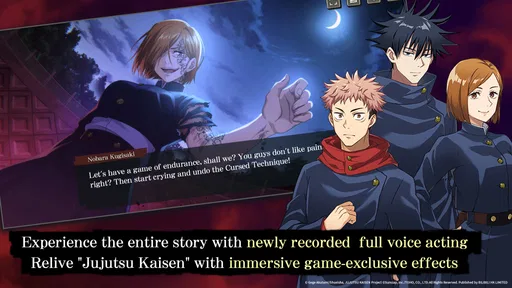
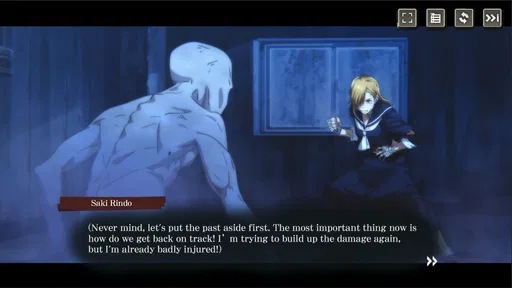
From the get-go, Jujutsu Kaisen Phantom Parade dazzles with its stunning visuals. The game developers have truly outdone themselves, capturing the vibrant and intense art style of the anime. It's like watching an episode of the show, but you get to be a part of it! As a fan of Jujutsu Kaisen, seeing my favorite characters come to life in such vivid detail was nothing short of exhilarating.
Gameplay: Strategy Meets Action
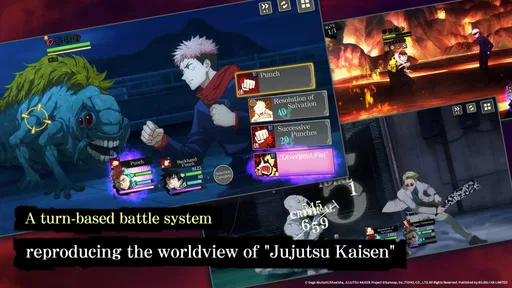
Now, let's talk about the gameplay. If you're into strategic combat with a dash of action, this game is right up your alley. You assemble a team of your favorite characters from the series, each with their unique abilities and skills. The strategy lies in choosing the right combination of characters to tackle each mission. I found myself constantly experimenting with different team setups, trying to discover the ultimate combo.
The battles themselves are turn-based, which might not be everyone's cup of tea, but hear me out. The depth of strategy involved keeps you on your toes. Each decision matters, and the satisfaction of executing a perfectly timed combo is immensely rewarding. Plus, the animations during combat are a treat to watch – it's like eye candy for anime lovers.
How to get more from the team-building loop
Rather than chase a supposedly perfect lineup, I find it more useful to keep a dependable core and use the remaining choices to address what a particular encounter exposes. If a fight feels difficult, I first ask whether I am using the team’s abilities with a clear purpose; only then do I consider changing a character. That is a more repeatable way to learn than copying a lineup without understanding why it works.
This also makes experimentation less frustrating for players who are still learning the cast. I would try a new character when I have a reason to test what they contribute, not simply because a battle went badly. The trade-off is that this measured approach can feel slower than constantly rebuilding for novelty. For me, though, it makes victories easier to understand and gives team choices meaning beyond collecting familiar faces.
Storyline: Dive Deeper into the Jujutsu World
One of the standout features of Jujutsu Kaisen Phantom Parade is its storyline. The game offers an original narrative that fits seamlessly into the Jujutsu Kaisen universe. As someone who can't get enough of the anime, I appreciated the fresh content and new scenarios to explore. It's like getting bonus episodes that deepen the lore and character relationships.
And for those new to the series, don't worry! The game does a great job of introducing the world and its mechanics, making it accessible even if you haven't watched the anime. However, I must say, the experience is much richer when you're familiar with the source material.
Where it fits among mobile role-playing games
Compared with action-focused role-playing games, this one asks for patience and planning rather than quick reactions. That is a real advantage on a phone when I want to play while waiting for an appointment: I can think through a turn without needing both hands constantly moving. On the other hand, anyone looking for direct, real-time combat may find the pauses between choices less exciting than a more action-heavy alternative.
It also differs from a compact puzzle game, where each session can be built around a self-contained challenge, and from a social competitive game, where matching against other people is the point. Here, I am chiefly choosing a party, following the Jujutsu Kaisen setting, and working through turn-based encounters. That focus is a strength if those are the parts I want; it is a poor fit if my main goal is quick head-to-head play or a battle system that rewards fast reactions.
Practical fit, expectations, and staying power
A realistic routine might be opening the game during a commute or a quiet break, choosing one mission, and using the result to decide whether the team needs a small adjustment. That approach keeps the experience manageable and gives each battle a purpose. I would avoid starting a story segment when I know I have only a moment to spare, since the presentation is part of the appeal and feels better when I can give it attention.
The game is published by BILIBILI and is a role-playing title rated Teen. It was released on October 26, 2024, and version 1.14.2 lists Android 8.0 as the minimum operating system. Its average rating is 3.5 from around 52,000 ratings, with about 2,400 written reviews and over 5 million installs. Those figures suggest a sizeable audience but also a mixed response, so I would approach it as a particular kind of anime RPG rather than assume it will suit every mobile player.
It is free to play, while optional in-app purchases range from $0.99 to $99.99 per item. I would set my own spending boundary before browsing purchase options, especially if I am the sort of player who tends to spend when a favorite character is involved. The game can be approached as a free experience, but the presence of purchases is worth keeping in mind; I would not treat spending as a requirement for deciding whether the story and battles appeal to me.
One trade-off is that the strongest appeal—recognizable characters, story scenes, and combat presentation—also means the game is most rewarding when I am interested in the series itself. Newcomers can follow the world, but familiarity adds context to character moments. If I wanted a role-playing game whose main draw was a completely unfamiliar setting, I would choose something else; if I wanted a way to spend more time with this universe, the adaptation has a clearer purpose.
Who will enjoy the pace—and who may not
I would put this game on the shortlist for someone who likes anime adaptations, wants a story-led mobile RPG, and enjoys thinking through turns instead of relying on speed. It is also a reasonable choice for a player who likes to improve by testing one team adjustment at a time. The recognizable world gives those decisions a personal hook, while the turn-based structure makes it possible to play thoughtfully without treating every encounter like a reflex challenge.
I would steer a player elsewhere if they want uninterrupted real-time action, a short puzzle with a clean finish, or multiplayer competition as the central attraction. It may also disappoint someone who is only mildly interested in Jujutsu Kaisen and expects the combat system alone to carry the entire experience. The license is not just decoration here: the character moments and setting are a substantial part of why I would keep playing.
The Verdict: A Must-Try for Fans
In conclusion, Jujutsu Kaisen Phantom Parade is a fantastic addition to the mobile gaming scene, especially if you're a fan of the anime. The combination of stunning visuals, strategic gameplay, and an engaging story makes it a standout title. Whether you're a seasoned Jujutsu Kaisen enthusiast or a newcomer curious about the hype, this game is worth checking out. So, grab your smartphone and dive into the world of curses and sorcery – you won't regret it!
My recommendation after settling into it
I would recommend it most to players who enjoy turn-based decisions, like seeing familiar characters in a new story, and are happy to refine a team gradually. I would skip it if I wanted fast, uninterrupted action or had no interest in the series’ world. My best advice is to keep early team changes small, give the narrative room to work, and treat optional purchases as optional. With those expectations, it is easier to judge the game on what it does well instead of expecting it to be a different kind of RPG.
A sensible way to decide whether to stay
After a few sessions, I would judge it by three things: whether I care about the original story, whether the turn-based fights make me curious about team choices, and whether the presentation feels enjoyable rather than something I am waiting to skip. If two of those are working for me, it is worth continuing at my own pace. If none are, the fact that it is free to start does not make it the right use of my time.
For a low-pressure trial, I would avoid making purchases while I am still deciding and avoid changing several team members after one loss. Give the game a fair chance to show its narrative and tactical sides, then decide based on the parts I actually enjoy. That is the clearest way I know to see whether this particular mix of Jujutsu Kaisen storytelling and mobile RPG combat belongs in my routine.
Jujutsu Kaisen Phantom Parade Frequently Asked Questions
Can I play Jujutsu Kaisen Phantom Parade on my Android device?
The game supports Android devices running Android 8.0 or later. Before downloading, check your device’s operating system and make sure it has enough free storage for the installation and subsequent updates. The current version is 1.14.2, and keeping the app updated helps you access its latest available content and improvements.
Does Jujutsu Kaisen Phantom Parade need an internet connection?
Jujutsu Kaisen Phantom Parade is designed as an online game, so an internet connection is important for accessing its game services and content. A reliable connection is also useful when installing the game and downloading updates. If you expect to play while offline or in places with limited connectivity, keep in mind that the game’s online features may not be available.
Is Jujutsu Kaisen Phantom Parade suitable for younger players?
Jujutsu Kaisen Phantom Parade is rated Teen, so it is aimed at teenage players rather than very young children. Its supernatural setting and battles draw on the Jujutsu Kaisen series, which centers on curses and sorcerers. Parents may want to consider the themes of the anime and manga, as well as the game’s in-app purchase options, when deciding whether it is appropriate for a younger player.
How much storage space does Jujutsu Kaisen Phantom Parade need, and does it require an internet connection?
Before downloading, it is sensible to check that your device has enough free storage and a reliable connection for installing and playing a mobile RPG. Jujutsu Kaisen Phantom Parade is designed as an online game, so an internet connection is important for accessing its game services and content. Its installed size can change with updates, so check the download details on your device before starting.
What is Jujutsu Kaisen Phantom Parade about?
Jujutsu Kaisen Phantom Parade is a mobile RPG game based on the popular Jujutsu Kaisen anime and manga series. Players can experience thrilling battles and an engaging storyline featuring their favorite characters from the series. The game offers strategic combat elements and allows players to form teams with various Jujutsu Sorcerers to tackle challenging missions and enemies.
Pros
- Stunning graphics and animations.
- Engaging storyline with original content.
- Wide variety of characters to collect.
- Easy to learn combat mechanics.
- Frequent updates and new events.
Cons
- Requires constant internet connection.
- In-game purchases can be expensive.
- Limited energy restricts playtime.
- Some characters are hard to obtain.
- Occasional bugs and glitches.