IQ Test: Logic brain training
- 243.00
- 4.5
- Installs
- 1.00M
- Price
- Free

Screenshots
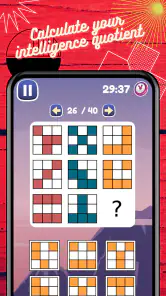
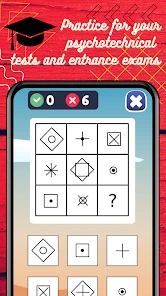
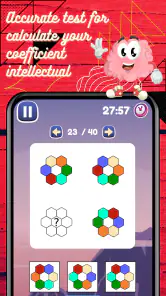
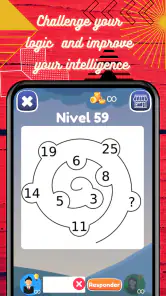
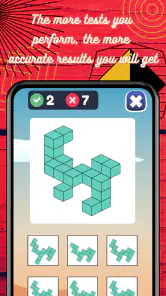
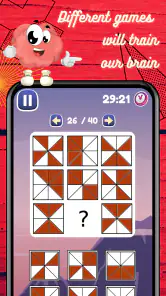
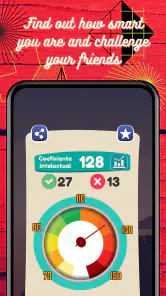

Analysis by Reviewed
I like brain games best when they give me a clear little challenge without turning a spare moment into homework. IQ Test: Logic brain training is built around that idea: it gives you puzzles and reasoning questions to work through, with enough variety to make a short session feel purposeful. I’d treat it as an entertaining way to practise attention and problem-solving, not as a formal measure of intelligence or a promise of measurable cognitive improvement.
Getting a feel for the first challenges
The early appeal is straightforward: open a question, look for the pattern or rule, and test your reasoning. That simple loop makes the game easy to pick up while waiting for coffee or taking a break between tasks. I find it most satisfying when I pause to explain the pattern to myself before choosing an answer; guessing quickly may move things along, but working out why an answer fits is the part that makes the exercise worthwhile.
That approach also gives the puzzles a useful role beyond passing time. If I have only a few minutes, I can focus on one problem rather than needing to set aside a long block for a story or a match. The trade-off is that anyone looking for a bigger sense of adventure, characters, or a narrative reason to keep going may find this focused format plain. Its reward is the thinking itself.
For someone deciding whether to try it, the practical question is less “Will this transform my brain?” and more “Do I enjoy stopping to reason through a small puzzle?” I’d recommend it to people who like spotting rules and testing possibilities, especially if they want an activity that can fit around an ordinary day. If you prefer a guided course, a social competition, or a game with a larger world to explore, I’d look elsewhere rather than expecting this one to become something it isn’t.
What’s the Buzz About?
So, what’s all the fuss about IQ Test: Logic brain training? Well, the app is designed to challenge your brain with a series of tricky questions and puzzles. You’ll find yourself solving logical sequences, identifying patterns, and even questioning your sanity at times. It’s a wild ride, trust me! The best part? It’s not just about getting the right answer; it’s about how you get there. The app focuses on enhancing your problem-solving skills and boosting your mental agility.
That focus makes it useful in a very specific everyday situation: I might open it during a quiet wait, attempt one puzzle, then put my phone away when my turn comes or my train arrives. A single question is a natural stopping point, so I don’t need to plan a long session. I would avoid playing while listening for important announcements or switching between work messages, though. Reasoning questions reward attention, and splitting it can make a fair challenge feel needlessly difficult.
Features That Stand Out
One of the coolest things about this app is its user-friendly interface. Navigating through the different tests and puzzles is seamless and intuitive. You won’t need a manual to figure out how to get started. Plus, the variety of questions keeps things fresh and exciting. Whether you’re a newbie or a seasoned puzzle solver, there’s something here for everyone.
You May Like

Clash of Clans Is Won Between the Battles

Android Auto Makes the Case for Quieter Car Software

MobiOffice: Transforming Mobile Productivity with Seamless Integration

EA SPORTS FC™ Mobile Soccer: Redefining Mobile Sports Gaming

How Microsoft OneDrive Became a Mobile Productivity Giant

How Google Translate Breaks Language Barriers Effortlessly
For a better sense of what a missed answer taught me, I try to name the rule in my own words before moving on: for example, whether I was tracking a sequence or comparing shapes. This small habit makes an explanation easier to remember and helps me notice when I’m relying on a familiar-looking pattern rather than the actual logic. It also turns a quick round into a more deliberate exercise without adding any complicated routine.
The game’s identity is clear in its name, but I wouldn’t use a result from an IQ-themed puzzle session as a diagnosis or a definitive score of ability. Familiarity with puzzle formats, concentration, and simply having a distracting day can all affect how a person performs. If you want a formal assessment, this is not a substitute; if you want a casual reasoning challenge, the framing is part of the fun.
Another feature that caught my eye is the detailed explanations after each question. Not only do you get to see the correct answer, but the app also breaks down the logic behind it. It’s like having a personal tutor right in your pocket! This feature makes learning from your mistakes a breeze, and it’s incredibly satisfying when you finally crack a particularly tough question.
Those explanations are also a good reason not to tap through a set of questions as quickly as possible. When an answer surprises me, I get more from first deciding what I thought the rule was, then comparing that idea with the explanation. If I still can’t see why the solution follows, I’d rather pause than pretend I have learned it. The useful outcome is understanding the reasoning, not clearing questions at speed.
Reading progress without turning it into pressure
Another reason I’d use the explanations is to separate progress from simply getting a streak of answers right. A question I solve after thinking carefully can be more useful than one I answer by luck. When I revisit the style of a puzzle later, I can tell whether I actually understood the reasoning or only recognized a familiar setup. That makes the feedback more valuable than treating a score as the whole story.
The game is from TrasCo Studios and sits in the trivia category, though its appeal is closer to logic practice than a conventional quiz about facts. It is free to start, rated for Everyone, and has a 4.5 average from around 30,000 ratings, with over 1 million installs. Those figures suggest a broad audience, but my own recommendation is narrower: it suits people who enjoy pattern questions and want a compact activity, not anyone expecting a complete course in brain training.
The audience figures can help reassure a cautious downloader that this is an established kind of casual game, but they don’t tell me whether its puzzle style will suit a particular person. I’d use the free entry point to judge that for myself: try a few questions when I can concentrate, and notice whether I’m curious about the reasoning or merely eager to get the next answer. That distinction is a more useful personal test than popularity alone.
Choosing a pace that works
I’d use it differently depending on the day. On a crowded commute, I’d try just one question and stop if I couldn’t give it proper attention; on a quiet evening, I’d spend longer reviewing explanations instead of racing through answers. That distinction matters because a timer-free puzzle can still feel frustrating when you’re tired. There’s no need to turn every session into a test of endurance.
Compared with a crossword or a word game, this kind of puzzle session puts more emphasis on patterns and logical relationships than vocabulary. Compared with a competitive trivia game, it is less about recalling facts or outperforming another player and more about how you approach a problem. If you want language practice, general-knowledge rounds, or head-to-head competition, those alternatives may be a better fit. If you like figuring out a rule from clues, this app’s focus is more appealing.
There is a trade-off in that focused style. A crossword can provide a larger puzzle to return to over several sittings, while a competitive quiz can supply the energy of another person’s performance. Here, the immediate problem has to carry the session. I’d choose it when I want a self-contained reasoning task, not when I’m looking for a shared activity or a long-term project with a visible story arc.
One practical habit is to stop after a question has taught me something, rather than continuing simply because I want to repair a disappointing result. Returning later with a fresh mind can make the same type of reasoning feel clearer. I also wouldn’t judge the game by a single session: concentration varies, and one difficult puzzle doesn’t tell me much about my overall ability. The useful signal is whether I’m learning to explain my reasoning more clearly.
The app is currently at version 1.77 and supports Android 6.0 or later. In-app purchases range from $0.49 to $4.49 per item, so I’d check the purchase details before paying for anything and decide whether the free experience already meets my needs. A free starting point is convenient, but it doesn’t mean every optional item is included at no cost. For a casual player, that is a sensible moment to pause and consider whether extra content would genuinely add value.
That purchase check is worth doing before treating an optional item as part of the basic experience. I’d first establish what I can do without paying and whether I’m still enjoying the puzzles, then decide if an item addresses a real need rather than an impulse to push through a tough stretch. The listed range gives a sense of the possible per-item cost, but the sensible choice depends on what is offered at the moment of purchase and whether it improves the way I want to play.
Why You’ll Love It
Now, let’s talk about why you might just fall in love with this app. First off, it’s incredibly rewarding. There’s nothing quite like the feeling of solving a challenging puzzle and seeing your progress over time. Plus, the app tracks your performance, so you can see how you’re improving with each session.
For me, progress signals are most helpful when I read them alongside the kind of puzzle I attempted and how I reached my answer. A better result after careful reasoning feels meaningful; a better result after guessing does not tell me as much. If I’m using the game as a small personal challenge, I’d pay attention to whether I can articulate the rule more clearly over time, rather than treating every result as a judgment of intelligence.
That sense of progress is most useful when I treat it as a personal reference rather than a target I must keep beating. A stronger result can feel encouraging, but I’d focus on the kinds of problems I can now reason through, not just a number or a run of correct answers. The app works best for curious players who enjoy that small moment of discovery; people who dislike being tested, or who want a structured lesson plan, may be happier with a different kind of brain-training tool.
Another reason to love this app is its flexibility. You can hop in for a quick brain workout during your coffee break or spend hours diving deep into complex problems. It’s entirely up to you how you want to engage with it, making it perfect for both casual users and hardcore enthusiasts.
I’d be cautious about assuming that flexibility automatically means a steadily rising challenge or a carefully paced curriculum. The reliable reason to continue is whether the questions remain engaging to me, and I’d let my own attention set the session length. If a puzzle feels too easy, I can still use it to practise explaining a rule precisely; if it feels too hard, the explanation gives me a way to examine the reasoning rather than just staring at the screen.
For me, the best retention comes from a modest routine: a few questions when I have a quiet pause, followed by a moment to think about the explanations. I wouldn’t force a daily streak or play while multitasking just to keep a habit alive. The app’s challenge is the reason to return, and if the puzzles start feeling repetitive or more like pressure than fun, taking a break is better than trying to manufacture motivation.
The Final Word
In a world where mindless scrolling has become the norm, IQ Test: Logic brain training offers a refreshing change of pace. It’s an app that not only challenges your intellect but also entertains you along the way. Whether you’re looking to improve your cognitive skills or just have some fun, this app is a must-try. So why not give it a whirl? Your brain will thank you!
My progression verdict is that its strongest loop is small and self-directed: take on a reasoning question, check how the answer works, and decide whether I want another. That can be satisfying without elaborate unlocks or a competitive ladder, but it also means the game depends on my interest in the puzzles rather than a larger reward structure. I’d recommend it to a curious casual player who wants bite-sized logic practice; I’d skip it in favor of a formal assessment, a lesson-based course, or a social quiz if those are the actual goals.
IQ Test: Logic brain training Frequently Asked Questions
What kind of questions and challenges can I expect in IQ Test: Logic brain training?
IQ Test: Logic brain training brings together trivia, logic puzzles, memory exercises, and other mind challenges. Its store summary describes authentic IQ tests alongside daily brain games and puzzles, making it suited to players who enjoy short activities that put their reasoning to work. The variety may help keep sessions from feeling repetitive, while the central focus remains on testing and practicing different ways of thinking.
Can IQ Test: Logic brain training help me improve my memory and reasoning?
The game offers puzzles and mind challenges that give you a chance to practice skills such as memory, logic, and problem solving. Regularly working through this kind of activity can be an engaging way to exercise your thinking, but an app cannot guarantee a measurable improvement in cognitive ability. Treat it as a game for practice and entertainment rather than as a substitute for formal assessment or professional guidance.
Does IQ Test: Logic brain training require an internet connection?
Whether you can play offline may matter if you plan to use the game while travelling or away from reliable service. The experience centers on IQ-style trivia, puzzles, and brain challenges, so it is worth checking how the app behaves on your device before relying on it without a connection. You can also consider whether any features you want to use are available during an offline session.
How often does IQ Test: Logic brain training offer new activities?
The game’s summary highlights daily brain games, puzzles, logic, memory, and mind challenges, which gives it an ongoing-practice focus rather than presenting it only as a one-time test. That can suit players who like returning for fresh mental activities as part of a routine. If daily challenges are important to you, check the game’s current experience after installing it to see how they fit your preferred pace.
Is IQ Test: Logic brain training free to download, and are there optional purchases?
IQ Test: Logic brain training is free to download, so you can try its trivia and brain-challenge format without an upfront purchase. It also offers optional in-app purchases, with individual items ranging from $0.49 to $4.49. Check the purchase details on your device before confirming anything, especially if you share your phone or tablet with children.
Pros
- Enhances cognitive abilities effectively.
- User-friendly interface for easy navigation.
- Variety of challenging puzzles included.
- Tracks progress with detailed statistics.
- Offline mode available for practice anytime.
Cons
- Limited free content without purchase.
- Some puzzles may seem repetitive.
- Occasional in-app ads disrupt flow.
- Higher difficulty may frustrate beginners.
- No multiplayer or social features.

- Category
- Trivia
- Version
- 1.77