Idle Clans - MMORPG
- 350.00
- 4.4
- Installs
- 100.00K
- Price
- Free

Screenshots
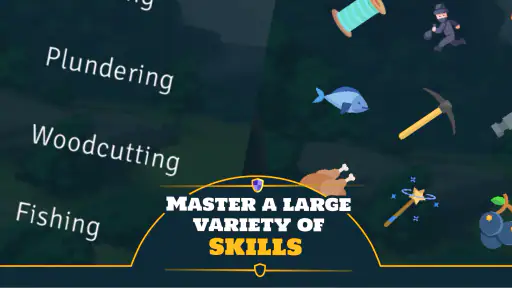
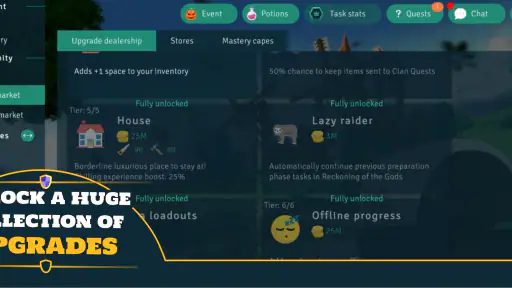
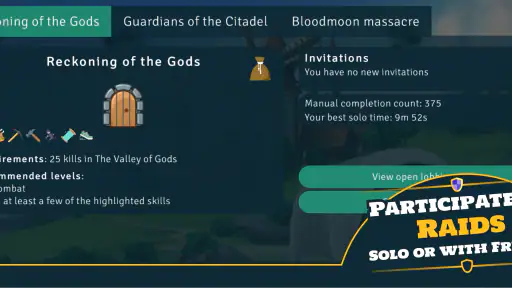
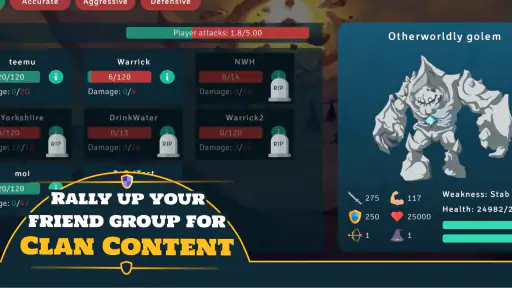
Analysis by Reviewed
I found Idle Clans - MMORPG most interesting when I stopped treating it like a traditional online role-playing game and started using it as a small, low-pressure activity I could return to throughout the day. Developed by Isam Games, this free adventure game aims to reduce the usual MMORPG workload without removing the feeling of building up a character and making gradual progress. That makes it especially relevant for a shared household, where one person may have only a few minutes while another wants something more involved.
My overall impression is positive, but it depends heavily on what you expect from the word MMORPG. This is not the best choice if you want constant action, cinematic presentation, or a large game world demanding your full attention. It makes more sense for someone who enjoys planning, checking progress, improving a character over time, and fitting play around school, work, meals, or family routines. The game is free to start, carries an Everyone 10+ rating, and has reached over 100 thousand installs, so it already has a useful level of visibility without feeling like an obscure experiment.
How Idle Clans fits into a shared household
A game that works around interruptions
The clearest strength is its casual structure. In a normal MMORPG, stepping away can mean missing an event, falling behind a group, or wasting a limited opportunity. Idle Clans is built around a more forgiving rhythm. I can open it, make a few decisions, collect progress, and leave without needing to reserve a long uninterrupted session. That is a practical advantage in a home where a phone or tablet may be used between chores, homework, commuting, or preparing dinner.
A realistic example is a shared device used after school. One household member might spend a short break checking character progress, while another uses the same device later for a separate activity. The game suits this kind of stop-and-start routine better than a competitive action title because its appeal comes from gradual development rather than perfect timing. It is easier to put down when someone needs the device immediately.
That convenience does not make every session equally satisfying. Idle games can feel less exciting when I want direct control and immediate consequences. The trade-off is clear: I get a lighter MMORPG experience, but I give up some of the tension and spectacle associated with a conventional role-playing game. For me, that exchange works best on busy days, not when I am specifically looking for an immersive evening adventure.
Separate expectations on one device
Shared-device use requires a little discipline. I would not assume that two people can casually take turns without checking whose progress is active. Before handing the device to another household member, I would make sure the intended account or play state is visible and avoid making changes while someone else is still using it. Even when a game is simple to operate, accidental progress changes can create unnecessary arguments in a family.
This is also a good reason to treat the game as an individual hobby rather than a family game by default. The casual format makes it easy to share a device, but that does not automatically mean that progress, purchases, or decisions are shared safely. I would establish a simple household rule: each player confirms their own session before anyone else begins, and nobody makes purchases without asking the person responsible for the device.
That boundary matters because the game includes optional in-app purchases ranging from $1.99 to $59.99 per item. The free entry point is helpful, but the presence of purchases changes how I would introduce it to younger players. A shared device should have a clear agreement about spending, especially when several people use the same store account or payment method.
Coordination without turning play into a chore
Idle Clans can encourage light coordination because players can talk about progress, choices, and what they want to improve next. In a household, that might mean comparing approaches or helping a less experienced player understand why a decision is useful. I like this better than forcing everyone into the same session at the same time. One person can play casually while another simply discusses the game or checks in later.
Still, I would avoid presenting it as a guaranteed cooperative family activity. Its main attraction is personal progression, and different players may enjoy different levels of involvement. One person might like optimizing every decision, while another may only want to open the game occasionally. The best household arrangement is therefore parallel play: each person keeps their own goals, and conversation remains optional rather than becoming another obligation.
A useful habit is to decide what “enough” progress means before opening the game. For a short session, I might collect available rewards, review the character’s current direction, and choose one next task instead of trying to inspect everything. This keeps the idle format from becoming a repetitive checking loop. It also makes the game easier to share because a player can finish a small, clearly defined visit before passing the device on.
What the age rating means in practice
The Everyone 10+ rating makes Idle Clans more approachable for families than many darker or more intense MMORPGs. However, I would not treat an age label as a complete parenting decision. The important questions at home are whether the child understands gradual progression, whether they can handle optional spending responsibly, and whether they know not to share personal account information with other players.
I would be comfortable presenting it to an older child or young teenager as a supervised introduction to casual online role-playing, provided the household has already discussed purchases and privacy. I would be more cautious with a child who tends to click quickly through prompts or becomes upset when progress feels slow. The game’s relaxed structure may reduce pressure, but it does not remove the need for sensible boundaries around devices and accounts.
Trust works both ways here. A child should know when they are allowed to play, while the adult should avoid taking over every choice. I think the healthiest arrangement is to agree on spending and device time, then let the player make ordinary in-game decisions independently. That preserves the game’s sense of ownership without treating every tap as a risk.
Account boundaries deserve attention
Because the game is designed for ongoing progression, I would keep each person’s play identity clearly separated wherever the available platform setup allows it. I would not begin a household routine by assuming that one shared profile can represent several players fairly. A character’s development is personal, and mixing choices can make the experience confusing very quickly.
On a shared phone or tablet, I would also make a habit of checking the active player before collecting progress or changing equipment. This is a small step, but it prevents the most common kind of household friction: somebody opens the game intending to help and unintentionally alters another person’s plan. The more a player cares about optimization, the more important this check becomes.
I would also avoid using the game as a reason to share passwords, payment details, or private contact information. The casual tone can make online interactions feel harmless, but good account habits should remain separate from how friendly or simple the game appears. For a family, that is a more valuable lesson than squeezing out a little extra progress.
What playing it feels like compared with other adventure games
Compared with a conventional MMORPG, Idle Clans asks much less of my schedule. Traditional alternatives usually reward long sessions, direct combat, exploration, and social coordination at specific times. Here, the appeal is closer to maintaining a developing character while making occasional decisions. That makes it easier to fit into daily life, but it also means the emotional highs are usually quieter.
Compared with a pure idle game, it has a stronger role-playing identity. I am not simply watching a number rise; I am approaching it as an adventure game with MMORPG ambitions. The simplified format gives the experience more direction than a bare progress meter, although players who want detailed controls may still find it restrained. In my view, it sits between a full online role-playing game and a background progression game.
That middle position is both its selling point and its limitation. It is a good compromise for someone who wants the language of an MMORPG without the commitment. It is a poor substitute for a player who values real-time combat, highly expressive movement, or a world that constantly demands exploration. I would choose it during a busy week and a more traditional adventure game during a weekend when I actually want to settle in.
Practical tips for getting more from the casual format
My first tip is to treat each visit as a planning session rather than a race. The temptation in an idle game is to tap through every available option immediately. I get more satisfaction when I pause long enough to decide whether my next action supports the kind of character I want to develop. That small delay turns routine collection into a meaningful choice.
My second tip is useful on a shared device: finish with a visible stopping point. Before handing the phone to someone else, I would collect what I intend to collect, leave the character in a deliberate state, and tell the next user that the session is finished. This avoids the vague “I think it is your turn” problem that often causes accidental changes.
My third tip concerns purchases. Since the game is free to start but offers paid items, I would play long enough to understand whether the basic progression loop is enjoyable before spending anything. A purchase should solve a clearly understood inconvenience, not simply respond to impatience. This is particularly important when the same device is used by adults and children.
A fourth useful approach is to compare the game with your actual available time, not with screenshots or expectations from larger MMORPGs. If you have ten minutes and want a calm progression check, its design may feel efficient. If you have an hour and want a dramatic adventure, its simplified structure may feel too passive. Choosing the right situation is more important than deciding whether the game is universally good.
Performance, access, and the practical download decision
The listed minimum operating system is Android 6.0, and the current version is 1.6501. That gives the game a broad technical starting point for Android users with older devices, although the experience will still depend on the condition of the phone or tablet. For a household device, I would make sure the operating system is supported and that the device can be handed between users without confusion before making the game part of a regular routine.
The game was released on April 7, 2023, and its average rating is 4.4 from around three thousand ratings, with around 350 written reviews. Those figures suggest that many players find the concept appealing, but I would read the rating in context: a casual MMORPG can satisfy players who want convenience while disappointing people expecting the depth of a large, fully active online world.
Since the game is free, the simplest test is to install it and judge the opening rhythm without committing money. I would pay attention to three things: whether the progression feels understandable, whether returning after a break feels rewarding rather than confusing, and whether the amount of interaction suits the player. Those observations tell me more than the genre label alone.
Who should choose it, and who should skip it
I would recommend Idle Clans to adults who enjoy gradual character development but cannot dedicate fixed blocks of time to a traditional MMORPG. It also suits older children and teenagers who can follow household rules around purchases and account use. A person who likes checking progress during short breaks may find the simplified adventure format pleasantly manageable.
I would be less likely to recommend it to someone who needs fast combat or a strong visual spectacle from every session. Players who want a deeply social MMORPG, a large world to explore manually, or tightly coordinated group events should look at more conventional alternatives. The game’s casual nature is not a flaw by itself, but it becomes a weakness when the player’s main reason for choosing an MMORPG is intensity.
I would also skip it for a household that cannot agree on device ownership or spending boundaries. A shared phone can work well, but only when everyone understands whose progress they are viewing and who is allowed to approve purchases. Without that basic agreement, even a relaxed game can create more household friction than entertainment.
My household verdict
After considering it as both an adventure game and a shared-device activity, I see Idle Clans as a sensible choice for households that value flexibility over spectacle. Isam Games has focused on making the MMORPG idea easier to approach, and that gives the game a useful place between full-length online role-playing and simple idle distractions. I like that it can fit around real life instead of demanding that real life stop.
My recommendation comes with clear conditions. Keep player identities separate, agree on purchases before anyone starts, and treat the age rating as a starting point for conversation rather than a substitute for supervision. For a family, the best experience will come from independent progress with occasional discussion, not from forcing everyone to share one character or one play style.
The right reason to try it is convenience with a sense of character growth. If that sounds appealing, the free entry point makes it easy to test without a financial commitment. If what you really want is a demanding MMORPG world full of direct action and constant social activity, I would choose a different kind of game. For my own casual sessions, though, Idle Clans works because it respects limited time while still giving each return visit a purpose.
Pros
- Deep crafting
- gathering
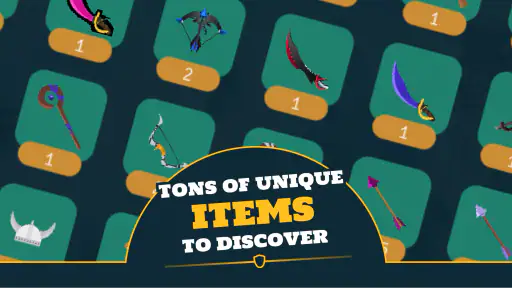
- and upgrade systems offer plenty of long-term goals.
- Playable at your own pace
- with progress continuing while you are offline.
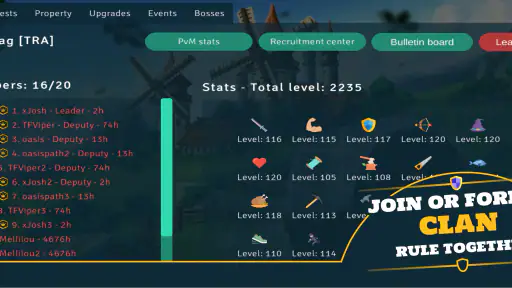
- Guild features add cooperation
- competition
- and useful social interaction.
- Runs smoothly on many devices with simple
- low-demand visuals.
- Frequent activities and events help keep the routine from becoming repetitive.
Cons
- Progress can feel slow without regular play or careful resource management.
- The interface may seem overwhelming until you learn where each system is located.
- Some advanced features and conveniences may require in-app purchases.
- Limited direct combat may disappoint players seeking an action-focused MMORPG.
- Guild participation is less rewarding if you prefer playing entirely solo.

- Category
- Adventure
- Version
- 1.6501