Human Sandbox: Ragdoll Play
- 148.00
- 4.6
- Installs
- 5.00M
- Price
- Free

Screenshots
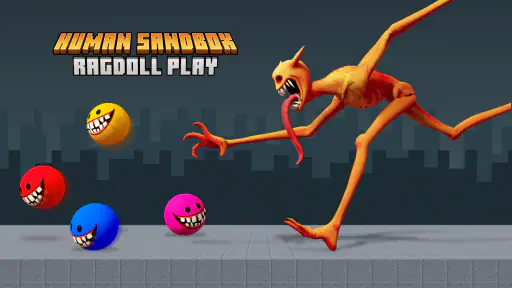
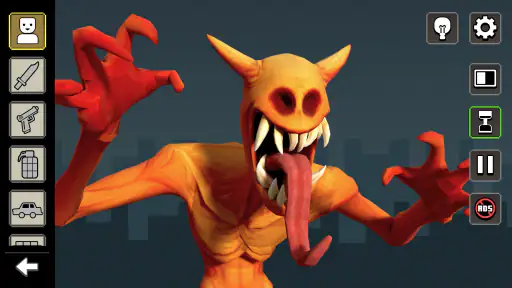
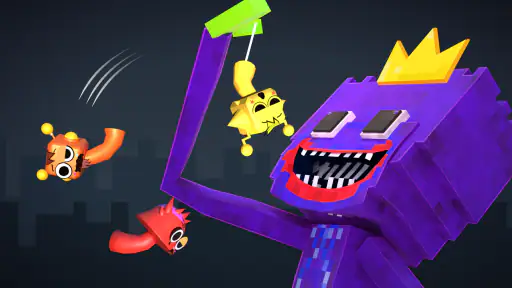
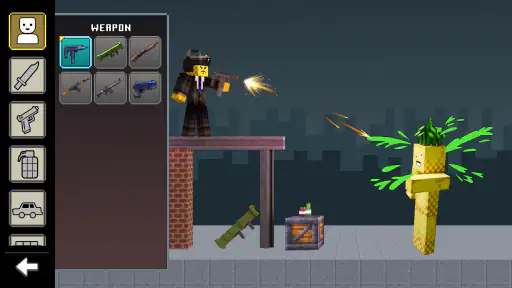
Analysis by Reviewed
I went into Human Sandbox: Ragdoll Play expecting a simple physics toy, and that is exactly where its appeal begins. It is a free simulation game from GrassBlock Studio built around a three-dimensional sandbox playground, with human-like figures and monster ragdoll physics at the center of the experience. Instead of asking me to follow a campaign or master a fixed set of missions, it gives me a space to experiment, arrange situations, and watch the results unfold.
That open-ended design makes the game easy to understand within a few moments. I can place objects, interact with characters, and create small scenes without first learning a complicated rule system. The pleasure comes from the reaction: a figure loses balance, a collision changes the whole setup, or a carefully arranged scene turns into something much more chaotic than I expected. It is less about winning and more about discovering what the simulation will do next.
The game is listed as a simulation title, although it also has the loose, playful quality of a physics sandbox. It is free to download, aimed at a Teen audience, and works on Android devices running version 7.1 or later. The current version is 1.2.5, and its popularity is clear from over five million installs and a 4.6 average from roughly ten thousand ratings. Those numbers do not guarantee that every player will enjoy the format, but they do fit my impression that this is an accessible game with a broad audience.
How the first few minutes set the mood
The first impression is deliberately direct. There is no need to study a long backstory before experimenting. The setting functions like a stage, and the characters function like performers whose movements are governed by physics rather than dialogue. That choice keeps the focus on interaction. I can begin with a small arrangement, make one change, and immediately see whether the scene becomes stable, funny, awkward, or completely uncontrolled.
I found that simplicity useful when playing in short sessions. A few minutes are enough to create a result, so the game suits moments when I do not want a demanding objective. It also encourages repeated attempts because the same starting arrangement can produce a different-looking chain of movement once I change the position of one element. The lack of a traditional victory screen is not a flaw here; it is part of the reason the sandbox feels relaxed.
There is a trade-off, though. Players who need clear goals, character progression, or a campaign with escalating challenges may feel that the opening has nowhere specific to lead. The game gives me tools for making situations, but it does not replace a structured adventure. I would recommend it to someone who enjoys testing possibilities, while I would point a mission-based player toward a conventional action or strategy game instead.
A realistic use case is a short break after work or school. I can open the game, create a deliberately unstable scene, watch the physics play out, and close it without losing progress in a long narrative. It is also suitable for sharing a device with a friend or younger family member who enjoys guessing what will happen when the setup changes. Because the content rating is Teen, I would still use personal judgment when deciding whether it is appropriate for a particular child.
A playground rather than a traditional level
The important mental shift is to stop treating each scene like a puzzle with one correct answer. I get more from the game when I ask questions such as, “What happens if I make this arrangement less stable?” or “Can I create a sequence where one movement affects everything else?” That approach reveals the game’s real strength: it turns small adjustments into experiments.
One useful habit is to change only one part of a setup at a time. If I move several characters and objects together, it becomes difficult to understand what caused the final result. By making a single adjustment, I can see how positioning, weight, or contact changes the chain of reactions. This is a simple workflow, but it makes the sandbox feel more deliberate and gives repeated sessions a sense of purpose.
Another good approach is to build scenes in stages. I start with a stable arrangement, observe the motion, then add a new source of disruption. That pacing creates a clearer contrast between calm and chaos. It also prevents the screen from becoming visually confusing too quickly, which matters in a game where the entertainment comes from following movement across the scene.
Art direction and the language of the world
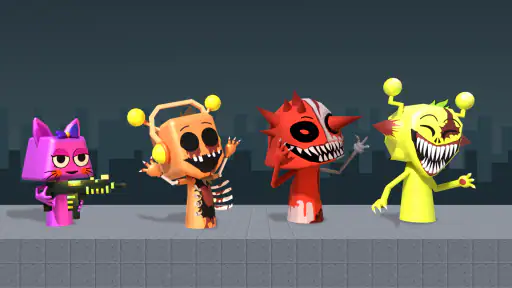
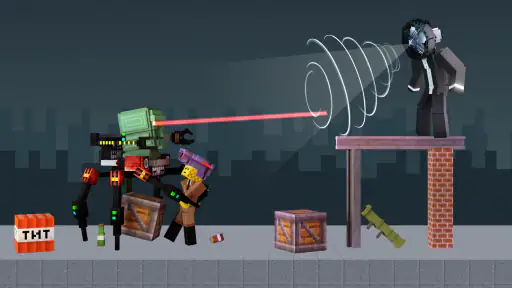
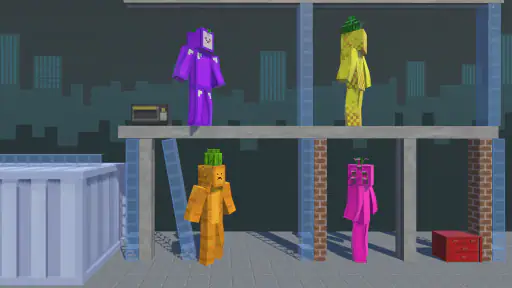
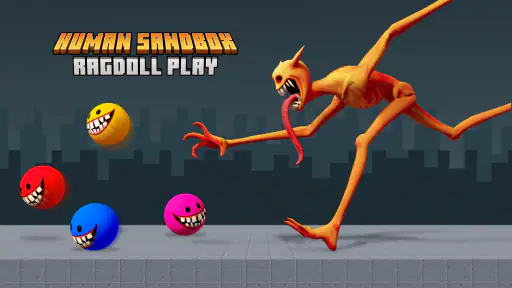
The visual identity is based less on detailed world-building and more on readable physical action. The three-dimensional presentation gives the playground enough depth for objects and characters to feel connected within the same space. I can understand the basic relationship between a figure and its surroundings without needing a story explanation. The world communicates through placement, motion, impact, and balance.
That visual language supports the game’s playful mood. Ragdoll movement naturally looks exaggerated and unpredictable, so the presentation does not need elaborate dialogue to create personality. A character’s sudden collapse or awkward recovery becomes the joke. The result is a kind of visual comedy generated by the simulation itself rather than by scripted lines.
I especially like how the setting leaves room for the player’s imagination. A plain playground can become a test area, a miniature stage, or a place to construct a deliberately ridiculous scene. This is one of the less obvious strengths of the format: the game supplies a physical vocabulary, but I decide what the arrangement means. That freedom is more valuable than a decorative environment would be for players who enjoy making their own situations.
The limitation is that a physics-focused presentation can feel visually repetitive over time. If I am looking for a richly illustrated world with changing locations, detailed characters, or a strong narrative identity, this is not the right choice. Its art direction is functional and expressive rather than expansive. The figures and objects matter because of what they do, not because the game asks me to admire a large fictional universe.
For that reason, I would compare it with a toy box rather than with a conventional simulation of building, farming, driving, or daily life. Those alternatives usually give me a defined role and a system to manage. Here, I am closer to a director arranging a physical scene. That distinction helps set expectations before downloading it.
Why the visual simplicity helps the mechanics
Clear silhouettes and uncomplicated staging are useful in a ragdoll game. When several bodies begin moving at once, I need to see where contact occurs and which object is causing a reaction. A crowded or overly ornate environment could make the action harder to follow. The straightforward presentation keeps my attention on the chain of motion.
This also creates a practical tip for better experiments: leave visual space between the main elements at the beginning. When everything starts in a tight cluster, the first collision can become impossible to read. Spacing the setup gives me time to see the initial movement before the scene becomes more chaotic. It is a small change, but it makes the difference between an amusing sequence and a confusing pileup.
The setting can also influence pacing. A compact arrangement produces immediate action, while a more open setup lets movement develop gradually. I found that alternating between those two styles keeps the sandbox from feeling like the same joke repeated. One session can be about a quick chain reaction; another can be about watching a carefully balanced arrangement slowly fail.
Sound, rhythm, and the feel of each session
Sound plays a supporting role in the experience rather than defining it. The main rhythm comes from movement: a quiet setup, a trigger, a fall, a collision, and the aftermath. That rhythm is important because it turns physics into entertainment. Even without a mission structure, the game can create a beginning, middle, and end inside a single experiment.
I enjoy the pauses between actions because they give me time to inspect the result and decide what to change. If every interaction were instant and constant, the sandbox would become tiring. The slower moments let me read the scene and plan another attempt. In that sense, the game’s pacing is controlled as much by my setup choices as by the simulation itself.
The best sessions usually have a deliberate rhythm. I begin with a simple arrangement, introduce one disruptive action, and then wait long enough to see the full consequence. Restarting immediately after the first impact can hide the most interesting part, since secondary movements often create the funniest or most surprising outcome. Patience is surprisingly useful in a game that appears to be about instant chaos.
There is also a trade-off here. Players seeking a strong musical score, voiced characters, or a story carried by sound may find the atmosphere too quiet or mechanically focused. The game’s mood comes from watching the scene, not from a dramatic soundtrack guiding me through emotional peaks. I see that as a good fit for casual experimentation, but not for someone choosing a game primarily for audio design.
When I want a calmer session, I reduce the number of active elements and watch one interaction at a time. When I want something more energetic, I create a denser arrangement and let the physics produce a faster sequence. This gives the player more control over the mood than the store summary might suggest. The sandbox is not only about what happens; it is also about how quickly I allow it to happen.
The difference between funny chaos and frustrating clutter
A useful distinction is whether I can still understand the cause of the action. If I can identify the first contact and follow the next few reactions, the scene feels satisfying. If too many bodies overlap immediately, the result may still be dramatic, but it becomes harder to learn from or recreate. I get better results by treating each setup like a small piece of stage direction.
This is where the game differs from a purely random toy. Randomness is entertaining once, but repeatable experiments give the experience more staying power. I can try to recreate a successful chain reaction, alter one position, and see whether the outcome becomes more stable or more chaotic. That process gives me a reason to keep playing after the novelty of the first collision fades.
How the mechanics fit the sandbox idea
The ragdoll physics are the central attraction, and they work best when I stop expecting perfectly controlled character movement. The figures respond in ways that can look clumsy, surprising, and occasionally unpredictable. That is not a side effect to overlook; it is the main source of the game’s humor and replay value.
Because the experience is physics-led, small choices matter. The location of a character, the amount of open space, and the order in which I create interactions can change the whole result. This makes the game approachable but not entirely mindless. I do not need advanced controls to begin, yet I can still develop a better sense of timing and arrangement through repeated play.
One of my favorite ways to use the mechanics is to create a “before and after” test. I set up a scene, observe its natural behavior, then make one adjustment and compare the two outcomes. This turns casual play into a simple investigation. It is particularly useful for players who might otherwise feel that the game is only random, because it reveals how much of the result comes from deliberate positioning.
The game is also a good fit for people who enjoy emergent comedy. The humor is not delivered through a fixed script, so two players can create very different moments from similar tools. A person who likes sharing unusual clips or showing friends a strange chain reaction may find more value here than someone who wants a polished sequence designed by the developer.
Still, the open-ended mechanics can expose a weakness: without personal goals, a session may lose momentum. I sometimes need to invent a challenge for myself, such as creating a stable arrangement before disrupting it or trying to produce a longer chain of reactions. That is enjoyable for creative players, but it is extra work for anyone who expects the game to provide objectives automatically.
The free price makes it easy to test that style without committing money at the start. Optional in-app purchases are listed at $2.49 per item, so I would approach them as extras rather than as a reason to download the game. The important question is whether the basic sandbox already provides enough experimentation for me. If I need a large progression system to justify continued play, this format may not hold my attention regardless of optional purchases.
On supported Android hardware, the minimum operating system requirement is Android 7.1. That makes the game available to a wide range of devices, although the practical experience can still depend on how comfortably a particular phone handles a three-dimensional physics scene. I would close other demanding apps if performance became inconsistent, especially before creating a crowded setup. That is sensible advice for any physics-heavy mobile game, but it matters especially here because slow or unclear motion undermines the main attraction.
Who will enjoy it, and who should skip it
I would recommend this game to players who enjoy sandbox experimentation, ragdoll comedy, and short sessions with no pressure to complete a campaign. It is also a good choice for someone who likes turning simple tools into personal challenges. The game’s strongest audience is curious and self-directed: people who enjoy asking “what if?” and watching the answer develop on screen.
I would be more cautious recommending it to players who want a detailed simulation of a real profession, a competitive leaderboard, or a clear sequence of missions. It is not a replacement for a city builder, life simulator, driving game, or physics puzzle with carefully authored solutions. Those alternatives are better when the satisfaction comes from management, precision, or measurable progress.
Parents and guardians should also consider the Teen content rating before handing it to a younger player. The game’s playful presentation may look harmless at a glance, but the rating is the relevant guide for deciding whether it fits a child’s age and expectations.
Atmosphere verdict after extended play
What holds the experience together is the agreement between its art direction, sound-led rhythm, setting, and mechanics. The world is simple because the physics need to remain readable. The pacing is flexible because the player creates the scene. The mood is playful because bodies move in exaggerated, unexpected ways. None of these elements tries to turn the game into something it is not.
That coherence is more important than visual ambition. I never felt that the game was pretending to be a narrative adventure or a serious scientific simulator. It knows that its appeal comes from arranging a situation and observing the consequences. When I play with that expectation, the straightforward presentation becomes an advantage rather than a limitation.
The developer, GrassBlock Studio, has positioned the game around a clear central idea, and the current version 1.2.5 remains easy to approach for newcomers. Its release on January 9, 2024, places it among relatively recent mobile sandbox options, while the large install base suggests that the format has reached well beyond a niche audience. I would not use popularity as a substitute for personal taste, but it does make the game feel like a reasonable starting point for anyone curious about ragdoll playgrounds.
My main reservation is longevity. The game can remain entertaining when I invent experiments, but it does not automatically supply the same motivation as a progression-heavy title. I also would not choose it for rich storytelling, deep character development, or a carefully composed musical journey. Its best moments come from short, self-created scenes, and players who need more structure may run out of reasons to return.
For me, the deciding strength is how quickly the mechanics create a mood. A quiet setup can become tense as an arrangement starts to tip, then turn absurd when the ragdoll movement takes over. That shift gives even a small experiment a satisfying arc. The game is at its best when I treat chaos as a material to shape, not as a substitute for every other kind of gameplay.
Overall, I see Human Sandbox: Ragdoll Play as a friendly, free entry into physics-based mobile simulation. It is easy to start, flexible enough for creative experiments, and distinctive in the way it lets movement provide both the comedy and the atmosphere. I would recommend downloading it if you want a casual playground for testing arrangements and watching unpredictable reactions. If you prefer goals, progression, or a richly authored world, I would choose a more structured alternative instead.
Pros
- Simple controls make it easy to experiment with ragdoll physics.
- Large sandbox areas encourage creative and unpredictable setups.
- Physics reactions provide entertaining results during short play sessions.
- Works well as a casual game for relaxing without strict objectives.
- Frequent object interactions keep experiments feeling varied.]
- contras:[
- Some scenes may become repetitive after extended play.
- Ads can interrupt gameplay
- depending on the version and device.
- Physics behavior is occasionally inconsistent or difficult to control.
- The game may appeal less to players seeking structured progression.
- Older or lower-end devices may experience slowdowns with many objects.
Cons
- Some scenes may become repetitive after extended play.
- Ads can interrupt gameplay
- depending on the version and device.
- Physics behavior is occasionally inconsistent or difficult to control.
- The game may appeal less to players seeking structured progression.
- Older or lower-end devices may experience slowdowns with many objects.

- Category
- Simulation
- Version
- 1.2.5