Hexa Master 3D - Color Sort
- 1.32K
- 4.6
- Installs
- 1.00M
- Price
- Free

Screenshots

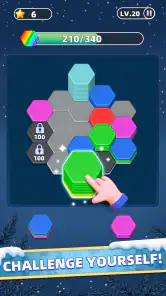


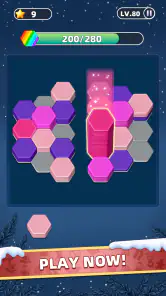
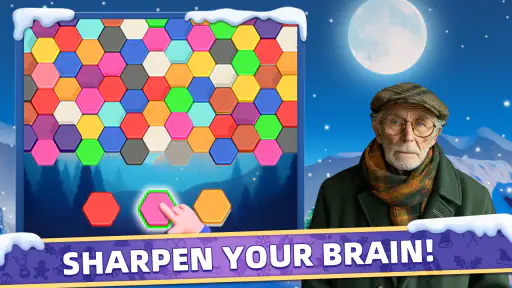
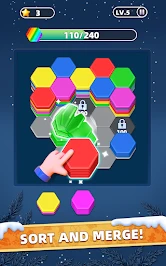
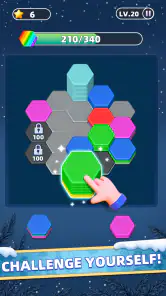
Analysis by Reviewed
I usually reach for a color-sorting puzzle when I want something focused but not demanding a long stretch of attention. Hexa Master 3D - Color Sort fits that role: its appeal is the steady satisfaction of bringing a jumble of colors into order, with enough planning to keep each move meaningful.
Small goals make it easy to begin
The early levels ease you into the central task rather than asking you to master a complicated set of rules first. That makes the game approachable for a quick break, and the visible goal gives each round a clear endpoint. I find that useful when I have only a few minutes: I can start with a specific puzzle in mind instead of committing to a lengthy session.
It is also a natural fit for a shared, low-pressure play session. A family member can watch the board and suggest a move without needing much explanation. The trade-off is that people who want a story, characters, or a competitive match will not find that kind of motivation here; the satisfaction comes from solving the board itself.
Gameplay: A Colorful Puzzle Delight
At the heart of Hexa Master 3D - Color Sort is a simple yet captivating concept: sort colors into their respective hexagonal tubes until each tube is filled with a single color. Sounds easy, right? But don't be fooled! As you level up, the complexity ramps up, and it’s a delightful challenge to keep your wits sharp.
The game starts with a few easy levels, just to get you into the groove. Before you know it, you’re juggling multiple colors and strategizing your next move like a pro. You’ll find yourself saying, “Just one more level,” and then suddenly, it’s two hours later. Trust me, it’s a real time-bender!
How I judge progress and difficulty
For me, progress is best measured by how confidently I can read a crowded color arrangement, not by rushing through it. Before moving a stack, I pause to consider whether it will leave space to sort the colors still mixed together. This simple habit helps avoid moves that feel tidy in the moment but make the remaining choices harder. The game’s rising complexity works best when I treat a level as a small planning problem rather than a speed test.
That pacing will not suit everyone. If a later board makes you hesitate, slow down and look for a move that opens room instead of trying to solve the entire puzzle at once. On the other hand, anyone who wants consistently intense pressure may find the measured, color-focused challenge too gentle. Compared with word puzzles or number grids, this is more about visual grouping and managing space than recalling clues or calculating.
More From Our News Desk

Clash of Clans Is Won Between the Battles

Android Auto Makes the Case for Quieter Car Software

MobiOffice: Transforming Mobile Productivity with Seamless Integration

EA SPORTS FC™ Mobile Soccer: Redefining Mobile Sports Gaming

How Microsoft OneDrive Became a Mobile Productivity Giant

How Google Translate Breaks Language Barriers Effortlessly
A practical way to approach a tangled board is to identify which colors already have a clear route toward being grouped, then avoid using the space that route may need. I find this more reliable than making the most obvious match straight away. A move can look productive because it gathers pieces together, yet still be a poor choice if it blocks access to another color. Thinking in terms of “what space will I need next?” makes the puzzle feel less like trial and error.
This also explains why I would not use it as a test of quick thinking. The useful skill is noticing how one rearrangement changes the options that remain, not reacting instantly. If I am tired, I can take a moment to scan the board before touching anything; if I am impatient, I am more likely to create a mess that takes extra thought to untangle. Players who enjoy careful visual planning should find that trade-off satisfying, while anyone seeking rapid-fire feedback may prefer a more action-oriented casual game.
Graphics and Interface: Smooth and Sleek
One of the first things you’ll notice about this game is its sleek design. The graphics are vibrant and easy on the eyes, which is a big plus when you’re playing for extended periods. Navigating through the game is a breeze, thanks to the intuitive interface. The developers have definitely put a lot of thought into making it user-friendly.
The visual clarity matters beyond appearance: when several colors are in play, being able to scan the arrangement quickly is part of the puzzle. I still prefer to pause and inspect the board rather than tap impulsively, especially when a move could make sorting the remaining pieces less straightforward. That makes this a better choice for a calm coffee break than for playing while distracted by another task.
That visual focus has a small practical consequence: the game asks for enough attention to distinguish and track colors, even though its rules are approachable. I would not start a tricky board while walking, crossing a busy place, or trying to follow a conversation. It is better suited to a safe pause when I can look at the screen and think for a minute. For a short waiting room visit or a quiet moment at home, that focused demand is part of the appeal rather than a burden.
Why It’s a Must-Try
So, what makes this game stand out in the crowded puzzle genre? For one, the strategic element involved in sorting and organizing the colors is immensely satisfying. It’s not just about speed; it’s about planning and thinking ahead. Plus, the game is suitable for all ages, making it a perfect choice for family game nights.
It is a casual game from Higgs Studio, and its broad appeal is reflected in an average rating of 4.6 from around 18,000 ratings, alongside more than a million installs. It is free to start and rated for Everyone, while optional in-app purchases range from $1.99 to $34.99 per item. I would treat those purchases as a personal spending choice, not as a reason to expect a better puzzle experience; anyone who prefers to avoid add-ons can simply decide whether the free play suits them.
Another highlight is its stress-relieving nature. There’s something oddly calming about organizing chaos into order. It’s like tidying up your room but way more fun and less physically demanding!
For a family session, I would treat the board as something everyone can inspect together rather than pass the phone around after every move. One person can point out a possible grouping, while the player decides whether it leaves enough room for what comes next. That works especially well with someone who does not usually play puzzle games, because the aim is easy to understand at a glance. It is still a single-player-style kind of satisfaction, though: people looking for teams, a leaderboard contest, or a shared campaign should choose a game built around those social features instead.
Because the game is free to start but includes optional purchases, I would set a simple boundary before handing it to a younger player: decide whether purchases are allowed on the device and keep that choice consistent. Its Everyone age rating makes it broadly approachable, but that does not mean every household wants in-app spending to be available. The sensible approach is to enjoy the sorting on its own terms and avoid treating a purchase as necessary just because a level becomes more demanding.
Who will enjoy the longer run
Hexa sorting has a different rhythm from match-three games, where quick reactions and chains of effects often drive the excitement. Here, I get more out of looking ahead and keeping the board manageable. That makes it a good pick if you enjoy sorting games and want a visual puzzle you can approach at your own pace. If you mainly want action, a narrative campaign, or a sharply timed challenge, I would choose another genre instead.
For a realistic everyday use, I can see myself opening it during a short wait, completing a level, then putting my phone away. The “one more” pull is real, though, so I would avoid starting when I need to leave immediately or focus on something else. A useful personal rule is to finish the current board and stop there rather than treating the next level as automatic.
That makes it a good companion for a predictable pause, such as waiting for a drink or sitting through a short gap between errands. I would start only if I have enough time to finish the board without rushing, since the clean endpoint is part of what makes a quick session satisfying. If the wait ends sooner than expected, I would rather leave a puzzle unfinished than play while distracted and make careless choices. For very brief gaps, a word game with tiny, self-contained prompts may be easier to put down instantly.
It is also worth asking what kind of variety you expect from a casual game. A match-three title often changes the board through cascades and special effects; a word puzzle swaps visual sorting for clues and vocabulary; a number puzzle asks you to reason through symbols or arithmetic. This game’s distinctive pleasure is narrower: it asks me to organize colors and preserve useful space. That focus is a strength when I want one clear kind of mental task, but a limitation if I want each session to feel like a different activity.
I would recommend it most to players who like tidy visual goals, gradual problem-solving, and a relaxed pace. I would steer away anyone who finds repeated sorting monotonous, needs a strong story to stay invested, or prefers a game that rewards fast taps. If you are unsure, try a few levels before deciding whether its particular loop clicks for you; the appeal depends less on broad puzzle enthusiasm than on enjoying this specific act of grouping and planning.
Release details and staying power
The game was released on January 29, 2024, and version 1.18.0 runs on Android 5.1 or later. Higgs Studio’s core idea is easy to understand, but continued interest depends on whether the growing arrangements keep giving you satisfying decisions. I would not judge its staying power by a promise of endless novelty: its strength is the repeatable pleasure of sorting, while players who need a changing story or a collection of distinct modes may tire of that focused loop.
That also answers the practical question of whether it is worth trying: if you like visual organization puzzles, the free entry point makes it an easy one to sample. If you discover that you dislike planning around limited space, or simply prefer puzzles with clues and varied objectives, there is little reason to force yourself through it. Its 1.3K reviews show that many players have shared feedback, but the more useful test for me is whether a few boards leave you wanting another for the puzzle rather than just the habit.
On an Android device, the stated minimum is Android 5.1, and the current version is 1.18.0. I would check that the device meets the requirement before planning to install it, particularly if I am choosing the game for an older phone. Those details do not change the central decision: the game is worth sampling when its sorting loop sounds appealing, not simply because it has a large audience. A large install count can suggest broad reach, but it cannot tell you whether you personally enjoy managing a crowded color arrangement.
Progress here is best judged by the quality of the decisions a board invites, rather than by expecting a dramatic new system every few levels. When the layout becomes harder, I look for a meaningful choice: can I open room, protect a useful grouping, or avoid closing off an option? If the challenge keeps offering that kind of small but clear problem, the familiar loop remains engaging. If it starts to feel like the same arrangement without interesting decisions, that is a reasonable point to take a break rather than push through out of habit.
The main retention pressure is the natural pull of a completed board followed by another available puzzle. That is gentler than a timer-driven game, but it can still stretch a break because finishing one round makes starting the next feel effortless. I find a stopping rule more useful than relying on willpower at the moment: decide in advance whether this is a one-board session, then close the game after that endpoint. The loop is pleasant, but it does not need to become the default filler for every spare minute.
Final Thoughts: Add it to Your Game Library
In a nutshell, if you’re on the hunt for a game that’s both entertaining and mentally stimulating, Hexa Master 3D - Color Sort is a fantastic pick. It’s a game that you can easily lose yourself in, whether you’re looking to kill time or unwind after a long day. So go ahead, give it a whirl, and enjoy the colorful world of hexagons and hues!
My verdict is more specific: I would keep it in mind for calm, short sessions when I want to focus on one visual problem and enjoy the relief of bringing it to order. It is not the right choice when I want a deep narrative, varied puzzle formats, or competitive pressure, and its repeatable structure may become familiar if sorting is not its own reward for me. If that focused loop sounds like your kind of break, it is an easy casual game to try; if not, there are better matches for the way you like to play.
Hexa Master 3D - Color Sort Frequently Asked Questions
How much space does Hexa Master 3D - Color Sort need on my device?
If you are deciding whether to install Hexa Master 3D - Color Sort, check the available storage on your device before downloading. The game is a casual color-sorting puzzle, and keeping some free space can also help accommodate app updates and other content. Storage needs can vary by device and installation, so reviewing the download size shown by your app store is a practical final check.
Who developed Hexa Master 3D - Color Sort, and when was it released?
Hexa Master 3D - Color Sort was developed by Higgs Studio and released on January 29, 2024. It is a casual game built around sorting colorful hexagons and solving puzzles, making it easy to understand what kind of experience to expect before installing. The release date and developer can also help you identify the game when searching for it in an app store.
Is Hexa Master 3D - Color Sort suitable for children?
Hexa Master 3D - Color Sort is rated Everyone, making it a casual puzzle option for a broad audience. Its central activity is sorting colored hexagons and solving puzzles, so it may appeal to children who enjoy visual challenges as well as adults looking for a light game. Parents can still check the game and its purchase options before letting a child play.
Does Hexa Master 3D - Color Sort include in-app purchases?
Yes. The game is free to download and play, with optional in-app purchases priced from $1.99 to $34.99 per item. These purchases are separate from the core sorting puzzles, so you can try the game without buying anything. If children use the device, it is sensible to review purchase settings and ask for approval before any transaction.
What is Hexa Master 3D - Color Sort?
Hexa Master 3D - Color Sort is a captivating puzzle game available on Android and iOS platforms. Players are challenged to sort colored hexagons and align them perfectly to solve puzzles. The game is designed to test your strategic thinking and problem-solving skills with increasing levels of difficulty. It’s a fun way to sharpen your mind and pass the time. Developed by Higgs Studio, it combines color sorting with hexa-style puzzle play.
Pros
- Engaging 3D puzzle gameplay.
- Challenging levels for all ages.
- User-friendly interface.
- Vibrant visual effects.
- Regular updates with new content.
Cons
- Contains in-app purchases.
- Ads can be intrusive.
- Requires internet connection.
- Limited free levels.
- No multiplayer mode.
- Category
- Casual
- Version
- 1.18.0