Hero Survival IO
- 625.00
- 4.4
- Installs
- 1.00M
- Price
- Free

Screenshots
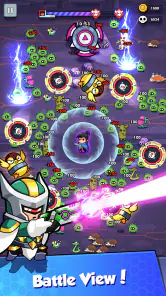
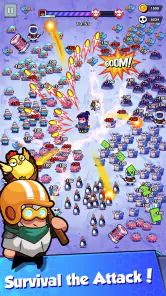
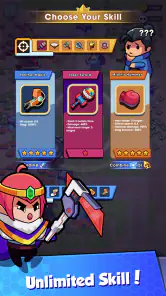
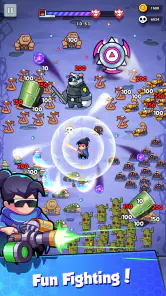
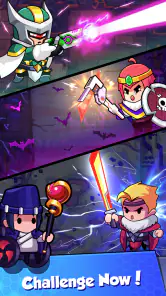
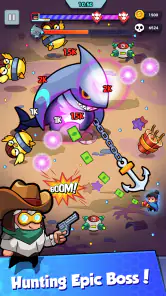
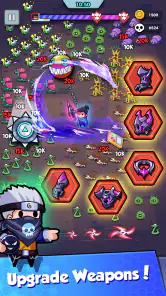
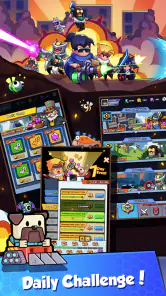
Analysis by Reviewed
I went into Hero Survival IO expecting a quick mobile adventure and found a game built around a very familiar promise: move, react, survive, and try again. Its appeal is not a long story or a complicated control scheme. Instead, it puts the focus on the small decisions made during a run, where a safe move can keep a hero alive and one careless moment can bring the session to an abrupt end.
That makes it easy to understand within minutes, but not necessarily easy to master. I found the game most enjoyable when I treated each attempt as a short challenge rather than expecting a deep role-playing adventure. It is free to play, belongs to the adventure category, and is suitable for players aged 10 and up. The developer is Zetylios Legend, and the game has built a sizable audience, with more than a million installs and an average score of 4.4 from roughly thirty-seven thousand ratings.
How the survival loop feels in practice
The first action is simple, but it sets the whole run in motion
The best way to understand this game is to start with its first few moments. You enter a run, take control of the hero, and immediately begin reading the space around you. There is no need to spend a long time learning a large set of commands before anything happens. The basic interaction is direct, which suits a phone screen and makes the game approachable for someone who only has a few minutes.
That simplicity is useful, but it also means the game asks you to pay attention to movement and timing rather than button combinations. I quickly found myself watching what was approaching, choosing where to move next, and trying not to let the screen become too difficult to read. The first action is therefore not just “start fighting.” It is a decision about positioning, risk, and how much room I want to preserve for the next moment.
This is where the combination of an adventure game and an io-style survival format starts to make sense. The presentation feels more immediate than a traditional adventure game, while the survival structure gives every movement a purpose. You are not simply walking through a world waiting for the next story scene. You are constantly responding to pressure, and that pressure gives even a short attempt a clear shape.
I would recommend beginning with a patient approach instead of rushing toward every possible reward. Early movement can teach you how much space you need to react and which situations become dangerous when you are surrounded. That is one of the first useful lessons the game offers: surviving longer often depends less on acting aggressively and more on keeping options open.
The feedback rhythm keeps the screen active
Once a run is underway, the game settles into a repeated rhythm. I act, the game responds, I adjust, and then I decide whether to take another risk. That feedback is the main source of satisfaction. A successful movement gives me a little more control, while a mistake is usually obvious because the situation becomes harder immediately.
This rhythm works particularly well for short sessions. I can play while waiting for an appointment or during a brief break without needing to remember a complicated story or return to a large map. The game gives me enough activity to stay involved, but its basic structure is clear enough that I can stop after a run without feeling lost.
The trade-off is that the experience can feel repetitive if you want constant novelty. The pleasure comes from improving decisions inside the same broad survival pattern, not from discovering a completely different type of game every few minutes. Players who enjoy repeating a challenge to make a cleaner attempt will understand the appeal quickly. Players who need a strong narrative, extensive exploration, or a large collection of distinct activities may find the loop narrow.
I also noticed that the game rewards attention more than passive play. It is tempting to focus only on immediate targets, but that can leave the hero in a poor position for what follows. My more successful attempts came from looking at the next escape route before the current problem was finished. That small change in focus makes the action feel more strategic without turning it into a slow planning game.
Why the action can feel more tactical than it first appears
The most useful hidden lesson is that movement is also preparation. When I kept enough open space around the hero, I had more ways to respond when the situation changed. When I moved without considering the surrounding area, a harmless-looking choice could limit my next options. This gives the game a light tactical layer that is easy to miss if you play only by reacting to what is closest.
Another practical tip is to avoid treating every opportunity as equally valuable. A reward may look attractive, but reaching it can expose the hero to a worse position. I had better runs when I considered the cost of moving toward something instead of automatically collecting it. That does not mean playing timidly; it means understanding that survival itself is part of the reward.
This is also where the game differs from a typical casual action title. Many quick mobile games encourage constant forward motion and immediate collection. Here, I found more value in controlling the pace of my decisions. The game still feels active, but the strongest play comes from balancing urgency with restraint.
The reward is the reason a failed run still teaches something
A survival game needs to make progress feel worthwhile, otherwise every defeat becomes a complete waste of time. In my experience, the reward side of Hero Survival IO works best when I connect it to the next attempt. Finishing a run, reaching a better result, or simply handling a difficult situation more cleanly gives me a reason to start again.
The important point is that the reward is not only the final outcome. I also get feedback from the run itself. I learn which movement created trouble, when I became too greedy, and whether I had left myself enough room to escape. That makes a failed attempt useful rather than meaningless. The next session begins with a practical question: can I avoid the mistake that ended the previous one?
There is a satisfying loop here. I enter with a basic plan, encounter pressure, make a decision, receive immediate feedback, and then carry that lesson into another attempt. The game does not need a complicated explanation to make this work. Its reward structure is closely tied to the player’s own improvement, which is why a short run can still feel productive.
That said, this kind of reward will not appeal equally to everyone. If you prefer games where progress is mostly delivered through new story chapters, elaborate equipment systems, or a large world to uncover, this may feel too focused on repetition. Its strongest reward is the feeling of playing better, so you need to enjoy that kind of personal improvement.
What the free model means for the way I would play
The game is free to download and includes optional in-app purchases ranging from $0.99 to $99.99 per item. That is worth keeping in mind before starting, especially if you are reviewing it for a younger player. The age classification is Everyone 10+, but the presence of purchases means I would still check the device’s purchase controls and decide in advance whether spending is allowed.
I would approach the free version as a complete trial of the core loop rather than assuming I need to buy anything to enjoy the game. For me, the sensible workflow is to play several sessions first, identify whether the movement and survival rhythm actually hold my attention, and only then consider whether an optional purchase adds value. Spending before knowing that the loop suits you is an easy way to turn a short experiment into an unnecessary cost.
This also affects who should choose the game. It is a reasonable fit for someone looking for a free adventure game that can be played in compact bursts. It is less suitable for a player who wants a single upfront purchase with no purchase prompts or for a parent who does not want to manage optional spending on a shared device.
The reset is not just a punishment
The end of a run is where the game either succeeds or loses me. A reset can feel frustrating when it wipes away effort without teaching anything. Here, I found the reset more tolerable because the short-session format makes another attempt feel accessible. I am not committing to a long campaign every time I press play; I am testing a new decision against the problem that defeated me.
The best reset happens when I can clearly identify the cause of failure. Maybe I moved into a tight area, chased a reward without an exit plan, or reacted too late because I was watching only one part of the screen. Those moments create a direct connection between failure and improvement. Instead of thinking, “the game randomly ended my run,” I can usually ask, “what choice left me with no safe response?”
That does not remove all frustration. Repeating a similar opening can become tiring, particularly if you are not seeing a meaningful improvement in your own play. The game is strongest when each restart has a purpose. I would recommend setting a small goal for the next run, such as surviving longer, keeping better spacing, or avoiding the mistake that caused the previous reset. This makes repetition feel deliberate rather than automatic.
The reset also makes the game easy to fit around daily life. If I have only a few minutes, I can begin a run without needing to protect a long uninterrupted block of time. If I have more time, I can continue testing different approaches. That flexibility is one of the clearest advantages over larger adventure games, which often expect more commitment before delivering a satisfying payoff.
Where it stands beside other adventure games
Compared with a traditional adventure game, this title is lighter on narrative and more concentrated on immediate survival decisions. You should choose it if you would rather control a tense short attempt than follow dialogue, explore a broad map, or manage a lengthy quest. Its io influence gives the action a more compact and repeatable shape.
Compared with a standard casual action game, it asks for more awareness of positioning. You cannot rely only on quick reactions or constant movement. The game becomes more enjoyable when you look ahead and preserve room for the next problem. That gives it a little more thought than its simple controls might suggest.
It is not the right choice for everyone. I would skip it if my priority were a deep story, a relaxing pace, or a highly varied campaign. I would also look elsewhere if I wanted a game built around detailed character customization or a long-term world to explore. The experience is deliberately centered on the survival loop, and that focus can feel limited once the basic pattern stops feeling fresh.
On the other hand, I would recommend it to players who like the “one more attempt” feeling. It works for someone who enjoys learning through failure, prefers quick mobile sessions, and wants an adventure game that starts working almost immediately. It is also a good option for players who find larger games overwhelming and want something easier to pick up without giving up all sense of decision-making.
Device fit, age, and what to expect from the current release
The game supports Android devices running version 7.0 or later, which makes it accessible to many players using older compatible phones. I would still keep expectations realistic: compatibility does not automatically mean every device will feel equally comfortable during busy moments. On a smaller screen, careful attention may be more difficult, so a player who relies on precise visual reading should try a few runs before deciding whether the presentation works for them.
The current version is 1.8.2. For a new player, the practical advice is simple: update before judging the experience, then spend enough time with the basic loop to see whether the rhythm suits you. A single rushed attempt is not a fair test, because the game’s appeal depends on recognizing patterns in your own decisions rather than merely seeing the opening action.
Its Everyone 10+ classification makes it easier to consider for family devices, but I would still explain the purchase setup to younger players. The game may be approachable, yet the combination of repeat attempts and optional purchases can encourage impulsive decisions. Establishing a clear rule before play is better than trying to solve that issue after a purchase has already been made.
My verdict on the action, reward, and restart cycle
After spending time with Hero Survival IO, I see its main strength clearly: it turns a small set of actions into a repeatable test of attention. The action is easy to enter, the feedback arrives quickly, the reward is tied to both survival and learning, and the reset gives me another chance to apply what went wrong.
The loop is most convincing when I play with a specific intention. I do not simply launch another session because the previous one ended; I return because I have a better idea about spacing, timing, or risk. That is the difference between a forgettable arcade attempt and a game that can hold my attention across several short sessions.
My reservations are equally clear. The structure may become repetitive, the experience is not designed for players seeking a story-heavy adventure, and optional purchases require sensible boundaries. Those are not minor details, but they do not undermine the game’s central purpose. They simply define the audience that will enjoy it most.
For me, this is a worthwhile free adventure game when I want immediate action without a long commitment. I would recommend it to a friend who likes compact survival challenges and does not mind repeating a run to improve. I would not recommend it as a replacement for a full narrative adventure. Its value comes from the next decision, the next correction, and the small satisfaction of lasting a little longer than before.
Pros
- Quick matches make it easy to play during short breaks.
- Simple controls are accessible for beginners.
- Roguelike upgrades add variety to each run.
- Large enemy waves create satisfying action moments.
- Playable without constant internet access in some modes.
Cons
- Runs can feel repetitive after extended play.
- Upgrade choices may depend heavily on random luck.
- Difficulty spikes can make later stages frustrating.
- Ads may interrupt progress or offer essential rewards.
- Battery usage can be high during long sessions.

- Category
- Adventure
- Version
- 1.8.2